The Five Corners of Love

#adventure, America, California, environment, Travel

Pt III

United Across the Great Divide.

All the way to Reno……

…….I was looking to segue from the last instalment into this one after a hefty hiatus of eighteen months. Once the mothballs had settled I should have known that life lays down markers everywhere only to let the individual decide to see them for what they are or else ignore them for what they’re not. This ‘gift’ came wrapped in an R.E.M. song title. How does one get from Denver to San Francisco in a story without travelling a thousand rugged miles in words? Answer: one cheats by picking a song title which says it all. Hey now, all the way to Reno. If you’re old enough or urbane enough to be listening to REM, you’ll know the number.

All that my memories will reveal to me about the long bitumen from Colorado to beautiful California was that the I25 in Denver led due north to Cheyenne, the state capital of Wyoming. We must have doubled back from our pioneer hut in the Rockies to Denver knowing that to reach central California expeditiously we would be better suited to heading north to Cheyenne before taking a sharp left onto the I80 through the prairie lands of southern Wyoming. The car delivery operator gave us only fourteen days to cross the continent. Adding that failure to present ourselves and their car at our destination in Sacramento might result in an FBI warrant being issued in our names, was enough to keep us from digressing too much en route. No sacrilege on the road to the Sacrament, that was the mantra.

Southern Wyoming, I remember chiefly as being the gateway to the world’s oldest designated National Park. We even spotted roadsigns denoting so. For Yellowstone turn north. But turn we did not, in spite of temptation that Jesus could have empathised with. The detour would have added days to the trip, and quite possibly – in our callow minds – brought us into the FBI’s ambit alongside Colombian cartel lords, the Unibomber, and a splendid array of serial killers.

West we drove through a sea of yellowing grass stuck to hills filed down by the Earth’s master carpenter, time. Through Rawlins, Rock Springs and Evanston, and onward we hardly stopped even after crossing state lines into Utah. At Salt Lake City on the southeast shores of the Great Salt Lake we kept on the I80. The city of the Latter-Day Saints sat there piously wedged between a mountain ridges running north-south. I thought it was befitting of a religious colony of New World Christian non-conformists that they found their new Nazareth in a place so far removed by distance from the Holy land yet so near in terms of the harsh semi-desert terrain upon which Christ built his broad church. They choose one helluva place to settle into unorthodoxy. The Wasatch to the east and north; the Oquirrh to the west, both ranges rising from the valley floor, pushed up until their ridges cut the arid air. In the midst of untrammelled wilderness emerged over time a city as different from any other in the Continental United States that anyone could imagine. So improbable it would end up cemented there but that was the pioneer spirit of the brutal nineteenth century. Those religious zealots with the pioneer spirit welling up in their eyes, they must’ve marched in unison over forest, river prairie and mountain until stopping there with the Rockies towering either side of them they said, this is far enough.

Outside of SLC a vast salt flat shimmers on the horizon. The I80 slices through it, a gesture of unflappable self-confidence by American civil engineers of the mid-20th century. Then again, what else could they have done? Reroute the highway around the imposing site of a salt desert? Nah. Signs offering fuel and food warn of shortages ahead. No fuel beyond here for 100 miles. You get the idea. The heat was phenomenal, yet you wouldn’t have known it, so dry was the atmosphere. The skin burned without telling so. A gasp of air was all it took to singe whatever lines the windpipe. This is mirage country. The flats, where water once abounded, were now desiccated. Salt crystals is all that withstood the heat until turning the world white this bed of minerals reflected the sunlight back but the sunlight wouldn’t bounce back in a straight line. It swayed and wobbled instead, hence the hazy reality of looking through and beyond a salt desert. The trucks ahead looked for all the world as if shimmering through a wormhole, all pulled and stretched out of their normal dimensions, somehow levitating over a roiling sea of salt. The gum i had been chewing on melted onto the windscreen after a failed attempt at flicking out the gobbet of gum going at 60mph. That’s what i recall most: the sight of chewing gum turning to liquid on the outside windscreen, dripping down until realising it would take an ice storm to remove that careless blemish from this car.

And so the road went on. Straight as an arrow it cut through the dazzling flats until leaving them the mountains once again took us into their fold. But by then we had left one state and entered yet another, this time Nevada. Meaning ‘snowy’ in Spanish, Nevada was too baked by this ferocious summer to offer up snowflakes. But it mattered not. By now we had crossed the Great Diving Range and now could say confidently of ourselves, we have made it to the West, to Pacific Time. I don’t remember crossing Nevada on the I80 to Reno, the state capital. It was up and down, though that’s for sure. And because of plate tectonics, the ridges formed N-S, therefore when travelling west you go over every last buckle in the Earth’s crust. On the outskirts of Reno I sensed California was close. Roadsigns affirming such were all the evidence I needed to back my claims. The town itself looked like so many others en route: a pitstop; a temporary settlement in the most unlikely of places that found permanent status on account of the fact that wave after wave after wave of new world hopefuls had kept passing through on their way to the promised land of California only to get waylaid for long enough to put down some odd manner of roots.

It was at Reno we turned off the I80. Knowing we had time before the FBI were called in, we decided to take the back roads into California. Unbeknownst to us, this deviation into the magnificent unknown would meanaling delightful acquaintance with one of America’s truly great roads: Highway 395. Forget Route 66 or even Highway 61, this was the road that would leave an indelible mark on me, so much so that twenty-three years later i would return alone to do the whole thing again. This road had fable written all over it. Had a young a precocious Bob Dylan driven it before making Highway 61 Revisited, we would never have had Highway 61 Revisited.

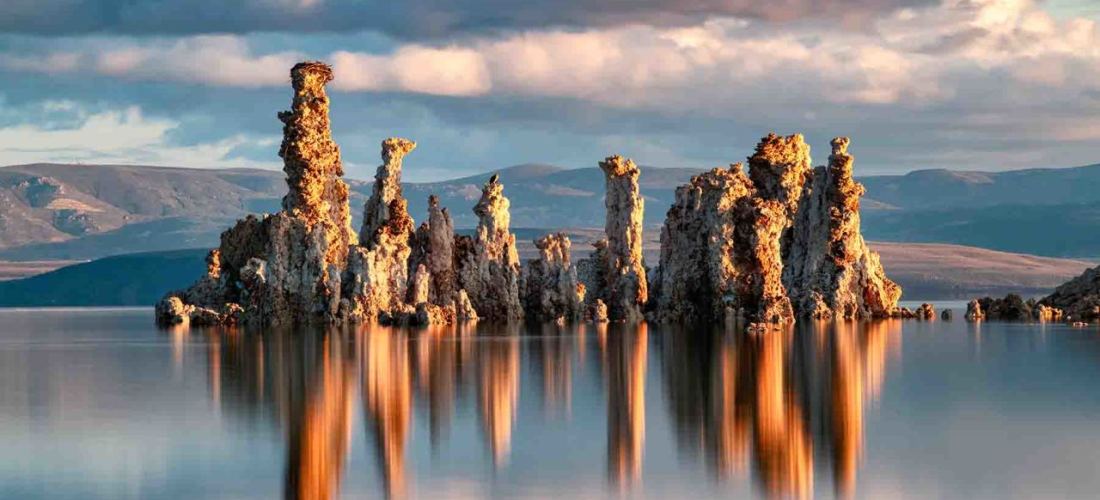
Highway 395, if you didn’t already know, runs from Carson City near Lake Tahoe all the way to San Bernardino, east of L.A. It runs parallel with the backside of the Sierra Nevadas where grows the Giant Sequoia tree and in between there and the White Mountains where grows the ancient Bristlecone Pine. Between them are vast geographical features that battle the heat and the cold and the light and the dark. The heavens make Wagnerian cloud operas over this gap between two mountain ranges, such is the drama nature cooks up. It’s no coincidence that Edwards Airforce Base lies amid all this scale and all this splendour. Neither is it a surprise that Edwards Airforce Base is where the space shuttle would come into land. To slow from 17,500 mph to 200 you need acres of space to land, you need light to sight the shuttle as it re-enters the Earth’s atmosphere, and you need high pressure, and lots of it, to mellow the bumps. Highway 395 and its back yard had it all. And smack bang in the midst of that lay Mono Lake, whose chemistry was most unusual, whose size was monumental, whose ambience was strange and beguiling.

In Praise of Persia

Arabia, Bedouin, Caliphate, civilisation, desert, Empire, history, Iran, Islam, Middle East, Muslim, Persia, philosophy, Political Culture, Religion, thoughts, Travel, Tribes

I watched a riveting BBC4 documentary last night called ‘The Art of Persia’. Contained within that visual treasure trove were cultural jewels of incalculable worth. The West might look on with a mixture of bemusement and disdain at the black chadors, the mass weepings, the ceremonial burnings of Imperialist flags of red, white and blue, and the tales of woe spun by Persia’s disgruntled diaspora everywhere from Tehr-Angeles to London, but that’s not the half of it. The country known since 1935 as Iran is arguably as great a continuous civilisation as there has even been, anywhere. But what makes Iran so interesting is how its personality traits reveal a duality deep in its cultural psyche.

To the Persians, who live either in wealthy North Tehran or else abroad, the name Iran is anathema to them because of its proximity to all that is humiliating to a once insuperable civilisation. To them Iran equals the puppet Shah. Iran equals fanaticism. Iran equals paranoid pride. Iran equals vice and virtue and blasphemy and stoning and vicious assaults on the freedom to think out loud. Iran equals secret shindigs with homemade grog. Iran equals ousted premiers. Iran equals the Ayatollahs. Iran equals political prisoners. Iran equals implacable hostility to nearly everyone except fellow villains, Russia and Syria. The name Persia, on the other hand, conjures nothing but antiquarian admirers. The Iran we know today, in stark contrast, has nothing but perceived enemies. On top of this litany of woes, for Persians the name Iran strikes fear into the heart because it equals Islam in its most austere form of submission and at its most fervent. To those Persians who see themselves as secular patriots – defenders of 4,000 years of unique culture, rather than defenders of a faith imported from impoverished desert lands – Iran in its present state will eventually be consumed by the larger meaning of Persia. For everyone, including Orientalists like me, Persia denotes the literary romance of Sheherezade in the 1001 Persian Nights and the Shahnameh of Ferdowsi. Persia is the Rubaiyat of Omar Khayyam; of intoxicating poetry recited in a garden of red roses, crocuses and pomegranate trees; of revelling in the NOW instead of waiting on God, as is the wont of modern Islam. Persia is the Sufi mysticism of Rumi as opposed to the stripped-down demystification of latter-day political Shi’ism.

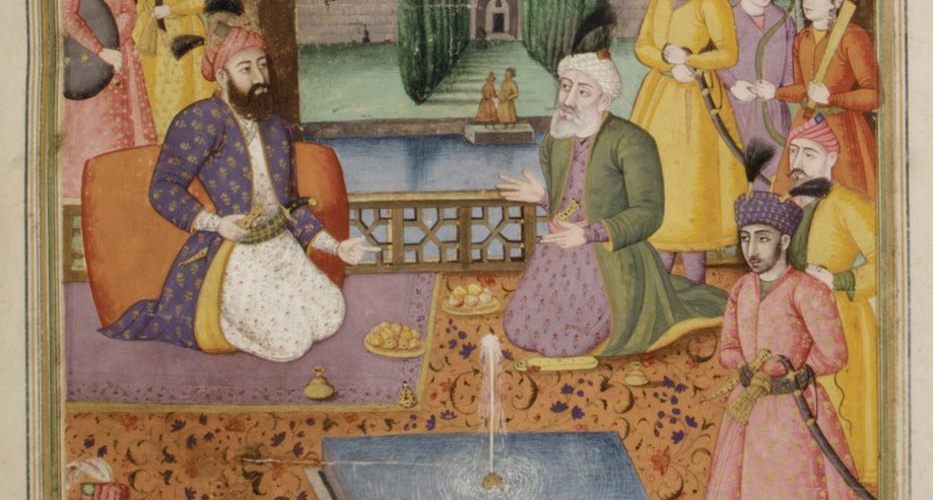
To the Iranians, who live everywhere else in Iran’s hinterland, Persia is something to be taken, if not lightly, then with a degree of scepticism. Persia equals complicity with the predatory West. Persia equals lingering resentment of being conquered by an inferior culture who brought a book – the Qur’an – which changed everything. Persia equals ambivalence, at best, toward the idea of Islamic piety. Persia equals antiquity, an age that’s gone forever. Persia equals wine and hedonism from the quills of drunken poets who saw things very differently from the Mullahs and the Ayatollahs. Persia equals Zoroastrianism and the fire temples of old. Contrarily, Iran equals Shi’a, a tough, oppressed, self-flagellating branch of Islam. Persia equals all that is effete: of brocades and silken rugs; of grand viziers in courtly costume; of silver filigree and lapiz lazuli glaze on priceless urns; and, of artistic depictions too close to iconoclastic for comfort. In short, for Iranians, nostalgia for old Persia is the antithesis of political Islam. It is a weak underbelly that allows outsiders to enter the forbidden gates on the pretext of weakening the present land by exalting its past.

The BBC documentary highlighted this duality as such. Uncovering the many layers of Persian culture we learn that when it comes to a civilisation that stretches back to the Elamites at Susa 4,500 years ago, an empire that during the reign of the Achaemenids under Cyrus stretched from Greece to Afghanistan, a simple either/or will not do. When something is that old and that far-reaching, dichotomies are rarely that simple. The BBC4 series taught us that even the political Islam of the 21st century Republic can not wash away that feeling of distinction held by so many Iranians. Their exceptionalism chimes with similar exceptionalism experienced by Brexit Britain and the Trumpite United States. It is this analogue with great Western powers that plunges modern Iran into a state of competitive hostility with them. It is the similarities therefore, and not the differences, that explain the fraught relations between the anglo-American West and the new Persia.

Eternally unknowable and all-mighty for being so is what makes Iran so much like the God of Islam it has worshipped for nearly 1,400 years. A bruised civilisation in such a battle for true identity on the shifting game board of power politics is what makes Iran the Persia it truly is to this day, and likewise what makes Persia the true Iran it has become. Its place at the head of the table of nation states has become problematic, none more so than within Iran itself. This was the first civilisation to claim the one true god, Ahura Mazda. Its official state religion of Zoroastrianism was as long-established as Persia itself. But all changed so suddenly. Zoroaster’s fires were extinguished by the Arab Conquest of 637AD. In many respects, an inferior culture usurped one whose deeds it could never match. A tribe tamed a civilisation, and I don’t think Iran has ever come to grips with that. Alexander sacked Persepolis in 330BC, but he razed it to the ground supposedly in the name of Hellenic Civilisation. The Arabs who swept into Sassanid Persia on the command of the Caliph Umar just four years after the death of the prophet Muhammed were a tribe of tribes with all the ostentatiousness of a Glastonbury festival-goer. They came unadorned and, other than tax and sovereignty, demanded little else. These bedouin Arabs were no Islamic State. Their relative tolerance was their enduring power. As the documentary states, Islam was adopted in Persia at a rate that Arabisation never ever was. The Persians took the commandments of Muhammed readily enough, though it was the language and cultural traits of the invaders from the Arabian Peninsula that had little staying power in the eyes of a people who believed, rightly of wrongly, that they had nothing to learn (other than the revelations in the Qur’an) from these usurpers in their raggedy clothing.

I taught a bunch of Iranians about ten years ago, all of whom had come to the West not so much for a taste of cultivated learning, which of course they could have delved into at home. They came, rather, to throw off their chadors and to relive the secular freedoms their parents had enjoyed under the Pahlavi dynasty. They came to change Iran not from within, which was too dangerous, but from without. Away from the Iran of the Basij and the Revolutionary Guard they could embrace the Persian in themselves, throwing off the shackles of the Iranian who boarded the aircraft in Tehran. In our ignorance, some locals asked if, being Muslim and existing in the heart of the Middle East, they were Arabs. The Iranian reaction was prompt and dismissive to say the least. You could actually see them wince at the mere suggestion. In my classroom there they sat together, far from the ethnic Arabs who were seated at the other end of the room. They looked and spoke different. They carried themselves differently, for unlike the Arabs in the room, the Persians had a dual identity: the one Iran foisted upon them at birth, and the Ferdowsi-reading Persian residing permanently in their heart. 


Flying Over Planet Lockdown on a Magic Carpet Ride

adventure, agriculture, Cities, climate, conservation, Coronavirus, counter-culture, developing world, environment, ethics, EU, future, futurology, Imagination, Life, Lifestyle, natural philosophy, natural world, philosophy, Reflections, revolution, Society, Socioeconomics, thoughts, Travel

It’s 2030. Imagine you could select anything from home to power your low-level flight around the planet. It wouldn’t be the stressed planet we have come to know. It would still be a human planet, but one rather unashamedly changed from the one you knew and despaired of back in 2020.

The overhyped pandemic of 2020, the one that had the world all in a panic to the point where it effectively closed human activity down, produced unexpected outcomes. No one quite knew it at the time, but the quarantining of humanity inadvertently gave breathing space to all terrestrial life that had been trampled in the poisoned dirt since the mid-20th century. Gone were the crisscross scars of vapour trails from planes all across the sky. Gone too were the ‘conjunctivitis domes’ that enclosed all but a few cities and towns in hazy, acrid pollution. More than anything, gone was the constant background noise of society consuming itself into an early grave. At first, even the most misanthropic kept tight-lipped about how the lockdown was having anything but a deleterious effect on them. They wanted to tell everyone about how delirious with happiness they were, that they were reconnecting with the world around, how the spring had never seemed so polarised with deep colours, and how the silence of everywhere had led to a great sonic peace across the entire sky. While patients with Coronavirus were gasping for their last breath, the guilty enjoyment of the majority who bore no symptoms seemed unutterable. But as the lockdown went on, more and more started to admit there was an upside to the downside of putting industrial society on ice for a while. While they cited different reasons for secretly enjoying the mass meditation retreat that the world had become, a common theme began to emerge. The average Joe and Joanne hadn’t been happy for a long time, but it was only through the Covid lockdown that it struck them exactly why.

I would select my cherished silk-on-silk rug from Kashmir as my means of transport, the one I bought for a princely sum from Kashmiris in a bazaar in old Kathmandu. The colour is light green with pink woven into the borders. When you brush your hand across it, the sweep turns it darker or lighter, not unlike suede. The pattern is distinctive: 32 geometric panels depicting the Islamic Garden of Paradise, including pomegranate trees, arbours, plant pots and rambling rose. Tradition tells that this is a design from the revered Iranian town of Qom, from where the finest silk rugs and carpets on Earth are spun by weavers with magic fingers. Hence, magic carpets. If not that precious (and surprisingly tough) silk rug, I have another I’d consider riding on over a changed world in 2021. This one is an Islamic prayer rug (although I do not profess to be a man of any faith, other than faith in myself). I bought it from a reliable dealer in the Emirates, but the thing itself was woven in Northern Afghanistan and is exceptionally beautiful. Not of silk, this short-pile rug is of the finest wool dyed with the madder root into a colour resembling the dark dried blood of many an Afghan who has spilled their veins throughout the long war. Yes, my choice of long-haul air transport would be either the Kashmir silk rug or the Afghan prayer rug. Then again, for spaciousness there’s also that large tribal kilim from Tabriz in my collection. I could spread out on that during my transcontinental flyover. I’ll need a flying jacket and goggles, as it might get chilly, breezy and bumpy riding up there on the thermals. Oh, and my Leica monocular, too, so I can peer into the lives of others, and to see how the wildlife is coming along.

The roots of popular unhappiness, more and more started to realise, were becoming evident in the pleasant results the lockdown had produced on the wider world. Where the pace of life had been pulling us at 5Gs in a centrifuge, instead of being forced outwards the lockdown had now turned the force inward, to where we were all falling forward together into an attractive centre, which I call a natural equilibrium. Where previously few had any time for anyone else, they now found themselves devoting newfound time to the human relations they once held at the fulcrum of their world. Where many were being sucked into deadly debt traps, they now saw another possibility for an economic model that extolled the simple, organic life. Where many couldn’t sleep for the din of a society that had turned into a screaming lunatic asylum, quiet lockdown nights brought quiescence to tortured minds. It also revealed what had always been there but droned out: birdsong, and other naturally-occurring sounds. Where tens of thousand of species teetered on the brink of extinction due to human unwillingness to share, humanity finally agreed that the wild places were too few and the tamed ones too many. Monoculture changed in the agri business. Farmers were now harvesting goodies from the broad-leafed forests they had let grow in the vacuum of brown fields whose soil was depleted to the point of exhaustion. Animals that had resisted extirpation by laying low during the worst of our planetary abuses, and generally driven to the edge by our selfish species, followed suit. Population policy aimed at natural reduction, allowing crops to be grown vertically in great agri-towers that ran on sunlight. Where our industrial-age fear of the dark had produced so much halogen light to power society through night after night, so the lights went off and the stars returned to twinkle over what were sulphurous megacities. Something else unexpected returned: the sun. The industrial age had whipped up a dynasty of stormy weather by seeding every cloud with effluents and contaminants into raining. Gone was the chromatic aberration caused by poor air quality. Now the portrait of the planet looked pin sharp and didn’t we know it.

A revolution in the mind happened soon after the lifting of the 2020 lockdown. People wanted it back. They may not have professed to wanting thousands dead of a pathogen, but what they did want was to mitigate the disastrous effects of the human project by blocking off one month in every year where systems ground practically to a halt; where only essential distribution services, such as food and medicine and so forth remained a mainstay priority. Of course, they were compensated financially, but this would decrease over time as we moved away from heavy borrowing and high expenditure market economics to an ecological model of sustainable productivity. So, there you are on the magic carpet, skirting over the planet.

Ten years have past since the lockdown revolution/revelation of 2020. The annual month of fallow is now enshrined in UN law. Every nation is a signatory. Even the U.S., that resisted for so long because it was a concept engineered through the myth of the American Dream to exist only by maximising capital gains in every overworked American, even they got on board. China remains the dark horse: tense on the issue because the Chinese are caught between their philosophical tradition of Taoism and their love of making money by ramping up industry to ridiculous levels. Europe, being the old man, was at the forefront of the new paradigm for living. The Continentals approved wholeheartedly of this nouvelle approach to tempering things down.

Mechanisms were put in place to ensure that the other eleven months are not abused by the rush to over-productivity, as this habit came to be scoffed at for its backward greed motive. As a burned-out race we started mellowing. Our eyes were evermore open to the great clockwork of nature and how we – contrary to the proud fools that modernity and progress had made us – had broadly accepted our fixed role as a cog in that natural machinery, and not – contrary to the arrogance of our predecessors – as its clockmaker. Delegates even took to doling out liberal sprinklings of Gandhi’s wisdom that we live simply so that we may simply live.

What do you see, future me, when you look down from way up high on that Afghan rug in the new blue sky?