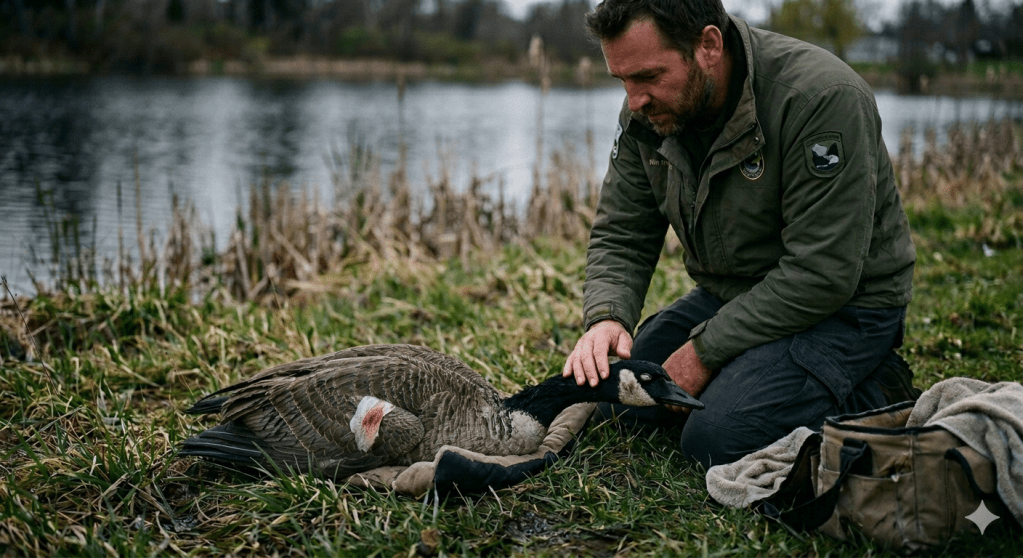
Broken Wings Make Broken Hearts

animals, Birds, canada goose, death, mortality, natural history, Natural Law, natural world, nature

For the past few seasons I’ve received a couple of unusual panhandlers. On the face of it, they were Canadian, though I heard them speak neither French nor English. They just kind of sat silently, patiently on cold water, fixing me stares through expectant eyes.

What began as a flying visit soon became a daily occurrence. Those expectant eyes soon started forming words of their own, like : ‘We’re peckish, so feed the beak’. And so i would dutifully open the swan hatch and break little bits of the baker’s dozen, hand-nourishing them with all the love and affection that only a mother could muster. The male – i knew he was a male because of the longer neck and the tendency to forsake his own hunger for the increased dietary needs of his pregnant missus – he was something to admire. He was selfless yet would keep her in line with a peck to the nape when her avarice got the better of her. With balletic charm she would round him and then leap up and snatch, warily, at the tasty morsels pinched between my fingers. His was no desperate lunge. He would take from my hand with a kind of gentle insouciance. Soon they grew bold and I, in turn, grew so fond of them that as he would take from my hand, with the other I would pat the feathers on his perfectly little anserine head. This interaction with wildlife I thought would never end, so much so that when they had their brood of goslings I imagined they would make me honorary godfather.

But nothing living lasts. Tragedy comes to remind us of that.

Last Friday I came upon a scene so distressing I’m still mulling over it days later. I saw a Canada goose flailing in the water right where my pair used to line up at the window to Scott’s wildlife soup kitchen. She was waterlogged and struggling to stay afloat. Sensing her end, the white swans soon encircled her. Initially I perceived them as a merciless mob who gained in strength from the weakness of others. Later i was to be informed that they do this because they are angels of death, white in their feathery shroud to deliver the condemned from protracted pain and suffering. Nature appears cruel but only in the pursuit of kindness.

She was in a terrible state, this Canada goose. Immediately recognising her as the feminine short-neck of my long-standing pair, her terrible suffering behoved me to act. I ran down the river bank as the current was carrying her away. But when I got too near she would flail with her one good side and, listing like a holed ship, paddle with all her might away from me and back into the waiting swans that loitered ready to euthanise her. Her movements made no sense. Waterlogged, limbs broken, her dignity was a thing of yesterday. Heavy now her plumage was a scrambled mess, she went under. I thought she was gone until, through one final death defiance, she surfaced and paddled away. Her mangled wing could have been an outrigger. She had no idea the extent of her wounds. This fact saddened me more.

I called the swan rescue society. England has its faults, but lack of compassion for animals is not one of them. A woman wasted no time in coming out to assist. With her she carried a hook and a net. After what seemed an eternity of trying to capture the bird, i scooped up the poor thing. She was cold, drenched and her wing horribly broken at the clavicle. We agreed that this goose had probable flown into a lorry in the fading light of evening. I spoke of my long acquaintance with these pair of Canada geese. To the rescuer I relayed my fears that this poor animal’s devoted partner had also flown into the trailer of the lorry and was right now lying dead in a ditch. She agreed.

Carrying the injured goose to the woman’s car to be taken away to a vet and put to sleep, the goose did not struggle or protest. Instead a great calm came over her, almost as if she has resigned herself to her impending death. Swaddling her in warm covers, I placed her in the boot of the car. Her neck was limp and outstretched. With the bottomless love I have for all God’s creatures, I stroked the wet feathers on her head as those black eyes gazed up at me. In a way she was saying thanks. Tears began to fill me eyes. I did not know why I shed tears for this wild animal. I could not gauge the reason why i felt immeasurable pity and loss that what was only the day before one half of a beautiful pair who went everywhere together in all seasons, even winter with hoary frost on their backs. In that very moment I felt such love for a wild animal. I felt loss. I mourned her life partner. And I believe she too, in her own way, felt not only the pain of terrible injury but also the pain of loss. Canada geese don’t betray emotions on their faces, so I’ll never truly know if in those eyes lay the look of disorientation that engulfs us when we know our time has come, or whether these were the eyes of acceptance and quiet relief.

We leave this world not as we found it. Question is: do we find it again to leave it on different terms, this time knowing not to collide with that lorry? That in the life of an animal the tragedy of history is never repeated as farce?
It’s (at) the End of the World as We Know it & I Feel Fine

adventure, chile, South America, Travel, Travel Photography, travelogue, Valparaiso
img_3728

Exaggeration. It’s nowhere near the end of the world; it’s not even near the world of the end. Nor is it at the end of Chile. Far from it. For that you’ve got to motor another 2000km south to Punta Arenas. But you get the idea, and if you remember a certain REM classic from the 80s, you’ll get the cultural reference, too. One fact in the title is incontrovertible: I did feel fine. Chile left me feeling as fine as I’ve felt for a while. Moreover, when the actual end of the world is unravelling half a world away in the Near East, Chile’s Pacific coast might well be the other end of the world spared the end. That enhances its attractiveness all the more.

Way down south lies a land of immense variety. A land that the relatively few who visit will not readily forget. Rigid like a backbone that runs down the southern cone of South America, Chile is tierra blessed by nature and by virtue of the 40 lines of latitude it straddles on the great southern highway reaching from the subtropics to the subantarctic. 40 degrees of latitude! As far as parallels go, that’s unparalleled, anywhere.

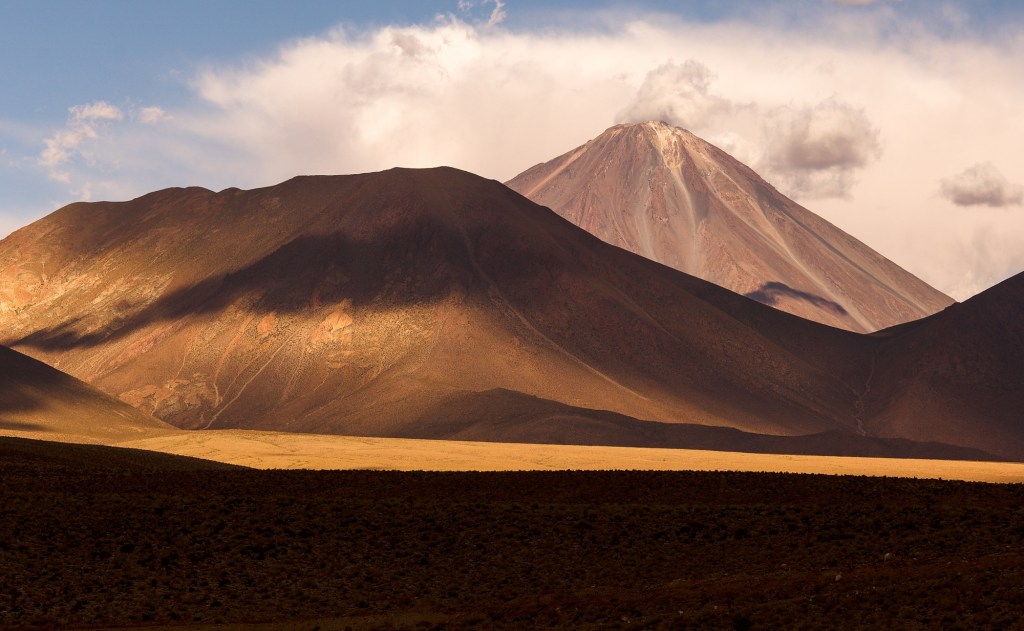
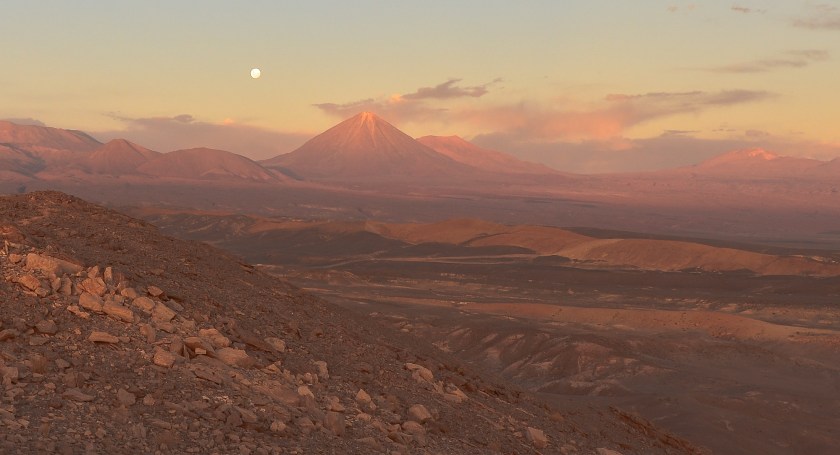
If i may stoop to condescend for a moment, with that irritating air of a geography teacher who always fancied himself as a geophysical mystic, the only true frontiers are natural: rivers, ocean, mountains, deserts, and so on. All else is political and therefore abstract. Chile is pinched between Earth’s longest mountain range above sea level and its deepest blue wilderness below. The altitude range within the space of 150km is about 40,000ft. With the exception of islands, Chile is the embodiment of a sovereign nation as nature intended. To its north is the Atacama, the world’s highest desert, recording some of the driest non-polar conditions on Earth; to its south a subpolar peninsula recording some of the strongest winds on Earth. So unusually-shaped within its borders, Chile is rather unlike anything else out there. Only its Andean neighbour, Argentina, comes close. Chile is a beautiful ecological layer cake. As mentioned, northern Chile, on the altiplano, is a high altitude, volcanic desert of spectacular beauty and otherworldly mystique. NASA use it as a Martian lab. Beneath that is a Mediterranean belt, where vines are grown, climate is optimal, and where most Chileans choose to live. Beneath that lies the cool temperate zone. This region is verdant like Scotland or the Pacific Northwest. This pristine region is studded with inlets and ring-fenced by national parks. Its coastline is so jagged it’s positively fractal.

licancabur16-1

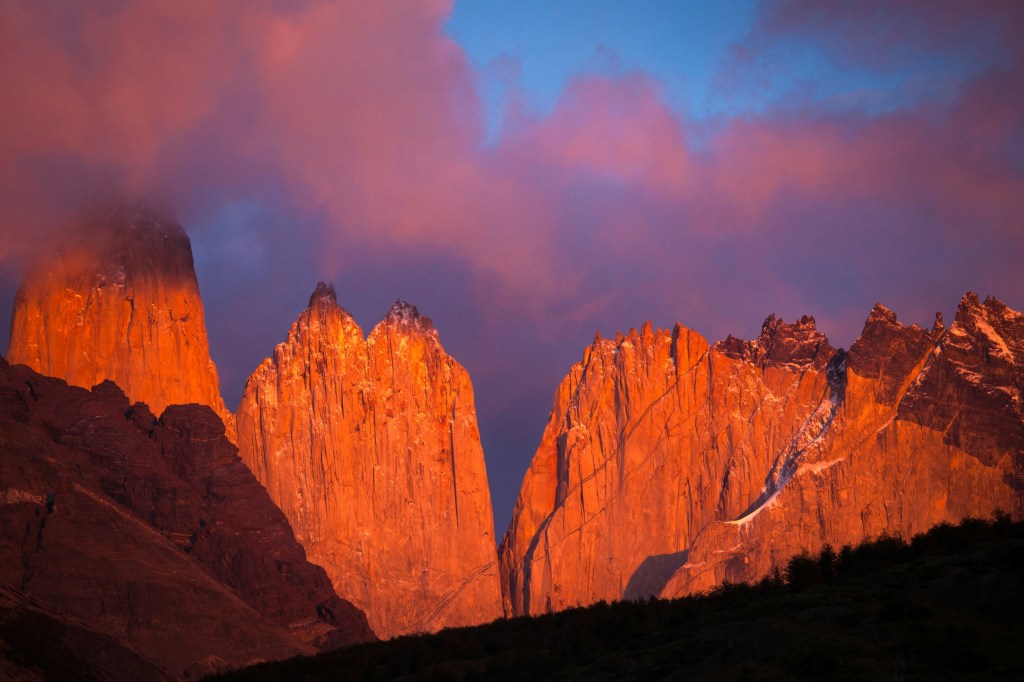
Beneath that you’re entering true Patagonia: a subpolar zone dotted with glaciers, guanaco, and granite fingers pointing up to their creator. Torres Del Paine is the most celebrated of these granite peaks. Beyond this storybook wilderness we come to the nub of the habitable world: the Chilean Antarctic and the Straits of Magellan. Beyond this point, history attests to where fools have rushed in where angels have feared to tread. Not mountains and ocean. Rather mountains of ocean.

Geography class over. Psychotherapy Class Underway.

Valparaiso – San Francisco of the South

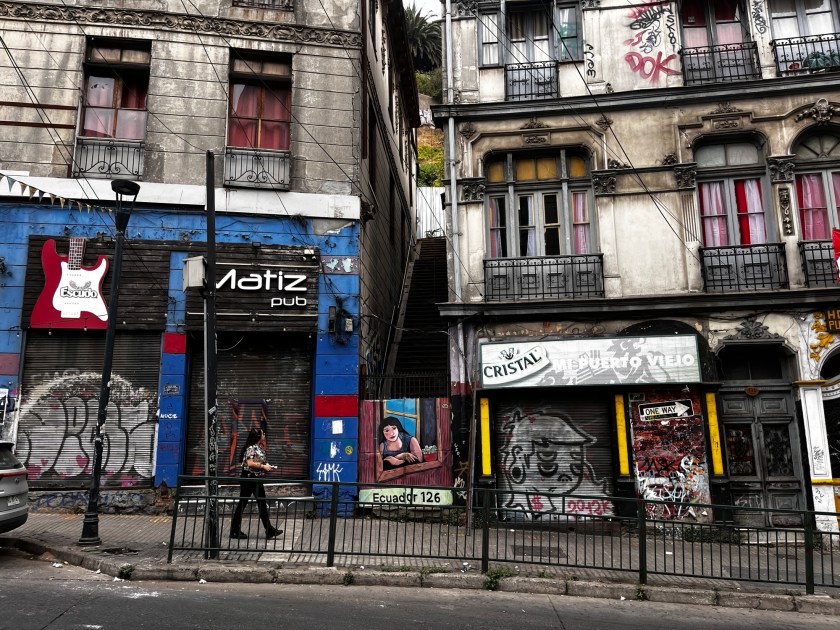
How do you cross a country three times the size of Great Britain in a single day? Well, you go to Chile is what you do. From Santiago’s Pajaritos (‘little birds’ – what a name for a bus station where pickpocketing is rife) it was an hour and an half to Valparaiso, the erstwhile ‘Jewel of the Pacific’. These days this coastal city of a quarter of a mill is not so much of a jewel, but more like a frayed patchwork quilt. But nonetheless, Valparaiso was immortalised by Sting in an eponymously-titled song from his 1996 album, Mercury Falling. Since I heard that song the year it was released when, coincidentally, I was on the other flank of the Andes in Argentina, I think I had harboured a longing to see this nineteenth century pride of the Pacific for myself. I knew of its dashing, federation-style, clapboard houses. I had seen images of it as an artist’s messy palette, all splashed in mixed hues of gouache across a Kraken’s bite mark in the coast where deep ocean becomes a narrow continental shelf, then suddenly and dramatically breaking the surface as South America in the form of a magnificent natural harbour.

img_3732

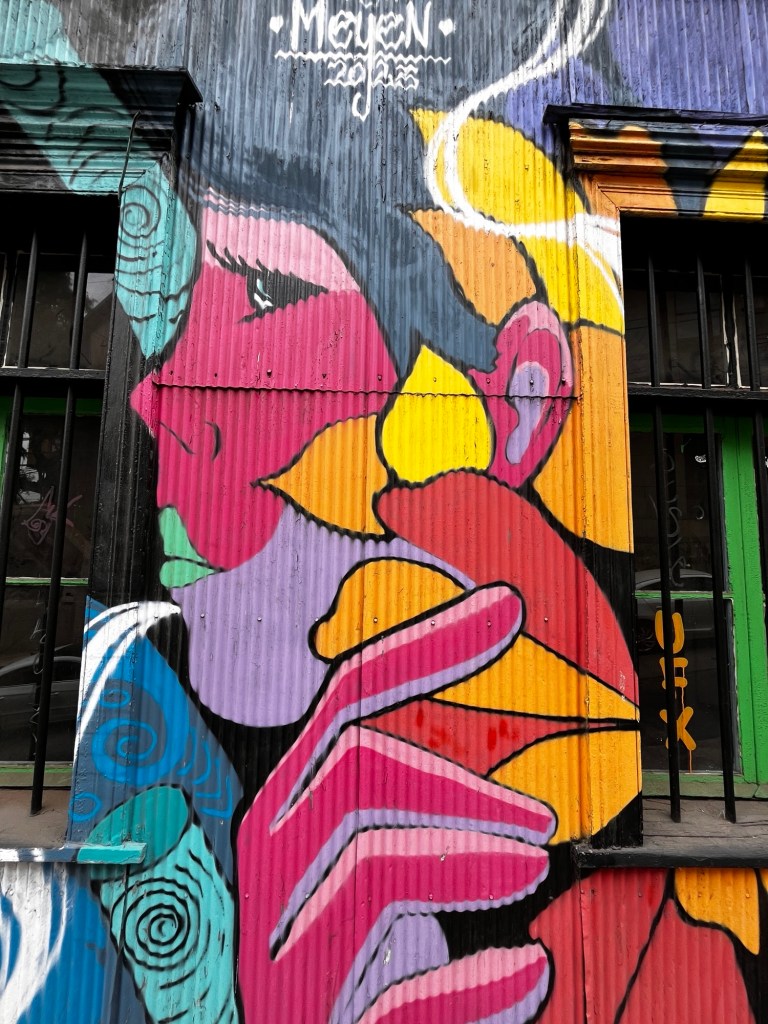
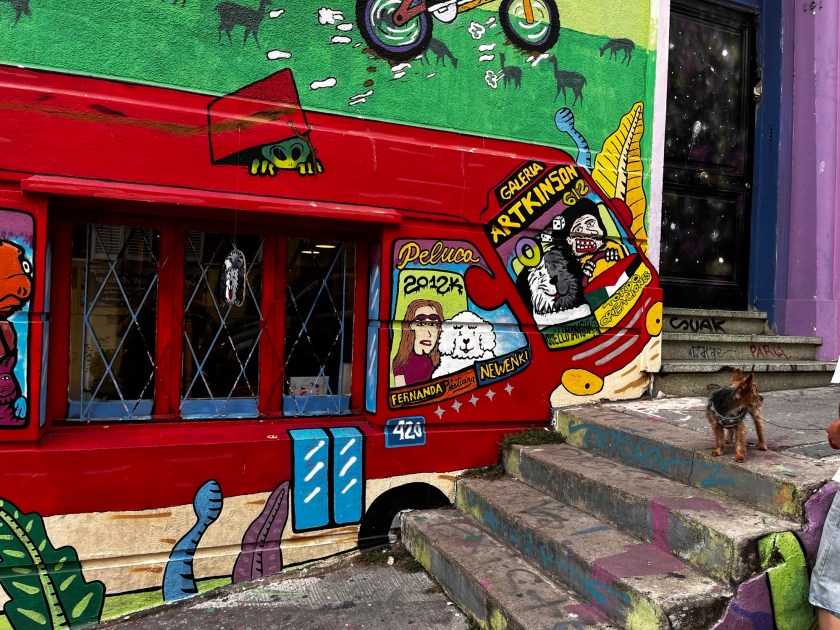
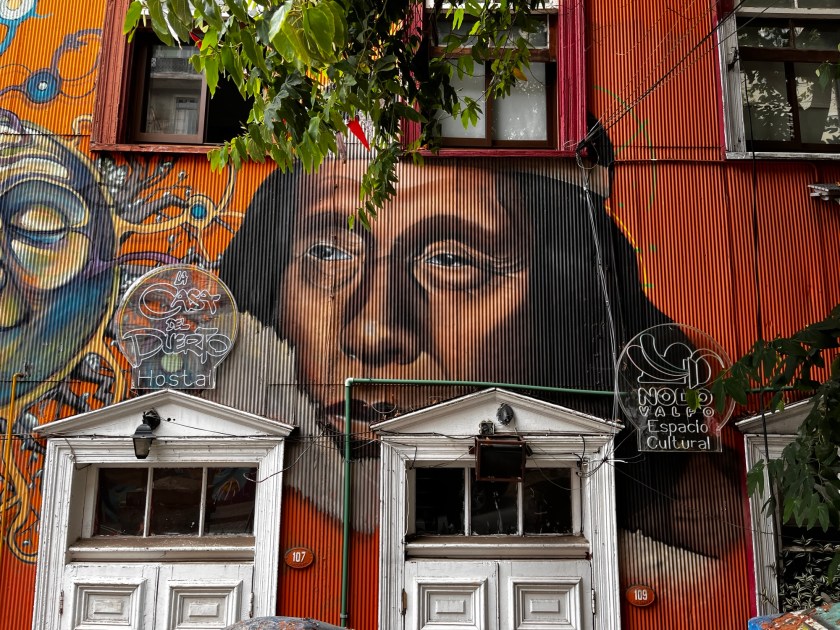
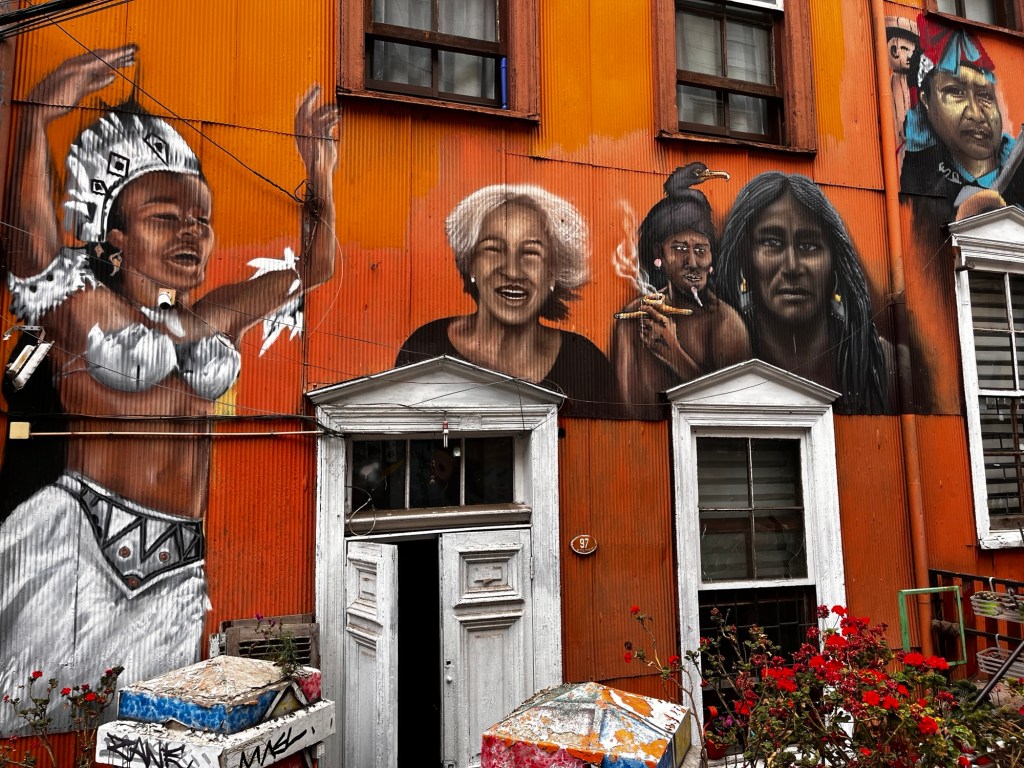
I knew of its reputation as an outpost of bohemian art. I knew a little of its rich history, its links to Victorian Britain. Though it was what i didn’t know that outshone what I knew. This in itself is the essence of discovery. For instance, I had not a clue how shabby Valparaiso was, how far she had fallen into disrepair. My legs were shocked at how steep her hills were; how every chipped and tattered surface now doubled as a work of art writ large; and, finally, how shady it was to walk her threaded streets after dark. This town struck me immediately as San Francisco’s doppelganger. The bay minus the tech giants. Full of dreamers, freaks, addicts, and creative types. A city falling off its elegant hinges, overwritten by the hand of youthful self-expression, I quickly realised there’s probably little else like it, never mind in Chile, or even Latin America, but across the entire world. Except for San Francisco, that is. And maybe Seattle. And Vancouver. Why don’t we throw in Vladivostok into the Pacific coastal family, not that i’ve been to the Russian Far east.

With vigour i set off out into the night. Pacific sunset falling down walls that told a story of decay and rebirth. This civic decrepitude you see across much of Latin America – from old British railway stations and Baroque colonial style in Sâo Paulo and Rio, to the flaky shutters and crumbling facades of San Telmo in Buenos Aires. But this decay does not mean death in Latin America. The blood of Latin creativity transfuses into the old, ailing body, rather like Count Dracula on his nightly prowls.

The day was handing over to the night shift when i got there. Scrawled metal shutters were coming down while the warm glow of micro pub lanterns were coming online. People sat on street tables quaffing the nation’s favourite tipple, which, by the way, is not wine. Chile has artisanal beers aplenty, many of which hail from the far south. It does red beers, ales, porters, lagers and pilsners, and all to a standard that even the Brits, Belgians and Germans might approve of. Yes, it’s official: Chileans fucking love beer, about as much as they love marijuana. In fact, they often combine them for a night to remember that gradually descends into a night forgotten. I sat outside at one such bar. The waiters were impeccable in their service in a way that puts my people to shame. They even spoke English, not that I wanted them to. But seeing that Chilean Spanish is a dialect unto itself, hearing English turned out to be a welcome tap on the eardrum.

On returning from el baño, the waiter warned me about leaving anything unsupervised, even four raw eggs, two bread rolls and a lump of cheese. Why, i asked. Because they’ll steal the clothes off your back in this town. It quickly became apparent that Valparaiso was the long-lost twin of San Francisco – a place where dreams come to die, a town where for every up and coming sort there down and out to match. When you think of South American cities you think of Old Portugal and Spain surrounded by cement. But not here. Here it’s Amityville meets neo-Baroque meets German half-timbering meets art nouveau meets grimy post-industrial meets the deep, blue yonder.

It’s sad really – seeing this once vital port of the South Pacific, for so long not just a refuelling station for naval and merchant shipping, but also an endpoint for Europeans seeking a new start – going downhill like a decrepit old dame rattling her jewels, wearing her tattered cha cha frock she kept from her heyday in the roaring Twenties. Yet, for all those flaked louvre shutters and all that graffiti scrawled across neo-baroque stonework, Valparaiso has reinvented itself in ways most other cities would have neither the chutzpah nor the imagination to do.

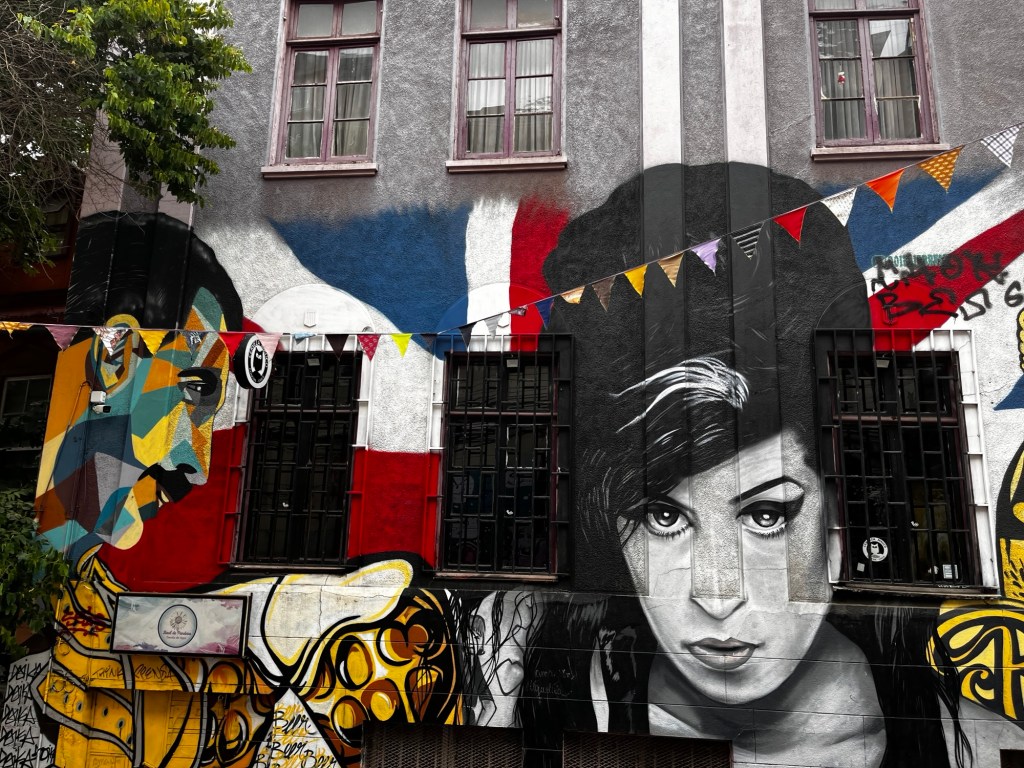
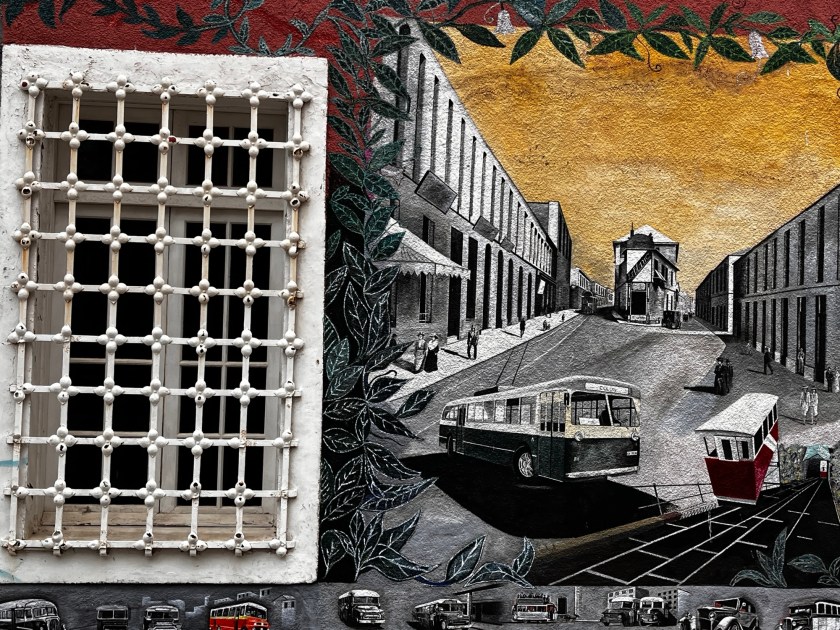
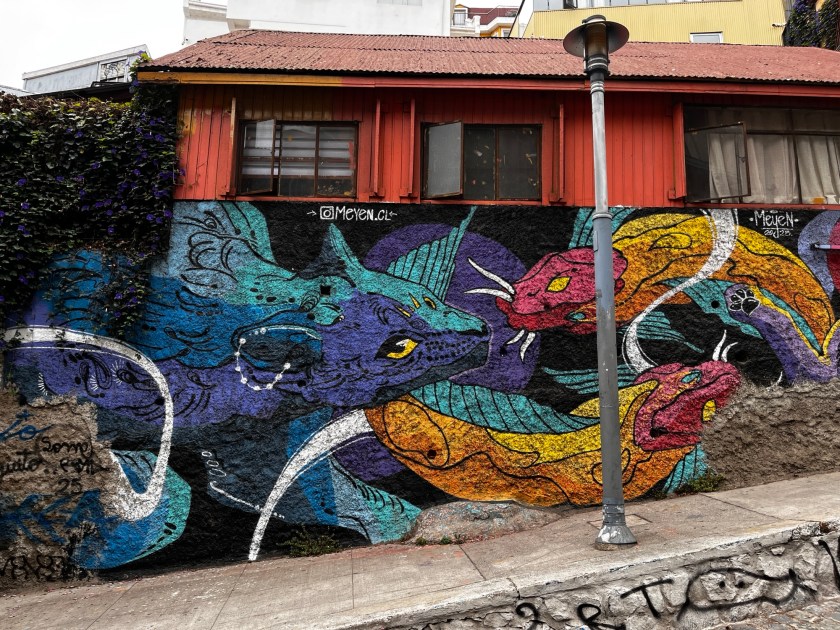
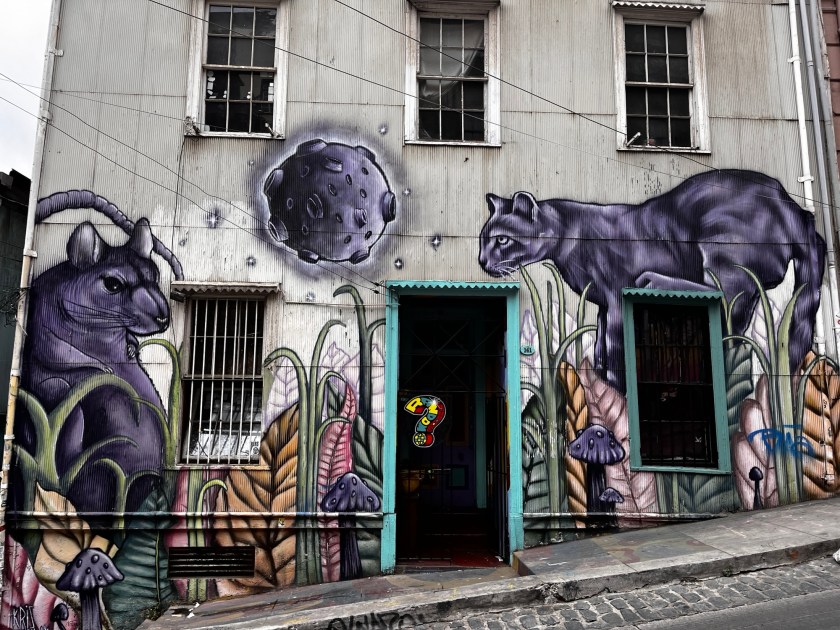
Why bother scrubbing the walls when you can bedaub them with a riot of colour which is the world itself if you can only move beyond the grey of the everyday? Valparaiso is colour writ large. It’s subversion in the way Paris’ Pompidou Centre is subversive. Murals extend out root and branch as if their host building existed purely for the moment the artist eyed their surface relief; just like the exoskeleton that wraps France’s greatest museum to modern art.

Valparaiso might well be the end of the world’s greatest open-air art gallery, but I’m running out of platitudes for a city falling so far apart it’s falling back together as a mass mania of magic murals that lend themselves to what survives of a human race that is failing in so many other ways. I’m all out of words. Speechless, even. Let each picture speak a thousand of them.

Until Valparaiso I never knew how decay could be subverted in such spectacular ways.

This Be The Place

#Brazil, adventure, Brazil, mantiqueira, Säo Paulo, South America
img_3385

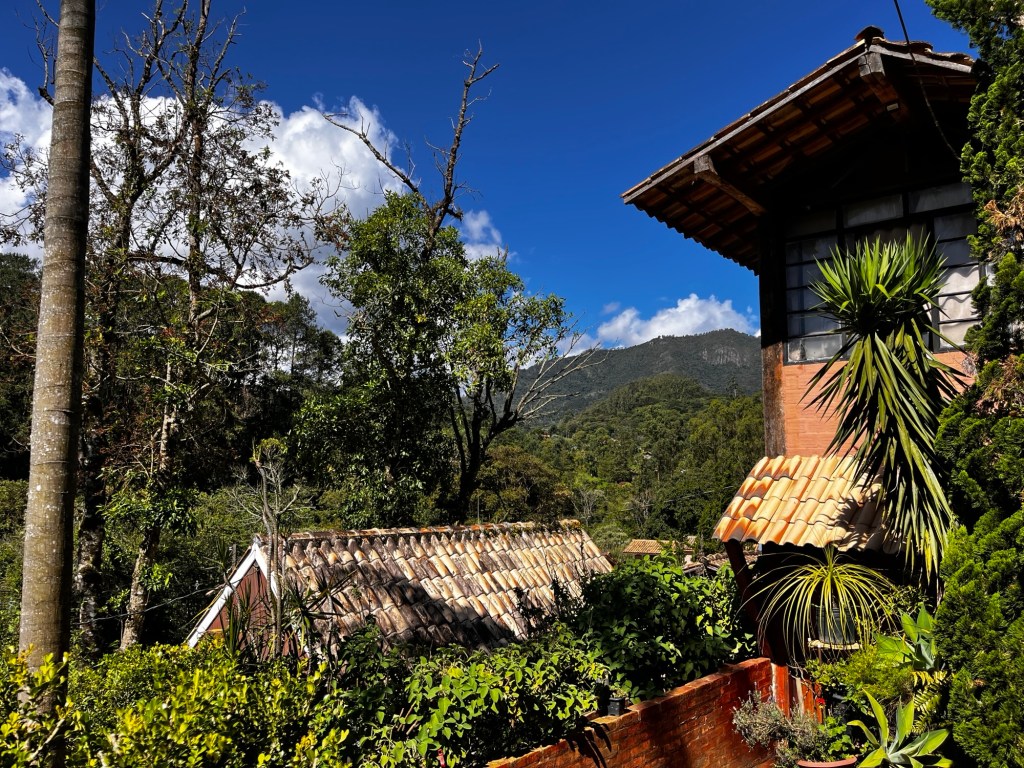
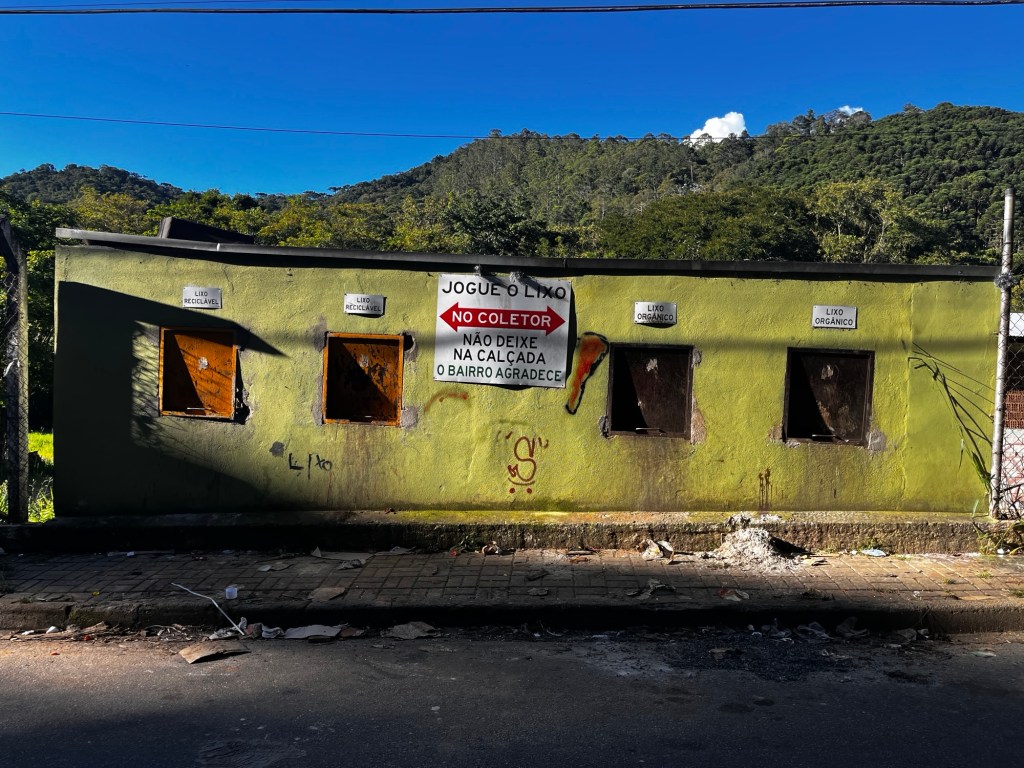
Be this the place? To write nonsense and fill the face,

With tropical wonders from inner space? Gondwana, I wanna know this place

Sixty million years ago. When these Mountains were fountains of youth.

When the lizards were long in the tooth. Tall stands of araucaria,

img_3372

Chomped by dinosaurs long dead. The thought of it

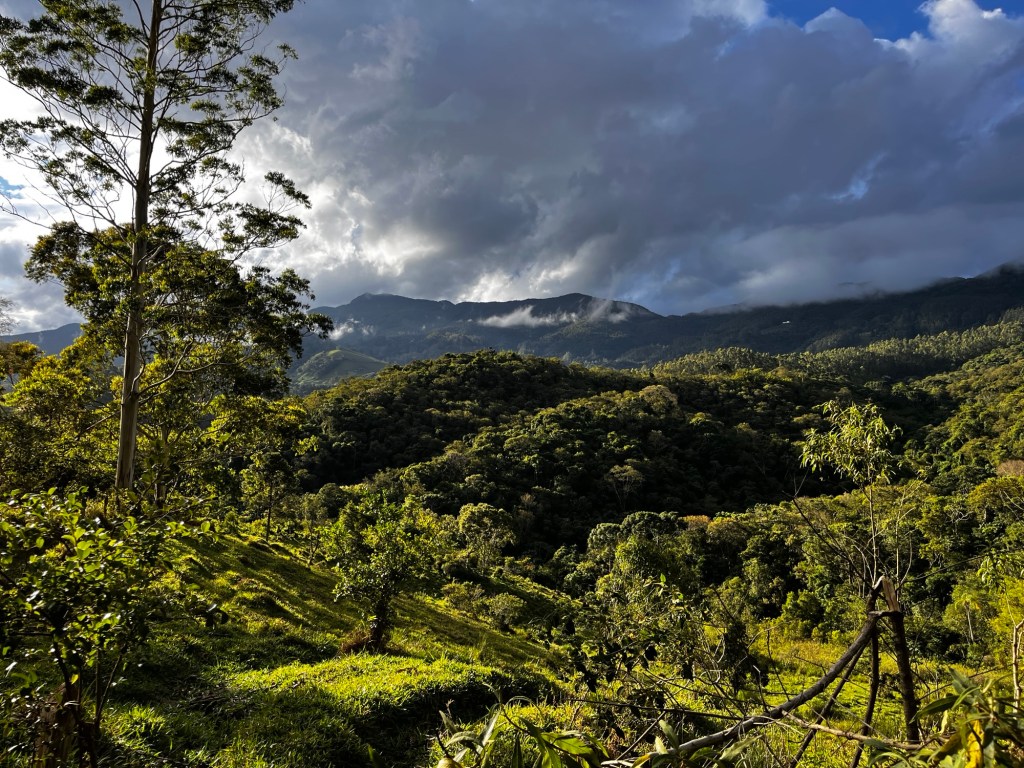
Circles my head. These Mantiqueira mountains, subtle as they are supreme.

Precambrian, basement rock. Holds me in some kind of dream.

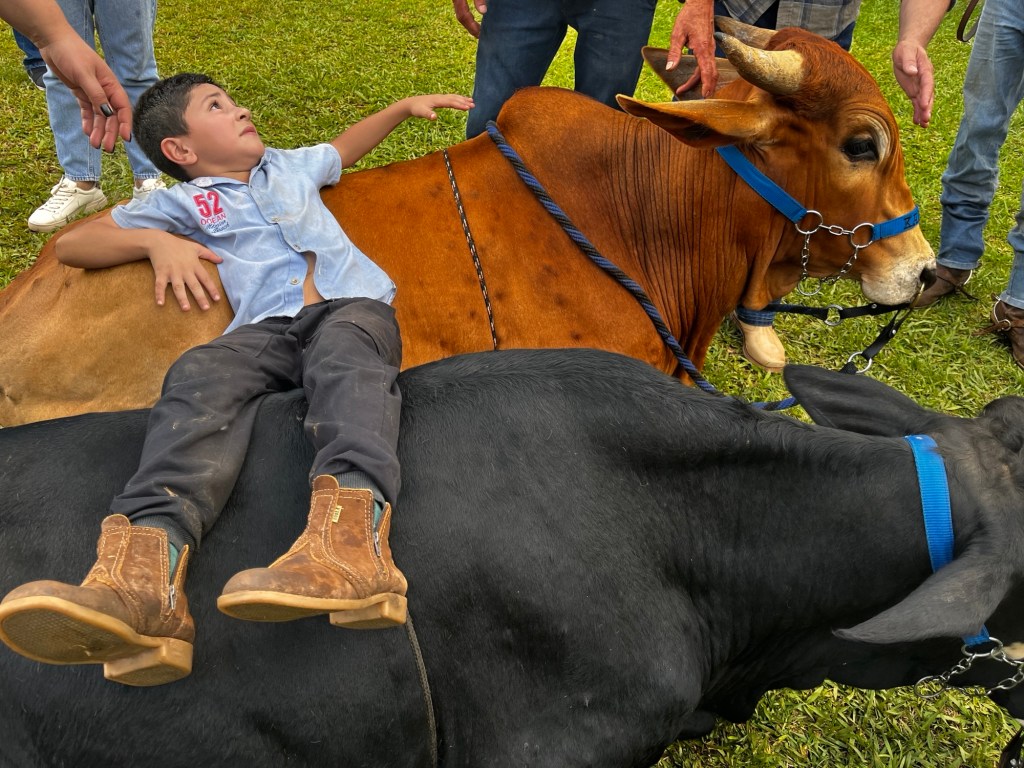
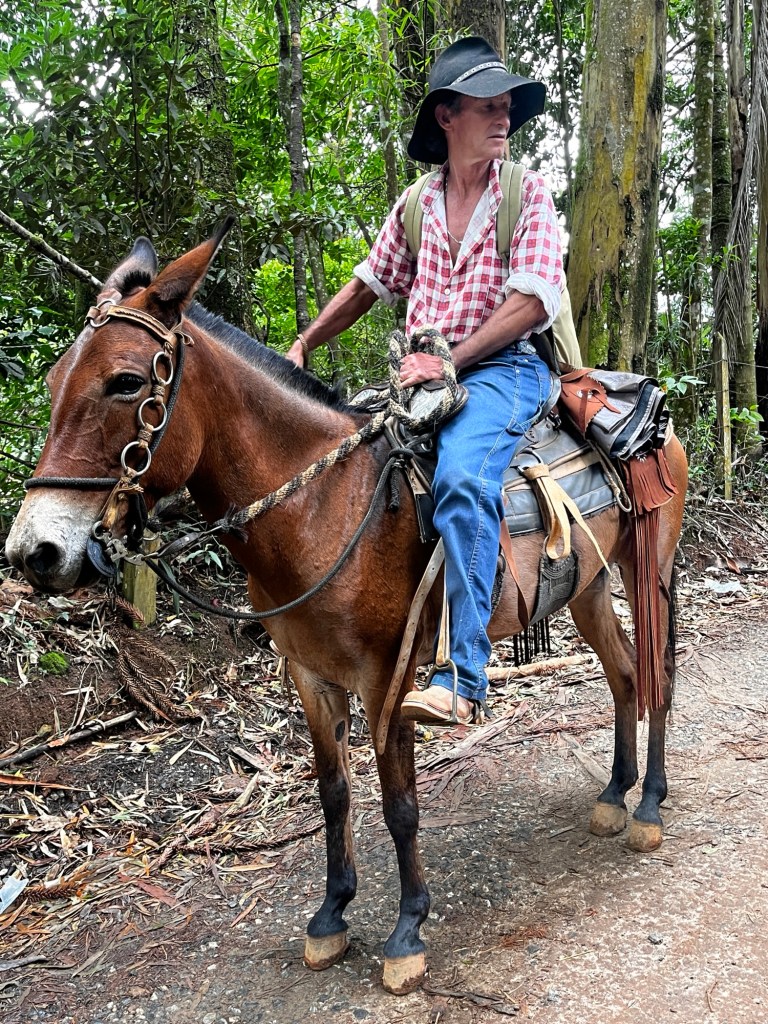
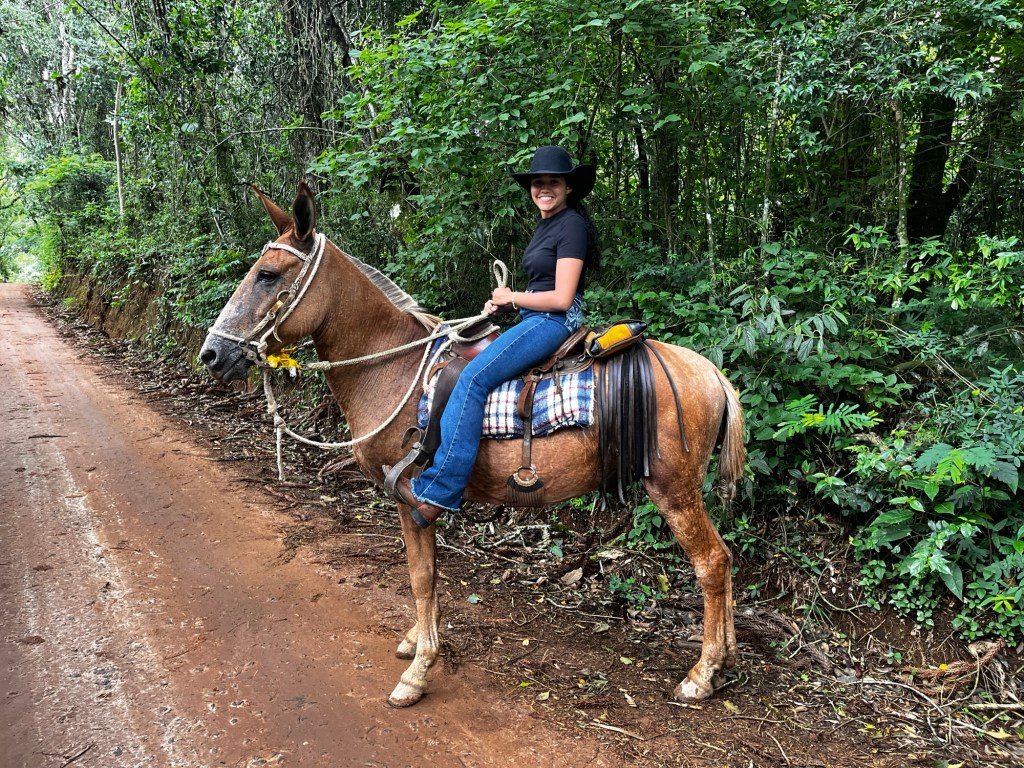
Vaqueros riding bareback on horned brahmins, with ease.

Like Shiva on Nandi speaking Portuguese.

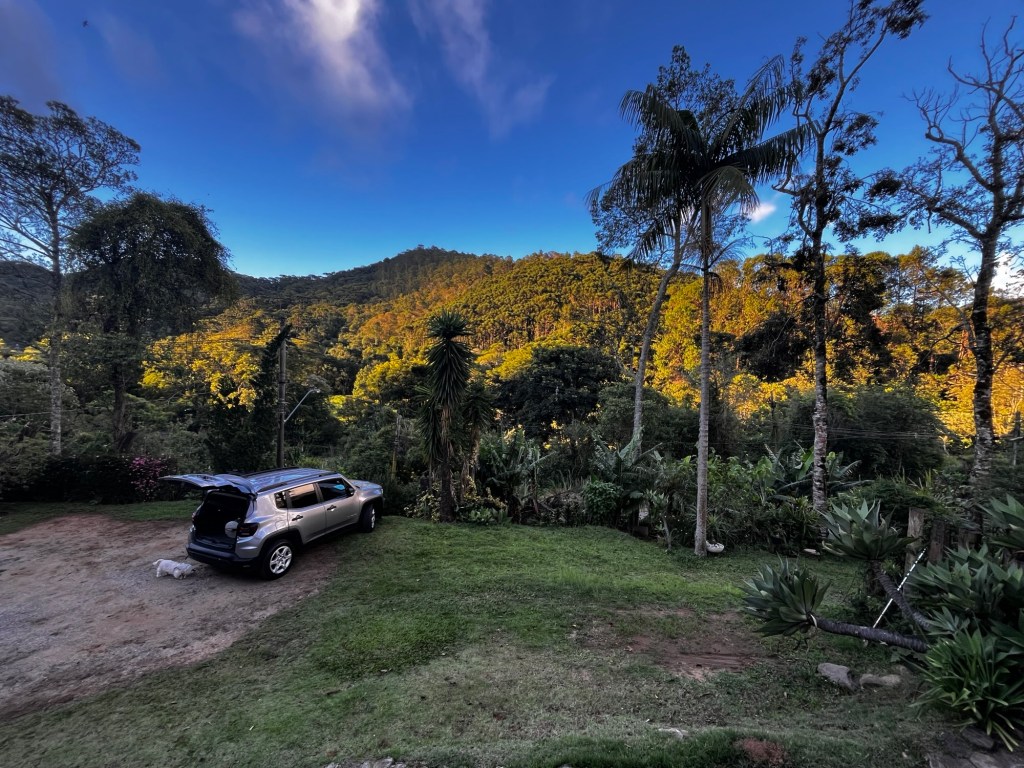
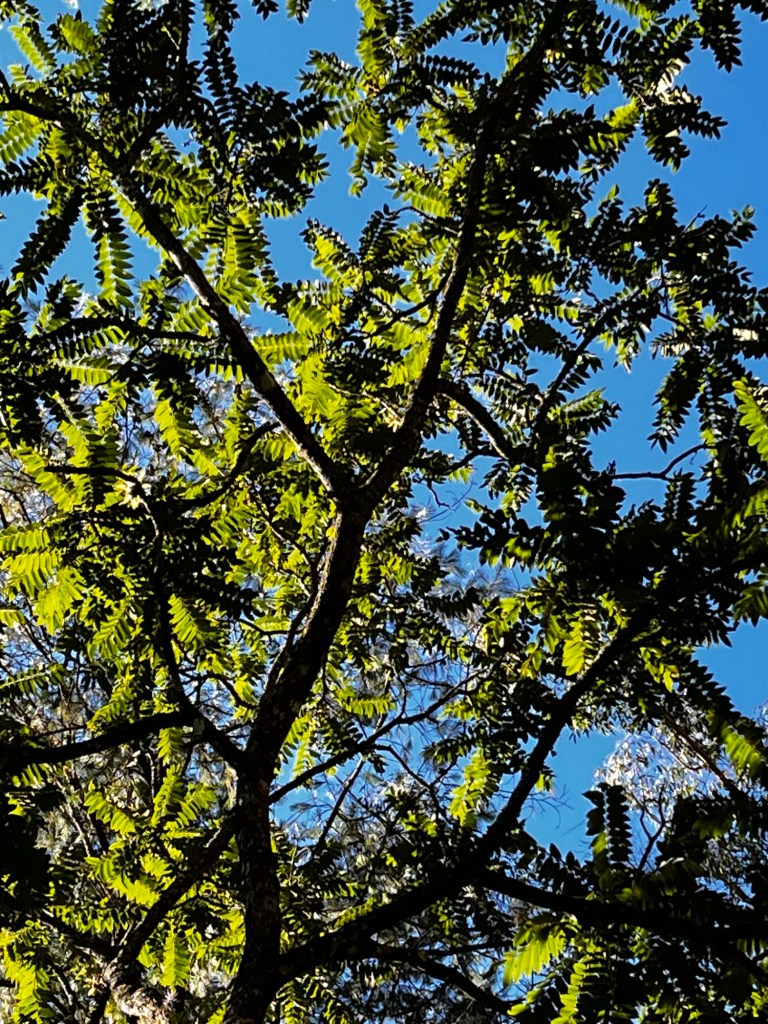
Dripping foliage, so nice. Birds borrowed from the garden of paradise.

I want to come back here in old age when these old ridges still breathe young.

And the light is zen. Falling in stripes of every shade of green among

overcrowded flanks. Avians, insects and plants teem while i give thanks

For every shape and form of creation, Nature’s glorious freak show,

Surging as one in rhythmic vibration. As it was sixty million years ago.

The view from my widescreen window

Is falling sunlight, where everything will grow.

Even at night. Little signs of humanity. Dotted red tiles amid the growth spree.

Cool rising above the burning plains, That’s what’s best. Cool breeze along the veins and up through the breast.

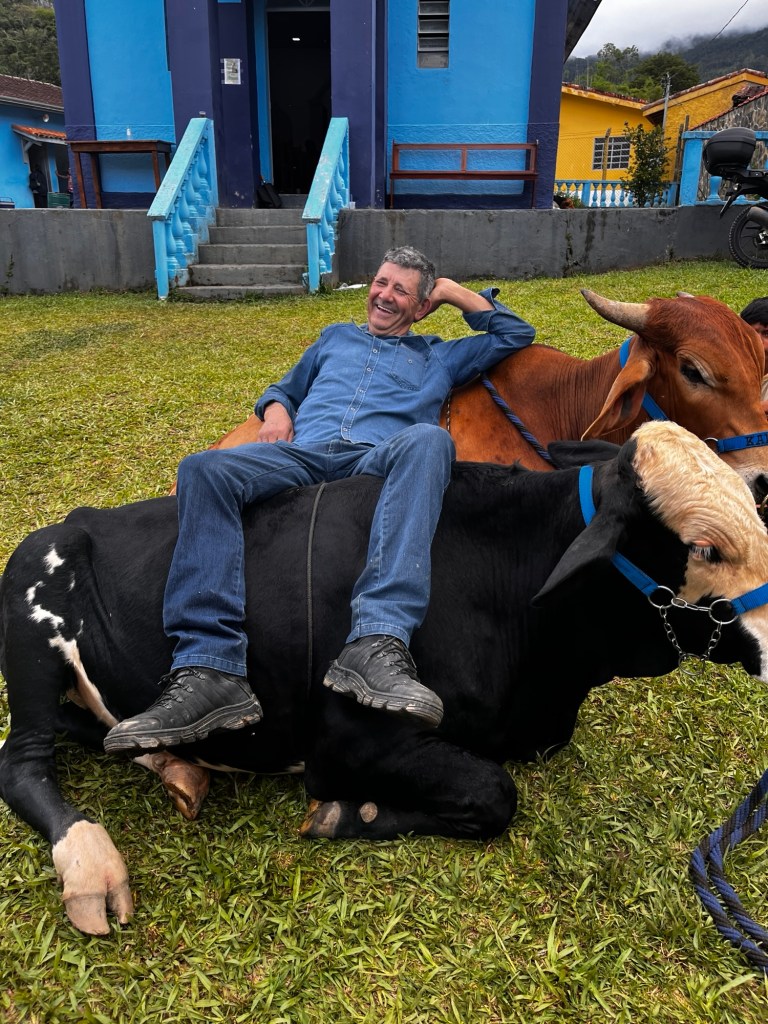
Mountain folk living in the now, clopping hooves, playing pool topless, chillin on a cow.

Mantiqueira. What can i say? You inspire without words

Each and every day. Cicadas chirring, palm fronds shh-shhing, the whistle chorus of birds.

And me, just being.