The Year is 2020, So Where is the Vision?

Britain, conservation, crisis, desert, developing world, development, earth, environment, ethics, EU, Fishing, forest, future, global polity, globalisation, history, human development, Libertarianism, Life, natural philosophy, natural world, nature, neglect, Ocean, People, Planet Earth, Political Culture, Politics, Poverty, revolution, Society, Socioeconomics, third world, thoughts, trees, Uncategorized

Humanity bumbling along, governing bodies staring longingly into their former selves à la Dorian Grey and his cloaked mirror, and so-called policies as ham-fisted as a fist full of, erm, ham. Yes, the list just rolls on and on in this the only year in history dedicated to a field of vision deemed as clear and perspicacious as you can get. Oh, the irony of it all! We might be languishing in the year of our landlord, 2020, but we as a race do not enjoy the accompanying 20/20 vision that makes a bleary-eyed rookie into a hawk-eyed fighter pilot.

Let’s start with the only thing that really matters, and no it’s not us. Dorian Grey’s older self would be disappointed to hear that admission. That thing I speak of is the world around us. Let’s face it, it’s the only world we’ll ever have and the only living one within about, let’s say for argument’s sake, ten light years, or 58 trillion 590 billion kilometres, if you’re claiming on mileage. Wilderness, as most of us are aware, is being co-opted for agronomy and industry to serve a human population that is beginning to resemble an infestation or worst still a bacterial culture gone rogue in a planet-sized petri dish. This is happening at a rate for which there is no excuse. We are eating ourselves out of house and home and the only ones not seeing that are those with their craw stuffed full of nature’s bounty, as well as unschooled ignoramuses, for which there are many even if the the doyens of political correctness admonish us for calling out all the provincial thinkers in our swelled ranks. We have known for much of my own lifetime about the concomitant risks in taming the wild places: what is lost cannot be recovered in a timeframe that humans understand. Every Tom, Dick and Harry, however hard of hearing, must know that extinction is forever. We’ve known the phrase slash and burn for decades and, encoded in it, all its barbaric implications. Even though the debate has taken on new and violent terms of reference, eco-vandalism is going on in spite of our knowledge of it and complicity in it. All the while it seems the more dire the prognostications, the more wanton our behaviour and the more debased our greed for the things that have kept the world hitherto in balance. I have lost track of the number of times I hear the term ‘sixth extinction’. Now if that were insufficient to jolt us into redefining the boundaries by which the human race exploits the natural world, i do not know therefore what is sufficient. The more the mainstream media reports on how we’re approaching a tipping point, a point of no return, the more the average family’s material needs appear to multiply. While global population ploughs upward to an 11-digit figure, our celebrity culture boasts of its procreative prowess by inviting the media to snapshot their opulent lives in rural Sussex with six children in tow. Why make the implicit link between many offspring and material success in the knowledge that this is a false correlation? I mean, throughout most of history large families have more often than not been synonymous with extreme poverty, and not opulence. A Prime Minister of Great Britain with six offspring (that we know of), chaired with the task of finding a common voice to bring down the human impact? Gimme a break. What kind of vision is that coming from the stuttering mouth of yet another high-flying free-market mercantilist libertarian who believes in the greatest markets for the greatest numbers?

While the correlation between modern industry and atmospheric-changing carbon emissions has been better made, we continue to miss the point. If you want to trace the problem back to its genesis, jump not onto the bandwagon of climate change. Look again, use that 20-20 vision and you’ll see that Attenborough has been whispering truth: it all comes back to global human population. It’s out of control and from it everything flows. Rampant human overpopulation is the taproot down which a pestilent tree of Man grows. Wild habitat is stolen to tend the needs of a burgeoning population (in Africa and Asia) who all aspire to live as postwar Americans have. Forest goes tree after tree, species after species. We know all this. We know that nothing hosts biodiversity better than a forest found 20 degrees either side of the equator. We know the secrets to finding cures for human ailments lies within their mind-blowing array of biota. We know that to have space to grow row after endless row of oil palm trees to produce better soap and all manner of packet food to feed ever-growing numbers of hungry mouths and to wash evermore grubby little faces, we first have to collapse an ecosystem perfectly evolved to provided a pyramidical shelter for every manner of creature, plant and fungus from here to kingdom come. We know that without canopy cover the thin, reedy soils of the tropics turn infertile, into dust under the blazing sun. So why do we, as a race, persist in laying the groundwork to seed our own miserable demise? Why clear-fell whole countries only to fatten cattle for their mass slaughter to give some Lazy Joe a nutrition-depleted, ready-made burger? Not content with turning the complex machinery of nature into a monocultural wasteland where even the public are forbidden to go, we’re even ramping up operations on livestock farms to expand the export market for meat into a China that’s seen the largest middle-class in history emerge within the past thirty years. Even their tastes are changing to embrace a completely cruel and unsustainable world. Bye bye Taoism. The only consolation we can draw is that 800 million Hindus refuse point blank to jump on the cattle train, not that Mother India is a shining beacon of environmental custodianship.

Living in 2020 without the corresponding vision is not totally unlike the proverbial overflowing bucket of liquified manure that spills out to all quarters. It’s not just the disappearance of tropical and sub-tropical forest, nor the disappearance of broadleaf temperate forest that we in Europe have mourned for a thousand years. It’s everything, everywhere. The human cancer has gone metastatic. Desert is growing everywhere between latitude 20 and 30 north and south, yet we turn a blind eye for most of us do not live in a desert, nor have so much as stepped in one. Grasslands have already been co-opted, but that’s old news now since Buffalo Bill Hickok shot six million bison on the Great Plains as a way of spitefully starving the Sioux. Ice is going, yet while we mourn its melting we overlook that if it were advancing – as it has dozens of times in the past two million years – we wouldn’t find it so brilliant white or cute. As for the oceans, well, not only have we gone from trawler to factory ship as if to underscore the intensification of the end for all who partake in the feast of misery, we continue to sully the waters around our coasts and then some more. We’ve created a floating mat of congealed plastics that swirl around in the North Pacific and is reckoned to be the size of big ol’ Texas. A remarkable feat of human ingenuity if you ask me. Only outdone by the crass stupidity of knowing that fish stocks (even the term ‘stocks’ implies monetary value and property for humans) are near exhausted, so how about we build trawlers the size of small passenger liners with hooked lines trailing off the stern, some long enough to reach the moon and back, which was in all fairness the last decent thing we ever did to get one over on nature. Scrape the seabed for a catch that justifies the distances the fleets (mainly Chinese) will go in order to bring home the ocean’s bacon. They know the damage wrought by this crude method, but do they care? They must know that hardwired into their rapacious business model is the reality that what they’re doing is finite and temporary and smacks of the kind of short-term strategic planning that is no planning at all. Rather, the dragnet of modern fishing fleets represents another instance of short-sightedness that can never equate to the far, crystal clear vision that 20-20 provides.

A discussion about the absence of vision in the year where the two words best eclipse, cannot be foreclosed without mention of political will and leadership. It does not require radical insight to see that leadership around the world is characterized by a near collapse in the manner of vision needed to see the living Earth through the 21st century without any more bodily desecration than is strictly needed to lead a low-impact life. Leaders are followers. Whom they follow is up for argument, but you can bet that the pursuit of profit and unenlightened self-interest lies right behind them. Britain and the U.S. are grotesque examples of nations who have known visionary leadership in their illustrious pasts and who have now descended into a near-existential breakdown because the current crop of leaders are singularly lacking in the kind of millennial vision that sees a hundred years ahead, and not the next hundred days, fearing the imminence of their own destruction, which is the lot of the modern politician. Where are the leaders that the world in crisis demands? Where are the new wave of articulate young voices? Where is the unity of purpose in it all? Of course, worshipping the making of capital and looking to those early 21st century capitalists as pedigree for the type of leadership our damaged world needs is going to end badly. The credo of unlimited economic growth built upon the conquest of nature (as espoused by Adam Smith back in 1776) is a dangerous one, setting a course for yet more planetary destruction by a species whose boots have gotten too big for their feet, whose eyes have grown too large and covetous for their sockets, but whose vision has dimmed. Contrary to the saucer-sized eyes they think is needed for a bigger, bolder vision, they’re missing the whole point: its smaller, less covetous eyes we need, but eyes that penetrate the darkness we currently find ourselves lost in.
In Praise of Persia

Arabia, Bedouin, Caliphate, civilisation, desert, Empire, history, Iran, Islam, Middle East, Muslim, Persia, philosophy, Political Culture, Religion, thoughts, Travel, Tribes

I watched a riveting BBC4 documentary last night called ‘The Art of Persia’. Contained within that visual treasure trove were cultural jewels of incalculable worth. The West might look on with a mixture of bemusement and disdain at the black chadors, the mass weepings, the ceremonial burnings of Imperialist flags of red, white and blue, and the tales of woe spun by Persia’s disgruntled diaspora everywhere from Tehr-Angeles to London, but that’s not the half of it. The country known since 1935 as Iran is arguably as great a continuous civilisation as there has even been, anywhere. But what makes Iran so interesting is how its personality traits reveal a duality deep in its cultural psyche.

To the Persians, who live either in wealthy North Tehran or else abroad, the name Iran is anathema to them because of its proximity to all that is humiliating to a once insuperable civilisation. To them Iran equals the puppet Shah. Iran equals fanaticism. Iran equals paranoid pride. Iran equals vice and virtue and blasphemy and stoning and vicious assaults on the freedom to think out loud. Iran equals secret shindigs with homemade grog. Iran equals ousted premiers. Iran equals the Ayatollahs. Iran equals political prisoners. Iran equals implacable hostility to nearly everyone except fellow villains, Russia and Syria. The name Persia, on the other hand, conjures nothing but antiquarian admirers. The Iran we know today, in stark contrast, has nothing but perceived enemies. On top of this litany of woes, for Persians the name Iran strikes fear into the heart because it equals Islam in its most austere form of submission and at its most fervent. To those Persians who see themselves as secular patriots – defenders of 4,000 years of unique culture, rather than defenders of a faith imported from impoverished desert lands – Iran in its present state will eventually be consumed by the larger meaning of Persia. For everyone, including Orientalists like me, Persia denotes the literary romance of Sheherezade in the 1001 Persian Nights and the Shahnameh of Ferdowsi. Persia is the Rubaiyat of Omar Khayyam; of intoxicating poetry recited in a garden of red roses, crocuses and pomegranate trees; of revelling in the NOW instead of waiting on God, as is the wont of modern Islam. Persia is the Sufi mysticism of Rumi as opposed to the stripped-down demystification of latter-day political Shi’ism.

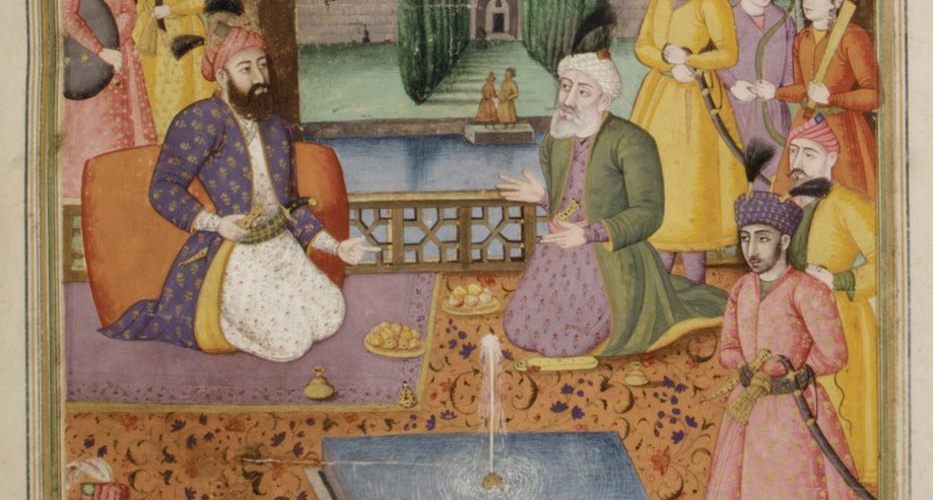
To the Iranians, who live everywhere else in Iran’s hinterland, Persia is something to be taken, if not lightly, then with a degree of scepticism. Persia equals complicity with the predatory West. Persia equals lingering resentment of being conquered by an inferior culture who brought a book – the Qur’an – which changed everything. Persia equals ambivalence, at best, toward the idea of Islamic piety. Persia equals antiquity, an age that’s gone forever. Persia equals wine and hedonism from the quills of drunken poets who saw things very differently from the Mullahs and the Ayatollahs. Persia equals Zoroastrianism and the fire temples of old. Contrarily, Iran equals Shi’a, a tough, oppressed, self-flagellating branch of Islam. Persia equals all that is effete: of brocades and silken rugs; of grand viziers in courtly costume; of silver filigree and lapiz lazuli glaze on priceless urns; and, of artistic depictions too close to iconoclastic for comfort. In short, for Iranians, nostalgia for old Persia is the antithesis of political Islam. It is a weak underbelly that allows outsiders to enter the forbidden gates on the pretext of weakening the present land by exalting its past.

The BBC documentary highlighted this duality as such. Uncovering the many layers of Persian culture we learn that when it comes to a civilisation that stretches back to the Elamites at Susa 4,500 years ago, an empire that during the reign of the Achaemenids under Cyrus stretched from Greece to Afghanistan, a simple either/or will not do. When something is that old and that far-reaching, dichotomies are rarely that simple. The BBC4 series taught us that even the political Islam of the 21st century Republic can not wash away that feeling of distinction held by so many Iranians. Their exceptionalism chimes with similar exceptionalism experienced by Brexit Britain and the Trumpite United States. It is this analogue with great Western powers that plunges modern Iran into a state of competitive hostility with them. It is the similarities therefore, and not the differences, that explain the fraught relations between the anglo-American West and the new Persia.

Eternally unknowable and all-mighty for being so is what makes Iran so much like the God of Islam it has worshipped for nearly 1,400 years. A bruised civilisation in such a battle for true identity on the shifting game board of power politics is what makes Iran the Persia it truly is to this day, and likewise what makes Persia the true Iran it has become. Its place at the head of the table of nation states has become problematic, none more so than within Iran itself. This was the first civilisation to claim the one true god, Ahura Mazda. Its official state religion of Zoroastrianism was as long-established as Persia itself. But all changed so suddenly. Zoroaster’s fires were extinguished by the Arab Conquest of 637AD. In many respects, an inferior culture usurped one whose deeds it could never match. A tribe tamed a civilisation, and I don’t think Iran has ever come to grips with that. Alexander sacked Persepolis in 330BC, but he razed it to the ground supposedly in the name of Hellenic Civilisation. The Arabs who swept into Sassanid Persia on the command of the Caliph Umar just four years after the death of the prophet Muhammed were a tribe of tribes with all the ostentatiousness of a Glastonbury festival-goer. They came unadorned and, other than tax and sovereignty, demanded little else. These bedouin Arabs were no Islamic State. Their relative tolerance was their enduring power. As the documentary states, Islam was adopted in Persia at a rate that Arabisation never ever was. The Persians took the commandments of Muhammed readily enough, though it was the language and cultural traits of the invaders from the Arabian Peninsula that had little staying power in the eyes of a people who believed, rightly of wrongly, that they had nothing to learn (other than the revelations in the Qur’an) from these usurpers in their raggedy clothing.

I taught a bunch of Iranians about ten years ago, all of whom had come to the West not so much for a taste of cultivated learning, which of course they could have delved into at home. They came, rather, to throw off their chadors and to relive the secular freedoms their parents had enjoyed under the Pahlavi dynasty. They came to change Iran not from within, which was too dangerous, but from without. Away from the Iran of the Basij and the Revolutionary Guard they could embrace the Persian in themselves, throwing off the shackles of the Iranian who boarded the aircraft in Tehran. In our ignorance, some locals asked if, being Muslim and existing in the heart of the Middle East, they were Arabs. The Iranian reaction was prompt and dismissive to say the least. You could actually see them wince at the mere suggestion. In my classroom there they sat together, far from the ethnic Arabs who were seated at the other end of the room. They looked and spoke different. They carried themselves differently, for unlike the Arabs in the room, the Persians had a dual identity: the one Iran foisted upon them at birth, and the Ferdowsi-reading Persian residing permanently in their heart. 


Too Good To Be True

Britain, British Isles, conservation, Coronavirus, counter-culture, Covid-19, death, developing world, England, environment, ethics, future, Great Britain, human development, kindness, Liberalism, Libertarianism, Life, Lifestyle, natural philosophy, natural world, pandemic, People, Political Culture, Politics, Poverty, revolution, Society, Socioeconomics, thoughts

That ol’ devil called greed is back again. Many feared the worst while others dreamed of a new, kinder dawn. But oh no no, sir! No sooner is full lockdown eased, untimely death is no longer news. And why? Because that she-devil, the economy, is back. No sooner has its mouth been welded shut than its teeth are glistening at the prospect of new blood.

Turn on the news and talk of rekindling a lost love for nature, or for that matter stopping to reflect on human suffering and the slow torture of social isolation, has been superseded by dire prognostications of poor industrial output, negative deficits, and looming recession. Figures in the billions (£) are banded around where only last week the figures were reserved for the dead. Yes, I’m afraid it’s time to rally together in a final push over the top to be mown down not by the bullets of the Bosch but by debt, overconsumption and more reckless environmental despoliation.

vikings

However, this national obsession with wealth accumulation has substantial precedent when seen over the arc of history. The very name Britannia came into being as a nomenclature given by Roman imperial planners (Britanicus, I think, was one of the Julio-Claudean line of rulers). The island was finally absorbed into the Romanosphere in the mid-first century not for magnanimous reasons but because it was known since Phoenician times for its lucrative silver, tin, lead and gold mines. Then, following the departing legions, Jutes, Angles and Saxons came not for magnanimous reasons but because in that fertile soil lay wealth and prosperity. Following them, the dreaded Danes, who arrived in the 790s on raiding parties along the North Sea coast. Not for magnanimous reasons did they emerge on the flat horizon, but to plunder the treasures known to be held in the abbeys. Following them the Normans, who didn’t raise a psychotic militia for magnanimous reasons but to spill blood onto land they knew would bring a crop of splendiferous wealth. During the civil war in the 1640s, a genuine attempt was made at levelling the appalling inequalities of serfdom in the late middle ages. But again that was snuffed out again by the forces of avarice. The Bank of England would be established forty years after the failures of English republicanism just to underscore the direction the country was heading in. In that century too, The East India Company and the Hudson Bay Company consolidated their royally-sanctioned gains to become the Multi-Nationals of their day. Following the failures of political equality in England, the notion of republicanism as the only force for egalitarianism was then left to France and the inchoate United States. In the years following the Seven Years War with France, by the mid-1700s the British empire had become the most profitable venture in the history of the world. Its adherence to the doctrine of greed, masqueraded as mercantilism, became set in stone, an article of faith.

Top-questions-answers-East-India-Company

And so it is that the country, as it appears today, finds itself true to its atavistic self. In other words, its socio-cultural DNA had been inherited from a long lineage. Other than the blip following both world wars when some kind of radical redistribution of wealth had to be sought to avoid a civilisational collapse, Britain has proven herself more adept at pursuing riches by any means possible than it has for coming up with novel ways of how people can co-exist harmoniously with each other and with the ecology that still clings to the land’s surface. It wasn’t for want of clever men and women that naked economics trumped high ideals. Those big ideas the so-called deep state (the power behind the power) encouraged our philosophers to debate, providing their conclusions arrived at a natural law of supply and demand, and of how man is shaped by self-evolving and universal economic forces than – as was the case in revolutionary France – how economic forces could be shaped by man and altered to reflect a fairer society. Utilitarianism, a dominant thought system in the very acquisitive nineteenth century was a excellent case in point. The greatest happiness for the greatest number lent itself well as a doctrine to England earning the sobriquet of a nation of shopkeepers.

Industrial Revolution

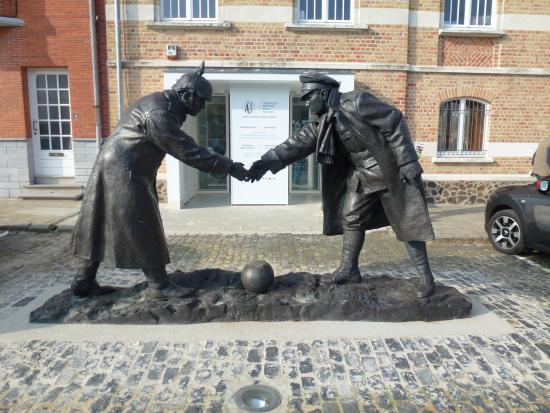
In the southern parts of this island, we are still wedded to the idea that economics of unlimited growth in a world bound by physical limits determines levels of happiness. No doubt it is better to be a rich man in a cold country than a poor man in a warm one. However, the great mechanisms of how we interact with tradable commodities continue to dominate thinking in informing the consensus. Lockdown was a chance to redress that imbalance. It was a unique opportunity for the average Joe to hop off the spinning wheel for a while and to try seeing life – and what he/she values from it – from a wholly different perspective. This perfect convergence of variables (that is to say, unusually great weather, government providing a blanket of financial support to the majority, as well as the stillness in the air that permitted us to think long and hard) gave the millions upon millions of conscripts fighting as footsoldiers and corporals in the boom and bust economic war the chance to think again about what they wanted out of their country. Unfortunately, like the Christmas Day short truce of 1914 where British and German soldiers showed their mutual enmity by getting together for a game of football and a post-match drink, this too is a false dawn. Like those men who knew, through a simple game of football, they had more in common with one another than with the chiefs of staff who sent them to the front in the first place, this cosy little interregnum that some have been enjoying of late is too dangerous to continue. The unfair society harnessed by the economics of naked aggression and unlimited growth cannot survive the neglect and contempt it is being shown at present.

1914-christmas-truce

The second age of the robber barons is not over yet. But a few more pandemic lockdowns might just do the trick. And not unlike the Peasants’ Revolt of 1381, a spring clean of the people (i.e. a serious trimming of human numbers leading to a radical restructuring of the socioeconomic order) may just give the downtrodden a glimmer of hope. And a chance to rise up alongside a damned and damaged natural world from the scorched earth of a long and unfruitful economic obsession.