Surviving a Wilderness of Weirdness with Philosophy as the Weapon of Choice

ethics, fate, free will, future, greek philosophy, human mind, Life, marcus aurelius, meditations, natural philosophy, natural world, philosophy, Spiritualism, stoicism, thoughts

220px-Zeno_of_Citium_Nuremberg_Chronicle

The media report much fear and trepidation in the wider world, although judging by the look of contentment on the face of passersby, you’d be hard pressed to think so.

(and I swear even the dogs grin, or is that the outward appearance of having a stick lodged in one’s mouth?)

There’s also the unintended consequence of having a lot of people who find themselves with oodles of time on their hands while Covid-19 does the rounds. So how do they while away the hours until the spectre of death subsides, and we can get back to servicing the toothed machine of human progress? Some trek to Everest Basecamp in the confines of their home by scaling the staircase until the carpet goes bald and they follow suit. Others turn their hand to a spot of home teaching the kids until, realising that the transmission of knowledge through didactic discipline is harder than it looks, they dismiss their tiny class early. Others, like me, write obscure blogs that few dare to read, worse still understand. Still others take up new housebound hobbies with aplomb: such as taking 360˚ virtual trips to the Great Namib Desert courtesy of their much-abused smart phones, or else the wise few keep reciting ‘No wild animals in my delicious hotpot, please’ in Mandarin until the phrase sticks.

With this golden opportunity not to go nuts inside a tiny flat in Basingstoke, how many out there have given over their enquiring mind to the acquisition of a philosophy? Ancients, who weren’t busy warring in a sackcloth and sandals, were rather adept at offering sound advice based on the principle that once a man had found a philosophy to suit his ontological needs, he had succeeded in finding the map that would guide a clear path through this impenetrable life. The bold and the beautiful in the Greco-Roman universe swore by this dictum, going so far as to stitch their new ethos into their imperator tunics while on campaign against troublesome Germanic tribes.

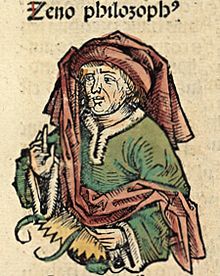
The last of the five ‘good emperors’, Marcus Aurelius, was a man revered for being an enlightened and compassionate allrounder with a mind given over to self-examination in ways inconceivable to other emperors, for whom pleasures of the flesh all too often outweighed the pain of asking what does it all mean and what is my true place in the grand scheme? Given the unenviable task of leading the decades-long charge against tribes terrifying the fragile borderlands of the Roman Empire, the good emperor still managed to fit in a famous philosophical treatise before he died. Known as The Meditations of Marcus Aurelius, it was in essence a late second century A.D. reinterpretation of an ethical code dating back to a school of philosophy which had flourished ever since Zeno inscribed it in the minds of 4th century B.C.E. Athenians fed up with Cynicism.

Known as Stoicism, this branch of philosophy sought to strip away the bark of long-established wisdom to reveal the true sap oozing out of life: that is to say something vaguely along the lines of a cosmos working in cycles that start and end in fire. All matter that makes up the physical and, by extension, metaphysical questions that Man struggles to intepret works on a rational and logical basis (or ought to). Hence we humans do best when we are exercising reason over hot-headed emotion; hence we attain more understanding of how things are when explaining that phenomena using language built upon the rational rules of grammar instead of, say, an abstract picture or an incoherent grunt.

Sandwiched between the grand cosmological cycles is something we know as nature. Hence. stoicism is arguably the most influential of natural philosophies in its insistence that you and me are very small and limited in the grand scheme of things. By accepting each our minor yet vital role, the pressure is off and therefore happiness through simplicity becomes viable. Nature has a grand design, and if you let it into your heart you’ll soon realise both you are very insignificant and that, in spite of our own individual position far from centre, the universe nevertheless has your best interests at stake. All things occur for a reason. Fate doesn’t have to explain why it behaves in seemingly random ways. If it did, we’d know there’s nothing random about it. Even if an event seems uniquely cruel or inexplicable, natural forces will use the injustice to take corrective measures later on that symmetrically redress the balance, leading to the ‘Ah!’ epiphany that ‘it all makes sense now’. The interconnectivity of events is so blindingly intricate, not even a genius could spot it (shit! Did I just spot it where better people failed?)

Zeno, the father of stoicism himself, is reputed to have said that fate is an endless chain of causation whereby things are: the reason or formula by which the world goes on. In spite of this complex pattern, nature’s inner workings are, obversely, not mystical and esoteric at all; they are beautiful because true beauty lies in simplicity. That nature is beneficent – an unstoppable force that looks out for each of us if only we’d realise it – is contingent on you, the stoic, playing life as a game involving a basic blueprint of virtues to carry through life’s interactions into every little thing. Seek the four cardinal virtues – 1) justice/fairness/decency 2) wisdom/prudence/deliberation 3) courage/fortitude/endurance, and 4) temperance/self-discipline/modesty – and ye shall find yourself on course for a good death. That’s the idea, as I see it. The moment of death is all that your life ultimately amounts to, so life had better be conducted virtuously if death is to be faced head on, without anguish. There is such an aspiration as a good death, but it must be preluded by a life of self-discipline, fairness, examination, and strength of heart and mind. By the way, a good stoic would urge you not to be virtuous only to for the reward of a least hideous death. Be good, in and of itself, not for what it may give you back. Life is not a financial investment. Do the right thing because that is the natural order of things and to speak the language of life eloquently, we must first understand its grammar and morphology.
For stoics, like Seneca, Epictetus or Marcus Aurelius, life exists to be lived, literally like there is no tomorrow. William Faulkener wrote, The past is never dead. It’s not even past. How I do admire that wordplay. That said, Faulkener was no devotee of Seneca the Stoic. To stoics like Seneca, the past is a foreign country. Events that created the mosaic of that life have moved away forever, never to be relived with the veracity of how they were first meted out. Memories are not to be trusted, nor to be dwelt on. And death is not a loss of a whole life but rather just a loss of a moment at the close of that life. The ideal life, according to Seneca, was to be lived in the now, without dwelling on what’s gone, nor the irrelevance of what’s to come. It was to find contentedness in the simple here and now, and to want for nothing. How else to understand what golden threads of alchemy the cosmic fabric is made of other than to look closely at what is all around you NOW?

What the world needs now is love, sweet love, so goes the song. The world also needs Stoicism, meant not as the character-building prototype of the rugged Victorian imperialist (sword in one hand, dove in the other, pen between the toes, and pipe contemplatively in the mouth). Rather, the stoicism that emanated from ancient Athens and Rome was one that understood its demoted place in the natural order. We face a twenty-first century reckoning because we took stoicism to mean putting up with any old shit that life throws at us. Overwhelmingly, that shit was of our own making because we got way, way ahead of ourselves, thinking that two thousand years of Christianity and Islam had transformed each of us into little gods and sinners to be forgiven through atonement and religious devotion. So it was okay to break the ancient covenant with the natural order and go forth and multiply exponentially while scorching the Earth to conquer all before us because it was sanctioned first by the scriptures, and secondly by the arrogance bestowed on us by virtue of having reached a state of civilisation that was deemed far removed from lowly animals (this civilisation, it should be post-scripted, built its sandcastle empire not always on virtue alone).

In an age of uncertainty, rocked by the unvoiced realisation that there are too many of us vying for limited resources in a world wrecked in the search for these valuables, what needs resurrecting from the ashes of a self-deceptive human race is the idea that there are greater forces out there writing the book of life. That we are not gods but men and women who are fallible may seem self-evident, but any visitor from Andromeda would think we had promoted ourselves to that elevated rank. Every one of us might be just a mote of dust in the wind, but life affords us one chance to show our mettle: that if each of us face our remaining days in the pursuit of justice and courage and wisdom and self-restraint we shall once again feel humbled by the enormity of all that surrounds us. While no one gets out here alive, use this present lockdown to fashion your own system of practical ethics. As well as dying with a smile on your face, you might just make a small difference to your own and to the innumerable small lives that together construct the rich tapestry of everything we see and, more importantly, everything we don’t.

Everybody has an answer, but few a philosophy. Everyone wants a life, but not everyone holds the ethical guidebook to embark upon one worth living. Millions likes posting big pictures on Instagram, but how many consider the bigger picture and their own role as but one pixel within it? Why go in search of happiness as if it be a commodity to be acquired when, with the right tools at your disposal, you may reach inside and find it there? Thousands are dying out there (of malaria more than of Covid-19). So why stay at home wondering how you’re going to avoid it when you can stay at home and work out a formula for how to pursue a good life befitting of an equally good death.

Springtime Of Our Lockdown

Britain, climate, conservation, Coronavirus, counter-culture, Covid-19, crisis, death, earth, environment, fate, free will, future, Hinduism, human mind, Liberalism, Life, Lifestyle, meditations, natural world, nature, neglect, pandemic, People, philosophy, Planet Earth, Political Culture, Politics, Reflections, thoughts

While we wither indoors, out there something profound is happening. Nature is back with a bloom. Can anyone remember it being so resplendent? So full of seasonal promise?

I’m asking myself how an annual event can seem to take on another dimension. Yet spring is springing with a wicked spring in its tail. Animals have returned to wander down paths long blocked to them. Goats window shopping in abandoned Welsh seaside towns; boars doing the passeggiata down silent streets in Bergamo; dolphins nosing around now crystal-clear canals in Venice in the absence of gondoliers sticking their bloody oars in everywhere. Hell! Even the tender shoots of first budding look that bit more sharp-suited, greener than usual. The sky, not so anaemic. The signs, far from being ominous to any life form other than us, are encouraging. If this is what the world’s end looks like, I’m signing up to it. The whole thing is beginning to feel like a massive teleological event: a reckoning that pits us against each other, and ourselves. What did Churchill once say? “Now this is not the end. It is not even the beginning of the end. But it is, perhaps, the end of the beginning.”

Can it be that Humanity pulls off a civilisational coup, foreclosing on the disastrous Age of Kali (see William Dalrymple’s 1998 travelogue for explanation, or else anyone of eight hundred million Hindus) for a gentler, more enlightened epoch? Could the pandemic be the hidden catalyst for it? Probably not, but the thought is a fitting one given the wonder show that nature puts on while we succumb to fear of personal extinction in our homes under the curfew of self-isolation. While a wholesale regeneration of purity in nature at the expense of human resource rape-&-pillage might be a bit much to hope for, certainly the lockdown can generate a paradigm shift in how people work, and in how we spend our few precious days on this Earth.

Yesterday I stopped by a glade of glistening wild garlic by the roadside. Ordinarily, cars would be humming past with such regularity that no one in their right mind would have pulled over on their bicycles to pick a bunch of nature’s own – a little crop of green goodness that went into the making of wild garlic pesto. In the absence of pandemic, would i have so much as done this? No. Am I better for having done so? Categorically, yes.

This reckoning, by which one refers to a near cessation of frenzied (and highly destructive) activity, which has come to characterise the Human Project over the past forty years, enables a beleaguered and frankly overwhelmed world a chance to hit reset. That great ferris wheel of civilisation that turns ever faster, drawing in and spitting out hapless human victims all the time, has ground to a halt for (shall we say) a spot of maintenance. While it lays motionless, finally we get the chance to stop being mesmerised by its whirring circulation, and start taking in the 360 degree view that was perilously neglected all the while.

Now is the springtime of our being (unless you live in the southern hemisphere in which case you’re on for a revolutionary autumn). Those who are in the gutter looking up at stars over cities that are not only shining but coruscating for the first time in the modern age, will they necessarily want a straight return to an orange-sodium sky above their heads, planes roaring overhead? Those realising that the job they are doing from home unexpectedly through lockdown can be done from home post-lockdown, will they desire an immediate return to crammed commuter lines full of sleepy, barely-approachable worker drones? All of us who may take our one hour of daily exercise (which in reality morphs into about four as the conditions are so favourable, and as time has taken on a more elastic property), we who can stroll down lanes untrammelled by the impatient thud of footsteps, do we want necessarily to cash in the quietude for a ride on the capitalist wheel of fortune again?

The spectre of death clears the field. If there were ever a moment to stop and smell the roses, it is now. If there were ever a moment to ask ourselves: what do each of us want from this fleeting life, and what are we prepared to leave behind when the fire goes out? Now is the time. A gift has been offered to us in the form of mass global quarantining. From this renewal nature may stand a fighting chance while for our part we may gain absolution from mass collective sin. Now I don’t quite know what kind of force is behind these weird developments, but whatever orchestrated them is giving Humanity an open window for opportunity to refashion ourselves into a life force that goes with the seasons, instead of one that signifies such damage and ecological destruction that the seasons themselves cease to be what they were. That window will all but certainly blow shut with the first shunt of summer wind against the pane. While we’re all locked down, let’s make room for the other tenants that call Earth their home, too. When the time comes to fling open our doors again, let goodness flow out and everywhere.

Hey Bulldog!

Beatles, Buddhism, death, fate, free will, future, Life, meditations, Musings, natural world, nature, Oddities, philosophy, predator, Reflections, Solipsism, thoughts

These are the days of our lives. Whether we like it or not, the clock is ticking. The long hour upon the stage will, of a fashion, one day be heard no more. So, let the tale told, ideally, not be by an idiot espousing sound and fury. Let it be told well, full of twists and turns, laughs and loves, random acts of kindness, adventures and heart-fluttering moments that lend themselves to the proud declaration: I was there.

I was recently watching colour footage of the Beatles in the studio, circa 1968, recording Hey Bulldog!. A song destined for obscurity, for me it was a much underrated number. According to Lennon, Hey Bulldog! was a nice tune that meant nothing. However, it wasn’t the melodies that stood out, nor McCartney’s catchy bass line. Rather, it was how the four lads from Liverpool – how the Beatles as a living organism – had undergone a profound physical and mental transformation in such a short space of time since they burst onto the scene in ’63. In the annals of rock music, who else aged and evolved so rapidly in relatively few years? To watch the Beatles do their seven years together was to observe a lifespan in time-lapse photography. Not only did the hair grow and the faces harden, the voices deepened and the subject matter took on ever more gravity. Theirs was an accelerated existence full of very little wasted time, a sort of Haiku poetry in motion.

Some creatures, like giant tortoises, slow down their metabolism to reach the age of Methuselah. He crawls, unchanged, through the centuries. Others, like dormice, speed up their heartbeats to live a James Dean life: short and intense. Mayflies explode onto the scene only to drop dead in the Danube before their first Earth day is out. In the human realm, things are similar. Picasso painted for over seventy years, ten times longer than the Beatles jammed. No slouch, over decades he painted thousands of canvases, admittedly. Some brush work he performed with a swish of urgency, but overall Picasso’s life mirrored the tortoise. He went for longevity, enjoying his life’s true calling all along the way. Physically, Picasso didn’t really alter appearance over time. He started small, tanned, dark-haired and Spanish-eyed, and he ended small, even more tanned, no-haired and Spanish-eyed. The Beatles, contrastingly, seemed to physically and creatively morph so fast, you could almost watch them grow up and apart. Lennon was the epitome of this. From young scallywag to long-haired gnostic, Lennon’s ageing was catalysed by a public domain obsessed with him. Like Mr Benn (for those of you old enough to remember the children’s TV show of the early 1970s) he changed his appearance in no time. As Lennon set about to change the world, the world changed him. And everyone could see him carrying carrying the weight of the world, plain as day (citation: boy, you’re gonna carry that weight, from Abbey Road.)

I employed the Beatles as an analogy to underscore the importance of using the time each of us have to reinvent ourselves: to morph; to never sit on our laurels. Your average human life is more four score and seven years than the squeeze of seven years the Beatles had to shake the world. That said, because we have no idea how long we have to live, these numbers melt away. The Beatles had seven years, but what they did in that time was the musical equivalent of the seventy years afforded Picasso. From I Want to Hold Your Hand to Eleanor Rigby in a mere three years? The difference in maturity might as well amount to forty.

I speak to so many people convinced that because life is long they can afford to sit out the game for long spells. In absentia, years vanish and little substantive gets done. A fearfulness sets in, front doors slam shut, possessions mount up, families fuse together before they sometimes shatter, leaving our clever model of market economics to dig its hooks in until ‘financial commitments’ make it all but impossible to break the chains that bind you to an immovable object that remains out of sight. Folks get stuck in a rut they can’t physically see, and their only consolation is that, ‘oh well, at least I’ve got years ahead of me to change things’.

If only we knew that the game was up much earlier than we originally thought might we take affirmative action to be the change we saw in ourselves. Maybe the Beatles knew deep down they didn’t have long (compared with their musical contemporaries) and that was the catalyst for them to live like no tomorrow (for Tomorrow Never Knows) : to pupate, to reinvent, to transmogrify, to create then recreate, and then some more. You don’t have to have penned Strawberry Fields Forever to view life as a series of peaks and troughs: of pinnacles that only the ingenious few can reach and rifts that the rest of us wallow in. If I had the power to tell another they had one more year instead of forty to thrive, what then? If others had the divine prophecy to forewarn me that my innings was a lot shorter than I otherwise thought, what then would I do to affect change? How would i fill the empty pages in this blank book of life?

(Footnote: I was moved to write this as I pondered the meaning of why the female mallard I’ve been feeding from the boat for the past three months was inexplicably taken from us (and from her drake boyfriend, in a meaningful sense) by an ambush predator, a giant pike probably. She was seen being dragged under not three weeks before she would have presented hatchlings to the Spring. What is this that the life of an animal can end so abruptly, her genetic destiny to reproduce be so cruelly thwarted, by a big nasty bottom-feeding fish, off all things? How arbitrary! How absurd! How sad! Her boyfriend was quacking like a mad thing in distress. And five days on, I still give her a thought.)