
To Machu Picchu, With Love

#adventure, #romance, adventure, Andes, backpacking, Eighth Wonder of the World, environment, Lifestyle, mountains, natural world, nature, peru, Planet Earth, Salkantay, South America, Travel, Travel Photography, travelogue, Trekking, Wilderness

It was always central to the plan. Fly transcontinental to Peru. Once in the capital, randomly follow compass points leading out of Lima in all directions but west, which would be suicidal as it would leave me adrift somewhere in the deep Pacific Ocean. But whatever I do, the golden rule stands: don’t fly home without first having taken the long trail to Machu Picchu.

Many roads lead to Rome. So too are there a fair few routes to Machu Picchu. The Inca, like the Romans, were master road builders after all. You can opt for what most do and that is to fly to Cusco, board a mini bus from that old Inca seat of power to the sublime surroundings of Ollantaytambo in the even more sublime Sacred Valley of the Inca, board the train from the terminus there 90 minutes to Aguas Calientes at the foot of Macchu Picchu, and from there board another bus that winds up and up until it reaches, at 2,430mt a.s.l., the ticket booths standing like sentinels at the entrance to the eighth wonder of the world.

Or you can pay Atahualpa’s ransom and trek the three nights, four days to Aguas Calientes on the famous Inca Trail. Equally, you can step out of the ordinary and hike the Lares Route running along the valley to the north of the Sacred Valley. But that plonks you down at Ollantaytambo and from there you’ll still need to ride the packed train to Machu Picchu. For the even more intrepid there’s the Vilcabamba Traverse route, which basically follows in the now well-trodden footsteps of Hiram Bingham, the American who discovered Machu Picchu with a little help from an unheralded fellow who happened to farm land in Aguas Calientes and knew all about the strange ruins in the thick undergrowth at the top of the mountain. At ninety kms long, descending into canyons, crossing raging rivers and back up mountains so steep you tip your head backwards just to see them in their entirety, the Vilcabamba can take well over a week to traverse. And then there’s the Salkantay. Free but definitely not easy. That’s the route I took. It turns out, with unintended consequences.

They always say, don’t they, that certain actions have unintended consequences. The more extreme the action, the more consequential. By the standards of some, walking a full five days and sixty kms to the foot of Machu Picchu over a 4,600m (15,090ft) pass is pretty extreme. Especially so when you happen to be fifty years old on your next birthday. Anyway, i digress. For five days I walked the walk and talked the talk and in between saw deep time cut deep into rock and cappuccino brown waters froth and fury on the valley floor because the mighty, near-mythical Urubamba river could not run down to the Amazon fast enough, pushed on as it was into incandescent rage by mountains pressed hard up against it, bullying it and blocking its light.

It was raining as the ten of us flooded out of the mini bus on the trailhead. In reality, the official start to the 75km Salkantay Nevada was 20km back down a very inundated road-cum-track. Ordinarily, day one of the Salkantay would involve a trek up and up that rutted track, waterlogged by weeks of summer rain and spun into mud by the endless turning of Mercedes minibuses wheels ferrying sightseers up to Humantay Lake. We were cutting to the chase on our five day dash to Machu Picchu by skipping the boring bits.

Our guide, Jorge, told us to get suited and booted. Raincoats and plastic ponchos would be the order of the day. My Texan friend and I clambered onto the muddy ground. Walking poles were doled out in exchange for rent money. Essential item. $10 for the duration. Our walking group – at that point still a bunch of strangers, mainly from Germany and Holland – formed under the rain, almost by accretion. Bedecked in plastic ponchos of the most garish colours, they readied themselves for a 2-hour detour to Humantay Lake, before bracing for a 3-hour climb up to camp 1 at Soraypampa. As usual, I was first off the bus and last onto the trail. The Texan and I rolled a smoke, buckled up and in our own time started this great overland journey with a single step. The young bucks and hinds in the group were already visibly ahead within minutes. But the Texan and I were not lone stragglers. Beside us we noticed a girl.

I had seen her when i first boarded the bus back in Cusco at 4am that morning. There she was all alone with only a covid mask covering her eyes, depriving me of the totality of her pretty face. She sat alone, not feeling the urge to befriend others, as so many solitary types do when they’re on the road. She slept, and when she woke she kept herself very much to herself. Much as I tried not to, i found myself constantly stealing a glimpse of her while trying to act all natural. Physically, she was nothing like us. I guessed Brazilian due to these fulsome lips and coffee complexion. She certainly wasn’t Peruvian, with their proud Quechuan noses. Nor Chilean. Nor Argentinian. Definitely not Bolivian. Ecuadorian? Hmmm. Nah. They too were ruled by the Inca, as their faces testify to. She could have been Colombian, or Venezuelan. I deduced that much. Anywhere in the Caribbean, the genetic blend of European, African and Indigene created this unmistakeable exoticism, verging on the absolutely beautiful. But, no. I settled upon Brazilian, as there are 150 million of them, and only 50 million Colombians and 25 million Venezuelans (there used to be 30 million, but 5 million are now refugees).

As we ambled, tortoises off the blocks, she drew abreast of us. Slightly discomfited by the presence of two jackasses who – as i was to later find out, she found irksome when they boarded the minibus at 4am singing, joking and generally ignoring the protocols of getting on a night bus – it took me to break the ice.

‘See my friend here, he doesn’t think you’re Brazilian. But i do. Am i right?”

She was. And I was. And that was the first time we were right together.

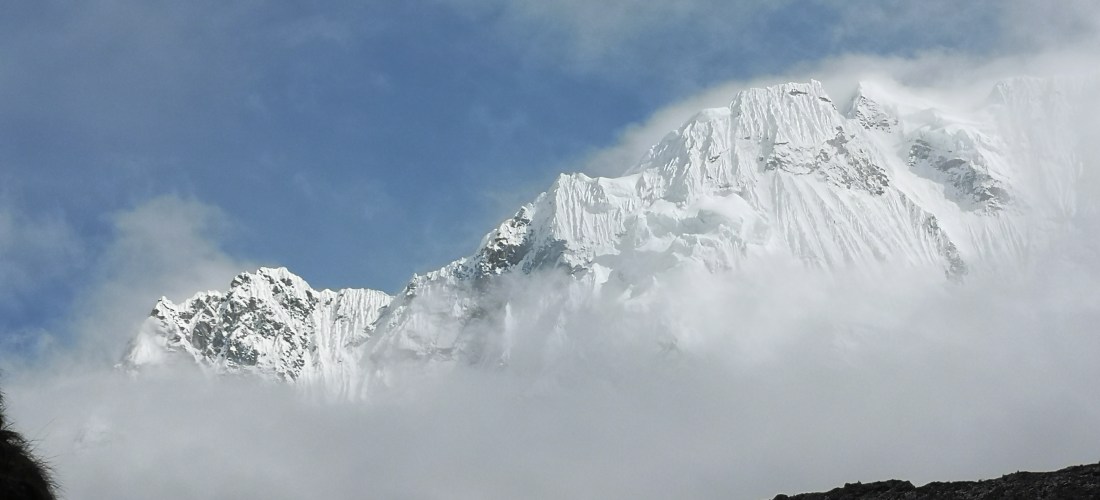
At Humantay lake, the surface water was a bioluminescent paint pot. The color was electric blue-green. Around it the land rose sharply, a browned earth soft as shale where the land had collapsed in. And on top of that sat a crumpled mountainous mass of black rock and ice. The Andean giant flitted in and out of sight, behind a veil of cloud and Scotch mist. It was summer, but the Andes being the Andes and defying definition, this was the rainy season. And for anyone who knows the high mountains, everything is exaggerated, even the intensity of the rain.

I could see the glass domes – our beds for the night – on the ridge up ahead far in advance of arriving. The others were all there, but she and I had fallen far behind. Our footsteps slow, deliberative, rhythmic. We were tired beyond belief, for here at nearly 4,000 metres (or 13,000ft) the air was reed thin and the angle of ascent deceptively steep and seemingly without end. For every gulp of air, disappointment ensued. And as the occluded sunlight dipped on a fading afternoon she and I became more and more talkative. Gassing while climbing at these altitudes is not always the right strategy. So for every sentence a pause for breath that doesn’t readily come the way it does as sea level. Our legs could not catch up with our tongues but I knew that something had clicked between us, language barrier or no language barrier.

Up on the ridge with the Salkantay mountain looming in the twilight behind a wall of white cloud, she and I slumped down. We were exhausted, the right kind of exhaustion that combines the very tired with the very happy. Eagles flew sorties in the valley beneath and every now and then a huge wall of granite would flash into view through the gathering night. Magic all around. This, I thought, is why I damned near killed myself to get here. And in the process i made a friend, a beautiful friend.

Day one not even drawn to a close, and this adventure was already shaping up to be a classic. It’s in the nature of duality that with pain comes a degree of pleasure that makes the pain bearable. Altitude and steep gradients might be the root cause of the pain, but the pleasure was all mine with her by my side. I have a fridge magnet back home that reads, ‘no road is too long in good company‘. Never was this Turkish proverb more true than the moment we collapsed into camp 1.

Is it Possible to Rediscover Something for the First Time?

Africa, Happiness, Music, Paul Simon, Rhythm of the Saints, roots music, tribal

Thirty years ago, give or take a month or two, a not so obvious child was born. (N.B. From the off, let me steer you away from fixating on an actual human birth, for a blog on the wonder of childbirth this is not. Figures of speech loom large in my writing, so apologies if you like your writing served on dry toast with a great dollop of literality. Oops! I did it again, smearing words on bread, which cannot be done, unless you’re making alphabet soup, in which case you can choke your own words, especially if the soup contains croutons.)

Well I’m accustomed to a smooth ride,

Or maybe I’m a dog who’s lost its bite

Anyway, back to the point. This not-so-obvious child was born in a New York recording studio thirty summers ago before the world junked out on the digital dope. The idea behind this multi-instrumental reproductive birth pang – no less the title track of the album – was that the child was obvious, and therefore should not be denied (could not resist a metatextual reference, so bear with me). But, trouble was, this birth went unheralded. No magi. No manger. Unlike the first born; yeah, that one with the South African mbaqanga rhythms and Ladysmith Black Mambaso a capella backing vocals, and for which everyone from Houston to Harare had heard of, recorded not five years before, this gift from our dancing God slipped into the world without slipping into my auditory canal for, oh, the next, uh, 30 years.

I don’t expect to be treated like a fool no more,

I don’t expect to sleep through the night

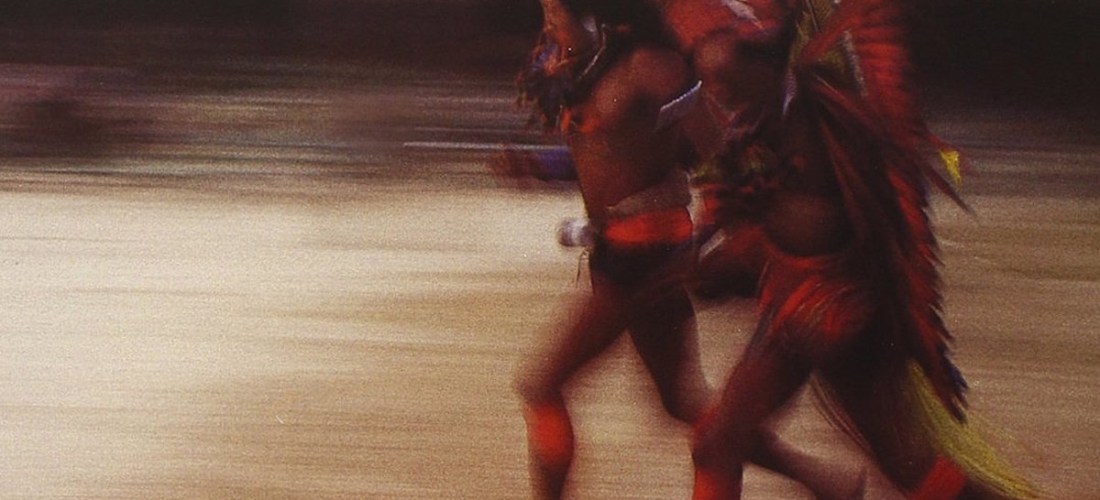
The ‘Obvious Child’, track one of Paul Simon’s much anticipated follow-up to Graceland, that renaissance masterpiece from the little Jewish guy (I’m reliably informed he’s actually Jewish on his dad’s side, which doesn’t strictly qualify him) best known for writing whimsical folk songs about being in a grim northern English railway station pining for America, or about the pulp-faced wreckage of a boxer standing in a clearing on an equally grim New York street. Simon’s masterpiece part II should have registered first time round. But it didn’t. Not with me, at any rate. He titled this Graceland infant brother from another mother Rhythm of the Saints. The Boxer it was not. But Rhythm of the Saints was a lot like watching Muhammed Ali bounce around the ring in his pomp. In short, Paul Simon’s extended musical journey into African roots is pure, unbridled joy captured in a musical jar. Fireflies lighting up Brazilian drums and picking West African strings. The album might be about to turn thirty but when music is as timeless as this who gives a tinker’s cuss how old it is.

Some people say a lie’s a lie’s a lie,

But I say why

Rhythm of the Saints should’ve nailed it on release, but it didn’t. Hardly did it flop either, but neither did it electrify the music scene quite like its illustrious forebear. This much I know because I was nineteen and bonkers about music in 1991, and I don’t remember anything drowning out the sound of Nirvana’s Nevermind at the time. If Paul Simon wanted a shot at redemption on 1986’s Graceland, he certainly got it five years later with Rhythm of the Saints. Made with so much music multilateralism in mind that if you teamed up Kofi Annan with the entire line-up of the WOMAD festival you’d still fall short. And yet, the album wasn’t quite as percussive in the wave effect of critical acclaim as it ought to have been. Nowhere near that of a predecessor that, one could argue, whacked the first nail in the coffin of Apartheid. Maybe the curse of Graceland. After all, Elvis himself fell foul to it.

Why deny the obvious child?

Why deny the obvious child?

I’m fixing to shout to the rooftops about this black opal of a album, buried as it is still close enough to the surface to be easily mined. I won’t bore you with the particulars of my life, nor of a chequered year that’s been about as much song and dance as the long trudge to the gallows. But i will say that salvation doesn’t have to come wrapped in Jesus’ tunic. Paul Simon saved my life this year. Summarily, I dedicate this season of light to him. Or maybe this rapturous album transcends the man, leaving the listener making supplications to the creation over the creator. Track 3, The Coast, is one stubborn son of a female dog. Like unrequited love, its warm tones, its hypnotic melody, and its swinging hotspot rhythms squat in the heart long after the mind deems it sensible to evict them. Much as I try to ignore what is fast becoming musical recitation’s answer to Tourette’s Syndrome, day or night I cannot stop listening to it. When the ensemble builds like a human tower – Bahian percussion beneath Cameroonian guitar strings beneath Simon’s pitch perfect voice – my ageing body starts slithering in a whiplash motion. For a moment the hands of time turn back and i feel like a young buck lubricated at the seams.

And in remembering a road sign,

I am remembering a girl when I was young

Track 6 is She Moves On. Get this, apparently he pens it as a kind of paean to his ex-wife, Carrie Fisher. (Emoji with love hearts for eyeballs) Carrie Fisher, aka Princess Leia, object of my adolescent fantasies sat statuesquely beside the debonair Jabba the Hut in an off-planetary bikini with hair plaited like a brunette Rapunzel. ‘When the road bends, when the song ends, She moves on.’ She certainly did. Sadly, it was onto acute bipolar disorder that she moved. But hey ho, unlike most who rest on their haunches, at least she moved. And if you ever listen to this number, so will you. In fact, maybe that’s the life force behind this work of art that can’t be hung in a gallery. Music is art providing someone’s playing it. When the music’s over…lights out. A song lives only for as long as it’s brought to life. Like any oral tradition that binds tribes into carriers of the flame, music is magic when multilingual. And on Rhythm of the Saints Simon performs an incantation on me unlike most other minstrels who try their damnedest to transcend the medium of sonic art.

The speeding planet burns

I’m used to that

My life’s so common it disappears

And sometimes even music

Cannot substitute for tears

It remains, perhaps, an ironic twist of lime in the caipirinha that the album’s closing track, The Rhythm of the Saints, ends with the lines printed above. And sometimes even music cannot substitute for tears. Is this a call to melancholy in the midst of joy? Can the two ever be truly rent apart when the greatest music makes symbiosis out of sounds and emotions. I have scribbled these thoughts down in the time it’s taken to listen to the album: twice (I took a break to sway my fidgety self to the those Pied Piper drumbeats). In the end, I do declare that these tears Paul Simon cannot hold back, even after composing this unforgettable musical oeuvre, have to be tears of pride that for a guy who made incredible folk songs with Art Garfunkel twenty years before, could go one better by bringing music back home to its birthplace of Africa. My own tears, for what it’s worth, are of relief that 2021 was rescued from ignominy by a little genius from New Jersey for whom the world didn’t quite appreciate when he was busy changing it with his Rhythm of the Saints.

True love sometimes has to round the block before it’s noticed. But nevertheless: how on Earth did I miss the carnival first time around?

Songs Are a Thesis on Life, So Live It.

advneture, death, free will, future, Life, Lifestyle, lyrics, philosophy

Sometimes a song can offer a thesis. It’s usually on life, love and the meaning of it all. Sometimes a song can revisit you after a long hiatus. I have no idea why it barges centre stage into the crowded theatre of the mind, yet barge in it most certainly does. You know when it chooses to stick around, because that damn ditty plays on you. Wherever you go, melodic thoughts intrude, and before soon you’re chanting the song silently word for word with such metronomic repetition that not even the eulogy you’ve memorised for your best friend’s funeral is enough to dislodge it.

We often talk about this human syndrome of having a song stuck in our heads. Lodged with a stubbornness the equal of a goat, that’s how songs seep into the psyche. We even share a laugh when that song turns out to be about the worst piece of shit bubblegum pop the hit parade ever produced. Indoctrination by music is rarely predicated on the quality of the tune in question.

But other times, the song that sticks contains the germ of a idea: a thesis, I suppose you’d call it if you were using it as the intellectual centrepiece of a Masters’ dissertation. It then spends three verses, a middle eight and repeat chorus to test its thesis out on you, the listener. Or maybe, more accurately, what its unstated intention is is to invite you, the listener, to test its thesis for it by living according to the principles extolled in its message. Yes, that’s what it’s doing. That might explain why every great lyrical song is more than an enigma, it’s an insight into the mystery of life.

An old song came back to me this morning as i was busy making other plans. Its name is Live Your Life, by the American Otis Taylor. Aimed at the bullseye between our eyes, the lyrics are really quite straightforward. He sings:

Live your life before you die. Only might be for a little while.

By a little while, he means life can be curtailed at any time without any due notice. Implicit in there somewhere is this notion that as westernised humans, we’ve come to expect longevity, and if your three-score and tenth birthday party never transpires, there’s something frightfully tragic about it. Actually, when you put your social historian/demographer hat on, you’ll see that expectations of a long and biologically untroubled life is very much a late twentieth century indulgence. For much of history death prevailed in infancy as much as in adulthood. It percolated up as much as down. And when it did, the suddenness of finality was not lost on those bygone generations. If they didn’t see death coming, they certainly saw it everywhere.

Anyway, back to Otis Taylor. And the band plays on…

Death won’t touch you, on your heart. It’ll just come around. It’s gonna walk on in and knock you down.

Here his thesis is starting to develop. Causation, the central tenet of most theories, comes walkin’ on in on this little number to knock us down from our exalted position of delusion. The causation rooted in these lyrics says if you live your life before you die then death cannot harm you. It can only snatch you away before you know it. Ergo, if you choose to live life then death cannot enter your heart in some dismal prelude to a mortal end characterised by regrets and the endless act of dying while very much alive.

But what is the magic formula here for a death no more painful than drawing a line in the sands of time? How are we expected to – in Taylor’s words – live your life before you die? Again, the songwriter offers an almost irresistible position in building his case for a life script that conquers death. He sings:

Take time to laugh. Or maybe time to cry. Climb a mountain. Swim the sea.

And what quality do all of these lyrical prescriptions share? They all invoke a vitality – eros – which is the counterforce to the spirit of death – thanatos. They ask you to feel and to do. When inviting you to feel, they steal tears from the sorrow of dying only to fetter those tears on what is more deserved of them, that being life itself. Laugh in the face of death? No. Laugh along with life, fostering the conditions for that laughter to play out. Don’t embolden death with the power of your laughter, nor pleasure it with your tears. Climb above your lowly mortality to reach the highest peaks. Suspend yourself again as you did pre-life in mama’s womb but this time in mother nature’s own amniotic fluid, the ocean. A funeral should be a occasion to celebrate a life well lived, but how often do we feel like heading out to a party when following the hearse to the crematorium?

The conclusions of this treatise with its simple thesis of live the middle ground now if you don’t want the end to live for you stand up to scrutiny. If the premises hold that if a life well-lived is no less than a life with the marrow sucked dry, therefore death has no carrion to feed on when inevitably it comes, then the conclusions are clear: take risks. Don’t fear uncertainty nor shy away from the unknown. Let the light of life dazzle death, consigning it to the shadows until that fateful day when finality doesn’t revel in making a show of taking you away. Sure, we could die a terminal death through a cruel, clinging illness. But by stacking up enough of the life affirmative stuff in our armoury of getting older, even a protracted death can feel more like a soldier’s death: sudden and honourable. If that theory sounds optimistic as it does untested, then that’s a fair kop. But I’m going on that proviso until you prise it from my cold, dead hands.

I, for one, don’t intend to give the scythe-toting hooded one the pleasure. More so in a bizarre era typified by mass quarantining for fear of death (we say our current Covid self-sacrifices are all utilitarian-backed and done for the common good, but the truth is the organism is us fears for itself more than others). Hey, whoever said backing words with deeds wasn’t a challenge? But if we turn the page on this world in existential fear NOW then perhaps something transformative can come of it.

Like Kazantzakis said, leave nothing for death but a burned-out castle. And thanks, Otis, for the invocation to live your life before you die. Wise words. I’m not sure about swimming the sea (never truly got over watching Jaws as a 6 year-old boy). As for the mountains, I’m already packing for this winter. And when I reach the top, I’m planning on having a good weep. But not for death. Hello Life.