

There’s the End of the World, Then There’s the End of the World
Exaggeration. It’s nowhere near the end of the world; it’s not even near the world of the end. Nor is it at the end of Chile. Far from it. For that you’ve got to motor another 2000km south to Punta Arenas. But you get the idea, and if you remember a certain REM classic from the 80s, you’ll get the cultural reference, too. One fact in the title is incontrovertible: I did feel fine. Chile left me feeling as fine as I’ve felt for a while. Moreover, when the actual end of the world is unravelling half a world away in the Near East, Chile’s Pacific coast might well be the other end of the world spared the end. That enhances its attractiveness all the more.
Travel Writing Should Always Start with A Geography Lesson and End with a Life Lesson
Way down south lies a land of immense variety. A land that the relatively few who visit will not readily forget. Rigid like a backbone that runs down the southern cone of South America, Chile is tierra blessed by nature and by virtue of the 40 lines of latitude it straddles on the great southern highway reaching from the subtropics to the subantarctic. 40 degrees of latitude! As far as parallels go, that’s unparalleled, anywhere.
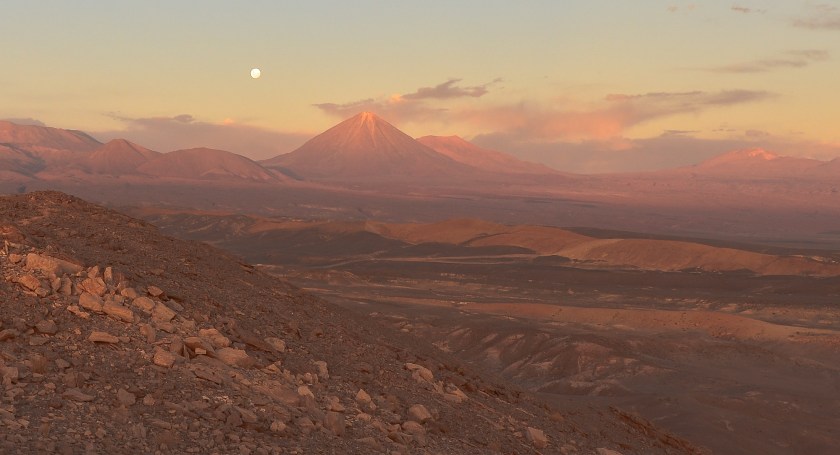
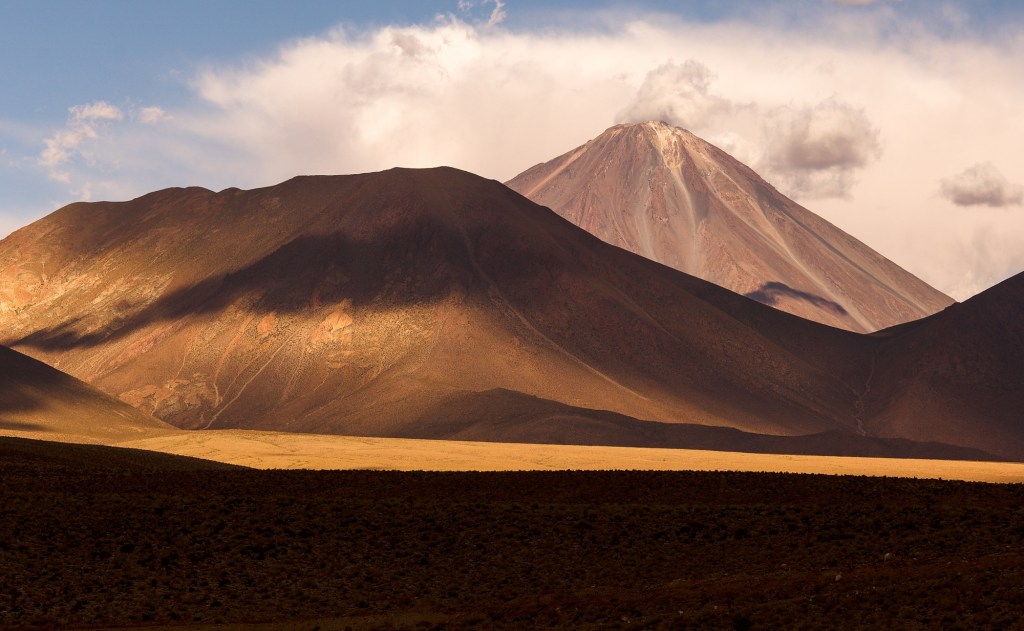
If i may stoop to condescend for a moment, with that irritating air of a geography teacher who always fancied himself as a geophysical mystic, the only true frontiers are natural: rivers, ocean, mountains, deserts, and so on. All else is political and therefore abstract. Chile is pinched between Earth’s longest mountain range above sea level and its deepest blue wilderness below. The altitude range within the space of 150km is about 40,000ft. With the exception of islands, Chile is the embodiment of a sovereign nation as nature intended. To its north is the Atacama, the world’s highest desert, recording some of the driest non-polar conditions on Earth; to its south a subpolar peninsula recording some of the strongest winds on Earth. So unusually-shaped within its borders, Chile is rather unlike anything else out there. Only its Andean neighbour, Argentina, comes close. Chile is a beautiful ecological layer cake. As mentioned, northern Chile, on the altiplano, is a high altitude, volcanic desert of spectacular beauty and otherworldly mystique. NASA use it as a Martian lab. Beneath that is a Mediterranean belt, where vines are grown, climate is optimal, and where most Chileans choose to live. Beneath that lies the cool temperate zone. This region is verdant like Scotland or the Pacific Northwest. This pristine region is studded with inlets and ring-fenced by national parks. Its coastline is so jagged it’s positively fractal.
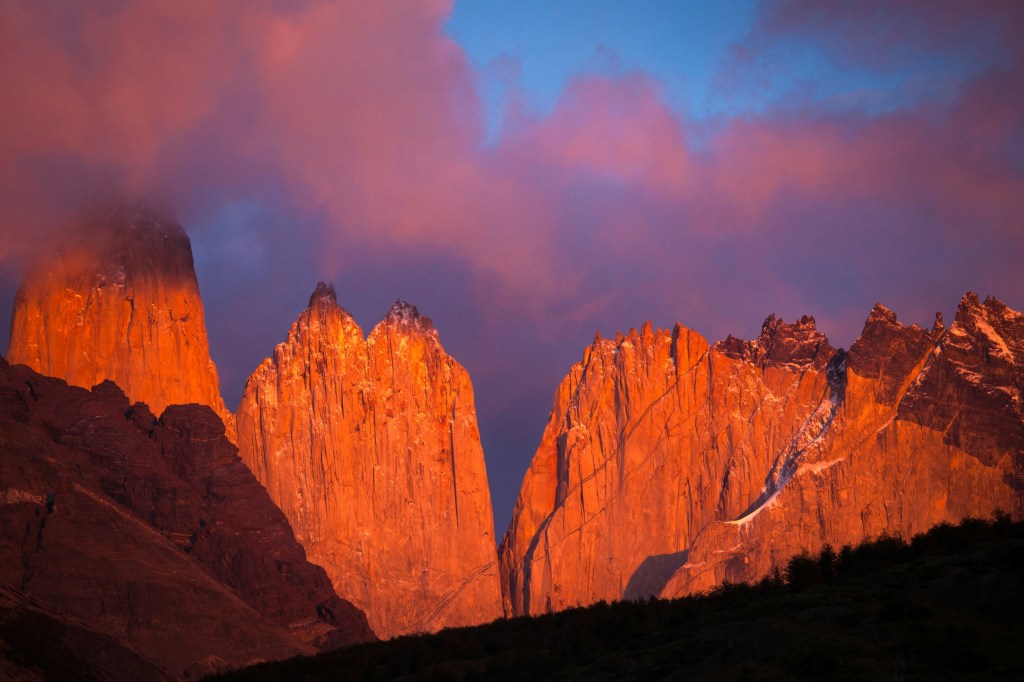
Beneath that you’re entering true Patagonia: a subpolar zone dotted with glaciers, guanaco, and granite fingers pointing up to their creator. Torres Del Paine is the most celebrated of these granite peaks. Beyond this storybook wilderness we come to the nub of the habitable world: the Chilean Antarctic and the Straits of Magellan. Beyond this point, history attests to where fools have rushed in where angels have feared to tread. Not mountains and ocean. Rather mountains of ocean.
Geography class over. Psychotherapy Class Underway.
Valparaiso – San Francisco of the South
How do you cross a country three times the size of Great Britain in a single day? Well, you go to Chile is what you do. From Santiago’s Pajaritos (‘little birds’ – what a name for a bus station where pickpocketing is rife) it was an hour and an half to Valparaiso, the erstwhile ‘Jewel of the Pacific’. These days this coastal city of a quarter of a mill is not so much of a jewel, but more like a frayed patchwork quilt. But nonetheless, Valparaiso was immortalised by Sting in an eponymously-titled song from his 1996 album, Mercury Falling. Since I heard that song the year it was released when, coincidentally, I was on the other flank of the Andes in Argentina, I think I had harboured a longing to see this nineteenth century pride of the Pacific for myself. I knew of its dashing, federation-style, clapboard houses. I had seen images of it as an artist’s messy palette, all splashed in mixed hues of gouache across a Kraken’s bite mark in the coast where deep ocean becomes a narrow continental shelf, then suddenly and dramatically breaking the surface as South America in the form of a magnificent natural harbour.
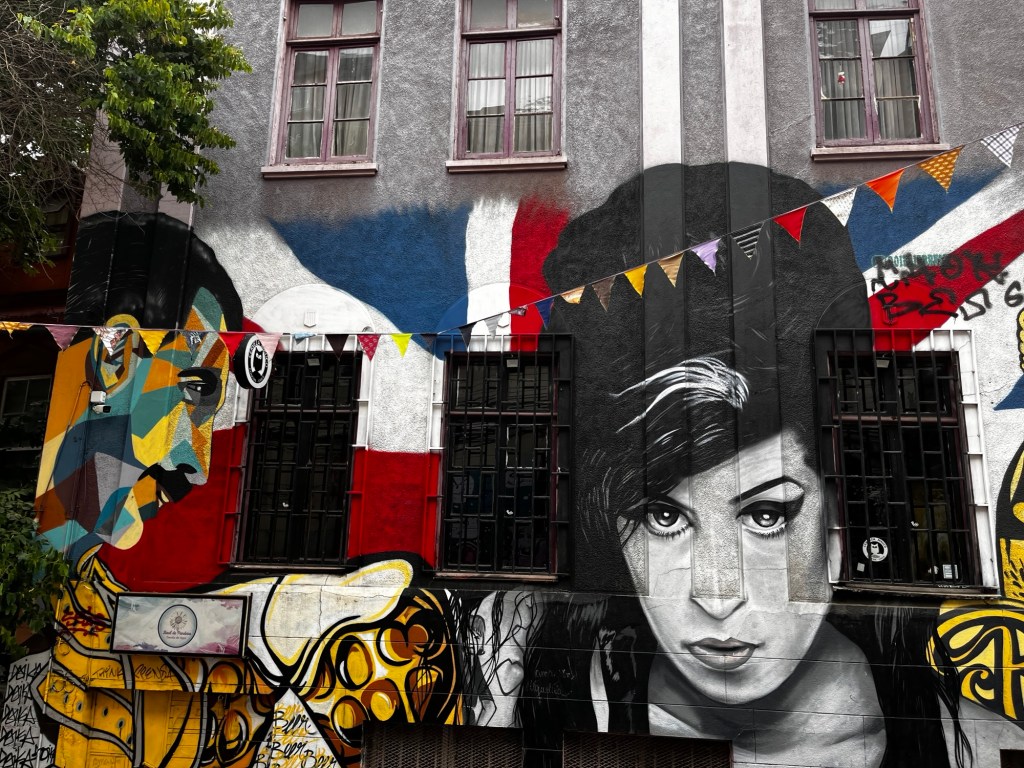
I knew of its reputation as an outpost of bohemian art. I knew a little of its rich history, its links to Victorian Britain. Though it was what i didn’t know that outshone what I knew. This in itself is the essence of discovery. For instance, I had not a clue how shabby Valparaiso was, how far she had fallen into disrepair. My legs were shocked at how steep her hills were; how every chipped and tattered surface now doubled as a work of art writ large; and, finally, how shady it was to walk her threaded streets after dark. This town struck me immediately as San Francisco’s doppelganger. The bay minus the tech giants. Full of dreamers, freaks, addicts, and creative types. A city falling off its elegant hinges, overwritten by the hand of youthful self-expression, I quickly realised there’s probably little else like it, never mind in Chile, or even Latin America, but across the entire world. Except for San Francisco, that is. And maybe Seattle. And Vancouver. Why don’t we throw in Vladivostok into the Pacific coastal family, not that i’ve been to the Russian Far east.
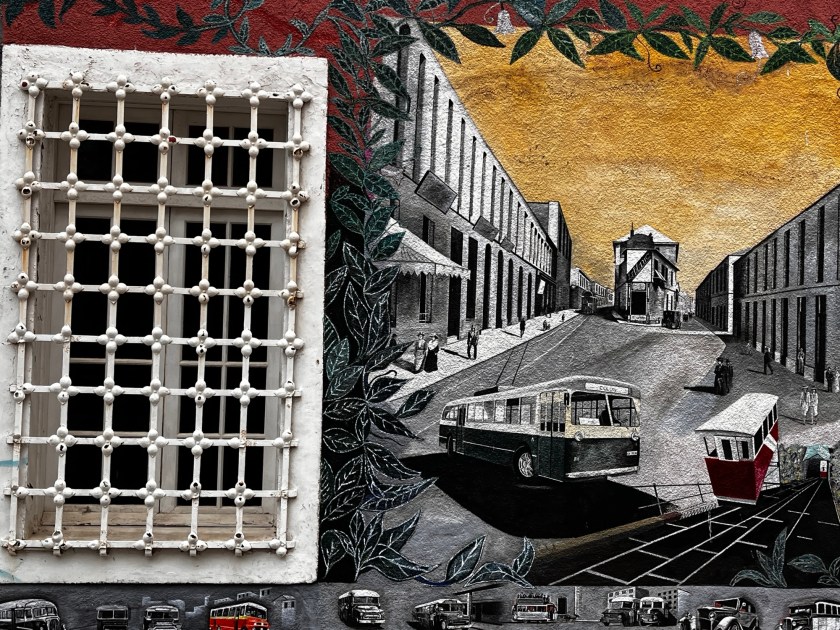
With vigour i set off out into the night. Pacific sunset falling down walls that told a story of decay and rebirth. This civic decrepitude you see across much of Latin America – from old British railway stations and Baroque colonial style in Sâo Paulo and Rio, to the flaky shutters and crumbling facades of San Telmo in Buenos Aires. But this decay does not mean death in Latin America. The blood of Latin creativity transfuses into the old, ailing body, rather like Count Dracula on his nightly prowls.
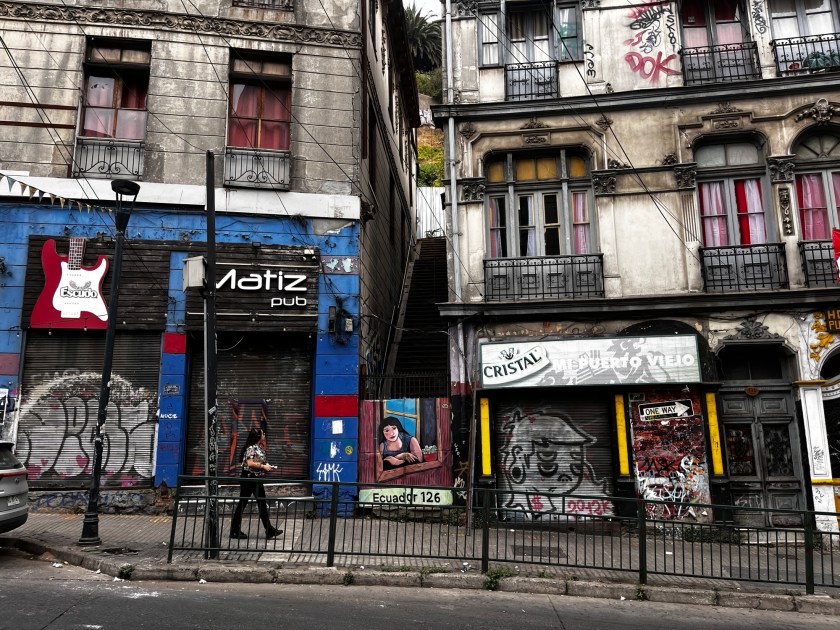
The day was handing over to the night shift when i got there. Scrawled metal shutters were coming down while the warm glow of micro pub lanterns were coming online. People sat on street tables quaffing the nation’s favourite tipple, which, by the way, is not wine. Chile has artisanal beers aplenty, many of which hail from the far south. It does red beers, ales, porters, lagers and pilsners, and all to a standard that even the Brits, Belgians and Germans might approve of. Yes, it’s official: Chileans fucking love beer, about as much as they love marijuana. In fact, they often combine them for a night to remember that gradually descends into a night forgotten. I sat outside at one such bar. The waiters were impeccable in their service in a way that puts my people to shame. They even spoke English, not that I wanted them to. But seeing that Chilean Spanish is a dialect unto itself, hearing English turned out to be a welcome tap on the eardrum.
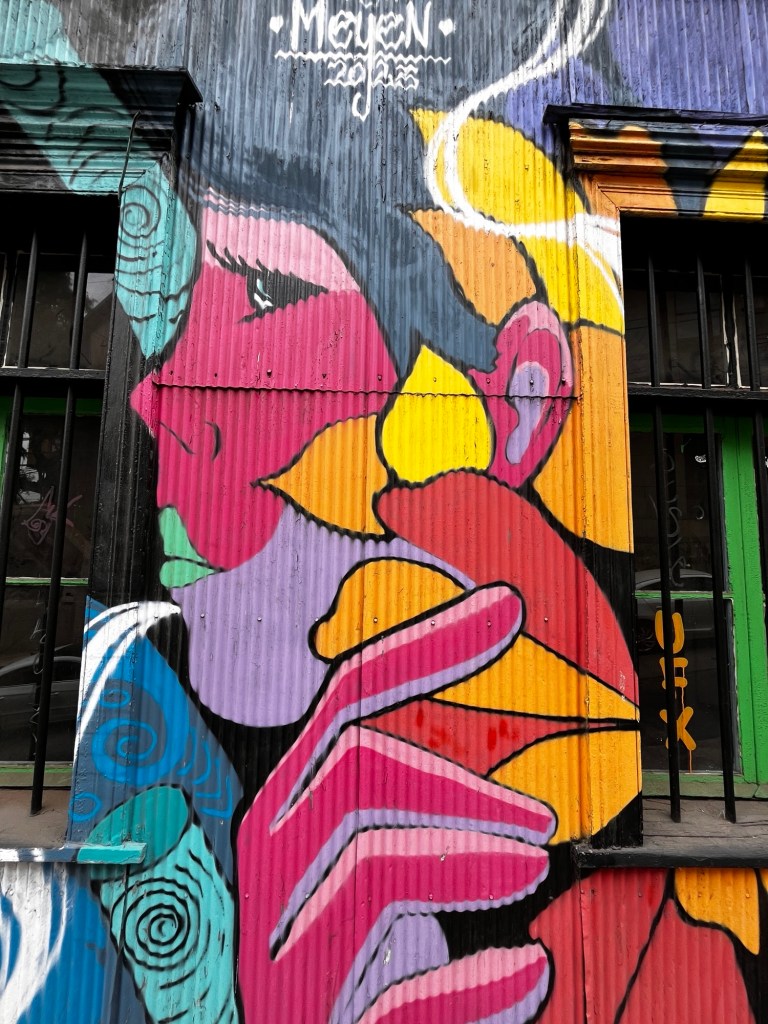
On returning from el baño, the waiter warned me about leaving anything unsupervised, even four raw eggs, two bread rolls and a lump of cheese. Why, i asked. Because they’ll steal the clothes off your back in this town. It quickly became apparent that Valparaiso was the long-lost twin of San Francisco – a place where dreams come to die, a town where for every up and coming sort there down and out to match. When you think of South American cities you think of Old Portugal and Spain surrounded by cement. But not here. Here it’s Amityville meets neo-Baroque meets German half-timbering meets art nouveau meets grimy post-industrial meets the deep, blue yonder.
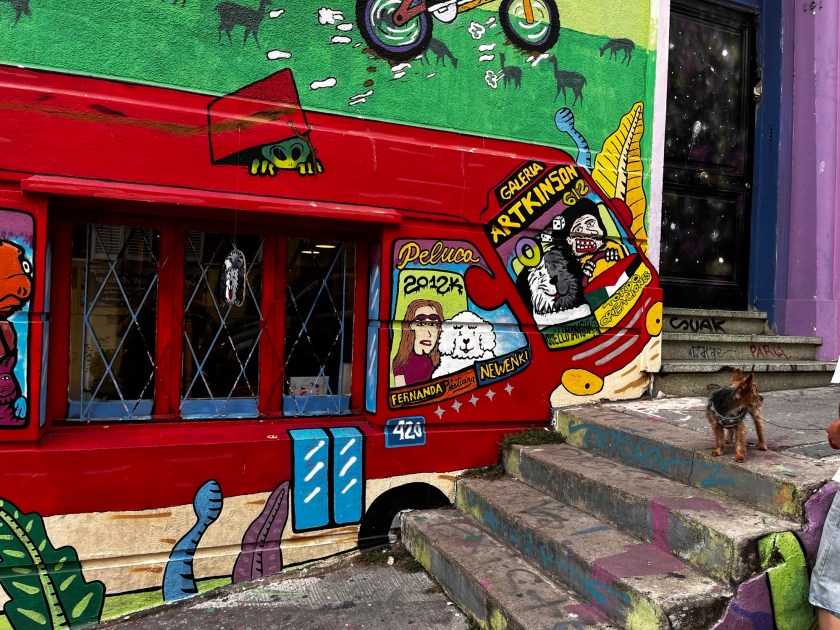
It’s sad really – seeing this once vital port of the South Pacific, for so long not just a refuelling station for naval and merchant shipping, but also an endpoint for Europeans seeking a new start – going downhill like a decrepit old dame rattling her jewels, wearing her tattered cha cha frock she kept from her heyday in the roaring Twenties. Yet, for all those flaked louvre shutters and all that graffiti scrawled across neo-baroque stonework, Valparaiso has reinvented itself in ways most other cities would have neither the chutzpah nor the imagination to do.
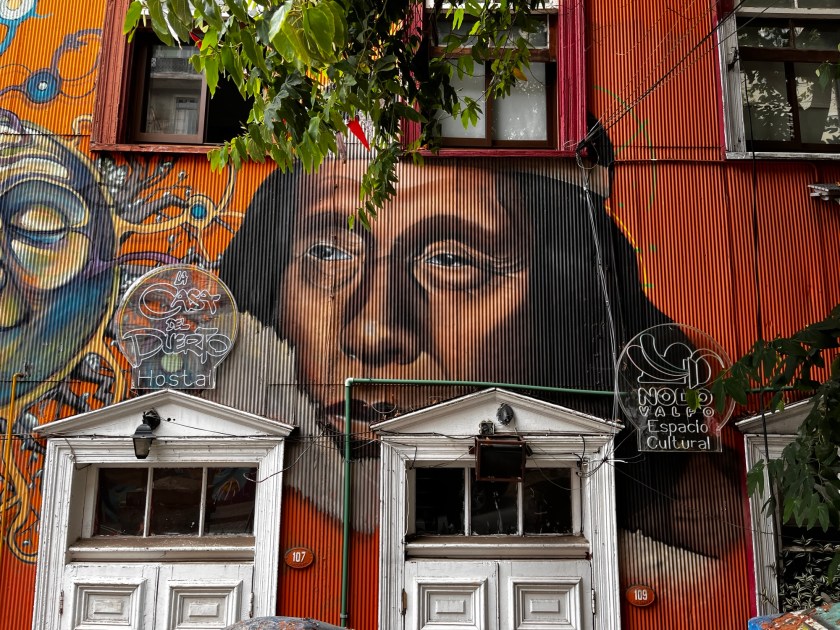
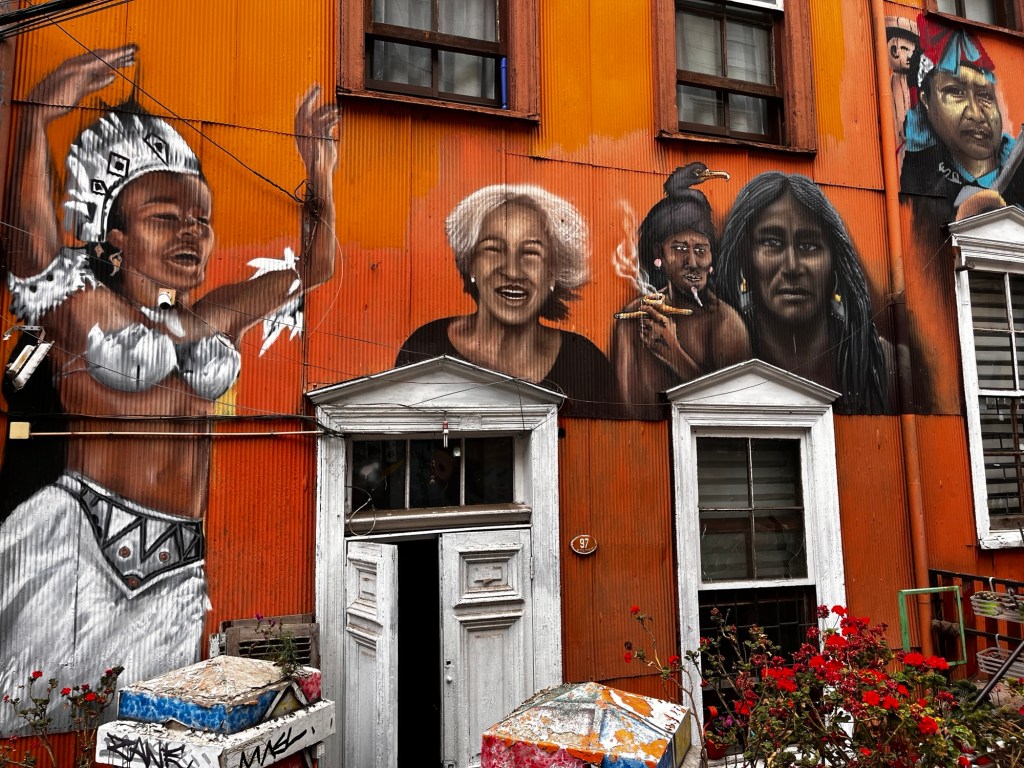
Why bother scrubbing the walls when you can bedaub them with a riot of colour which is the world itself if you can only move beyond the grey of the everyday? Valparaiso is colour writ large. It’s subversion in the way Paris’ Pompidou Centre is subversive. Murals extend out root and branch as if their host building existed purely for the moment the artist eyed their surface relief; just like the exoskeleton that wraps France’s greatest museum to modern art.

Valparaiso might well be the end of the world’s greatest open-air art gallery, but I’m running out of platitudes for a city falling so far apart it’s falling back together as a mass mania of magic murals that lend themselves to what survives of a human race that is failing in so many other ways. I’m all out of words. Speechless, even. Let each picture speak a thousand of them.
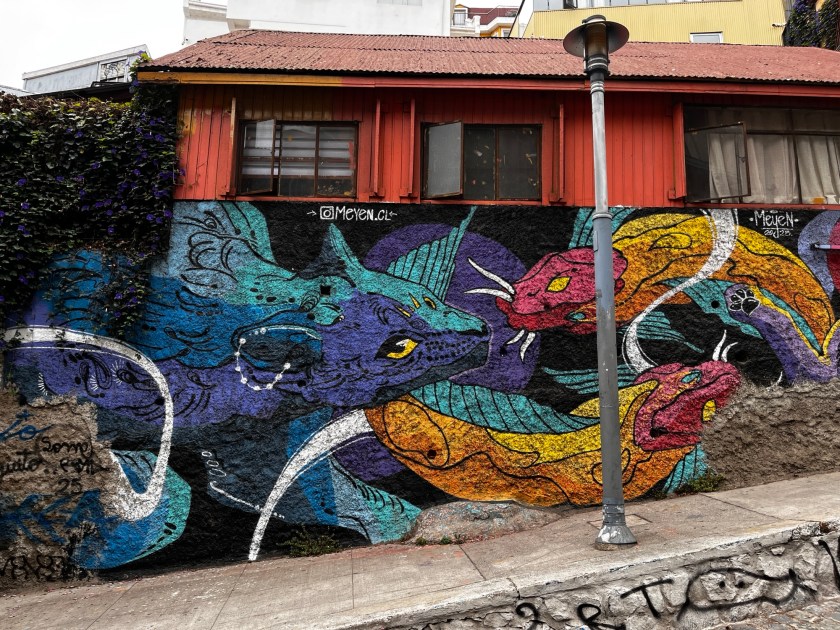
Until Valparaiso I never knew how decay could be subverted in such spectacular ways.
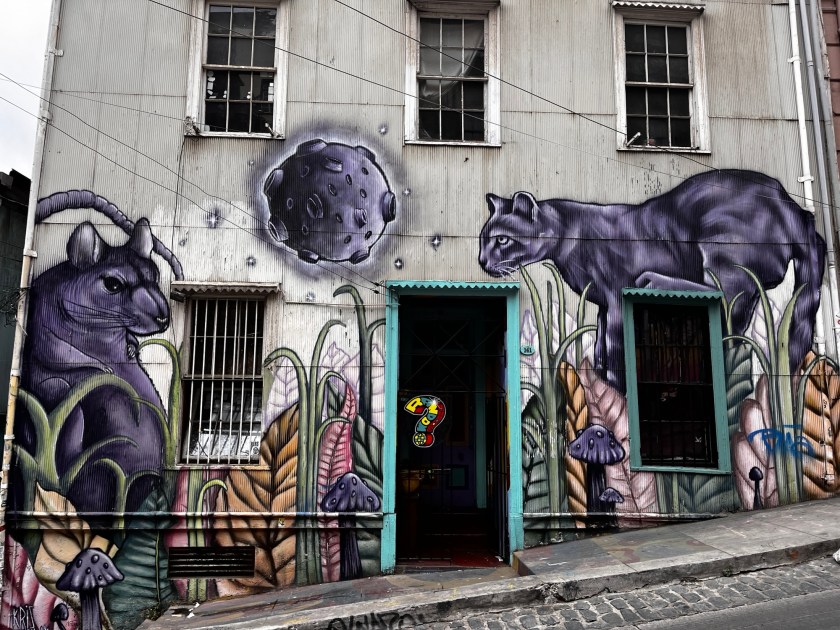
 The Blind Salamander