

Who Needs Breakfast at Tiffany’s?
Who needs Breakfast at Tiffany’s when you can have evangelical Nigerian generals for breakfast? A fair question, you might ask, but one that stands out as a trifle bizarre.
I’m holed up in the Al-Rayyan Doha Hilton for three months. We’re currently three weeks into a long, luxurious stay, with two months of room service to run. Outside it might be 43 celsius, but the hotel is an air-conned hotbed of the weird and the wonderful. They dump their bags from all over the world before disappearing behind fancy room numbers in this six-storey prism of marble and bronze leaf. The atrium is magnificent, it must be acknowledged. Tiered on two sides with hotel rooms tastefully set back from balustrades. On the third side, resplendent as you enter the vast lobby, is a kind of architectural fixture – I know not the technical term for it – a 100ft-high banner of bronze, cross-hatched glass panels, and abstractions of light and three-dimensional relief, perhaps. Whatever it is, it’s a showstopper. There’s so much marble in this one establishment that the mountain it was quarried from lies now in ransacked ruin. Trump was here in Qatar last week. He quipped something about loving all that marble. Trust me, he wasn’t kidding.
Back to the breakfast anecdote. It was Friday, first day of the weekend, and I was sitting there digesting yet another unnecessarily generous buffet breakfast, minding my own business, when in walks a black man, middle-aged, definitely West African. I had a feeling he might be Nigerian, as a large delegation had encamped there on official business as few days before. In fact, i was chatting with one of them at dinner the previous evening.
The chap turned to me and asked, “Are you South African?”
I answered i wasn’t but that the question had been asked of me in the past.
“Is there something about me that has that Afrikaner ring to it?”
“Well, yes”, he said. “Your face. And you are tall and white, so why not.”
I wanted to reassure him that in various parts of the world, stretching from Dunedin to Dundee, Manitoba to Moscow, there are a lot of white fellas over 6′ tall, and who could pass for a Springbok.
Soon, we fell into talking. Not afraid of physical proximity, as West Africans have to be, he shifted across the padded bench until inches away and proceeded to tell me that he was none other than a general in the Nigerian army.
“Funny, that,” I countered. ‘Until last week, I can’t recall ever meeting a senior military officer. But since then I’ve rubbed up against British Lt Colonels and Qatari Brigadiers.”
Life is either predictably predictable or else bloody bizarre. You wait an age on one red double decker and then three turn up in rapid succession.
Our conversation went from surface to deep sea within minutes. Our first scheduled stop on the pelagic dive was about the conspicuous wealth in the Gulf. Another hundred metres into the inky leviathan and we were on the subject of the corruption of money and greed in public life. Deeper still, it was the ecological crisis, rampant deforestation and Africa’s – and the planet’s – dwindling biota of all creatures great and small. But it was our next scheduled rest on the deep dive into the profound that he strong-armed me with a term i had never heard of before: prebendalism. What the? Can you repeat that, Emmanuel? P-r-e-b-e-n-d-a-l-i-s-m. The politics of cronyism and corruption and the curse of a democratic Nigeria. It refers to a closed culture in which state offices and civil service privileges result in a shared feeling of entitlement among elected officials to basically cannibalise the state’s resources for their own ends when that commonwealth should instead be fairly redistributed to those most in need. And among Nigeria’s 200 million there are many. It was, alleged my newfound general friend, Emmanuel, the reason for Nigeria’s impending doom. Reason further still to suspend democracy and restore military rule. He had a point, to be fair. He claimed, plausibly, that when civilian governments rule, they cannot help but slide in a culture of prebendalism. Popular vote by virtue of self-interest groups close to government demand booty in exchange for ballot loyalty. Those entitlements can be as innocent as a bag of rice or as sinister as cash bundles. A military government, on the other hand, seeks no such alliances of convenience and is therefore more adept at tackling strategic problems, like bringing immediate aid to whole regional populations who have, say, had their crops fail due to extreme weather, or civil unrest.
Emmanuel propounded a theory massively unpopular in the condescending West. But a theory nonetheless that made me sit back and think from the perspective of one of the heads of the Army who frames his country’s current plight in near-calamitous terms requiring martial law, redefining martial rule as a corrective instrument for a nation gone badly off the rails. Though in spite of the prebendalism hollowing out Nigeria’s (and i suspect much of Africa’s) civil governance, it was something else that led me to turn a quirky but original experience into this written record: namely, Emmanuel’s confession that he would rather be saving souls than saving lives. There is a deep evangelical streak running through the heart of all human life in developing nations with runaway population pressure. I saw it in Brazil. In him I saw it as casting a divine shadow over realities we in the west cannot imagine: where someone like Emmanuel’s father loses his own father to preventable disease aged six, before wandering alone across brutally hot savannah for weeks before being rescued by European missionaries – Anglicans, actually. From that trauma to the balm of Christ, in a West Africa preceded for millennia by animistic shamanism, the superimposition of Western scriptural doctrine onto little lost sheep has this intoxicating effect. Not only was the son fervently Christian in both beliefs and deeds in a way we in the secular West could no longer be, Emmanuel had the shaman in him too, for he believed that God spoke through him, anointing him with divine powers to change others’ fate. He was convinced, for instance, that he was able to grant his father a stay of death until the time was right to lose him. Like the missionaries who plucked his father from sad obscurity aged six, beyond the temporal to the spiritual Emmanuel considered being a general a drop in the ocean compared to being a servant of the people prosecuting God’s work.
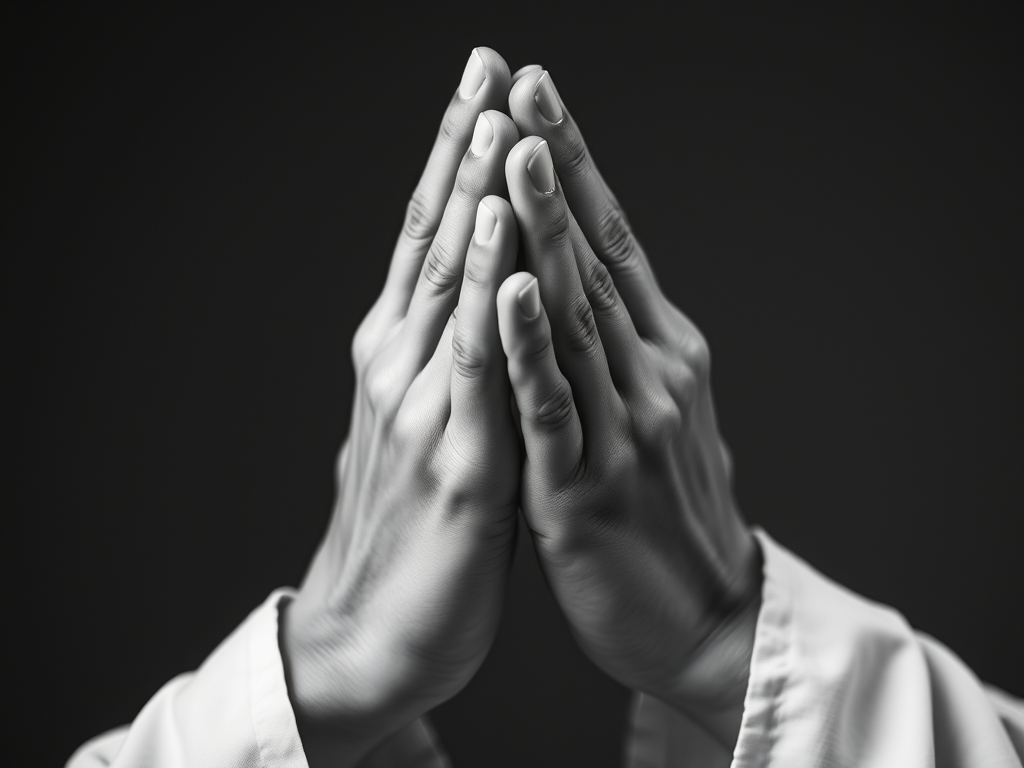
Pitying my inbuilt scepticism, and mocking my quasi-Darwinian metaphor of the chimpanzee and the human hand being one in the same, he was not going to let me go without taking my hand in his, and praying for an end to my lifetime of doubt. Clasping a white hand in two warm, black hands he squeezed with all the conviction of a man who knew nothing but. He sealed his eyes and screwed up his face, beseeching God to give Scott a long life. And when it was over, gave me his number and invited me to stay with his family the next time i was in Nigeria.
Who needs Breakfast at Tiffany’s when you can have breakfast in Babylon?


 The Blind Salamander