I suppose all travellers feel the homecoming differently. Some crash to earth while others drift down all light and feathery. It all depends on a number of factors: how intense the trip has been, and how far you ventured to make that trip happen in the first place. For a reliable measure of to what degree you feel the fallout of coming home, look no further than this equation: divide the value of where have i just been with the value of where the hell I think I am going now. Unless the sum comes out as a negative number, you might just have experienced a homecoming crash.
With the world numbering about 200 sovereign nations, there are tens of thousands of combinations in theory you can make on any end-to-end journey. You can go from Java to Japan, Venezuela to Vanuatu, or the Faroes Isles to France. You can make these point to point destinations alliterate with a classic short back vowel sound, like the UK to the US. Or go large with a nice voiced consonant, like Gabon to Ghana. If you’re willing to speak the lingo of long-haul, how about the rarely confused but uncannily similar-sounding Austria to Australia? Or for practicality’s sake you can dump literary pretensions, and just stretch the alphabet by going Azerbaijan to Zanzibar and back to Abyssinia – except, Ah! Sugar! Abyssinia is now known as Ethiopia, so ditch that. Be judicious when combining vowel sounds on your long end-to-end destination list, as they can culminate in an act of war, as the Ethiopians and Eritreans discovered to their detriment. Russia and Ukraine are neighbours in the alphabet, but far apart in other ways. Nor are either viable travel destinations right now.
In my case, I stuck to the early stages of the alphabet: I went from England to Brazil, albeit via France’s exquisite Charles de Gaulle airport. As E can never be B, so it follows, England can never be Brazil. Not that E would ever truly want to be…uh…B. The world has quite enough to contend with having one Brazil in it far less two. Another Brazil on the fringes of Northwest Europe, and the planet would spin out of orbit (all that rain and vegetation on all that landmass is a weighty proposition). On second thoughts, forget it! An E=B duplicate Brazil this far north just wouldn’t be Brazil. It would be a bloody big England, and more of a headache for Europe.
Before I go in sinuous, unplanned narrative directions, I think it behooves me to say, Brazil is a truly amazing country. Okay. Wind that back. Correction: Brazil is a continent within a continent. So, therefore, Brazil is an amazing country-continent. By definition, it doesn’t rely on any place else. If all others withered, it would keep sprouting new shoots. It grows its own food, drink and living materials in abundance, making it self-sufficient in all but the imported luxuries, which frankly no one needs for happiness because they are by definition luxuries and exist only to make dreary winter days in Europe feel meaningful to dissolute rich people. But Brazil is far from myopically narcissistic. She’ll take you in alright. And she’ll make you feel bloody good about being accepted. Particularly, I must add, if you’re white, European and male. Speaking the global lingua-franca helps, too. But white British privilege aside, even undervalued black Brazilians and pardo/as (name given to mixed race Brazilians of uncertain origin) hardly gripe about their country, for all its historical betrayal of them. Being a continent within a continent, and the sole Portuguese-speaking one, at that, it’s all they’ve seen. And by and large, what they see more often than not pleases the eye, whether that eye be blue, green or brown.
I want to talk about the immediate aftermath of what it feels like living a whole season in Brazil. I want to drift in an out of feeling into thinking and back into feeling. I want to talk stats, sights, sounds and smells, but after three months of sensory overload, i am clueless of where to begin. Being a journey with a beating heart, maybe the writing style should mirror the pulsations of the human corazão. Like a healthy heart, the retelling should contract into a tight ball of fleeting moments – observational vignettes set on location in some of the meanest, greenest backcountry I have seen (i shit you not) in 30 years of darting all over this planet. Then, filled with blood that still boils with the heat of the Brazilian summer, the heart of the travelogue should expand to draw in the immensity of facts and physical features that fill the eyes with sights incomprehensible to those whose gaze has yet to be blessed to fall upon such places.
This is the challenge of the ‘travelong travelogger’. This might smack of bombast, but such is the burden we carry, all too often alone.
The experts say ‘write what you know’. I prefer to invert the maxim to ‘know what I write’. And right now, I’m in that 72hr critical period when where I’ve landed still feels like a diorama, capturing all that’s still-life about these dying days of England’s winter. Small-town English life with all its bauble hats and padded overcoats is going on outside my boat on the other bank of the river, but – Brazil fresh in my mind and radiating in a tropical afterglow out from my skin – there’s a yellow and blue filter between these eyes that cast an outward stare on that monochrome movie out there. I’m trying to see both sides of the world for what they are, but every time I try take each on their own merit, i end up trying to colour match the two. This contrast is stretching me a bit.
The subjectivity aspect of how your perceptions both change and adapt to seeing a familiar place as if for the first time, having been somewhere so qualitatively different for so long, kind of hastens you to want to reach for the encyclopaedia. Having travelled long days by road from São Paulo, only to make the slightest of incisions into the neighbouring states of Rio and Minas Gerais – such is the scale of a land half the size of the South American continent it occupies – there’s little doubt Brazil is rich in details, mostly, but by no means exclusively, natural.
Scenes set context. Even though my impression is that I saw a lot on my expeditionary outings in Brazil, I saw but a fraction. And here’s why. Let’s go holistic before getting to the nub.
Broadly-speaking, there are a handful of ecosystems that constitute the eight million square km landmass of South America’s dancing, oversized child. Imagine for a moment a litter of mongrel pups, Brazil’s natural habitats are varied as they are conjoined. You’ve got flat pampa in the Gaucho grassland country of the far south; you’ve got Pantanal – floodplain swamp country in the Mato Grosso, rich in plant and animal life; inland you’ve got cerrado (pronounced say-hado) in Minas Gerais and Goianas – yellow savannah and rocky extrusions, not unlike parts of Australia; between the cerrado and the sea you’ve got caatinga (pronouned kah-chinga) in Minas Gerais and Bahia – hot, dry, hilly scrubland of tight, gnarly vegetation, deep canyons and red oxide earth; you’ve got Amazonia – lowland river basin of pure, tropical rainforest with its prodigious feet in the world’s largest drainage system. Between the hot highlands of the vast interior and 4,000km of sometimes sultry, botanical coastline, there’s lush, semi-deciduous forest featuring immigrants like towering eucalypts and golden oldies like Permian pines in the form of Araucaria. Then there’s the other, less celebrated but far more felled brethren – the Mata Atlantica. There might only be 7% of the original Atlantic rainforest left, but it don’t let that fool you. It continues to cloak innumerable hillsides, and brings rain in multitudes between Brazil’s two most recognisable urban centres: São Paulo and Rio de Janeiro. Moreover, it brings organic reproduction in ways hard to fathom when you live the four seasons.
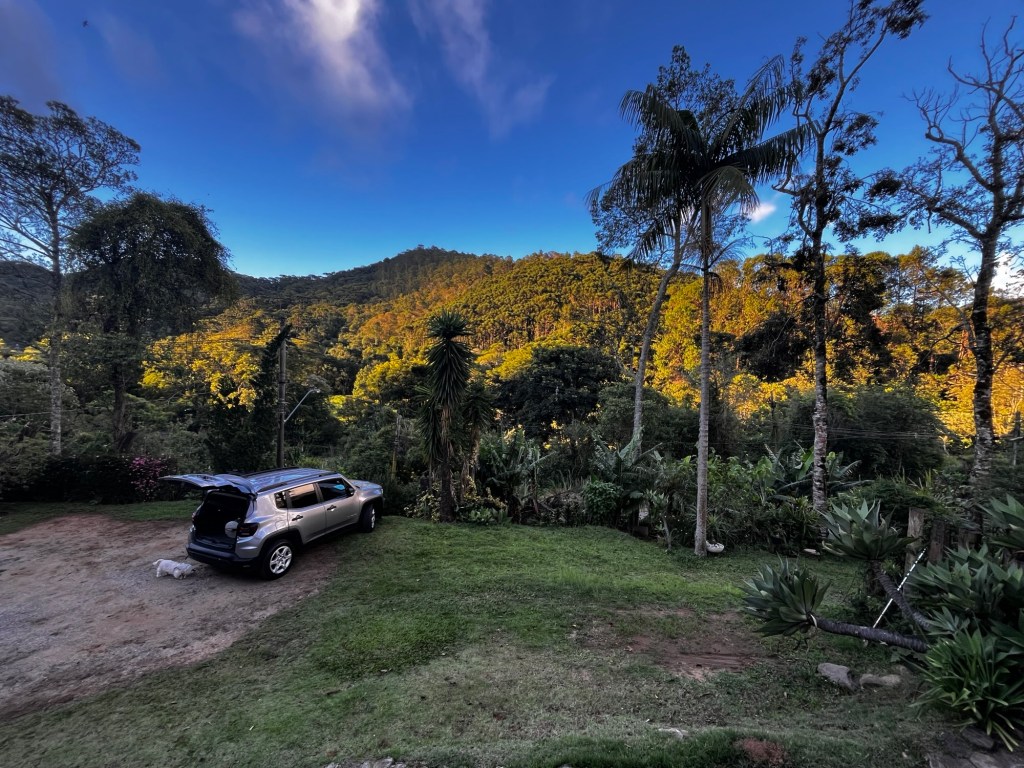
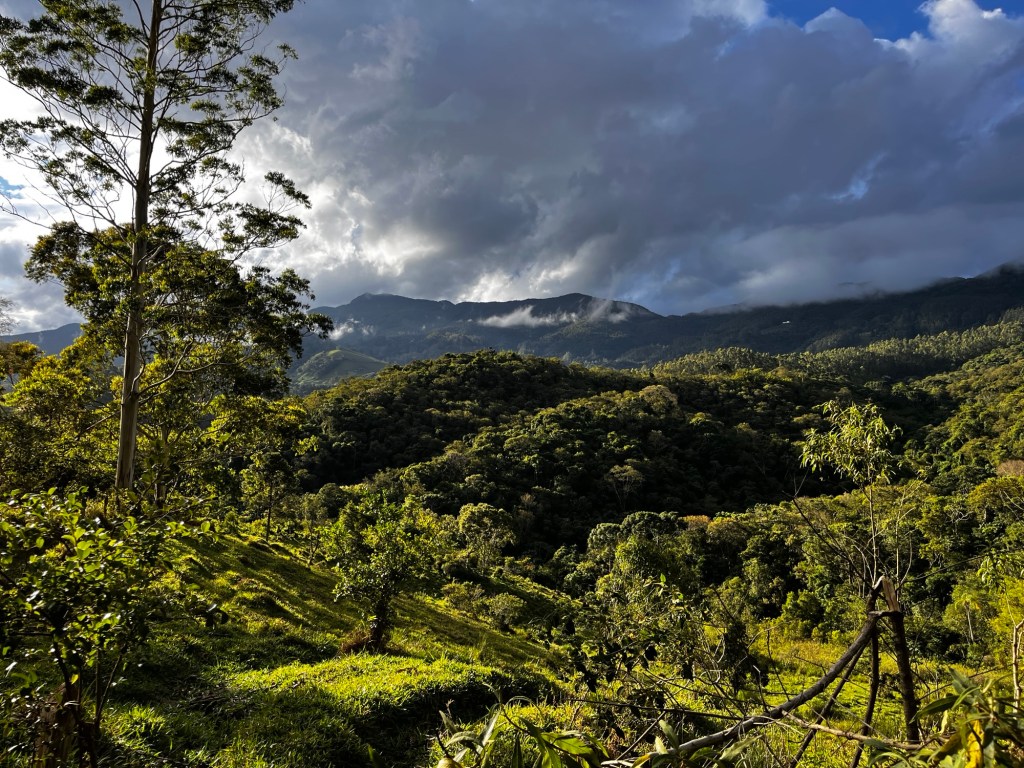
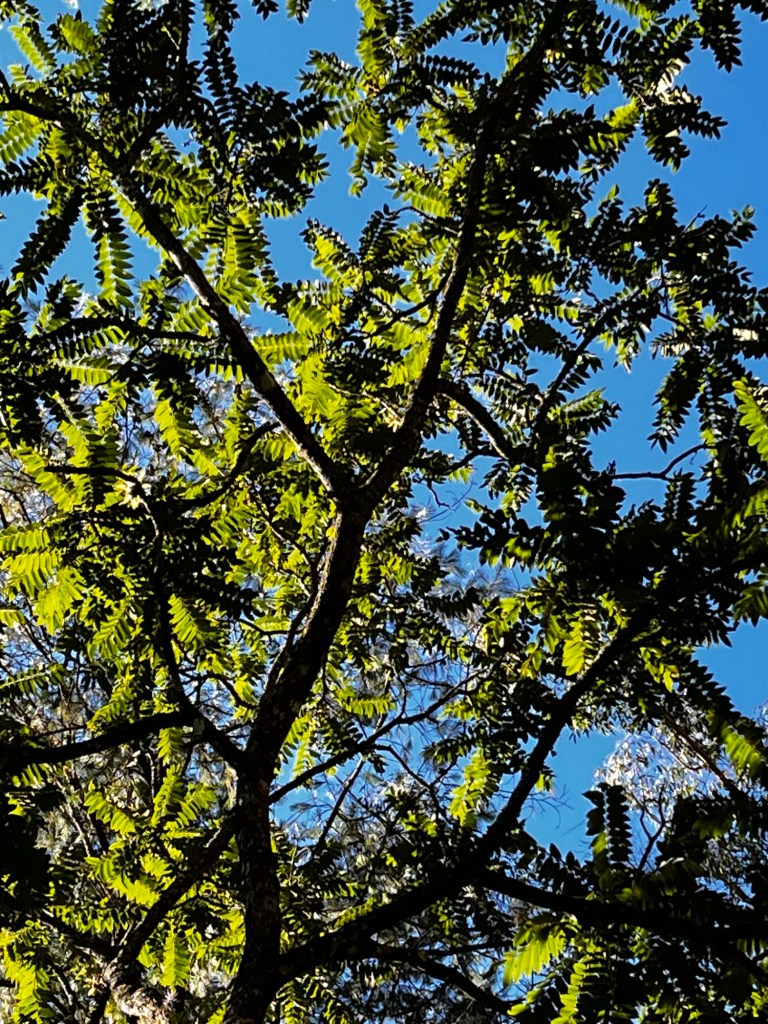
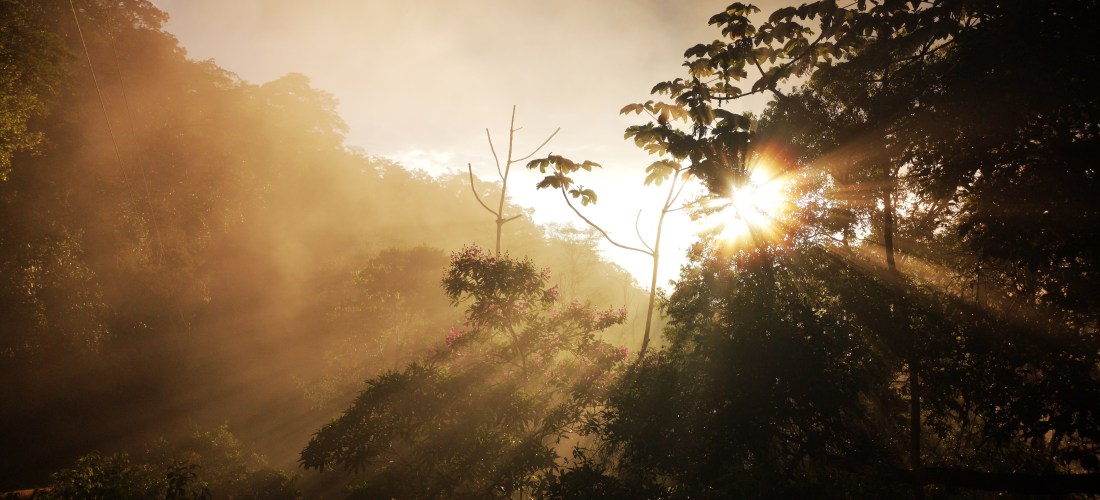
It is this habitat, the Mata Atlantica, reaching all the way from the mountains near Minas Gerais to the magnificent beaches along the litoral norte of São Paulo and the Rio coast, that I was witness to. It’s formidable as it is stupendous. Though it wants to bite you at every opportunity. When the sun blazes, it burns. And when it rains, boy does it rain.
Now seems like a good moment to end this instalment. Let anticipation hum for a while before following up with an op-ed piece on why magical encounters – from Minas to São Paulo, and best of all Rio State – are best shared with posterity, as well as maybe a few accidental readers. Why stash these experiences selfishly away in a memory capsule? The 72hr window will only pass, and the new reality will shove and jostle the previous one until it’s all but banished to a darkening past.














 The Blind Salamander