It’s (at) the End of the World as We Know it & I Feel Fine

adventure, chile, South America, Travel, Travel Photography, travelogue, Valparaiso
img_3728

Exaggeration. It’s nowhere near the end of the world; it’s not even near the world of the end. Nor is it at the end of Chile. Far from it. For that you’ve got to motor another 2000km south to Punta Arenas. But you get the idea, and if you remember a certain REM classic from the 80s, you’ll get the cultural reference, too. One fact in the title is incontrovertible: I did feel fine. Chile left me feeling as fine as I’ve felt for a while. Moreover, when the actual end of the world is unravelling half a world away in the Near East, Chile’s Pacific coast might well be the other end of the world spared the end. That enhances its attractiveness all the more.

Way down south lies a land of immense variety. A land that the relatively few who visit will not readily forget. Rigid like a backbone that runs down the southern cone of South America, Chile is tierra blessed by nature and by virtue of the 40 lines of latitude it straddles on the great southern highway reaching from the subtropics to the subantarctic. 40 degrees of latitude! As far as parallels go, that’s unparalleled, anywhere.
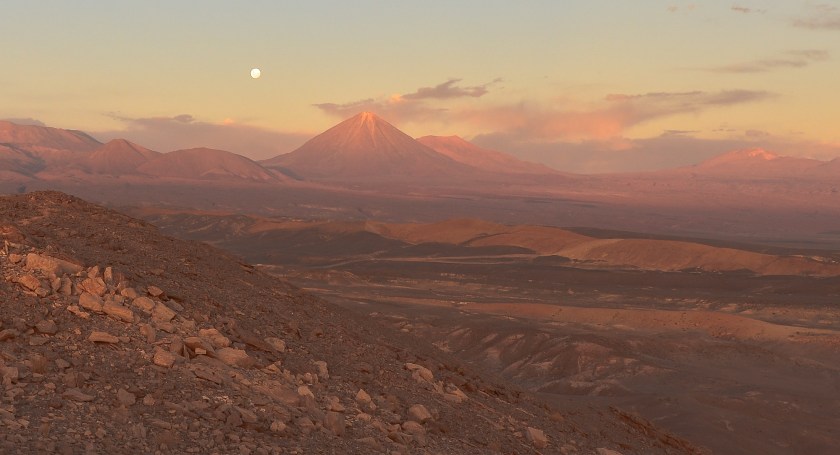
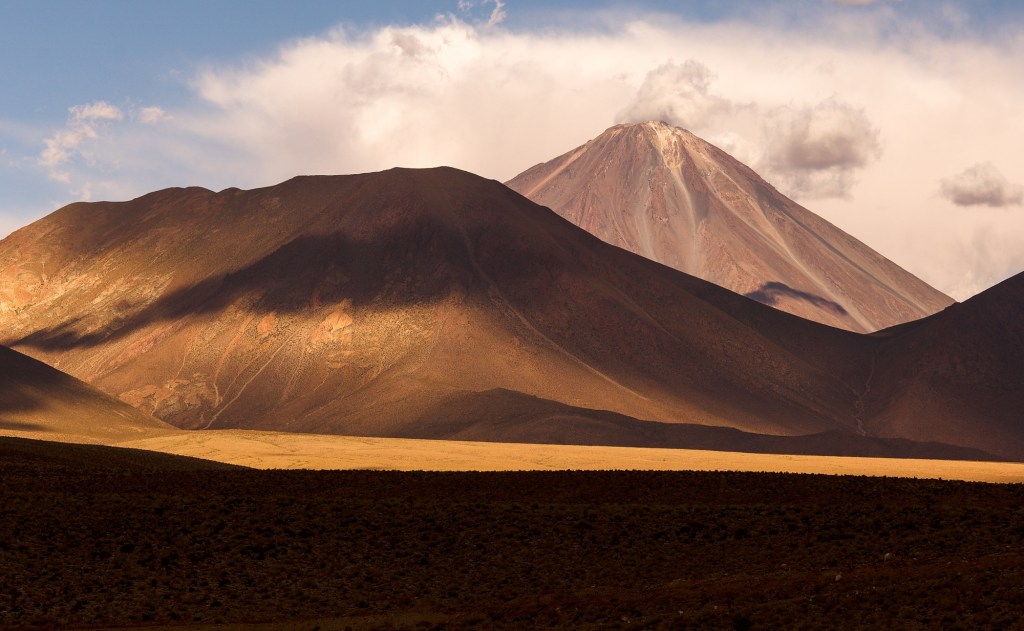
If i may stoop to condescend for a moment, with that irritating air of a geography teacher who always fancied himself as a geophysical mystic, the only true frontiers are natural: rivers, ocean, mountains, deserts, and so on. All else is political and therefore abstract. Chile is pinched between Earth’s longest mountain range above sea level and its deepest blue wilderness below. The altitude range within the space of 150km is about 40,000ft. With the exception of islands, Chile is the embodiment of a sovereign nation as nature intended. To its north is the Atacama, the world’s highest desert, recording some of the driest non-polar conditions on Earth; to its south a subpolar peninsula recording some of the strongest winds on Earth. So unusually-shaped within its borders, Chile is rather unlike anything else out there. Only its Andean neighbour, Argentina, comes close. Chile is a beautiful ecological layer cake. As mentioned, northern Chile, on the altiplano, is a high altitude, volcanic desert of spectacular beauty and otherworldly mystique. NASA use it as a Martian lab. Beneath that is a Mediterranean belt, where vines are grown, climate is optimal, and where most Chileans choose to live. Beneath that lies the cool temperate zone. This region is verdant like Scotland or the Pacific Northwest. This pristine region is studded with inlets and ring-fenced by national parks. Its coastline is so jagged it’s positively fractal.
licancabur16-1

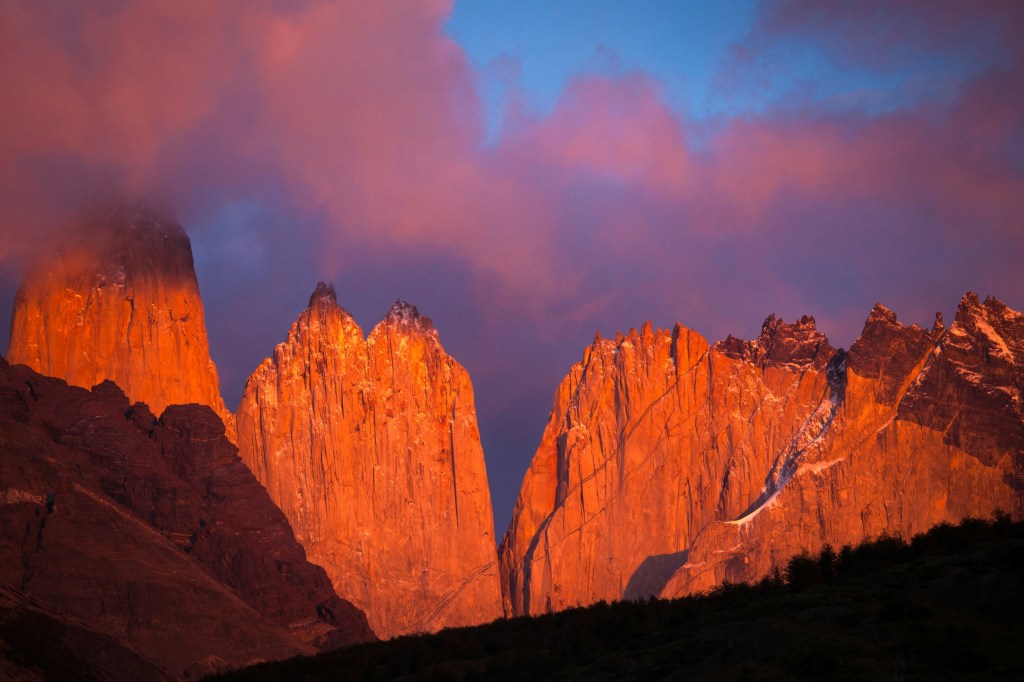
Beneath that you’re entering true Patagonia: a subpolar zone dotted with glaciers, guanaco, and granite fingers pointing up to their creator. Torres Del Paine is the most celebrated of these granite peaks. Beyond this storybook wilderness we come to the nub of the habitable world: the Chilean Antarctic and the Straits of Magellan. Beyond this point, history attests to where fools have rushed in where angels have feared to tread. Not mountains and ocean. Rather mountains of ocean.
Geography class over. Psychotherapy Class Underway.

Valparaiso – San Francisco of the South

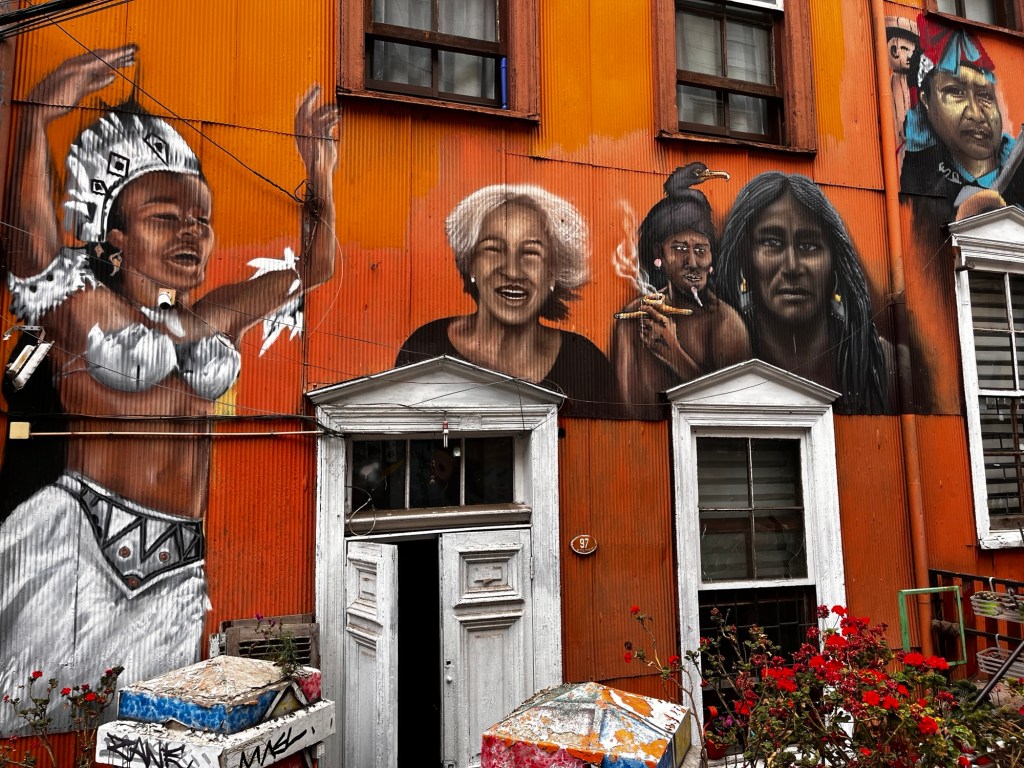
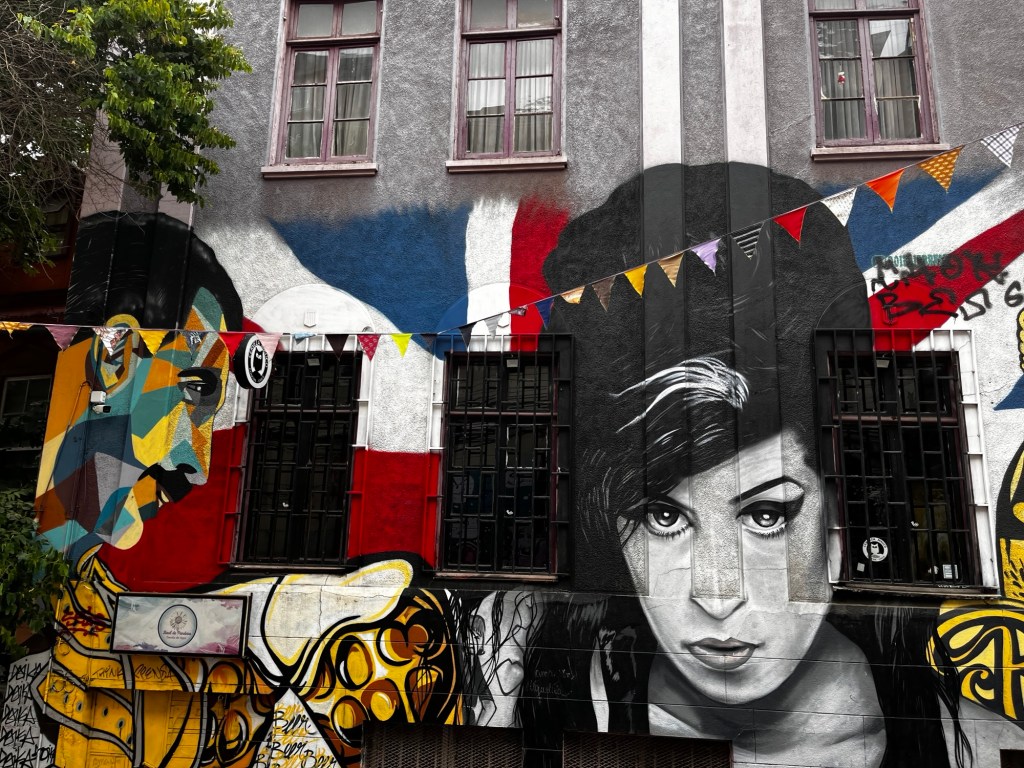
How do you cross a country three times the size of Great Britain in a single day? Well, you go to Chile is what you do. From Santiago’s Pajaritos (‘little birds’ – what a name for a bus station where pickpocketing is rife) it was an hour and an half to Valparaiso, the erstwhile ‘Jewel of the Pacific’. These days this coastal city of a quarter of a mill is not so much of a jewel, but more like a frayed patchwork quilt. But nonetheless, Valparaiso was immortalised by Sting in an eponymously-titled song from his 1996 album, Mercury Falling. Since I heard that song the year it was released when, coincidentally, I was on the other flank of the Andes in Argentina, I think I had harboured a longing to see this nineteenth century pride of the Pacific for myself. I knew of its dashing, federation-style, clapboard houses. I had seen images of it as an artist’s messy palette, all splashed in mixed hues of gouache across a Kraken’s bite mark in the coast where deep ocean becomes a narrow continental shelf, then suddenly and dramatically breaking the surface as South America in the form of a magnificent natural harbour.
img_3732

I knew of its reputation as an outpost of bohemian art. I knew a little of its rich history, its links to Victorian Britain. Though it was what i didn’t know that outshone what I knew. This in itself is the essence of discovery. For instance, I had not a clue how shabby Valparaiso was, how far she had fallen into disrepair. My legs were shocked at how steep her hills were; how every chipped and tattered surface now doubled as a work of art writ large; and, finally, how shady it was to walk her threaded streets after dark. This town struck me immediately as San Francisco’s doppelganger. The bay minus the tech giants. Full of dreamers, freaks, addicts, and creative types. A city falling off its elegant hinges, overwritten by the hand of youthful self-expression, I quickly realised there’s probably little else like it, never mind in Chile, or even Latin America, but across the entire world. Except for San Francisco, that is. And maybe Seattle. And Vancouver. Why don’t we throw in Vladivostok into the Pacific coastal family, not that i’ve been to the Russian Far east.
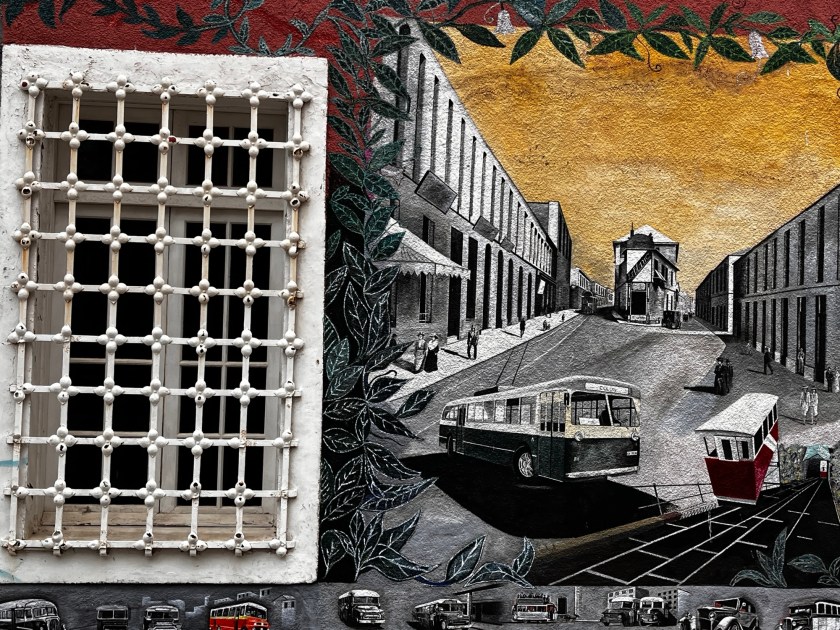
With vigour i set off out into the night. Pacific sunset falling down walls that told a story of decay and rebirth. This civic decrepitude you see across much of Latin America – from old British railway stations and Baroque colonial style in Sâo Paulo and Rio, to the flaky shutters and crumbling facades of San Telmo in Buenos Aires. But this decay does not mean death in Latin America. The blood of Latin creativity transfuses into the old, ailing body, rather like Count Dracula on his nightly prowls.
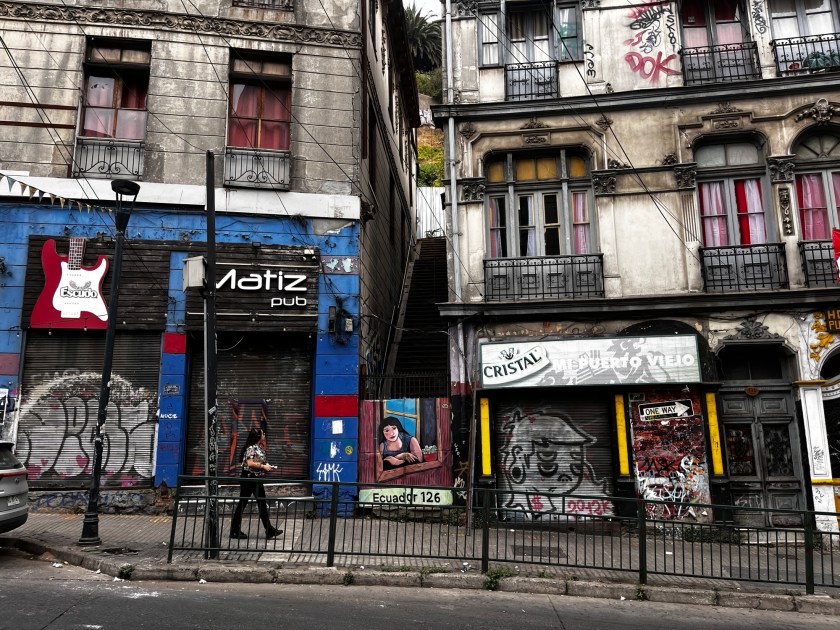
The day was handing over to the night shift when i got there. Scrawled metal shutters were coming down while the warm glow of micro pub lanterns were coming online. People sat on street tables quaffing the nation’s favourite tipple, which, by the way, is not wine. Chile has artisanal beers aplenty, many of which hail from the far south. It does red beers, ales, porters, lagers and pilsners, and all to a standard that even the Brits, Belgians and Germans might approve of. Yes, it’s official: Chileans fucking love beer, about as much as they love marijuana. In fact, they often combine them for a night to remember that gradually descends into a night forgotten. I sat outside at one such bar. The waiters were impeccable in their service in a way that puts my people to shame. They even spoke English, not that I wanted them to. But seeing that Chilean Spanish is a dialect unto itself, hearing English turned out to be a welcome tap on the eardrum.
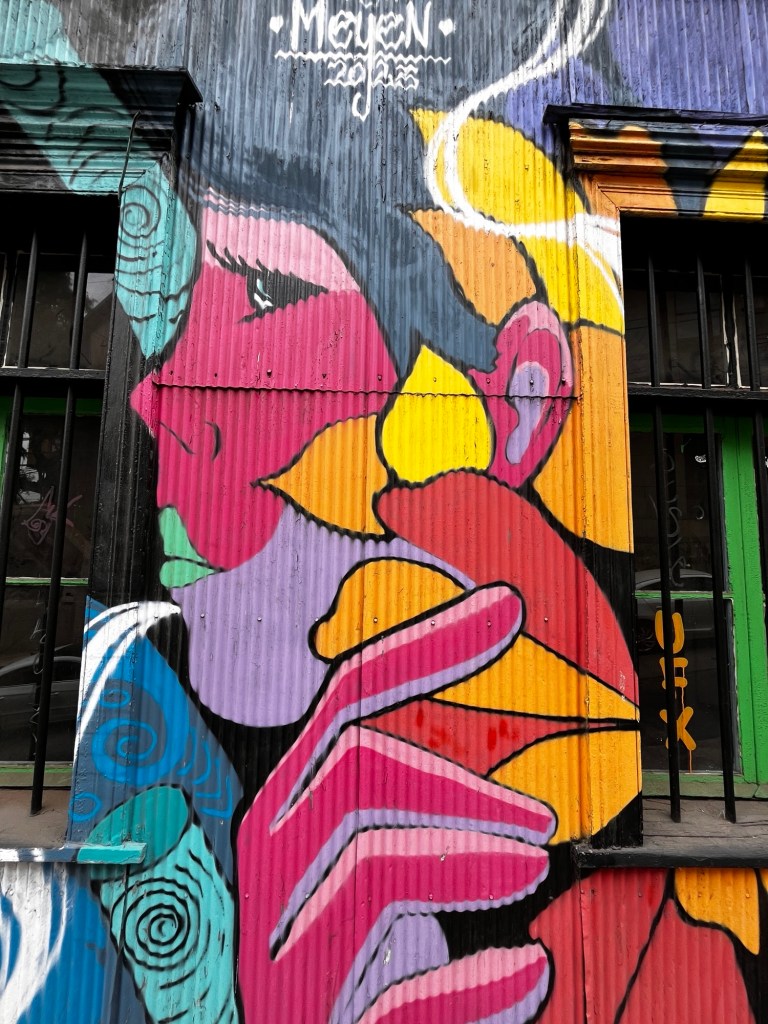
On returning from el baño, the waiter warned me about leaving anything unsupervised, even four raw eggs, two bread rolls and a lump of cheese. Why, i asked. Because they’ll steal the clothes off your back in this town. It quickly became apparent that Valparaiso was the long-lost twin of San Francisco – a place where dreams come to die, a town where for every up and coming sort there down and out to match. When you think of South American cities you think of Old Portugal and Spain surrounded by cement. But not here. Here it’s Amityville meets neo-Baroque meets German half-timbering meets art nouveau meets grimy post-industrial meets the deep, blue yonder.
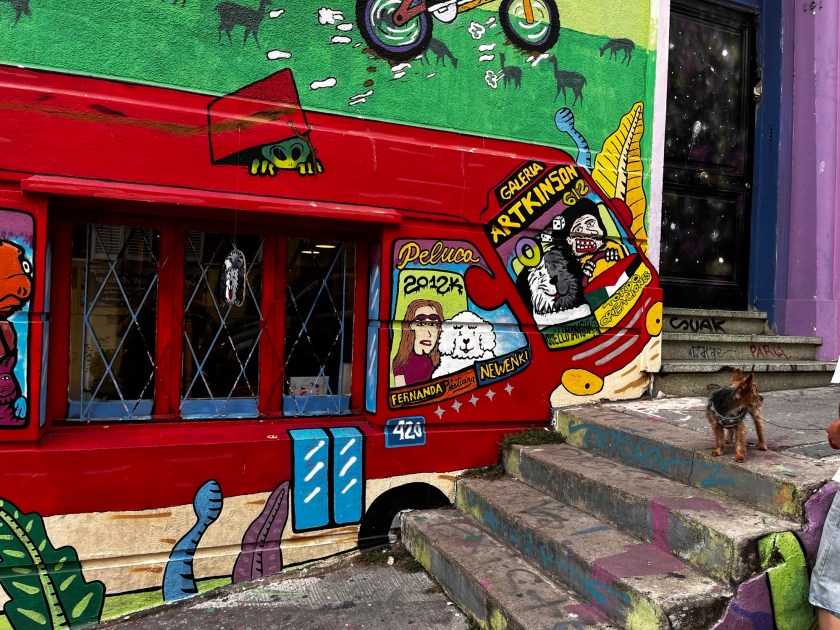
It’s sad really – seeing this once vital port of the South Pacific, for so long not just a refuelling station for naval and merchant shipping, but also an endpoint for Europeans seeking a new start – going downhill like a decrepit old dame rattling her jewels, wearing her tattered cha cha frock she kept from her heyday in the roaring Twenties. Yet, for all those flaked louvre shutters and all that graffiti scrawled across neo-baroque stonework, Valparaiso has reinvented itself in ways most other cities would have neither the chutzpah nor the imagination to do.
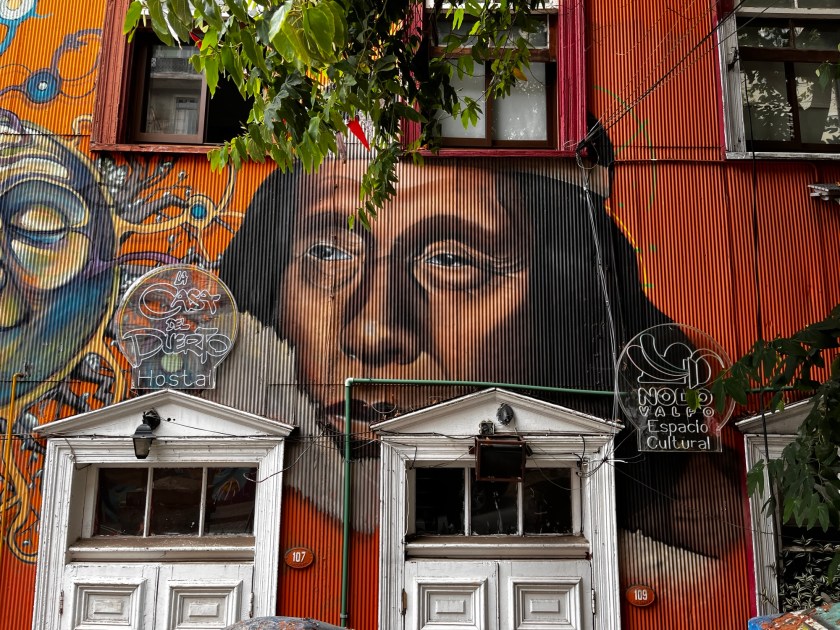
Why bother scrubbing the walls when you can bedaub them with a riot of colour which is the world itself if you can only move beyond the grey of the everyday? Valparaiso is colour writ large. It’s subversion in the way Paris’ Pompidou Centre is subversive. Murals extend out root and branch as if their host building existed purely for the moment the artist eyed their surface relief; just like the exoskeleton that wraps France’s greatest museum to modern art.

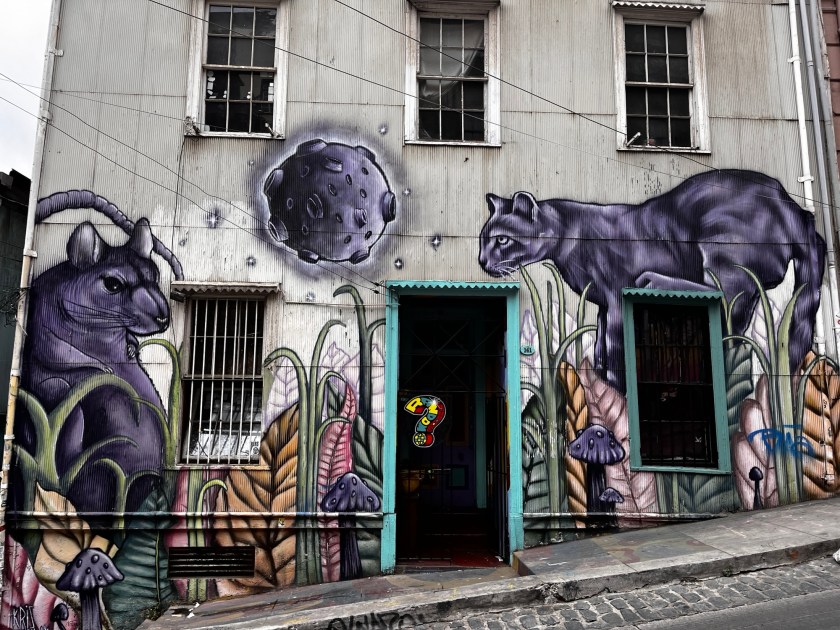
Valparaiso might well be the end of the world’s greatest open-air art gallery, but I’m running out of platitudes for a city falling so far apart it’s falling back together as a mass mania of magic murals that lend themselves to what survives of a human race that is failing in so many other ways. I’m all out of words. Speechless, even. Let each picture speak a thousand of them.
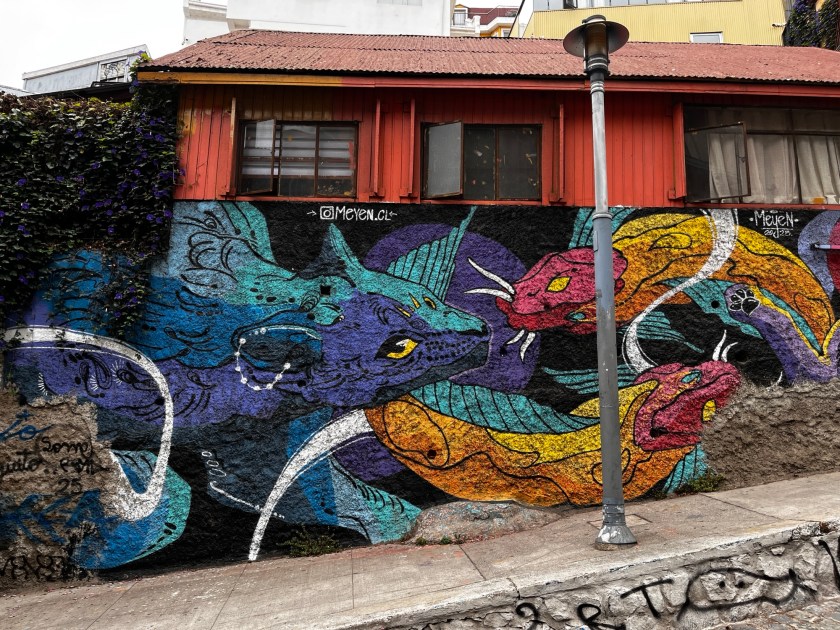
Until Valparaiso I never knew how decay could be subverted in such spectacular ways.
For You Beach Bums, Here’s the World’s Worst-Kept Secret

#adventure, #Brazil, #coast, A Costa Trindade, adventure, Brazil, Rio de Janeiro, South America, Travel, Travel Photography, travelogue

There are coastlines. Then there are coastlines. They vary vastly from pole to equator. Some are drowned mountain chains, others hilly escarpments ending in sea stacks, but most I can think of are fairly flat and innocuous. To quote American comic great, Bill Hicks, the place where dirt meets water. These level coastlines are where continental plains slope gracefully, but unspectacularly, into seas and oceans before falling off the edge of the continental shelf and into the inky abyss.

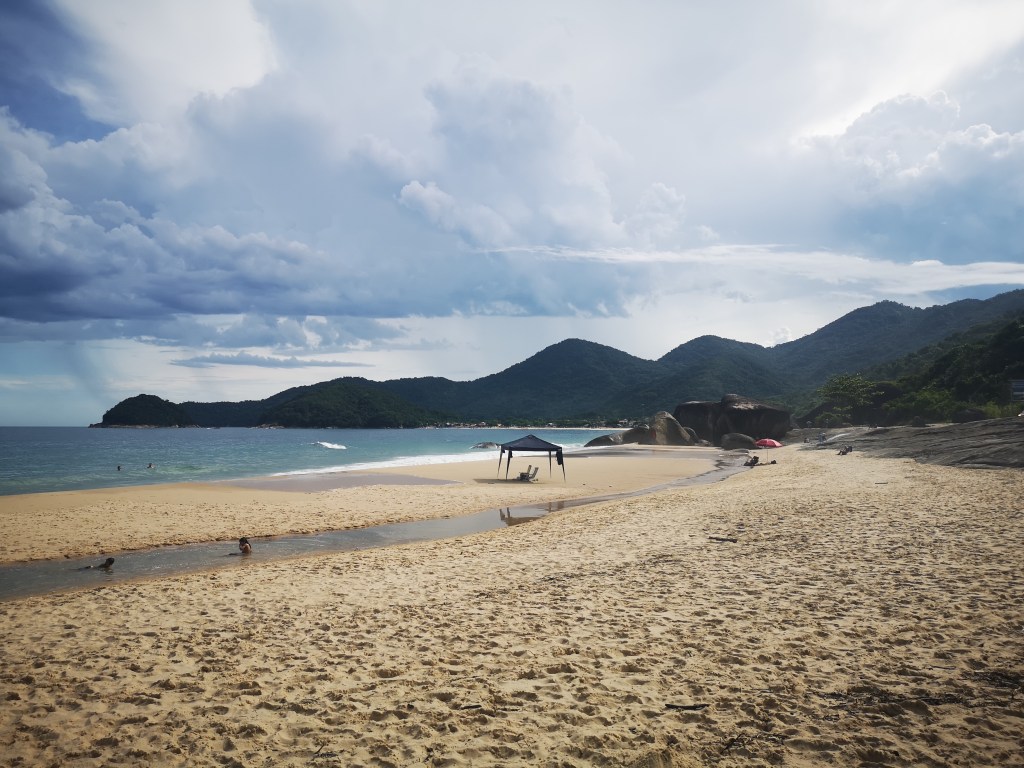
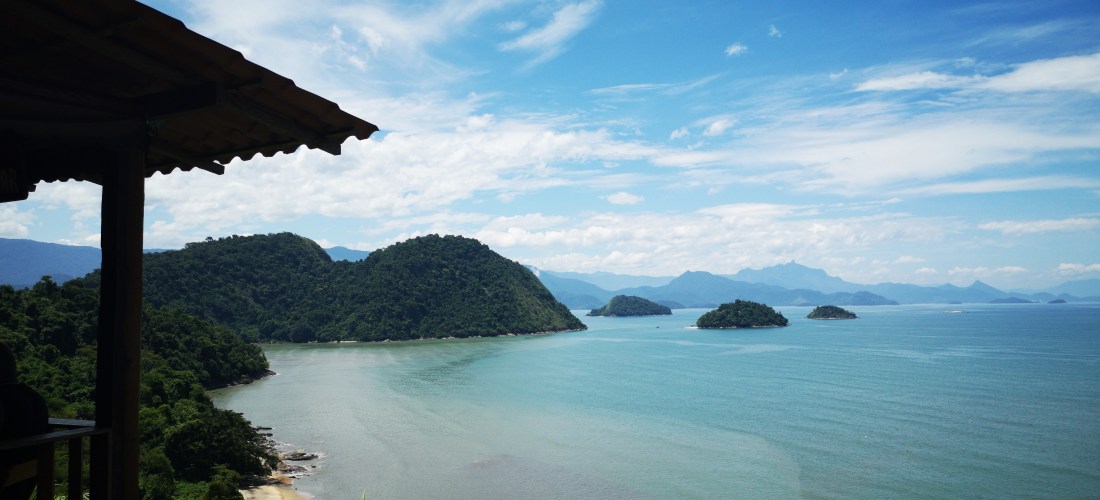
Just once in a while, though, you come upon a coastline which, for all intents and purposes, looks like it was designed by nature to strike undying awe into all humans. Occasionally, that awe extends to – now here i’m thinking bubbly bottlenose dolphins, leisurely leatherback turtles, and even that daft dog you always see barking at the crashing waves – creatures hitherto considered incapable of feeling awed by something abstract like beauty. Its every contour is divinely formed. Its lush, green, & pinnacled backdrop exists to try and upstage the coastline itself, although all it tends to end up doing is to add gloss to the whole picture. Both its outcrops of tide-smoothed megaliths and its oddly-placed vegetation could have been put there by a mythic giant who fancied himself as a bit of a stage designer-cum-cinematographer. Its intertidal waters are so transparent you wonder what the hell’s coming out of the tap.

Its mesmeric surf, unrolling waves onto the shore with all the panache of the footman unrolling the red carpet for his regal passenger, is so impeccably timed as to be the work of some unseen metronome: let’s call him The Earth Philharmonic Conductor. Its sand has been sifted so many times by the daily rhythms that it could pass for castor sugar if it didn’t taste so unlike sugar and so much like, er, minuscule grains of pulverised mollusc. Another defining characteristic of this perfect coastline is that it doesn’t simply disappear into the vanishing point. Rather, it is framed by virtue of being indented in the shape of a half-moon. Its farthest point, as visible by the human eye, is bookended by a mountain of Atlantic Rainforest that slips magnificently into the big blue.

Finally, the whole scene is capped off by a tropical sky, mercifully obscured by a succession of passing clouds that rest briefly in front of a blazing Capricorn sun in order to take the edge off the heat. But failing the presence of a shifting cloudscape, you – the lucky beachgoer – can always cool off racing into the rolling surf, whose temperature is an optimal 22ºC.

The stretch of coast I’m thinking of is one I’ve just returned from. Lying across both an ocean and an equator from the British Isles, tis true it’s far from here. In fact, it follows the Tropic of Capricorn about 43º longitude west of Greenwich, so that places it firmly both in the Western and the Southern Hemisphere. Yes, the sand exudes more heat than the average sole can handle, but there are shady spots, and tables and chairs under leafy fronds, and pretty girls serving chilled caipirinhas and fried morsels of freshly-caught fish. And away in the distance there are old, leathery hippies with beards too long for the sultry air, and joints smouldering away in their mouths. Music drifts in from who knows where. The singer’s language is exotic yet reassuring. Bodies come in all shapes and sizes, but unlike our overdeveloped world obesity is not really a problem. People who come here look after themselves. Elderly whippersnappers bob in the surf, forming a defensive palisade of golden skin and bone against the might of the ocean. I venture that this is pointless, but admire nevertheless their bravery before such a formidable opponent as the Atlantic.

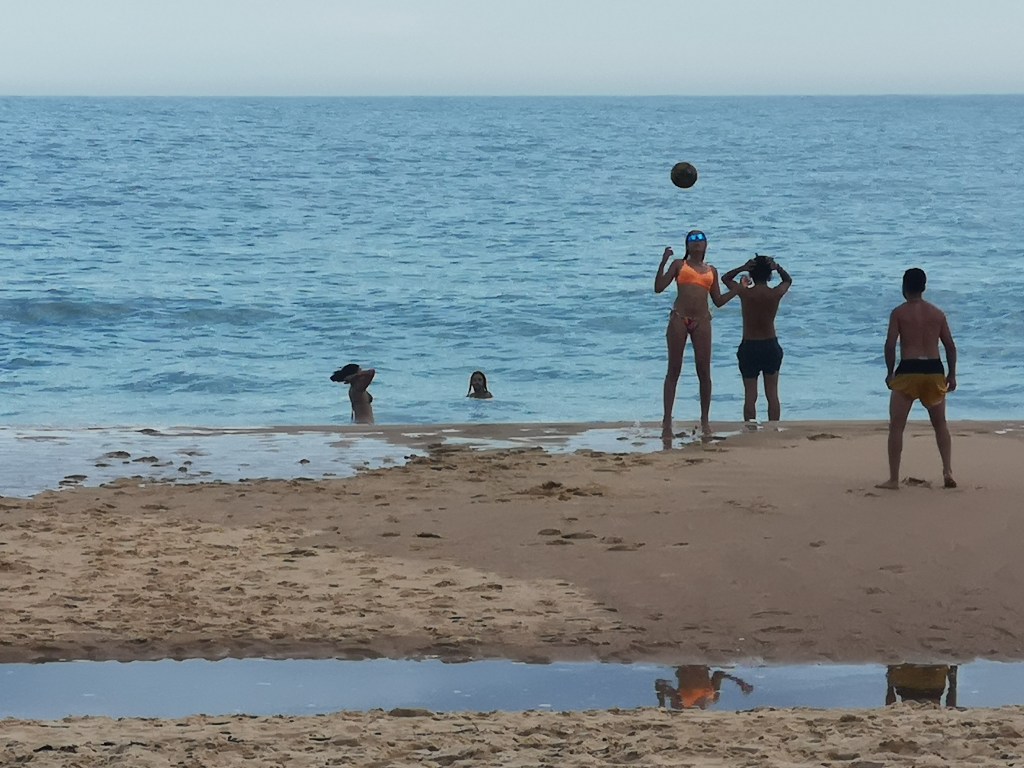
The post meridian on the world’s most perfect length of sandy coast passes in a pleasant reverie. This is the sure sign of a great beach. An even surer sign of skin damage to fair types like yours truly, seeing as the Capricorn sun is now at its apex. The to-ing and fro-ing of the tide complementing the to-ing and fro-ing of my regular forays, from the spot where our parasoled table stands in the granite shadow of a wall of dripping vegetation, down to the world’s clearest water. I sip the dregs of my lime cocktail and watch a boy and a girl on the beach volleying a football between them without it barely touching the ground. She heads, he chests, she volleys it back with the side of her foot. This is impressive stuff. Never let it be said that girls canna kick a ball for toffee.

The day passes both without incident and with plenty of it. In a kind of Schrödinger’s feline paradox, I experience one memorable incident after another without there being the manner of incidents one usually associates with beaches on a hot day: pissed up louts and boors, stealthy gangs of thieves, drowning in the surf, that kind of thing. The first such incidence in my incident-free day starts with an uncanny feeling that i’ve died without a coroner’s report and then gone to heaven without really believing in either God or his long-haired son. It’s a cheat, and can only be got visiting the world’s most breathtaking bit of coastline. It then continues by dipping under the crest of a pulsing sea with my girlfriend’s son, who is beyond delighted to have discovered that such a place as this can really be in this world. The incidents continue with my girlfriend – no swimmer by her own admission – being upended by a wave, screaming in pure terror she hates me, before proceeding to slap me in the face for having brought her not only to a wild coast, but also almost to her untimely demise. I love her even more after that tiff.

What to say other than that was the noblest, most gratifying slap I’ve ever had. And why? Because i found the best bit of coastline anywhere. You could have stripped me of all my worldly belongings, subjected me to summary humiliation, and even proclaimed me dead from cancer within six months, and so long as these awful things were performed there where that sand met that sea, I would forgive practically anyone their everything.

You know you’ve arrived when all along you thought beaches and coasts came a poor second to the mountains inland. Having witnessed this Shangri-La, I’m not so convinced anymore of the inherent superiority of mountains over coasts. It was the best-kept secret outside of Brazil until I shouted my mouth off about it. It’s now the worst-kept. So, here goes….

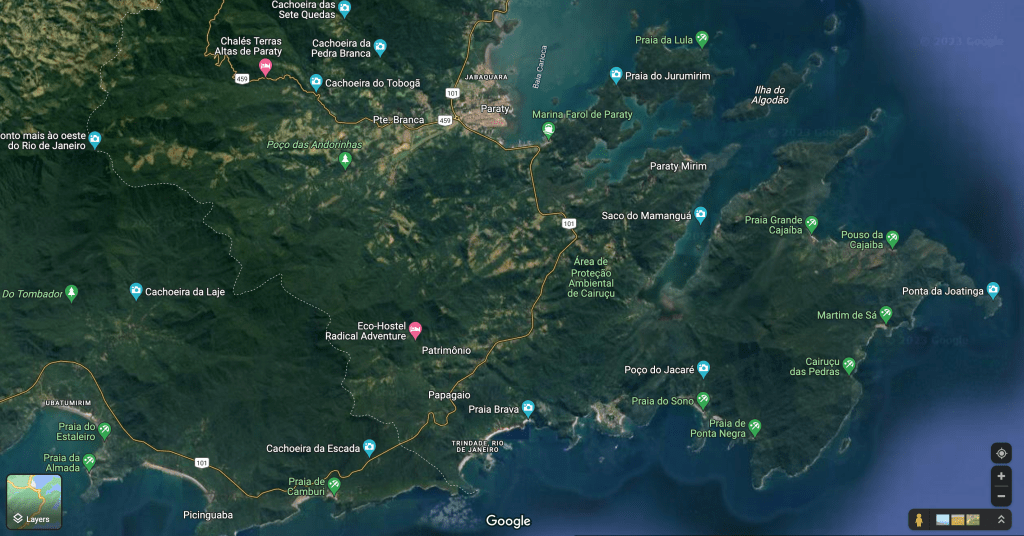
You’re looking, but are you listening? See that little bite out of the green land due south of Paraty? Right on the South Atlantic ocean. The beach is Trindade, just inside of Rio de Janeiro state. Follow Highway 101 from Santos to Rio, and at every twist and turn of what is actually a 4,000km squiggle of bitumen running from Brazil’s south to its north, you’ll be picking your jaw up off the ground. This coastline is the stuff of your wildest dreams. See it before you see your end.

Picture Yourself on a Boat or in Rio

#adventure, #Brazil, Latin America, South America, Travel, Travel Photography, travelogue

I suppose all travellers feel the homecoming differently. Some crash to earth while others drift down all light and feathery. It all depends on a number of factors: how intense the trip has been, and how far you ventured to make that trip happen in the first place. For a reliable measure of to what degree you feel the fallout of coming home, look no further than this equation: divide the value of where have i just been with the value of where the hell I think I am going now. Unless the sum comes out as a negative number, you might just have experienced a homecoming crash.

With the world numbering about 200 sovereign nations, there are tens of thousands of combinations in theory you can make on any end-to-end journey. You can go from Java to Japan, Venezuela to Vanuatu, or the Faroes Isles to France. You can make these point to point destinations alliterate with a classic short back vowel sound, like the UK to the US. Or go large with a nice voiced consonant, like Gabon to Ghana. If you’re willing to speak the lingo of long-haul, how about the rarely confused but uncannily similar-sounding Austria to Australia? Or for practicality’s sake you can dump literary pretensions, and just stretch the alphabet by going Azerbaijan to Zanzibar and back to Abyssinia – except, Ah! Sugar! Abyssinia is now known as Ethiopia, so ditch that. Be judicious when combining vowel sounds on your long end-to-end destination list, as they can culminate in an act of war, as the Ethiopians and Eritreans discovered to their detriment. Russia and Ukraine are neighbours in the alphabet, but far apart in other ways. Nor are either viable travel destinations right now.

In my case, I stuck to the early stages of the alphabet: I went from England to Brazil, albeit via France’s exquisite Charles de Gaulle airport. As E can never be B, so it follows, England can never be Brazil. Not that E would ever truly want to be…uh…B. The world has quite enough to contend with having one Brazil in it far less two. Another Brazil on the fringes of Northwest Europe, and the planet would spin out of orbit (all that rain and vegetation on all that landmass is a weighty proposition). On second thoughts, forget it! An E=B duplicate Brazil this far north just wouldn’t be Brazil. It would be a bloody big England, and more of a headache for Europe.

Before I go in sinuous, unplanned narrative directions, I think it behooves me to say, Brazil is a truly amazing country. Okay. Wind that back. Correction: Brazil is a continent within a continent. So, therefore, Brazil is an amazing country-continent. By definition, it doesn’t rely on any place else. If all others withered, it would keep sprouting new shoots. It grows its own food, drink and living materials in abundance, making it self-sufficient in all but the imported luxuries, which frankly no one needs for happiness because they are by definition luxuries and exist only to make dreary winter days in Europe feel meaningful to dissolute rich people. But Brazil is far from myopically narcissistic. She’ll take you in alright. And she’ll make you feel bloody good about being accepted. Particularly, I must add, if you’re white, European and male. Speaking the global lingua-franca helps, too. But white British privilege aside, even undervalued black Brazilians and pardo/as (name given to mixed race Brazilians of uncertain origin) hardly gripe about their country, for all its historical betrayal of them. Being a continent within a continent, and the sole Portuguese-speaking one, at that, it’s all they’ve seen. And by and large, what they see more often than not pleases the eye, whether that eye be blue, green or brown.

I want to talk about the immediate aftermath of what it feels like living a whole season in Brazil. I want to drift in an out of feeling into thinking and back into feeling. I want to talk stats, sights, sounds and smells, but after three months of sensory overload, i am clueless of where to begin. Being a journey with a beating heart, maybe the writing style should mirror the pulsations of the human corazão. Like a healthy heart, the retelling should contract into a tight ball of fleeting moments – observational vignettes set on location in some of the meanest, greenest backcountry I have seen (i shit you not) in 30 years of darting all over this planet. Then, filled with blood that still boils with the heat of the Brazilian summer, the heart of the travelogue should expand to draw in the immensity of facts and physical features that fill the eyes with sights incomprehensible to those whose gaze has yet to be blessed to fall upon such places.

This is the challenge of the ‘travelong travelogger’. This might smack of bombast, but such is the burden we carry, all too often alone.

The experts say ‘write what you know’. I prefer to invert the maxim to ‘know what I write’. And right now, I’m in that 72hr critical period when where I’ve landed still feels like a diorama, capturing all that’s still-life about these dying days of England’s winter. Small-town English life with all its bauble hats and padded overcoats is going on outside my boat on the other bank of the river, but – Brazil fresh in my mind and radiating in a tropical afterglow out from my skin – there’s a yellow and blue filter between these eyes that cast an outward stare on that monochrome movie out there. I’m trying to see both sides of the world for what they are, but every time I try take each on their own merit, i end up trying to colour match the two. This contrast is stretching me a bit.

The subjectivity aspect of how your perceptions both change and adapt to seeing a familiar place as if for the first time, having been somewhere so qualitatively different for so long, kind of hastens you to want to reach for the encyclopaedia. Having travelled long days by road from São Paulo, only to make the slightest of incisions into the neighbouring states of Rio and Minas Gerais – such is the scale of a land half the size of the South American continent it occupies – there’s little doubt Brazil is rich in details, mostly, but by no means exclusively, natural.

Scenes set context. Even though my impression is that I saw a lot on my expeditionary outings in Brazil, I saw but a fraction. And here’s why. Let’s go holistic before getting to the nub.

Broadly-speaking, there are a handful of ecosystems that constitute the eight million square km landmass of South America’s dancing, oversized child. Imagine for a moment a litter of mongrel pups, Brazil’s natural habitats are varied as they are conjoined. You’ve got flat pampa in the Gaucho grassland country of the far south; you’ve got Pantanal – floodplain swamp country in the Mato Grosso, rich in plant and animal life; inland you’ve got cerrado (pronounced say-hado) in Minas Gerais and Goianas – yellow savannah and rocky extrusions, not unlike parts of Australia; between the cerrado and the sea you’ve got caatinga (pronouned kah-chinga) in Minas Gerais and Bahia – hot, dry, hilly scrubland of tight, gnarly vegetation, deep canyons and red oxide earth; you’ve got Amazonia – lowland river basin of pure, tropical rainforest with its prodigious feet in the world’s largest drainage system. Between the hot highlands of the vast interior and 4,000km of sometimes sultry, botanical coastline, there’s lush, semi-deciduous forest featuring immigrants like towering eucalypts and golden oldies like Permian pines in the form of Araucaria. Then there’s the other, less celebrated but far more felled brethren – the Mata Atlantica. There might only be 7% of the original Atlantic rainforest left, but it don’t let that fool you. It continues to cloak innumerable hillsides, and brings rain in multitudes between Brazil’s two most recognisable urban centres: São Paulo and Rio de Janeiro. Moreover, it brings organic reproduction in ways hard to fathom when you live the four seasons.

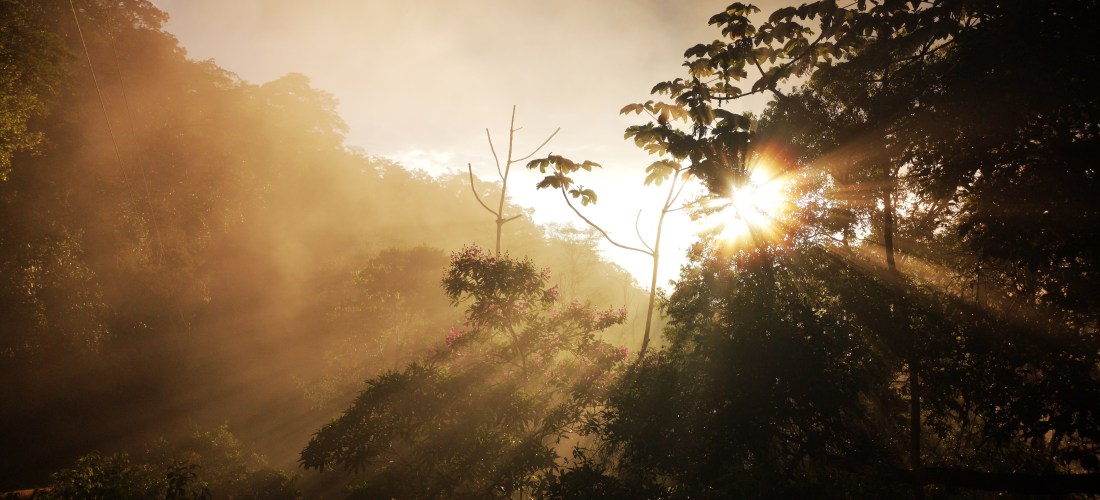
It is this habitat, the Mata Atlantica, reaching all the way from the mountains near Minas Gerais to the magnificent beaches along the litoral norte of São Paulo and the Rio coast, that I was witness to. It’s formidable as it is stupendous. Though it wants to bite you at every opportunity. When the sun blazes, it burns. And when it rains, boy does it rain.

Now seems like a good moment to end this instalment. Let anticipation hum for a while before following up with an op-ed piece on why magical encounters – from Minas to São Paulo, and best of all Rio State – are best shared with posterity, as well as maybe a few accidental readers. Why stash these experiences selfishly away in a memory capsule? The 72hr window will only pass, and the new reality will shove and jostle the previous one until it’s all but banished to a darkening past.