Picture Yourself on a Boat or in Rio

#adventure, #Brazil, Latin America, South America, Travel, Travel Photography, travelogue

I suppose all travellers feel the homecoming differently. Some crash to earth while others drift down all light and feathery. It all depends on a number of factors: how intense the trip has been, and how far you ventured to make that trip happen in the first place. For a reliable measure of to what degree you feel the fallout of coming home, look no further than this equation: divide the value of where have i just been with the value of where the hell I think I am going now. Unless the sum comes out as a negative number, you might just have experienced a homecoming crash.

With the world numbering about 200 sovereign nations, there are tens of thousands of combinations in theory you can make on any end-to-end journey. You can go from Java to Japan, Venezuela to Vanuatu, or the Faroes Isles to France. You can make these point to point destinations alliterate with a classic short back vowel sound, like the UK to the US. Or go large with a nice voiced consonant, like Gabon to Ghana. If you’re willing to speak the lingo of long-haul, how about the rarely confused but uncannily similar-sounding Austria to Australia? Or for practicality’s sake you can dump literary pretensions, and just stretch the alphabet by going Azerbaijan to Zanzibar and back to Abyssinia – except, Ah! Sugar! Abyssinia is now known as Ethiopia, so ditch that. Be judicious when combining vowel sounds on your long end-to-end destination list, as they can culminate in an act of war, as the Ethiopians and Eritreans discovered to their detriment. Russia and Ukraine are neighbours in the alphabet, but far apart in other ways. Nor are either viable travel destinations right now.

In my case, I stuck to the early stages of the alphabet: I went from England to Brazil, albeit via France’s exquisite Charles de Gaulle airport. As E can never be B, so it follows, England can never be Brazil. Not that E would ever truly want to be…uh…B. The world has quite enough to contend with having one Brazil in it far less two. Another Brazil on the fringes of Northwest Europe, and the planet would spin out of orbit (all that rain and vegetation on all that landmass is a weighty proposition). On second thoughts, forget it! An E=B duplicate Brazil this far north just wouldn’t be Brazil. It would be a bloody big England, and more of a headache for Europe.

Before I go in sinuous, unplanned narrative directions, I think it behooves me to say, Brazil is a truly amazing country. Okay. Wind that back. Correction: Brazil is a continent within a continent. So, therefore, Brazil is an amazing country-continent. By definition, it doesn’t rely on any place else. If all others withered, it would keep sprouting new shoots. It grows its own food, drink and living materials in abundance, making it self-sufficient in all but the imported luxuries, which frankly no one needs for happiness because they are by definition luxuries and exist only to make dreary winter days in Europe feel meaningful to dissolute rich people. But Brazil is far from myopically narcissistic. She’ll take you in alright. And she’ll make you feel bloody good about being accepted. Particularly, I must add, if you’re white, European and male. Speaking the global lingua-franca helps, too. But white British privilege aside, even undervalued black Brazilians and pardo/as (name given to mixed race Brazilians of uncertain origin) hardly gripe about their country, for all its historical betrayal of them. Being a continent within a continent, and the sole Portuguese-speaking one, at that, it’s all they’ve seen. And by and large, what they see more often than not pleases the eye, whether that eye be blue, green or brown.

I want to talk about the immediate aftermath of what it feels like living a whole season in Brazil. I want to drift in an out of feeling into thinking and back into feeling. I want to talk stats, sights, sounds and smells, but after three months of sensory overload, i am clueless of where to begin. Being a journey with a beating heart, maybe the writing style should mirror the pulsations of the human corazão. Like a healthy heart, the retelling should contract into a tight ball of fleeting moments – observational vignettes set on location in some of the meanest, greenest backcountry I have seen (i shit you not) in 30 years of darting all over this planet. Then, filled with blood that still boils with the heat of the Brazilian summer, the heart of the travelogue should expand to draw in the immensity of facts and physical features that fill the eyes with sights incomprehensible to those whose gaze has yet to be blessed to fall upon such places.

This is the challenge of the ‘travelong travelogger’. This might smack of bombast, but such is the burden we carry, all too often alone.

The experts say ‘write what you know’. I prefer to invert the maxim to ‘know what I write’. And right now, I’m in that 72hr critical period when where I’ve landed still feels like a diorama, capturing all that’s still-life about these dying days of England’s winter. Small-town English life with all its bauble hats and padded overcoats is going on outside my boat on the other bank of the river, but – Brazil fresh in my mind and radiating in a tropical afterglow out from my skin – there’s a yellow and blue filter between these eyes that cast an outward stare on that monochrome movie out there. I’m trying to see both sides of the world for what they are, but every time I try take each on their own merit, i end up trying to colour match the two. This contrast is stretching me a bit.

The subjectivity aspect of how your perceptions both change and adapt to seeing a familiar place as if for the first time, having been somewhere so qualitatively different for so long, kind of hastens you to want to reach for the encyclopaedia. Having travelled long days by road from São Paulo, only to make the slightest of incisions into the neighbouring states of Rio and Minas Gerais – such is the scale of a land half the size of the South American continent it occupies – there’s little doubt Brazil is rich in details, mostly, but by no means exclusively, natural.

Scenes set context. Even though my impression is that I saw a lot on my expeditionary outings in Brazil, I saw but a fraction. And here’s why. Let’s go holistic before getting to the nub.

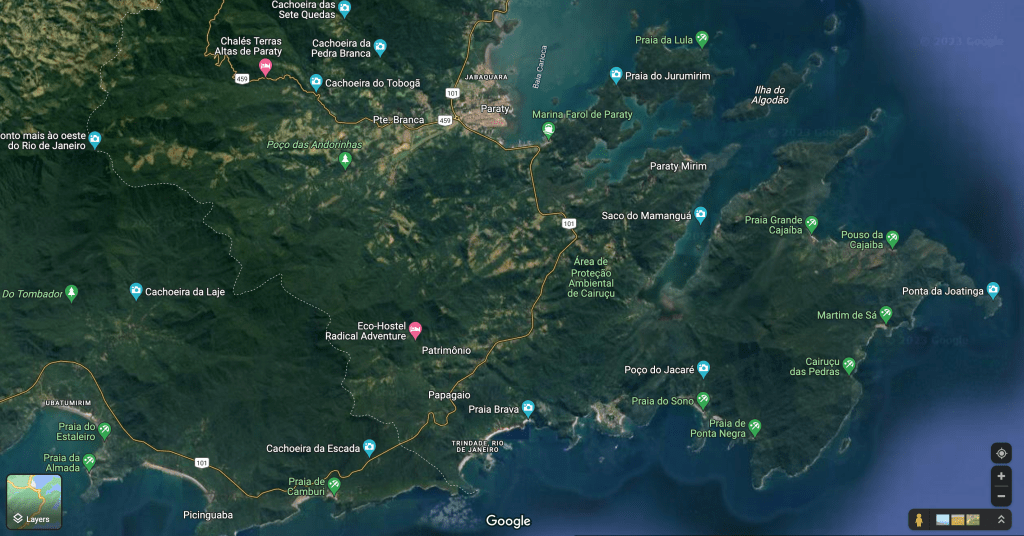
Broadly-speaking, there are a handful of ecosystems that constitute the eight million square km landmass of South America’s dancing, oversized child. Imagine for a moment a litter of mongrel pups, Brazil’s natural habitats are varied as they are conjoined. You’ve got flat pampa in the Gaucho grassland country of the far south; you’ve got Pantanal – floodplain swamp country in the Mato Grosso, rich in plant and animal life; inland you’ve got cerrado (pronounced say-hado) in Minas Gerais and Goianas – yellow savannah and rocky extrusions, not unlike parts of Australia; between the cerrado and the sea you’ve got caatinga (pronouned kah-chinga) in Minas Gerais and Bahia – hot, dry, hilly scrubland of tight, gnarly vegetation, deep canyons and red oxide earth; you’ve got Amazonia – lowland river basin of pure, tropical rainforest with its prodigious feet in the world’s largest drainage system. Between the hot highlands of the vast interior and 4,000km of sometimes sultry, botanical coastline, there’s lush, semi-deciduous forest featuring immigrants like towering eucalypts and golden oldies like Permian pines in the form of Araucaria. Then there’s the other, less celebrated but far more felled brethren – the Mata Atlantica. There might only be 7% of the original Atlantic rainforest left, but it don’t let that fool you. It continues to cloak innumerable hillsides, and brings rain in multitudes between Brazil’s two most recognisable urban centres: São Paulo and Rio de Janeiro. Moreover, it brings organic reproduction in ways hard to fathom when you live the four seasons.

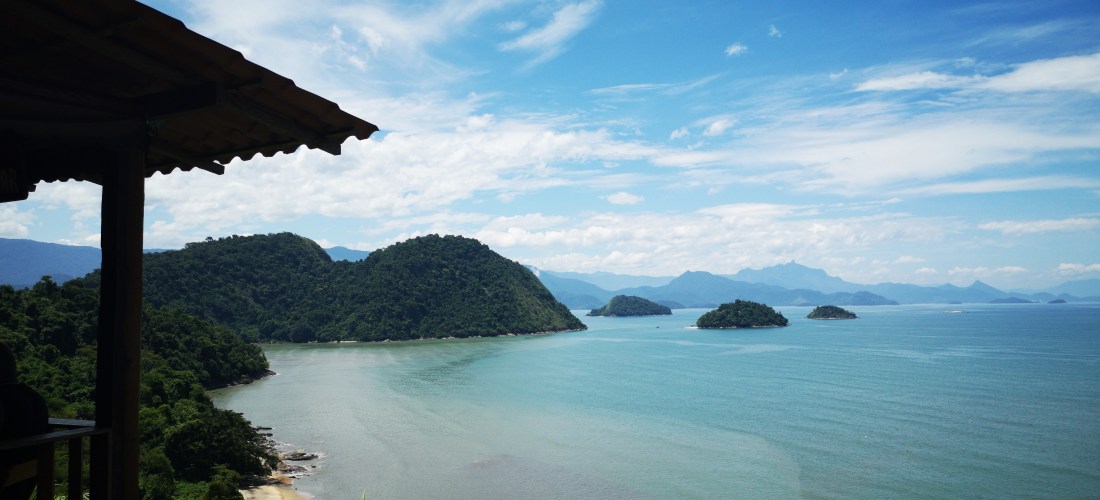
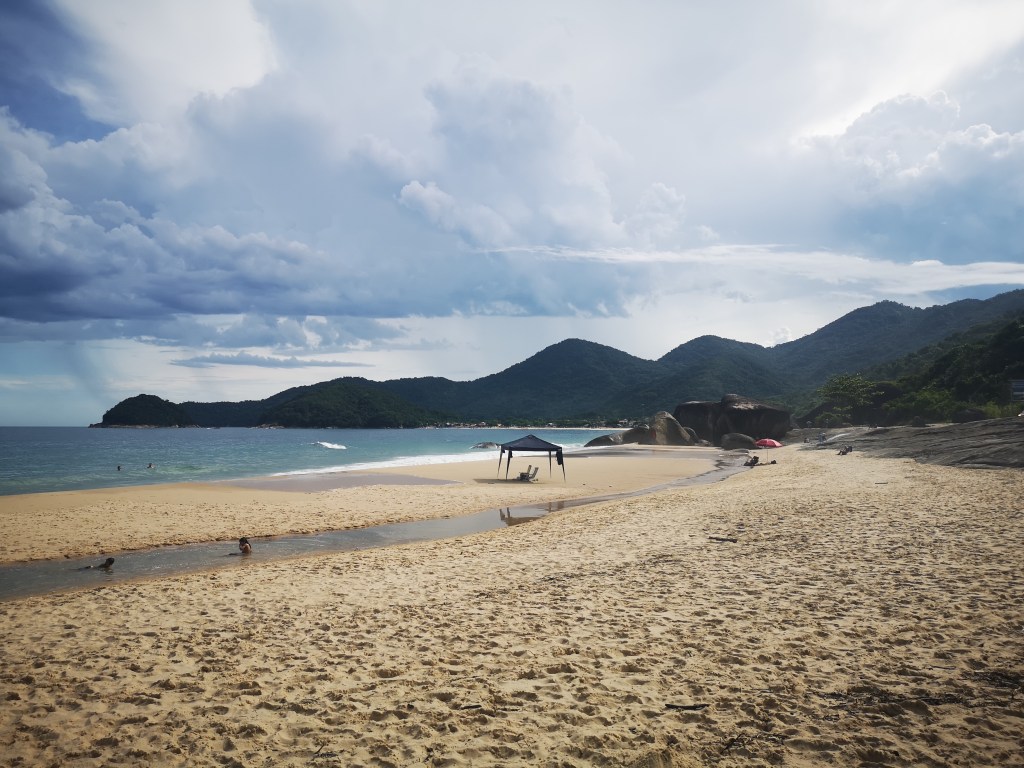
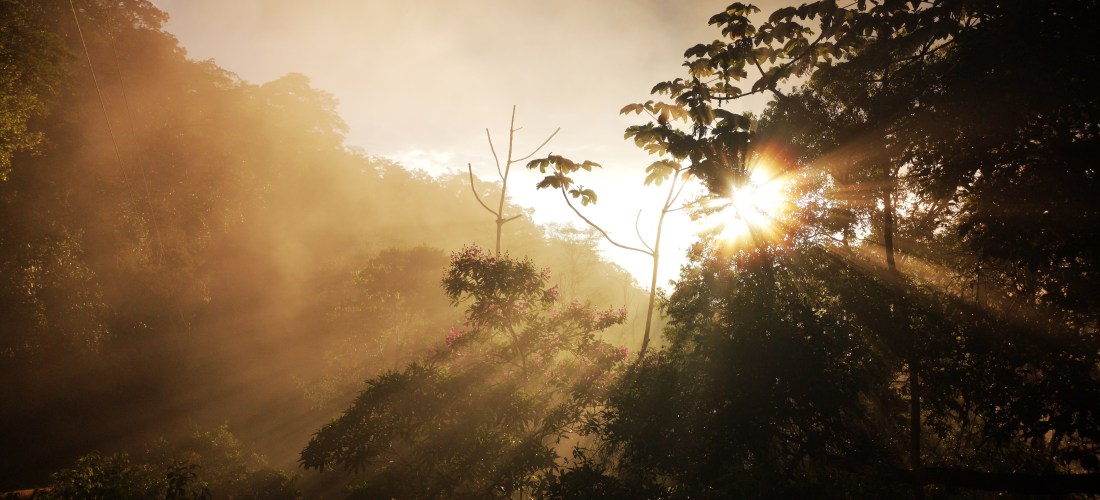
It is this habitat, the Mata Atlantica, reaching all the way from the mountains near Minas Gerais to the magnificent beaches along the litoral norte of São Paulo and the Rio coast, that I was witness to. It’s formidable as it is stupendous. Though it wants to bite you at every opportunity. When the sun blazes, it burns. And when it rains, boy does it rain.

Now seems like a good moment to end this instalment. Let anticipation hum for a while before following up with an op-ed piece on why magical encounters – from Minas to São Paulo, and best of all Rio State – are best shared with posterity, as well as maybe a few accidental readers. Why stash these experiences selfishly away in a memory capsule? The 72hr window will only pass, and the new reality will shove and jostle the previous one until it’s all but banished to a darkening past.

A Fitting Farewell to Pelé

#Brazil, ageing, Childhood home, death, Football, Minas Gerais, Pelé, Sport, Três Corações

Since I landed in São Paulo in November, the news about Pelé’s hospitalisation in this self-same city has had a feeling of finality about it. The prognosis for the ex-supremo athlete who, in his pomp, was every bit as super-fit as Christiano Ronaldo is today, was pretty bleak. I thought infirmity and Pelé do not belong in the same sentence. That it just goes to show that even the most physically gifted must one day succumb like all the other unfit has-beens.

By December, his family started to gather at his bedside in the Albert Einstein Hospital. The signals for the 82 year-old rei do futebol were mixed. The headlines ran from round-the-clock end-of-life care to he’s got plenty more life in him. Information. Disinformation. Mortal acceptance. Refusal to bury Brazil’s national treasure. It was hard to tell which way the wave of recovery would break.

A year ago, in a hotel room in Perú – while relaying giddy, sweetheart messages with a new love interest who happened to live down the road from the Albert Einstein Hospital in Sáo Paulo; who, like Edson Arantes Do Nascimento (Pelé’s birth name that we fitba’-mad lads had all memorised with customary difficulty back in the late 70s, early 80s) was a Mineira herself, born and bred in the proud Brazilian state of Minas Gerais – I watched a wonderful Kevin McDonald documentary titled simply Pelé. I was so moved by how this black man could rise from obscurity in a vast nation that had done nothing throughout its 400-year old history but demean Os Pretos, the Portuguese name for its long-suffering blacks – every one a former plantation slave, cutting sugar cane, making cachaça for the white latifúndios and their gang masters who drove the slaves on. And not only that, how he could – through outlandish ball skill topped off with a beautiful perma-smile – grow to become one, i’d contend, of only five black men who were almost universally lauded by whites throughout the entire 20th century, the others being Luther King, Mandela, Marley, and Ali.

And so it was that I came to be in Brazil when the lifeblood was slowly, inexorably draining from Pele’s mighty heart. Two days prior to his death, myself and the lovely Mineira who I flew all this way to be with, were coming down from Sáo Thomé Das Letras, a kind of hippie Glastonbury of magic mushrooms, putative alien sightings, and spiritualist retreats set among the Tolkienesque backcountry of southern Minas Gerais. Life being poetic when most you need it to rhyme, we happened to be passing through Três Corações, Pele’s home town as a young infant. To drive through without a side-stepping homage to Pelé’s first home, now a civic museum, would have constituted an unconscionable crime against decency.

It’s an unassuming place, but by no means the shack that the Western media so erroneously report. Pelé’s family, daddy Dondinho & the Do Nascimentos, were middle-class by the standards of the day. Their house, made of solid plastered walls, contained three bedrooms, a perfectly-fine kitchen, and large living area with dining table, and importantly, a big garden where his grandad kept his lenha, or firewood, which he sold to locals off the back of a horse and cart. Their old house, now a living museum, still does retain these characteristics. In fact, Pelé’s home of circa 1940 is a more affluent and dignified squat even now compared to the canvas squalor that legions of latter-day Brazilians have to exist in. Certainly, plusher than the domestic setting my infant father inherited in postwar Edinburgh. I feel it’s important to set the record straight to the untold numbers who were not as lucky as me to be able to walk into his house two days before he died.

I mentioned the garden. But what few know is what happened in that garden recently that some might construe as uncanny, or somehow prescient. We were sitting on a log on the lawn, my Mineira and I, when the curator, a little old women amiable as can be, told us the tale of the fallen tree trunk in the middle of the garden. While considered of modest size, this tree, now lying with truck snapped, was a sapling, racing to meet the hot Minas Gerais sun when Pelé was a mere 2-year old toddler tottering on the grass, kicking whatever round object that rolled along with a bit of prodding.

I remarked what a pity the trunk had fallen. She said, yes, it matured every step of the way with Pelé. They came into the world in the same year. They grew together. Then he and the tree grew apart when his father took his young family to another Mineiro town in search of a footballing contract. How did it happen? I asked. A storm blew in, she said. Unusual weather conditions for this benign part of the world, she added. When? I asked her. The other weekend, she said, without a hint of irony that the storm had put an end to the tree almost on the same day as Pelé would be admitted to hospital for the final time.

You can only know this by sitting in his old garden. All the platitudes, all the world’s scribes in all the world’s reputable journals scribbling paeans befitting this truly great individual. All looking – like Pelé against every crumbling defence he ever played against – for a tight angle to exploit. And none knowing what I learned that day: that all fates – be they of man or tree – are intimately tied. Pelé and the fallen tree could be an Aesop Fable.

We enter this world together as we leave this world together. Blowin’ in the wind.

Cha-cha-chani: Volcanoes Don’t Get Much Bigger Than This.

#adventure, altitude, Andes, mountains, peru, South America

Though Chachani may sound like a dance step, ascending this Peruvian volcano – one of only eighteen on Earth to exceed 6,000 metres – is no waltz.

No Walk in the Park

As I sit here tapping away, turning milestone into narrative, an ironic smile upturns the corners of my mouth when I think of trying ballroom dancing on its icy apex. So, if you’re thinking of celebrating the feat of summiting your first 6,057 metre peak (19,872 feet) with a little jig, forget the waltz. You can forget the cha-cha, too. In fact, about the best I could hope for was a stiff and ponderous trudge: the dance of the malfunctioning robot.  

Those who purport to know say Chachani is the easiest 6,000 metre climb anywhere in the world, but I can testify that if climbing Chachani is a stroll compared to the others then the others must require something extraordinary. That, plus a lungful of bottled oxygen. Nevertheless, it was an opportunity way too good to miss.

Chachani coming in from the North

To See or Not to See

Let’s go on the proviso that it’s not everyday one decides to tackle a behemoth of geology that stands proud above all else – even over the formidable presence of El Misti, a 5,822 metre (19,101 feet) stratovolcano that, alongside Chachani, forms a silent guardianship over a white city named Arequipa that itself sits 2,335 metres (7,660 feet) up on the arid Andean plateau in Peru’s deep south. So, let’s go on that proviso: one chance in life to ascend to places that few ever venture. Or would ever want to. Do you take it? You’d be a fool to, but an even bigger fool not to.

Don’t Go it Alone

Adventurous types pour into Arequipa, or at least they did before Peru declared a national state of emergency due to Covid. As of early 2022, the city and country were still struggling to recover sufficient tourist numbers. Bars and diners lay empty. By government decree, not one but two face masks were the order of the day. Troubling times for the adventure tour industry, sure. Having said that, keep a good thing down and it always rebounds.

The bigger they are, the higher they rise. Arequipa’s two famous volcanic landmarks are, by any measure, epic. Hardly surprising then that a number of tour providers on Calle Jerusalén, as well as in and around the Plaza de Armas remained open for business. Covid might have detrimentally impacted the local adventure travel industry, but it seems it couldn’t make a dint in interest for Chachani. The rates too, were as low as the volcanoes were high: about $80 all in.

When it comes to mini expeditions of this stature, it’s a professional guide you need. These guys go to university to learn to lead expeditions in these mountains. I went with Waiky Adventours, but a whole host of others made similar arrangements.

The Long Road to Basecamp

A good many operators in Arequipa’s burgeoning adventure tour business will take you most of the way to base camp by jeep. Up and up the route snakes, north and away from the city’s sprawling limits, past the sublime figure of El Misti toward the indomitable sight of Chachani spread even over a massif of towering, flattened peaks.

With Arequipa due south and out of sight, you come in behind it to face Chachani’s arid, northern flanks. Grazing vicuña dot the altiplano, gentle in their ways. As you are already at nearly 5,000 metres at the foot of the range, it doesn’t look especially imposing. We were subsequently to discover that just because a thing doesn’t appear imposing, it doesn’t mean to say it’s not. Up here in the liminal space between worlds habitable and inhabitable a peaceful silence pervades the air, as if the mountains are holding their breath ready for you to hold yours.

Up Where the Air is Thin

Away to the right as we started our two-day round-trek to the summit, I saw there a painted mountain. Made of iron and sulphur and all those minerals that Man so desires, under the shifting sky of cotton wool stuck on a background of cerulean blue the mountain’s rusted hues throbbed and dimmed with the coming and going of the light.

I knew such wondrous sights could only be had up here in the Gods. The natural reaction to seeing this psychedelic landscape at high altitude is to gasp, but that – as became immediately clear – was easier said than done. Oxygen levels at roughly 5,000 metres (16,500 feet) are about 60% of those at sea level, meaning those lungs have to work nearly twice as hard just to make up the same ground.

The Long Wait

Arriving exhausted at our base camp, we were encouraged to rest up and sleep for the day. The reason given was that at night the air pressure drops in the high mountains. Above about 5,000 metres sleep becomes a real problem after dark, as I found out the hard way. Other than a brave, solitary fox that came calling for dinner at our basecamp not a lot ekes out a meagre living above this height. Multicellular life wasn’t really designed for it. Even the unexpected sight of a fox tamed into revealing itself by the temptations of a handout – life must be unremittingly tough at the top.

This being the season the Andean weather gods show their unpleasant side, vistas to die for can be fleeting. By mid-afternoon the fog crept in and all about. The altiplano and all the peaks rising from it, like ships scattered on an ocean, disappeared. All at once, we were wreathed in a freezing world of the spirits. Visibility decreased until not a thing except our date with the mountaintop could be seen.

Nightfall at 5,000 Metres

I must have fallen into demented dreams for a few minutes before awakening in the pitch black with a pounding headache. Our basecamp comprised half a dozen tents, though only one showed signs of life and that amounted to no more than a rasping cough. The others lay dormant. I thought for a moment my group had gone home, and I was left alone with High Altitude sickness, until the thought consoled me that others too probably lay in their tents peering into the void, thinking about how difficult sleep was, and how cold it was becoming.  

As the evening ground on, my headache worsened. In the absence of sunlight, the chill gripped me with an intensity hitherto I had never experienced. I cocooned my legs inside my down jacket, but even that was glistening with frost.

I tried to lie horizontal, until sleep apnea grabbed me by the throat and made me sit up and lunge at the vestibule zip. I couldn’t breathe. I was alone. And then to cap it all, the nausea, which I had suffered at altitude elsewhere in Peru, came back with a vengeance. I couldn’t wait for midnight to come. That’s when the push for the summit would begin. Or would it? At this rate of physiological decay, I would need to be escorted down and off the mountain.

Should I Stay or Should I Go?

Sometime before midnight, the camp stirred back into life. Everyone gathered around cups of hot coca tea. Headlamp beams made feeble work of the immense darkness of our surrounds. I reported my symptoms to my guide, who seemed irked that his hopes of a hassle-free night ahead might be inconvenienced by having one of his clients die on him.

‘Stay here and we’ll come for you in about 8 hours from now on our way back.’

‘Are you not supposed to descend with high altitude sickness?’

Then I addressed him in Spanish, hoping for more sympathy.

‘No creo que deba quedarme aqui. Hay que bajar.’

By now my lungs were froth-corrupted, resulting in a lot of sputum being gobbed onto the ground. Bad sign. I ran to a rock where I vomited. Worse sign.

When he saw me throw up, his demeanour changed. Suddenly he was concerned.

‘The other guide will accompany you down.’

But some deeper power had stirred in me. My pride burned such that the air no longer felt so icy. I instructed him as to how we were going to tackle this.

‘I want to do this thing. If my headache gets worse higher up, I’ll take the other guide and turn back.’

He agreed, albeit dubiously.

The Only Way is Up

The climb, in the early stages, was brutal. I trailed the others, who had galloped off ahead, whose headtorches I could see as little beacons high above. For each scheduled stop I died a thousand times. Chewing with all the might of a retired mule, gobbets of mashed coca leaf occupied the space between teeth and gums. Hope against hope, I was sucking on that coca for dear life.

Although my eyes were fixed on the pool of light into where our frozen feet stepped, above me I caught glimpses of stars coruscating bright as a glitterball, and so bountiful they scorched the black out of the firmament. Jupiter rose over the shoulder of Chachani, not as the fake star it is with the naked eye at sea level but as the planet it truly is from Hubble.

As the hours passed, the gap between the early pacemakers and me started to close. I found I was gaining in strength while others were flagging. The headache dissipated; the nausea diminished. The coca was doing what mother nature intended. Not for nothing is this plant considered so valuable.

Kids half my age were showing signs of mental confusion in the absence of o2 brainfood. Grabbing one, he looked to be falling off the mountain. Another became quite delirious, muttering something under his breath. A girl in the group, who I later witnessed practically running up the Colca Canyon, looked lobotomised. Could brain damage be permanent, I thought.

So Near and Yet…

They say the darkest hour is just before the dawn. What they don’t tell you is that the coldest hour is also before the dawn. I should have known better.

We had climbed through the night. Our expedition team had gone from tight knot to attenuated line of trudgers. The first rays of morning had settled on distant peaks. The air was frigid and by now my toes had stopped receiving warm blood flow. But there was light even in the absence of day. Our guide was now excitable. Geeing us up, he promised us our reward was within reach. One in our group was suffering badly. He looked catatonic and I was worried for his welfare. Our guide plied him with coca and candy while his head swayed, and his attention faltered.

But me, I felt a new lease of life. Yes, my toes were frostbitten but my heart had never felt this heat of the moment. Yes, each step felt like my last, but I had found a new spring in my step. The night had yielded to a new day. The world was as if viewed for the first time. Seeing the rounded summit of Chachani and the cairn sitting atop I was overcome with emotion. So much so, that I threw up again.

What Goes Up…

Our travails were not quite over yet. An arête had to be crossed to reach the crater and beyond the summit whence we could see all of Arequipa before us. Picking through the jagged rock and ice we came upon a flattened brow and like that, the climb was over.

I sucked in the air at over 6,000 metres and held it there while I tried to absorb the magnitude of what I had achieved. Tears welled in my eyes. The others wore smiles as wide as the climb was long. Was it joy or relief?

Peering over the edge Arequipa, a city of two million people, was coming to life. And like that, she was gone, wreathed in the impenetrable fog. Our guide hastened us to descend before the weather worsened.

‘Back down the same route?’ We asked with a foreboding.

Then with an impish smile, he shook his head.

‘We’re taking the quick way down,’ he replied.

Then he turned, marched over to the world’s longest gully, slumped onto his backside, and proceeded to slide down the snowy mountain. Incredulous, we gawped at his receding orange figure as it diminished away to a pinprick. What had taken six hours to ascend was taking ninety minutes in the opposite direction.

We all looked at one another with childish delight then, slumping onto our backsides, followed him all the way back down to where we left the oxygen behind.

End.