The Social Experiment in Living Off-Grid: How Goes It?

#alternative lifestyle, #living off-grid, boats, Ecology, England, environment, Lifestyle, social issues, Society

Part I: Life on the Grid

Or should that be the anti-social experiment in off-grid living? There is that aspect, too, though there’s more to life off-grid than a simple wordplay. Or unbearable isolation. There’s the experiment itself, which has to be longitudinal – meaning same conditions over an extended period – and has to transition from living on-grid to living off, with all the upheavals that entails. For all those who aspire to living La Vida Loca – offline, unhitched, and possibly unhinged – the experience goes a bit thus…

Before entering the spartan realm of minimalist, I was a maximalist. Whereas today I can claim to tiptoe on the Earth with a size-4 carbon/ecological footprint, pre-watershed I used to make the Earth shake with a megafauna-sized carbon footprint. You know the type: Crusty the Clown outsized shoes, freak show dimensions, gargantuan metatarsals. Three years ago, but it seems like only yesterday (to quote The Carpenters), I was following a high-octane consumption pattern.

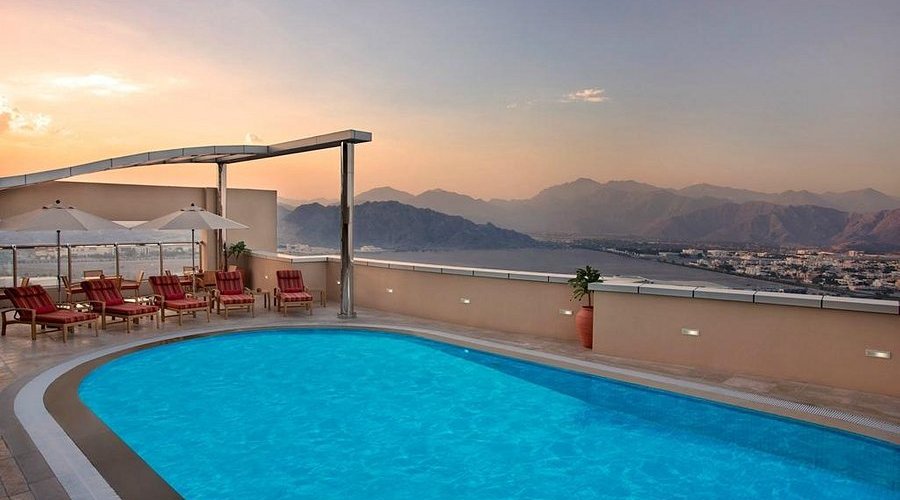
Living twixt the ocean and the deserts of the Arabian Gulf, I drove a car whose off-roading capabilities rendered it a gas-guzzling behemoth. Not that quenching its thirst for fuel mattered much, as costs at the pump were absurdly affordable. I lived in a business hotel in a spacious apartment high up on the 18th floor. For nine months of the year the air outside was so sultry that the air-con inside was on 24/7. A simple walk around the vast mosque near my home, while pleasant, often resulted in a complete body sweat blended in with atmospheric dust and other nasty particulates. The only self-purification was to lose oneself in the apartment’s planet-sized, walk-in shower cubicle. I dread to think what the water consumption was per shower. And yes, in summer one shower could easily morph into three scrub downs per day. That in itself wouldn’t be too egregious an act of environmental vandalism were it not for the fact that in the entire Arabian peninsula – an area about the size of Western Europe – there is not one single watercourse viewable from space. That means that ‘sweet’ water has to be sourced from somewhere other than the traditional go-to place for the native Bedouins, the well.

Arabia’s carrying capacity for humans is naturally small. To elevate it in order to invite millions of migratory workers in, engineers had to build a series of water desalination plants along the coast. Turning seawater into the salt-free solution that comes through the plumbing requires phenomenal amounts of oil to burn the salt off millions of gallons of water in steam condensers that run day and night. This process accounts for a surprising percentage of all oil production. That aside, the point I’m trying to force through here is that just to have a shower required an industrial process that burnt mind-boggling quantities of oil from water sequestrated from the ocean. The Persian Gulf, all 700 miles of it, is turning saltier because of the desalination required to sustain millions of migrant labourers. This brackish chemistry puts stress on the aquatic ecology, too. Most famously, sea grasses are suffering, which brings big problems downstream to grazers such as the manatee.

At work, we used machinery in a profligate way. Printing worksheets and other paraphernalia for the sake of it resulted in towers of waste paper, un-recyclable laser jet cartridges, and overworked Xerox machines. Air-con ran all day through unmanned corridors, empty classrooms, bare staff rooms, and even little panic rooms where you go to escape the madness. The utilities bill alone must have been equal to the GDP of a small principality. Lights were routinely on in empty rooms. Just switching them off was an act of radicalism.

Workdays there are kinder than in the slave-driving West. One of the reasons so many venture there in the first place. Instead of being bolted to one’s desk until long after dark, privileged expat Europeans (Brits included) would finish work with the sun still high in the sky. That exacerbated our carbon footprint, as at 4 o’clock there’s much life left in the day. Invariably, myself and friends would do some form of physical exercise in an air-conditioned gym, on equipment often running on mains power. In fact, the treadmills often needed their own national grid to operate. Once the aerobic fun and games were over it was time to decamp to the bar for a cold one. Except, for the Guinness to reach chill factor 10 required power beyond power. When outside the temperature is touching 40 celsius with a wet bulb humidity level of 80%, and inside the beer tap has a designer layer of ice around it, you know you’ve got an addiction to mains power. Is there any wonder a pint costs the equivalent of $15?

Of course, this power audit i’m describing is not the half of it. One of the great mass movements of expats in the carbon-rich Gulf is to descend en masse to the airport on the first day of school holidays. It is far from unusual to meet a colleague, neighbour or even drinking buddy in the queue for check-in. Their intended destinations are myriad, but all of them are linked by one carbon-relevant fact: flight time is seldom less than five hours, and sometimes fifteen. That’s a lot of vapour trail.

But this mass gathering of folks sharing similar socio-economic status is by no means confined to the air travel industry. If you want to visualise another airport analogue, but this time for the domestic market outside of school holidays, look no further than the mall. The great emporium of the 21st century – beloved of Arab rulers who see a historicity with the ancient bazaars and souks of the Middle East, as well as a source of great internal revenue – draws the crowds in all weathers, be it hot or hotter. Some, such as the Dubai Mall, are so sprawling as to contain more shops than some cities (Dubai Mall has circa 1,200 individual rental units within its great perimeter walls).

Once inside these 21st Century temples of consumer worship you see the level of food waste. That, in itself, is staggering. If I had a dollar for every plate of leftovers I witnessed, I’d be a wealthy man. Buffets barely-touched. Takeaways partially eaten. Quantities of cooked food that no society without an agricultural base should ever rightfully have within their means. The profligacy of quality food would appall any good Presbyterian. There, in the Arabian Gulf, apportioning little or no value to a precious thing as fresh, quality food is a fact of life in a burnout society gone badly wrong. Now, if these generous helpings of leftovers would go to feeding the pitiful canine waifs and strays that mill around behind malls and hotels, I could almost justify the waste. But they don’t, as a matter of policy. The Muslim rulers would rather legislate for a situation where uneaten food is binned than to nourish an animal considered to be vermin.

Like any superstructure, be it an international airport hub or a world-beating shopping mall, the maintenance costs of the mall are almost as environmentally disastrous as the industrial legacy of building them from their foundations. While I don’t profess to having the data on how many megawatts per hour the Dubai Mall uses in order to keep the lights on, the air-con nippy, and the customers happy, I’ll wager that its not far off the levels consumed by the whole country thirty years ago. A graph showing the mains power consumption over a thirty-year period would likely resemble a hockey stick: from sustainable to a complete loss of perspective in a single generation. The point being here that I was one of millions far exceeding a carbon footprint expected from the average consumer in their home nations. It’s the gift that keeps giving, the party without the hangover.

So much raw power consumed from relatively few sources. We’re not talking PV solar panels blanketing the desert, drawing in abundant current from the Arabian sun. We’re talking good old fashioned oil-burning power stations sending carbon consumption through the roof for many. We’re talking industrial output from raw materials extraction that has had a deleterious – in places catastrophic – effect on the specialist ecology and wildlife of the desert. Arabian leopard, down to two hundred individuals across two million square miles. The Arabian wolf, dwindling away to nothing, unable to halt their own human-led persecution. Hyrax, under threat. Corals, wrecked by coastal degradation. About the only wild things to have prospered are the feral dogs that cling on, unloved, in the derelict quarters of the city. Oh, and the ubiquitous camel, too cherished as a commodity to be in danger of extinction.

It doesn’t take a visionary to see that consumption levels of both power (delivered in cheap abundance by the burning of non-renewable fossil fuels) and commodities (imported on oil-burning container ships in exchange for crude oil and gas) are disturbingly high. After five years, I was reaching a moral dead-end. I couldn’t go on enacting a lifestyle that I myself criticised for its crimes against nature. To be sitting at a bar in the desert drinking Irish beer from a tap that’s chilled not by the air outside but but a long chain of industrial processes demanding huge quantities of power, while having discussions about how to bang the world to rights, that’s wasn’t going to cut it long-term. That’s when the small footprint plan kicked into action.

The transition from energy elephant to mouse has been a steep learning curve. Contrastive, to say the least. It’s not all peaches and cream when you’re trying to atone for your former environmental crimes. The challenges of acquiring power off-grid, of limiting daily usage, and of scrimping on water, are in their own right as equally immense as running power stations for cities such as Dubai. Ethically, living off-grid you’re on firmer ground. However, in a practical sense could we all do it? Or is off-grid living destined to be a strictly niche affair?

In my next blog, I’ll illustrate some of the day-to-day rituals required to keep the lights on, the fire going, and the water running.
Oh, The Places You’ll Go.

#adventure, Life, Lifestyle, love, lyrics, mountains, nature, poetry, rhyme, Travel, verse

Picture a Place beyond your front door,

Where the world awaits you, when you are locked down no more.

Where Coronavirus is a Mexican beer-drinking game,

And social isolation a choice not a chore. Things will never be the same.

I’ve heard that one before. The plain fact is, lifetimes well lived never were,

But that little reminder is neither here nor there.


Is it high tide, or glen, or Thai bride, or fen

You seek? Petersburg or Pelion? Russian or Greek?

Then, is it painting a mural on a West Bank wall?

Or lying in wet sand doing not much at all?

Do you see yourself gladly on a deck chair in Spain?

Or puffing away on the Darjeeling train?

A bit of imagination and the possibilities seem endless. And they are.

I can testify to that. Because I’ve kept near and I’ve ventured far.

There’s really nowhere you’ll feel friendless. Whether you’re watching red cardinals from a bench in Central Park.

Or itching your head in the flea markets of Muscat.

There’s nowhere you won’t make your mark.


I myself have had visions on high,

Of following mountains way up to the sky.

And then looking down on all I survey,

A thought. A plot. I’ll come back here one day.

Or not go away,

at all.


I know. I’ll stay rooted to the spot, and dream not of what I’m missing,

but of what I’ve got.

Which is really the whole world when what’s all around

Are mountains beyond mountains. What is this I have found?

Head in the jet stream, heart on my sleeve,

Life’s best in the thrill of the chase, i believe.

Or better still, I found contentment. That’s what i meant.


There is so much to see, so far to go,

So many ways: fly, cycle, row. Hitch a ride, crawl on all fours,

It doesn’t matter how. Providing you do it outdoors.

Depart at a snail’s pace. Arrive in an instant.

Whoever said dreams had to be distant?

By saying ‘I can’t’, you never will. A mountain?

You’ll be lucky to get up a hill.

So don’t forget to recall, it’s all in the mind. If you fall,

Only you can leave yourself behind.


If you like, walk on your hands to Timbuktu,

And when you get there you’ll know what to do.

Keep on keeping on, this time on your feet,

and smile aloud at the people you meet. Everywhere along the way.

Your presence there will make someone’s day, no doubt. Maybe everyone’s.

Depends where you are, where it’s about. Greeks are not Egyptians.

Cambodians not Colombians. Angolans not Australians. Same but different,

Different but the same, a million broken pictures within a single frame.

A mosaic, you might say. A tapestry, a dot painting, a thing on a wall,

Hungarian, Haitian, Hurdy Gurdy Man, or Han. People are people. Wherever you find them. That’s all.


Wherever you roam, roam with a smile.

And if strangers invite you in for a while,

Don’t turn them down.

Turn them up, let them speak, of what they did today and what they did last week.

Who cares if you can’t follow, if it’s all mumbo-jumbo.

You’ve given them yourself, not some hollow

Man! They can see your spirit is willing, your eyes are smiling, your voice is trilling

Out birdsong, some foreign tongue, delighted to have you here among

Strangers.

No one is a stranger, not when you travel.

Except yourself maybe. Let that twist of fate unravel.


So, next time you find yourself in some forgotten land.

Soon, I trust. On an island in a warm sea scratching the sand,

Or if needs must, holidaying local. Even if that means dressing up as a yokel.

Original thinking is the key. Another experience in the bag. The making of me.

Give yourself a big pat on the back for re-learning the art of life. Such a drag, after a year stuck at home

On the edge of a blunt knife.

All things exist, but only life is for living. Tell me something I don’t know.

But have you thought of the future, of the places you’ll go?


(Inspired by Dr Suess, Oh, The Places You’ll Go)


<p value="<amp-fit-text layout="fixed-height" min-font-size="6" max-font-size="72" height="80">

Weathering the Purr-fect Storm

animals, Covid-19, dogs, ethics, humour, Life, Lifestyle, love, Travel

When Choosing Between a Kitten and Wintering in the Sun Is the Extent of Your Woes, You Know You’ve Got a First-World Problem at Hand.

The Time to Remedy it? Never. (Still, a solution exists, if you’ll let me explain)

The world has gone canine and feline-mad in the age of Covid. Whether you fall into the category of emotionally clinging to anything with a heartbeat, or else into that of possessing more money than sense, all you suckers out there from either category are being royally shafted for the privilege of sharing your life with four paws, a tail and a pair of irresistible eyes for company.

If you’re not paying a king’s ransom for a King Charles’ spaniel then it’s an ingot of gold bullion for a French bulldog. As for your regal highness of the High Street and all-round deity of detached houses everywhere – the not-so-humble cat, we’ve got Bengals going for anything but a bargain, and Ragdolls for the equivalent of a small finca in Spain. Yip, puppy prices and kitten costs have doubled, tripled, quadrupled. I would go beyond quintupled but I cannot find the word.

Breeders are having a field day while wannabe owners are prepared to part with pretty much their life savings just to snaffle whatever breed is in vogue recently. The law of Siamese supply and Dobermann demand is beginning to resemble the state of the housing market in SouthEast England where sums involved are so eye-watering you’d be forgiven for thinking the bricks are of gold. Same with our precious little quadrupeds where GBP3,000 for a KennelClub-registered fur ball is de rigueur nowadays. The nation’s housebound millions have put out an SOS for something that can bring a taste of Attenborough into their locked-down living rooms. Is there any surprise therefore that the Bengal Cat is presently so popular? They are, after all, not too many generations removed from a Asiatic Leopard Cat, normally found swiping their prickly paws at anything moving in the forests and grasslands of India. If you can’t go to India’s remaining wild places, then bring India into the comfort of one’s living room, where at this rate we’re all likely to live out our remaining days.

I digress slightly. My blogs wouldn’t be the same if I didn’t. So, we’ve quickly established that interest in acquiring a pet has jumped since half the world was grounded by our surrogate parents in government. In Western nations such as animal-mad Britain, an existing industry has just gone decidedly up-market. Not that the quality of kitten or puppy has improved. Far from it. The costs of acquiring the animal have, however. The trend is so blatantly obvious, judging by the number of daft-as-a-brush French Bulldogs that strut past wearing made-to-measure harnesses, that the nation’s thieves have even got in on the act. Thieves are pertinent to this discussion. We can’t simply ignore them, given that their normative habits of breaking into empty houses have been adversely impacted by commuters working from home. So yes, unsurprisingly, every tea leaf in the land (as pseudo-Cockneys like to call thief) worth his prison stripes has swapped the old cat burglary routine for just the cat part. Yes, literally they have taken to burglary of cats (and dogs who fetch more). Once they were a dogged bunch. Now, the criminal element are merely a bunch intent on decamping with their victims’ beloved (and very costly) dogs. Buy your Lhasa Apso pup for two grand from the auctioneer who calls themselves a breeder before it’s stolen from under your nose. Then have the little bundle of joy ransomed back to you for another two thousand. Times are strange.

I myself am no different insofar as i too crave love and affection. Without it, this man has become part-machine, part-Borg. In the continuing absence of that other feline, woman, in my life I too have longed for the ineffable charms of a four-month old puppy or kitten, as well as the dignified air of an older animal. Longed to say absolutely not, this dog is not sleeping with us on the bed, only to pat the mattress when the lights go out and whisper, come on boy. H’up. Naturally, I would baulk at the prospect of paying through the nose but, then again, I would rather adopt a rescue animal over a market-savvy breeder. More than anything, I’d love fate to intervene and have the animal find me. Wow! Now that would be kind of divine intervention. But whatever the source, the intention must be the same: to guarantee that with ownership you have signed an unbreakable moral contract with yourself to care for that animal from the litter tray to the pet cemetery, relinquishing loving ownership only in extreme circumstances, such as terminal cancer or a seat on the Mars Mission.

There’s no leeway for flaky types when it comes to adopting a fur-baby. Alas, they exist. In droves, I expect, though the majority of dependable types are incensed by these soi-disant owners who sell marvellous, sentient household animals as quickly and conscience-free as the day they bought them. Me, I detest this commodification (treating something as unique as a Siberian cat or a English Pointer a mere commodity) of pets in the strange age of Covid. To have one would be to retain it under all circumstances. No exceptions other than the two mentioned above. That’s the honourable thing. Getting a kitten or a pup is no small matter. It takes responsibility and devotion, as we know. So what does a guy do when he’s faced with the dilemma of desiring that wonderful feeling of bringing an animal into his life, his home, and 15-year plans, while also holding fast to that love for far flung, foreign travel? Twenty years with a Birman cat or a solitary winter travelling around Burma? The whole year round with a Russian Blue or that little getaway to the Russian hinterland you’ve always dreamed of but never had the freedom to? Full-time carer-in-chief for that lovely black Labrador, or a summer jaunt around the coast of Labrador in Canada?

The sickening thing is, it’s one or the other. The two – 1) extended bouts of travel and 2) pet – are mutually exclusive. I could have that kitten to cuddle up to a night, to watch with delight at how she starts becoming an existential part of the home and me, or I could spend eight months of the year lavishing affection on the dogs that pass by the boat, each evening poorer for not having a cat or dog to wile the hours away with in front of the fire. For what? For the escape? For the elan and incomparable adventure of travel? I need both but, wearing this crown of moral responsibility, i can have but one or the other.

Much of the world lives hand to mouth on a dollar a day. They are faced with dilemmas like having to leave their home and families for years on end to find work overseas. As for mine. When your biggest dilemma is to chose between raising a fur-baby or wintering each year in a sunny, mountainous Shangri-La, man you know your problem is quintessentially first-world.

Bearing in mind, there is solution for the uncompromising in me. Go and live in a sunny, mountainous place, taking the dog and the cat with me. If you can’t beat ’em, join ’em.