
The Social Experiment in Living Off-Grid: How Goes It?

#alternative lifestyle, #living off-grid, boats, Ecology, England, environment, Lifestyle, social issues, Society

Part I: Life on the Grid

Or should that be the anti-social experiment in off-grid living? There is that aspect, too, though there’s more to life off-grid than a simple wordplay. Or unbearable isolation. There’s the experiment itself, which has to be longitudinal – meaning same conditions over an extended period – and has to transition from living on-grid to living off, with all the upheavals that entails. For all those who aspire to living La Vida Loca – offline, unhitched, and possibly unhinged – the experience goes a bit thus…

Before entering the spartan realm of minimalist, I was a maximalist. Whereas today I can claim to tiptoe on the Earth with a size-4 carbon/ecological footprint, pre-watershed I used to make the Earth shake with a megafauna-sized carbon footprint. You know the type: Crusty the Clown outsized shoes, freak show dimensions, gargantuan metatarsals. Three years ago, but it seems like only yesterday (to quote The Carpenters), I was following a high-octane consumption pattern.

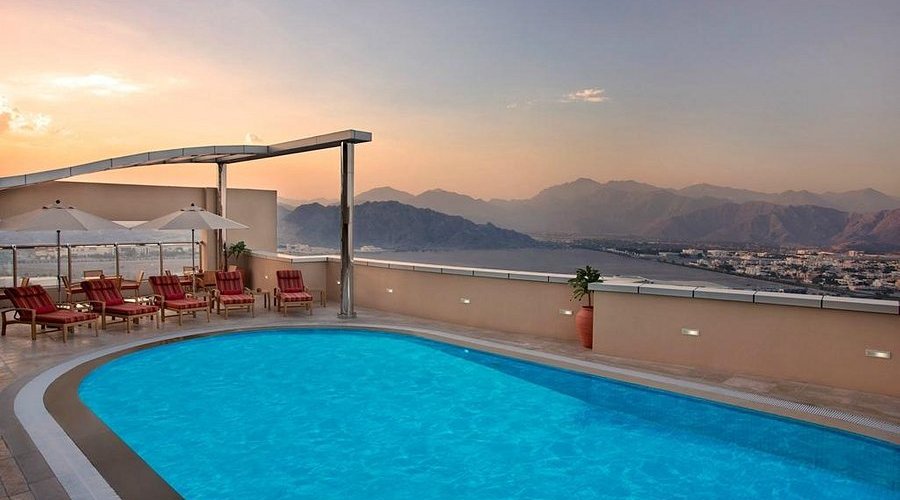
Living twixt the ocean and the deserts of the Arabian Gulf, I drove a car whose off-roading capabilities rendered it a gas-guzzling behemoth. Not that quenching its thirst for fuel mattered much, as costs at the pump were absurdly affordable. I lived in a business hotel in a spacious apartment high up on the 18th floor. For nine months of the year the air outside was so sultry that the air-con inside was on 24/7. A simple walk around the vast mosque near my home, while pleasant, often resulted in a complete body sweat blended in with atmospheric dust and other nasty particulates. The only self-purification was to lose oneself in the apartment’s planet-sized, walk-in shower cubicle. I dread to think what the water consumption was per shower. And yes, in summer one shower could easily morph into three scrub downs per day. That in itself wouldn’t be too egregious an act of environmental vandalism were it not for the fact that in the entire Arabian peninsula – an area about the size of Western Europe – there is not one single watercourse viewable from space. That means that ‘sweet’ water has to be sourced from somewhere other than the traditional go-to place for the native Bedouins, the well.

Arabia’s carrying capacity for humans is naturally small. To elevate it in order to invite millions of migratory workers in, engineers had to build a series of water desalination plants along the coast. Turning seawater into the salt-free solution that comes through the plumbing requires phenomenal amounts of oil to burn the salt off millions of gallons of water in steam condensers that run day and night. This process accounts for a surprising percentage of all oil production. That aside, the point I’m trying to force through here is that just to have a shower required an industrial process that burnt mind-boggling quantities of oil from water sequestrated from the ocean. The Persian Gulf, all 700 miles of it, is turning saltier because of the desalination required to sustain millions of migrant labourers. This brackish chemistry puts stress on the aquatic ecology, too. Most famously, sea grasses are suffering, which brings big problems downstream to grazers such as the manatee.

At work, we used machinery in a profligate way. Printing worksheets and other paraphernalia for the sake of it resulted in towers of waste paper, un-recyclable laser jet cartridges, and overworked Xerox machines. Air-con ran all day through unmanned corridors, empty classrooms, bare staff rooms, and even little panic rooms where you go to escape the madness. The utilities bill alone must have been equal to the GDP of a small principality. Lights were routinely on in empty rooms. Just switching them off was an act of radicalism.

Workdays there are kinder than in the slave-driving West. One of the reasons so many venture there in the first place. Instead of being bolted to one’s desk until long after dark, privileged expat Europeans (Brits included) would finish work with the sun still high in the sky. That exacerbated our carbon footprint, as at 4 o’clock there’s much life left in the day. Invariably, myself and friends would do some form of physical exercise in an air-conditioned gym, on equipment often running on mains power. In fact, the treadmills often needed their own national grid to operate. Once the aerobic fun and games were over it was time to decamp to the bar for a cold one. Except, for the Guinness to reach chill factor 10 required power beyond power. When outside the temperature is touching 40 celsius with a wet bulb humidity level of 80%, and inside the beer tap has a designer layer of ice around it, you know you’ve got an addiction to mains power. Is there any wonder a pint costs the equivalent of $15?

Of course, this power audit i’m describing is not the half of it. One of the great mass movements of expats in the carbon-rich Gulf is to descend en masse to the airport on the first day of school holidays. It is far from unusual to meet a colleague, neighbour or even drinking buddy in the queue for check-in. Their intended destinations are myriad, but all of them are linked by one carbon-relevant fact: flight time is seldom less than five hours, and sometimes fifteen. That’s a lot of vapour trail.

But this mass gathering of folks sharing similar socio-economic status is by no means confined to the air travel industry. If you want to visualise another airport analogue, but this time for the domestic market outside of school holidays, look no further than the mall. The great emporium of the 21st century – beloved of Arab rulers who see a historicity with the ancient bazaars and souks of the Middle East, as well as a source of great internal revenue – draws the crowds in all weathers, be it hot or hotter. Some, such as the Dubai Mall, are so sprawling as to contain more shops than some cities (Dubai Mall has circa 1,200 individual rental units within its great perimeter walls).

Once inside these 21st Century temples of consumer worship you see the level of food waste. That, in itself, is staggering. If I had a dollar for every plate of leftovers I witnessed, I’d be a wealthy man. Buffets barely-touched. Takeaways partially eaten. Quantities of cooked food that no society without an agricultural base should ever rightfully have within their means. The profligacy of quality food would appall any good Presbyterian. There, in the Arabian Gulf, apportioning little or no value to a precious thing as fresh, quality food is a fact of life in a burnout society gone badly wrong. Now, if these generous helpings of leftovers would go to feeding the pitiful canine waifs and strays that mill around behind malls and hotels, I could almost justify the waste. But they don’t, as a matter of policy. The Muslim rulers would rather legislate for a situation where uneaten food is binned than to nourish an animal considered to be vermin.

Like any superstructure, be it an international airport hub or a world-beating shopping mall, the maintenance costs of the mall are almost as environmentally disastrous as the industrial legacy of building them from their foundations. While I don’t profess to having the data on how many megawatts per hour the Dubai Mall uses in order to keep the lights on, the air-con nippy, and the customers happy, I’ll wager that its not far off the levels consumed by the whole country thirty years ago. A graph showing the mains power consumption over a thirty-year period would likely resemble a hockey stick: from sustainable to a complete loss of perspective in a single generation. The point being here that I was one of millions far exceeding a carbon footprint expected from the average consumer in their home nations. It’s the gift that keeps giving, the party without the hangover.

So much raw power consumed from relatively few sources. We’re not talking PV solar panels blanketing the desert, drawing in abundant current from the Arabian sun. We’re talking good old fashioned oil-burning power stations sending carbon consumption through the roof for many. We’re talking industrial output from raw materials extraction that has had a deleterious – in places catastrophic – effect on the specialist ecology and wildlife of the desert. Arabian leopard, down to two hundred individuals across two million square miles. The Arabian wolf, dwindling away to nothing, unable to halt their own human-led persecution. Hyrax, under threat. Corals, wrecked by coastal degradation. About the only wild things to have prospered are the feral dogs that cling on, unloved, in the derelict quarters of the city. Oh, and the ubiquitous camel, too cherished as a commodity to be in danger of extinction.

It doesn’t take a visionary to see that consumption levels of both power (delivered in cheap abundance by the burning of non-renewable fossil fuels) and commodities (imported on oil-burning container ships in exchange for crude oil and gas) are disturbingly high. After five years, I was reaching a moral dead-end. I couldn’t go on enacting a lifestyle that I myself criticised for its crimes against nature. To be sitting at a bar in the desert drinking Irish beer from a tap that’s chilled not by the air outside but but a long chain of industrial processes demanding huge quantities of power, while having discussions about how to bang the world to rights, that’s wasn’t going to cut it long-term. That’s when the small footprint plan kicked into action.

The transition from energy elephant to mouse has been a steep learning curve. Contrastive, to say the least. It’s not all peaches and cream when you’re trying to atone for your former environmental crimes. The challenges of acquiring power off-grid, of limiting daily usage, and of scrimping on water, are in their own right as equally immense as running power stations for cities such as Dubai. Ethically, living off-grid you’re on firmer ground. However, in a practical sense could we all do it? Or is off-grid living destined to be a strictly niche affair?

In my next blog, I’ll illustrate some of the day-to-day rituals required to keep the lights on, the fire going, and the water running.
To Save First We Have To Spend

biodiversity, civilisation, climate, conservation, developing world, development, ecological economism, Ecology, environment, ethics, future, international development, land ownership, rainforest

“You can take the title to your house to the bank and borrow money. Why? Because the market puts value on a house. We need to see rainforest at that same value level,” he says. “Conservation has to be market-driven. The long-term benefits of a healthy forest are more valuable than the short-term profits from logging or mining.”

Dane Gobin, Iwokrama Forest Management, Guyana (Bloomberg, 2019)

For decades methods have been applied about how best to arrest the process of deforestation in the world’s tropical regions. Everyone from international development agencies to Hollywood greenies have gone all out, doing everything from berating, and even ostracizing governments in affected regions, to incentivising them with the promise of aid, legitimacy and investment if only they would quit the logging.

The argument to conserve biodiversity over the argument to develop economically has traditionally come down to a binary ethical one. Western voices have persistently pleaded on the basis that deforestation – whether it be for lumber, squatting, mining, or slash-and-burn farming of cash crops – is an immoral act that not only deprives countless millions of species of a roof over their heads, but also degrades the quality of soil, air and of the lives of every man, woman, and child in the wider world. The value, therefore, of each hardwood tree, each prowling jaguar, and each creeping vine is in and of itself incalculable – or at least with a value exceeding the sum parts of the commodities that loggers, farmers and miners seek when despoiling the rainforest in the first place. Western thinking goes thus: stay in your sprawling shanty towns; let nature be; allow only indigenes the right to dwell in biodiversity hotspots. But in a world of nearly 8 billion ambitious souls, most of whom live in what’s called the Global South where most of the real biodiversity lies broken against a backdrop of poverty, squalor and deep structural inequality, what then?

Making Borneo into one great National Park, or keeping the Amazon as a primordial world, is all well and fine, but does it really chime with our contemporary mood? Making nature exempt from commodification and monetary value was part of a conservation mindset popular during the heyday of the National Park system in the early to mid twentieth century (think the USA under Teddy Roosevelt). Let’s ring fence the beautiful places in perpetuity, which worked beautifully in wild places such as Yosemite. But today, given the mess we’re in what with a toxic blend of population pressure, degraded environment, and a model of capitalism espousing the greatest consumption for the greatest number to produce the greatest happiness, how durable is the view that wilderness should remain untouched? Isn’t it time to take other, more radical, measures to safeguard the last remaining wild places?

Look around and what becomes apparent is not that the old paradigm is changing. Moreover, it’s that it has to. Under the pressure of realpolitik, of shrinking public spaces, of expansive corporate reach, and of burgeoning populations hell bent on getting a slice of that consumer pie, closing off vast swathes of so-called virgin territory is creating a rift between governments and their people, and more importantly between the reality of the situation and the perception of how to solve it. If not, then how come the more that developing countries (as well as a few developed ones) have tightened their environmental laws over the past generation, the more incursions we see made by various players and the greater the overall dismantling of the biosphere within the primary forest? Within this paradox, political populists hostile to established models of conservation can stand on ceremony with the promise of making pots of money for everyone from what they see as their own – and not the planet’s – natural patrimony.

Seen by populist governments in heavily-populated developing countries as symptomatic of the Western tendency toward paternalism towards the regions these great powers used to rule, in some unpopular cases, such as Brazil and Indonesia, the world has seen in recent years a worrying acceleration in the acreage of virgin forest felled for lumber, cash crops, and the riches that lie beneath the forest floor. And what is the motive that belies this degradation we see in spite of decades of lobbying and campaigning for an end to wilful and unsanctioned deforestation? Why are things, in some sense, worse than anyone could have imagined even twenty years ago? Well, in the words of Ricardo Salles, the Brazilian Environment minister under Jair Bolsonaro’s polemic presidency, the reality goes a bit like this:

“We need to recognise that there are real subjects living in the Amazon,” Mr Salles said, referring to the 20m people living in the Amazon. “So we need to give a concrete response to them, and not simply saying that they cannot do anything in the area of the Amazon. That is not reasonable, it is not even feasible.” (Financial Times, 2019)

By promulgating the moral argument for making the Amazon one gigantic exclusion zone for the millions of restless, economically-challenged people living in its vast surrounds, it seems that no lasting progress can be made. The old model, backed by rich, industrialised countries, many of whom have already laid waste to their own primary forests, is turning out to be a dud. Their appeal to goodness based on the ethical presumption that ‘just because we did it to get rich, to develop our nation state, you shouldn’t necessarily follow’, is now clearly falling on deaf ears. Populism has fostered defiance among the developing states in the equatorial belt. The rising power of China as an ideological counterweight to the traditional Western hegemony is emboldening states, such as Brazil, to let ecocide reign so long as the conditions for human inequality persist. Alongside this, the vast improvements in global supply-chain logistics has smoothed the way for biodiversity loss to become one big concerted effort. Salles’ justification for this lawlessness rife on the fringes of the great Amazonian basin is clearly viewable in these terms. He elaborates the point:

‘That is why people go over to the illegal activities… because they don’t have a space to do something within the law.’

Are we hearing the makings of policy based on the precepts of what is known as ecological economics? This idea is not exactly hot off the press, but it is beginning to demand attention. With the UN’s Millennium Development Goals teetering on the brink, something has to give. And that, unfortunately, is policy attachment to the notion of deep ecology. As outlined previously in this article, building policy goals around a shared ethic that one can never put a price on nature, has proved a bridge too far, and this failure is seen in terms of unsustainable losses to tropical biodiversity in this century alone. Purists might baulk at the idea, but monetising a forest and all that’s in it might just be the one compelling way to make business, and all the rogues that dwell on its fringes, sit up and listen. Speak their language. It’s called cash. Easy to learn; tough to forget.

So, what does monetisation of nature mean in principle? According to Barbara Unmüßig of the Heinrich Boell Foundation, that conservation efforts can be bolstered and public sympathy heightened by revealing an economic contribution of nature and the services it can provide. This translates as tradable prices for ecosystem services. We can encapsulate these wider definitions into what I would term ‘natural capital/equity’. Measuring nature with economic indicators over a tradition of measuring nature, sui generis, against other ethical considerations still has a touch of the abstract to it. So, in short, ecological economism really boils down to saying, look, if you want this patch of forest you’ll have to show you truly value it by paying a high tariff for it. Ergo, those who would place such high stakes on their own economic future, and that of their corporate interests, would therefore place an enormous value on natural capital, to the extent that it would be safer in private hands (acting as a trust) than at the mercy of prohibitive legislation that invariably ends up breached by corrupt officials and short-term prospectors anyway.

If the past fifty years have amply shown that the world doesn’t quite agree on an absolute value placed on nature, it has always contrastingly shown that free market capitalism has been instrumental in placing absolute value on something so long as it can be considered commodity. No one quibbles with the price the market sets, after all. And this is where the problem lies: is it right to commodify nature? Does doing so lead to privatisation by other means? Where governments have failed, can the private sector, including the world’s investment bankers, step into the fray and actually flick the switch on ecological damage and destruction? In short, is it better to harvest a tropical hardwood than to fell it? For the tree, the answer is an unqualified yes. But for the guy who wants a quick hit of capital from the lumber, or he who desires the empty space left once the tree goes, what then? Even this radical idea (well, radical for our modern age) has its limitations. Without applying what Unmüßig terms the precautionary principle – the principle that the higher the risk to the natural environment, the greater the justification must be for a stakeholder to take such action – monetization of the natural world can all too easily slide into the kind of excessive commodification that drives Man to desire ownership and control over every tangible thing. We all know where that leads. And this instinct of tearing down only to build up, or to destroy in order to prosper, can only be moderated at the levels of governance and legislation. Which brings us back to the old ways of trying to combat ecocide.

Perhaps, there is a way, though. A new modus operandi where some ecosystems can thrive while we survive. And all in a more symbiotic, a more mutually-beneficial way. The Selva Maya is an area of tropical jungle spanning three countries: Mexico, Belize and Guatemala. A 150,000 sq km biodiversity hotspot containing no less than five species of big cat, La Selva Maya has recently been acquired at cost by conservation groups with money to put into something other than publicity and administration (Guardian, 22/04/21) Thanks to direct purchasing from the national government of Belize (i believe), this splodge of megadiverse, pristine forest finds itself now perpetually protected. Barring a constitutional catastrophe in Belize, nothing large-scale will ever again encroach on the fragile makeup of the forest. By any measure, what has happened here is a great thing for nature. And by extension, for the whole world. In purchasing the forest, conservation groups have clearly come out in the open, admitting that a monetary value – whatever it is – has been agreed with the previous custodians of the land. However, the arrangement seeks not to commodify what has been purchased, ironically, as a commodity. The contents of the forest will not be up for negotiation, or fair game for the highest bidder. No, that would miss the point.

The best analogy i can come up with for the money paid is that of a ransom. The right people now have the title deeds in their name, and presumably their business model is to leave the place the hell alone to simply be. If enough consortiums can come together to purchase small, affordable patches of rich biota, mainly rainforest, along the entire equator, then we might just begin to witness a joining of the dots until one day every last hectare that was bought by conservationists will start to outweigh the great green spaces on the map occupied by the industrialists, the agronomists, and the settlers, all content with one thing: to bleed nature for all she’s worth. By that point, capitalization of all natural ‘assets’ will be so valuable as to be out of the price league of every sinister corporation or corrupted government.

There is a faint whiff of Thatcherism in all this. In the early 1980s, with Britain exhausted and failing miserably, she encouraged affordable home ownership, and what transpired? Newly privately-owned homes across the kingdom didn’t get trashed; many actually ended up beautified where everyone become a vested stakeholder. The nature wars are reminiscent of her era. Whether humanity continues with the short-term strategy of raid and pillage until no booty is left, or the long-term one of benign ownership at a dollar price – monetising nature without commodifying her – we are, it seems, at a critical juncture. The race is on. It’s all to play for.

The Five Corners of Love

#adventure, America, California, environment, Travel

Pt III

United Across the Great Divide.

All the way to Reno……

…….I was looking to segue from the last instalment into this one after a hefty hiatus of eighteen months. Once the mothballs had settled I should have known that life lays down markers everywhere only to let the individual decide to see them for what they are or else ignore them for what they’re not. This ‘gift’ came wrapped in an R.E.M. song title. How does one get from Denver to San Francisco in a story without travelling a thousand rugged miles in words? Answer: one cheats by picking a song title which says it all. Hey now, all the way to Reno. If you’re old enough or urbane enough to be listening to REM, you’ll know the number.

All that my memories will reveal to me about the long bitumen from Colorado to beautiful California was that the I25 in Denver led due north to Cheyenne, the state capital of Wyoming. We must have doubled back from our pioneer hut in the Rockies to Denver knowing that to reach central California expeditiously we would be better suited to heading north to Cheyenne before taking a sharp left onto the I80 through the prairie lands of southern Wyoming. The car delivery operator gave us only fourteen days to cross the continent. Adding that failure to present ourselves and their car at our destination in Sacramento might result in an FBI warrant being issued in our names, was enough to keep us from digressing too much en route. No sacrilege on the road to the Sacrament, that was the mantra.

Southern Wyoming, I remember chiefly as being the gateway to the world’s oldest designated National Park. We even spotted roadsigns denoting so. For Yellowstone turn north. But turn we did not, in spite of temptation that Jesus could have empathised with. The detour would have added days to the trip, and quite possibly – in our callow minds – brought us into the FBI’s ambit alongside Colombian cartel lords, the Unibomber, and a splendid array of serial killers.

West we drove through a sea of yellowing grass stuck to hills filed down by the Earth’s master carpenter, time. Through Rawlins, Rock Springs and Evanston, and onward we hardly stopped even after crossing state lines into Utah. At Salt Lake City on the southeast shores of the Great Salt Lake we kept on the I80. The city of the Latter-Day Saints sat there piously wedged between a mountain ridges running north-south. I thought it was befitting of a religious colony of New World Christian non-conformists that they found their new Nazareth in a place so far removed by distance from the Holy land yet so near in terms of the harsh semi-desert terrain upon which Christ built his broad church. They choose one helluva place to settle into unorthodoxy. The Wasatch to the east and north; the Oquirrh to the west, both ranges rising from the valley floor, pushed up until their ridges cut the arid air. In the midst of untrammelled wilderness emerged over time a city as different from any other in the Continental United States that anyone could imagine. So improbable it would end up cemented there but that was the pioneer spirit of the brutal nineteenth century. Those religious zealots with the pioneer spirit welling up in their eyes, they must’ve marched in unison over forest, river prairie and mountain until stopping there with the Rockies towering either side of them they said, this is far enough.

Outside of SLC a vast salt flat shimmers on the horizon. The I80 slices through it, a gesture of unflappable self-confidence by American civil engineers of the mid-20th century. Then again, what else could they have done? Reroute the highway around the imposing site of a salt desert? Nah. Signs offering fuel and food warn of shortages ahead. No fuel beyond here for 100 miles. You get the idea. The heat was phenomenal, yet you wouldn’t have known it, so dry was the atmosphere. The skin burned without telling so. A gasp of air was all it took to singe whatever lines the windpipe. This is mirage country. The flats, where water once abounded, were now desiccated. Salt crystals is all that withstood the heat until turning the world white this bed of minerals reflected the sunlight back but the sunlight wouldn’t bounce back in a straight line. It swayed and wobbled instead, hence the hazy reality of looking through and beyond a salt desert. The trucks ahead looked for all the world as if shimmering through a wormhole, all pulled and stretched out of their normal dimensions, somehow levitating over a roiling sea of salt. The gum i had been chewing on melted onto the windscreen after a failed attempt at flicking out the gobbet of gum going at 60mph. That’s what i recall most: the sight of chewing gum turning to liquid on the outside windscreen, dripping down until realising it would take an ice storm to remove that careless blemish from this car.

And so the road went on. Straight as an arrow it cut through the dazzling flats until leaving them the mountains once again took us into their fold. But by then we had left one state and entered yet another, this time Nevada. Meaning ‘snowy’ in Spanish, Nevada was too baked by this ferocious summer to offer up snowflakes. But it mattered not. By now we had crossed the Great Diving Range and now could say confidently of ourselves, we have made it to the West, to Pacific Time. I don’t remember crossing Nevada on the I80 to Reno, the state capital. It was up and down, though that’s for sure. And because of plate tectonics, the ridges formed N-S, therefore when travelling west you go over every last buckle in the Earth’s crust. On the outskirts of Reno I sensed California was close. Roadsigns affirming such were all the evidence I needed to back my claims. The town itself looked like so many others en route: a pitstop; a temporary settlement in the most unlikely of places that found permanent status on account of the fact that wave after wave after wave of new world hopefuls had kept passing through on their way to the promised land of California only to get waylaid for long enough to put down some odd manner of roots.

It was at Reno we turned off the I80. Knowing we had time before the FBI were called in, we decided to take the back roads into California. Unbeknownst to us, this deviation into the magnificent unknown would meanaling delightful acquaintance with one of America’s truly great roads: Highway 395. Forget Route 66 or even Highway 61, this was the road that would leave an indelible mark on me, so much so that twenty-three years later i would return alone to do the whole thing again. This road had fable written all over it. Had a young a precocious Bob Dylan driven it before making Highway 61 Revisited, we would never have had Highway 61 Revisited.

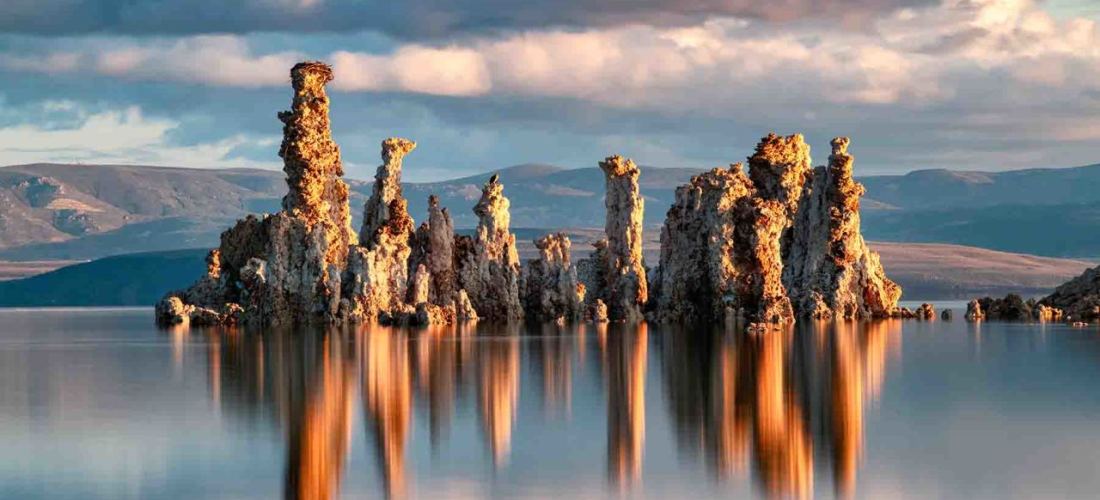
Highway 395, if you didn’t already know, runs from Carson City near Lake Tahoe all the way to San Bernardino, east of L.A. It runs parallel with the backside of the Sierra Nevadas where grows the Giant Sequoia tree and in between there and the White Mountains where grows the ancient Bristlecone Pine. Between them are vast geographical features that battle the heat and the cold and the light and the dark. The heavens make Wagnerian cloud operas over this gap between two mountain ranges, such is the drama nature cooks up. It’s no coincidence that Edwards Airforce Base lies amid all this scale and all this splendour. Neither is it a surprise that Edwards Airforce Base is where the space shuttle would come into land. To slow from 17,500 mph to 200 you need acres of space to land, you need light to sight the shuttle as it re-enters the Earth’s atmosphere, and you need high pressure, and lots of it, to mellow the bumps. Highway 395 and its back yard had it all. And smack bang in the midst of that lay Mono Lake, whose chemistry was most unusual, whose size was monumental, whose ambience was strange and beguiling.