TITICACA: Afterlife Vacation Spot #1

#adventure, Lakes, Perú, Reincarnation, South America, Titicaca, Titicaca, Travel

Did You Find Me, or Did I Find You?

For now that blue eye in the sky between Peru and Bolivia still exudes magic. Where others struggled to point, as a kid obsessed with the physical world I faced down that map of the world and prodded right at the X. Titicaca, there’s no hiding from my beady eye. In hindsight, it was my way of saying,


‘Don’t you go evaporating because one of these days I’m coming for you.’

It only took nearing thirty years of travelling to other Titicacas before the real thing found me wandering life’s lost highway. And now Titicaca is gone from sight, tucked away behind that annular world of rock and sky, she hasn’t really gone anywhere other than shrink inch by inch. As the lake was with me from the start, so she shall be to the end. And beyond. Maybe so far beyond that my ashes will linger longer than her vapours.

Early Onset Titicaca Syndrome

I might have mentioned, There’s not a time i can recall not knowing of the lake. Maybe it was the name itself banded around like M-i-s-s-i-s-s-i-p-p-i in the corridors of primary school. The hee-hee and ka-ka onomatopoeia of a laughing jackass, the repetition of the phonemes -ti and -ca, so alien to my English mother tongue. And the familiarity just deepened, breeding not contempt but a certain fascination. Ferocious battles of Trivial Pursuit at the tender age of ten taught me that Titicaca was Earth’s highest navigable body of water. That cool factoid stayed lodged in my hippocampus, planting some seed in the drifting dunes of the mind that would one day bring ephemeral rain enough to germinate that seed into an apparition of the lake itself. I could have sworn it was the real thing, though these days you never can tell.

The Old Ones Are The Best

Hands down, Lake Titicaca is stocked with knockout trivia the way Lake Malawi is stocked with cichlids. Off the bat, it’s where the supreme god Viracocha created the first man (and presumably woman, given that we’re all still here). But more importantly for their selfless service to all life on Earth compared with selfish man and woman, he sent up the sun and the moon from the dark waters. The sun, who went by the name of Inti, then ordered forth his two little suns, Manco Copac and Mama Ocllo (presumably more daughter than sun) to put Man, who was not only selfish but wayward, on the righteous path to Inca-dom. So they set forth over the primordial Altiplano to found Cusco, on a now well worn – if sublime – route covered by both the tourist bus and train between Puno and the aforesaid capital of the Inca’s Pan-Andean empire.

But Titicaca doesn’t even start with the same waist measurements, nor with those time-lost legends of Gods and monsters. Too many of us start skinny and move ever outward around the girth; the lake did the opposite. I read that about 12,000 years ago, when Göbekle Tepe was wowing forager crowds and ice was on the retreat from gigantic Andean glaciers, what now covers 8,370km2 between the modern political constructs we call Peru and Bolivia drowned a much larger area, was at least a hundred feet deeper, creating a liquid landscape bigger than my imagination. Think of it as a rooftop pool not just for Viracocha, but an infinity rooftop (of the world) pool for all the Incan pantheon. Now that’s a big pool of meltwater, all consecrated, it goes without saying.

But alas! Things ain’t what they used to be. In today’s balmy Holocene, all that’s left is a slow-disappearing puddle a few hundred feet deep about the size of Puerto Rico. Still, not to be sniffed at.


Ticking off the Ash Bucket List

Ever asked yourself where you’d like those ashes scattered when you are no more? I’ve roamed around looking for ideal ‘eternity’ spots rather like first-time buyers viewing properties in the housing market. In fact, I’ve been crying, ‘this must be the place!’, since the first time I crossed the Oakland Bridge as a greenhorn globetrotter of tender twenty-two and saw San Francisco shimmering like Oz before my very eyes. I was in love with it then and I’m in love with it now. There’s eternity spot #1. But who’s to say one’s vial of earthly remains have to be tipped out in the same place?

Why not entrust a dear friend, or maybe a kindly stranger, to sprinkle a little bit of yourself in more than one hotspot you visited and fell head over heels for? Call it a breadcrumbs trail of your brief appearance on this beautiful blue planet, there for your reincarnate self to rediscover on the great wheel of time.


Leave A Little Piece of You Wherever You’ve Gone

In Puno, Peru’s port town on the shore’s of Titicaca, I got the idea for this grand post-mortal plan. On the bus from Cusco i met two of the very few Englishman I found in three months of travelling this land north to south. Affable Liverpudlians, they too were heading to Titicaca for a special reason. One of them, the one not married to the Peruvian girl, was carrying valuable cargo. So priceless it could fit in his pocket; so symbolic it brought him all the way to the Southern Hemisphere.

His dad had died a couple of years prior. The man’s dying wish was that his son would ration his ashes, setting aside enough to be able to scatter in a number of his favourite locations around the world. One such spot was Titicaca, though strangely i don’t think he had ever been there himself. Rather, he died with this long-harboured dream unfulfilled. So his son grasped the initiative. He and his friend took a boat from Puno to Isla Taquille – Avalon in the middle of the lake – and on the way there tipped the vial into inky waters of Titicaca. It was there he could say a final farewell to his father. It was there his father’s 21-gramme soul could say an initial hello to this lake so big and so mystical it could be a freshwater sea sailed by the sky people. There was something truly Arthurian about this tale. A power that never left me.
 

Beaches Where Clouds Ought To Be

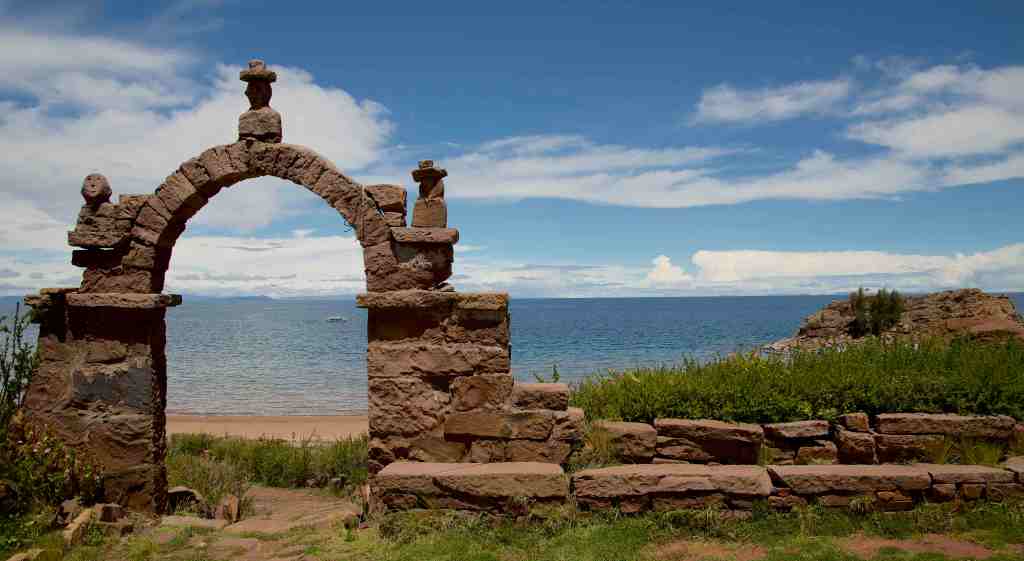
Picture yourself on a beach, but no ordinary beach. Picture yourself instead on a soft, sandy beach on an isle ringed with clouds in the middle of Lake Titicaca, at 12,507ft above the bigger cousin of this sea way down there where the world’s intractable problems are deepening by the day. Imagine mountaintops in plain sight, yet so distant I’m not even going to guess how. Visualise a dirty storm front gathering over starboard waters on your Titicaca vessel when on the port side hills are bathed in pure sunlight. Stop and consider for a moment sleeping on a double bed in a floating lodge atop a huge, anchored raft of totora reeds 15ft thick. Being essentially grass this mythical totora, with which the proto-Inca built their distinctive canoes with their curlicue prow, is continuously waterlogged. If the Uro people, who have presumably lived this way since time immemorial, are to avoid a sailor’s death by sinking into 50ft of water, these totora reed mats need re-thatching every fortnight. Can you imagine having to re-thatch a Cotswolds cottage roof every two weeks? I’ve seen the sea peoples of the Andaman. I’ve seen the Junk-dwellers of Canton. Hell, I live on a boat myself. But I’ve seen nothing like this. No, the lake doesn’t add up. And that’s precisely why it does. And that’s why I want my ashes scattered there. Or at least a pinch of them. 

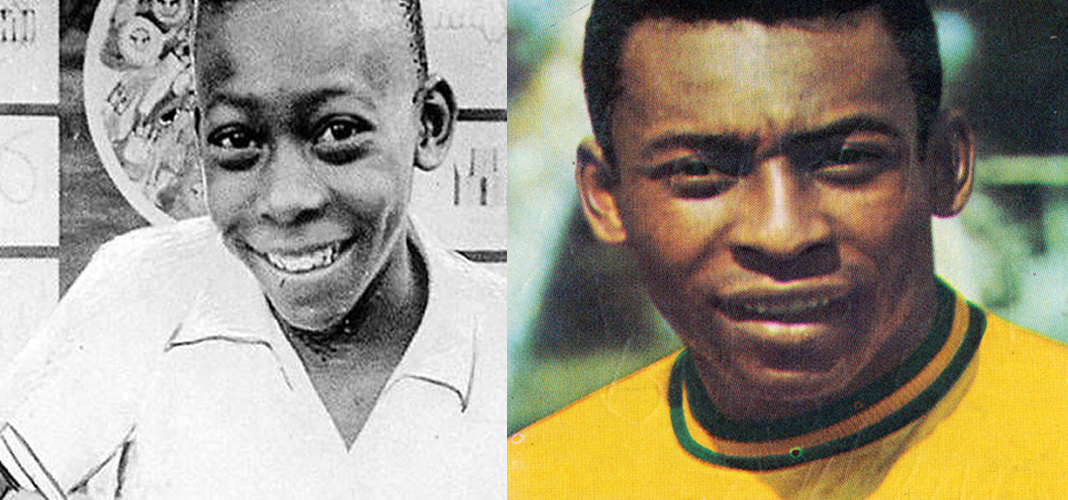
A Fitting Farewell to Pelé

#Brazil, ageing, Childhood home, death, Football, Minas Gerais, Pelé, Sport, Três Corações

Since I landed in São Paulo in November, the news about Pelé’s hospitalisation in this self-same city has had a feeling of finality about it. The prognosis for the ex-supremo athlete who, in his pomp, was every bit as super-fit as Christiano Ronaldo is today, was pretty bleak. I thought infirmity and Pelé do not belong in the same sentence. That it just goes to show that even the most physically gifted must one day succumb like all the other unfit has-beens.

By December, his family started to gather at his bedside in the Albert Einstein Hospital. The signals for the 82 year-old rei do futebol were mixed. The headlines ran from round-the-clock end-of-life care to he’s got plenty more life in him. Information. Disinformation. Mortal acceptance. Refusal to bury Brazil’s national treasure. It was hard to tell which way the wave of recovery would break.

A year ago, in a hotel room in Perú – while relaying giddy, sweetheart messages with a new love interest who happened to live down the road from the Albert Einstein Hospital in Sáo Paulo; who, like Edson Arantes Do Nascimento (Pelé’s birth name that we fitba’-mad lads had all memorised with customary difficulty back in the late 70s, early 80s) was a Mineira herself, born and bred in the proud Brazilian state of Minas Gerais – I watched a wonderful Kevin McDonald documentary titled simply Pelé. I was so moved by how this black man could rise from obscurity in a vast nation that had done nothing throughout its 400-year old history but demean Os Pretos, the Portuguese name for its long-suffering blacks – every one a former plantation slave, cutting sugar cane, making cachaça for the white latifúndios and their gang masters who drove the slaves on. And not only that, how he could – through outlandish ball skill topped off with a beautiful perma-smile – grow to become one, i’d contend, of only five black men who were almost universally lauded by whites throughout the entire 20th century, the others being Luther King, Mandela, Marley, and Ali.

And so it was that I came to be in Brazil when the lifeblood was slowly, inexorably draining from Pele’s mighty heart. Two days prior to his death, myself and the lovely Mineira who I flew all this way to be with, were coming down from Sáo Thomé Das Letras, a kind of hippie Glastonbury of magic mushrooms, putative alien sightings, and spiritualist retreats set among the Tolkienesque backcountry of southern Minas Gerais. Life being poetic when most you need it to rhyme, we happened to be passing through Três Corações, Pele’s home town as a young infant. To drive through without a side-stepping homage to Pelé’s first home, now a civic museum, would have constituted an unconscionable crime against decency.

It’s an unassuming place, but by no means the shack that the Western media so erroneously report. Pelé’s family, daddy Dondinho & the Do Nascimentos, were middle-class by the standards of the day. Their house, made of solid plastered walls, contained three bedrooms, a perfectly-fine kitchen, and large living area with dining table, and importantly, a big garden where his grandad kept his lenha, or firewood, which he sold to locals off the back of a horse and cart. Their old house, now a living museum, still does retain these characteristics. In fact, Pelé’s home of circa 1940 is a more affluent and dignified squat even now compared to the canvas squalor that legions of latter-day Brazilians have to exist in. Certainly, plusher than the domestic setting my infant father inherited in postwar Edinburgh. I feel it’s important to set the record straight to the untold numbers who were not as lucky as me to be able to walk into his house two days before he died.

I mentioned the garden. But what few know is what happened in that garden recently that some might construe as uncanny, or somehow prescient. We were sitting on a log on the lawn, my Mineira and I, when the curator, a little old women amiable as can be, told us the tale of the fallen tree trunk in the middle of the garden. While considered of modest size, this tree, now lying with truck snapped, was a sapling, racing to meet the hot Minas Gerais sun when Pelé was a mere 2-year old toddler tottering on the grass, kicking whatever round object that rolled along with a bit of prodding.

I remarked what a pity the trunk had fallen. She said, yes, it matured every step of the way with Pelé. They came into the world in the same year. They grew together. Then he and the tree grew apart when his father took his young family to another Mineiro town in search of a footballing contract. How did it happen? I asked. A storm blew in, she said. Unusual weather conditions for this benign part of the world, she added. When? I asked her. The other weekend, she said, without a hint of irony that the storm had put an end to the tree almost on the same day as Pelé would be admitted to hospital for the final time.

You can only know this by sitting in his old garden. All the platitudes, all the world’s scribes in all the world’s reputable journals scribbling paeans befitting this truly great individual. All looking – like Pelé against every crumbling defence he ever played against – for a tight angle to exploit. And none knowing what I learned that day: that all fates – be they of man or tree – are intimately tied. Pelé and the fallen tree could be an Aesop Fable.

We enter this world together as we leave this world together. Blowin’ in the wind.

Songs Are a Thesis on Life, So Live It.

advneture, death, free will, future, Life, Lifestyle, lyrics, philosophy

Sometimes a song can offer a thesis. It’s usually on life, love and the meaning of it all. Sometimes a song can revisit you after a long hiatus. I have no idea why it barges centre stage into the crowded theatre of the mind, yet barge in it most certainly does. You know when it chooses to stick around, because that damn ditty plays on you. Wherever you go, melodic thoughts intrude, and before soon you’re chanting the song silently word for word with such metronomic repetition that not even the eulogy you’ve memorised for your best friend’s funeral is enough to dislodge it.

We often talk about this human syndrome of having a song stuck in our heads. Lodged with a stubbornness the equal of a goat, that’s how songs seep into the psyche. We even share a laugh when that song turns out to be about the worst piece of shit bubblegum pop the hit parade ever produced. Indoctrination by music is rarely predicated on the quality of the tune in question.

But other times, the song that sticks contains the germ of a idea: a thesis, I suppose you’d call it if you were using it as the intellectual centrepiece of a Masters’ dissertation. It then spends three verses, a middle eight and repeat chorus to test its thesis out on you, the listener. Or maybe, more accurately, what its unstated intention is is to invite you, the listener, to test its thesis for it by living according to the principles extolled in its message. Yes, that’s what it’s doing. That might explain why every great lyrical song is more than an enigma, it’s an insight into the mystery of life.

An old song came back to me this morning as i was busy making other plans. Its name is Live Your Life, by the American Otis Taylor. Aimed at the bullseye between our eyes, the lyrics are really quite straightforward. He sings:

Live your life before you die. Only might be for a little while.

By a little while, he means life can be curtailed at any time without any due notice. Implicit in there somewhere is this notion that as westernised humans, we’ve come to expect longevity, and if your three-score and tenth birthday party never transpires, there’s something frightfully tragic about it. Actually, when you put your social historian/demographer hat on, you’ll see that expectations of a long and biologically untroubled life is very much a late twentieth century indulgence. For much of history death prevailed in infancy as much as in adulthood. It percolated up as much as down. And when it did, the suddenness of finality was not lost on those bygone generations. If they didn’t see death coming, they certainly saw it everywhere.

Anyway, back to Otis Taylor. And the band plays on…

Death won’t touch you, on your heart. It’ll just come around. It’s gonna walk on in and knock you down.

Here his thesis is starting to develop. Causation, the central tenet of most theories, comes walkin’ on in on this little number to knock us down from our exalted position of delusion. The causation rooted in these lyrics says if you live your life before you die then death cannot harm you. It can only snatch you away before you know it. Ergo, if you choose to live life then death cannot enter your heart in some dismal prelude to a mortal end characterised by regrets and the endless act of dying while very much alive.

But what is the magic formula here for a death no more painful than drawing a line in the sands of time? How are we expected to – in Taylor’s words – live your life before you die? Again, the songwriter offers an almost irresistible position in building his case for a life script that conquers death. He sings:

Take time to laugh. Or maybe time to cry. Climb a mountain. Swim the sea.

And what quality do all of these lyrical prescriptions share? They all invoke a vitality – eros – which is the counterforce to the spirit of death – thanatos. They ask you to feel and to do. When inviting you to feel, they steal tears from the sorrow of dying only to fetter those tears on what is more deserved of them, that being life itself. Laugh in the face of death? No. Laugh along with life, fostering the conditions for that laughter to play out. Don’t embolden death with the power of your laughter, nor pleasure it with your tears. Climb above your lowly mortality to reach the highest peaks. Suspend yourself again as you did pre-life in mama’s womb but this time in mother nature’s own amniotic fluid, the ocean. A funeral should be a occasion to celebrate a life well lived, but how often do we feel like heading out to a party when following the hearse to the crematorium?

The conclusions of this treatise with its simple thesis of live the middle ground now if you don’t want the end to live for you stand up to scrutiny. If the premises hold that if a life well-lived is no less than a life with the marrow sucked dry, therefore death has no carrion to feed on when inevitably it comes, then the conclusions are clear: take risks. Don’t fear uncertainty nor shy away from the unknown. Let the light of life dazzle death, consigning it to the shadows until that fateful day when finality doesn’t revel in making a show of taking you away. Sure, we could die a terminal death through a cruel, clinging illness. But by stacking up enough of the life affirmative stuff in our armoury of getting older, even a protracted death can feel more like a soldier’s death: sudden and honourable. If that theory sounds optimistic as it does untested, then that’s a fair kop. But I’m going on that proviso until you prise it from my cold, dead hands.

I, for one, don’t intend to give the scythe-toting hooded one the pleasure. More so in a bizarre era typified by mass quarantining for fear of death (we say our current Covid self-sacrifices are all utilitarian-backed and done for the common good, but the truth is the organism is us fears for itself more than others). Hey, whoever said backing words with deeds wasn’t a challenge? But if we turn the page on this world in existential fear NOW then perhaps something transformative can come of it.

Like Kazantzakis said, leave nothing for death but a burned-out castle. And thanks, Otis, for the invocation to live your life before you die. Wise words. I’m not sure about swimming the sea (never truly got over watching Jaws as a 6 year-old boy). As for the mountains, I’m already packing for this winter. And when I reach the top, I’m planning on having a good weep. But not for death. Hello Life.