Songs Are a Thesis on Life, So Live It.

advneture, death, free will, future, Life, Lifestyle, lyrics, philosophy

Sometimes a song can offer a thesis. It’s usually on life, love and the meaning of it all. Sometimes a song can revisit you after a long hiatus. I have no idea why it barges centre stage into the crowded theatre of the mind, yet barge in it most certainly does. You know when it chooses to stick around, because that damn ditty plays on you. Wherever you go, melodic thoughts intrude, and before soon you’re chanting the song silently word for word with such metronomic repetition that not even the eulogy you’ve memorised for your best friend’s funeral is enough to dislodge it.

We often talk about this human syndrome of having a song stuck in our heads. Lodged with a stubbornness the equal of a goat, that’s how songs seep into the psyche. We even share a laugh when that song turns out to be about the worst piece of shit bubblegum pop the hit parade ever produced. Indoctrination by music is rarely predicated on the quality of the tune in question.

But other times, the song that sticks contains the germ of a idea: a thesis, I suppose you’d call it if you were using it as the intellectual centrepiece of a Masters’ dissertation. It then spends three verses, a middle eight and repeat chorus to test its thesis out on you, the listener. Or maybe, more accurately, what its unstated intention is is to invite you, the listener, to test its thesis for it by living according to the principles extolled in its message. Yes, that’s what it’s doing. That might explain why every great lyrical song is more than an enigma, it’s an insight into the mystery of life.

An old song came back to me this morning as i was busy making other plans. Its name is Live Your Life, by the American Otis Taylor. Aimed at the bullseye between our eyes, the lyrics are really quite straightforward. He sings:

Live your life before you die. Only might be for a little while.

By a little while, he means life can be curtailed at any time without any due notice. Implicit in there somewhere is this notion that as westernised humans, we’ve come to expect longevity, and if your three-score and tenth birthday party never transpires, there’s something frightfully tragic about it. Actually, when you put your social historian/demographer hat on, you’ll see that expectations of a long and biologically untroubled life is very much a late twentieth century indulgence. For much of history death prevailed in infancy as much as in adulthood. It percolated up as much as down. And when it did, the suddenness of finality was not lost on those bygone generations. If they didn’t see death coming, they certainly saw it everywhere.

Anyway, back to Otis Taylor. And the band plays on…

Death won’t touch you, on your heart. It’ll just come around. It’s gonna walk on in and knock you down.

Here his thesis is starting to develop. Causation, the central tenet of most theories, comes walkin’ on in on this little number to knock us down from our exalted position of delusion. The causation rooted in these lyrics says if you live your life before you die then death cannot harm you. It can only snatch you away before you know it. Ergo, if you choose to live life then death cannot enter your heart in some dismal prelude to a mortal end characterised by regrets and the endless act of dying while very much alive.

But what is the magic formula here for a death no more painful than drawing a line in the sands of time? How are we expected to – in Taylor’s words – live your life before you die? Again, the songwriter offers an almost irresistible position in building his case for a life script that conquers death. He sings:

Take time to laugh. Or maybe time to cry. Climb a mountain. Swim the sea.

And what quality do all of these lyrical prescriptions share? They all invoke a vitality – eros – which is the counterforce to the spirit of death – thanatos. They ask you to feel and to do. When inviting you to feel, they steal tears from the sorrow of dying only to fetter those tears on what is more deserved of them, that being life itself. Laugh in the face of death? No. Laugh along with life, fostering the conditions for that laughter to play out. Don’t embolden death with the power of your laughter, nor pleasure it with your tears. Climb above your lowly mortality to reach the highest peaks. Suspend yourself again as you did pre-life in mama’s womb but this time in mother nature’s own amniotic fluid, the ocean. A funeral should be a occasion to celebrate a life well lived, but how often do we feel like heading out to a party when following the hearse to the crematorium?

The conclusions of this treatise with its simple thesis of live the middle ground now if you don’t want the end to live for you stand up to scrutiny. If the premises hold that if a life well-lived is no less than a life with the marrow sucked dry, therefore death has no carrion to feed on when inevitably it comes, then the conclusions are clear: take risks. Don’t fear uncertainty nor shy away from the unknown. Let the light of life dazzle death, consigning it to the shadows until that fateful day when finality doesn’t revel in making a show of taking you away. Sure, we could die a terminal death through a cruel, clinging illness. But by stacking up enough of the life affirmative stuff in our armoury of getting older, even a protracted death can feel more like a soldier’s death: sudden and honourable. If that theory sounds optimistic as it does untested, then that’s a fair kop. But I’m going on that proviso until you prise it from my cold, dead hands.

I, for one, don’t intend to give the scythe-toting hooded one the pleasure. More so in a bizarre era typified by mass quarantining for fear of death (we say our current Covid self-sacrifices are all utilitarian-backed and done for the common good, but the truth is the organism is us fears for itself more than others). Hey, whoever said backing words with deeds wasn’t a challenge? But if we turn the page on this world in existential fear NOW then perhaps something transformative can come of it.

Like Kazantzakis said, leave nothing for death but a burned-out castle. And thanks, Otis, for the invocation to live your life before you die. Wise words. I’m not sure about swimming the sea (never truly got over watching Jaws as a 6 year-old boy). As for the mountains, I’m already packing for this winter. And when I reach the top, I’m planning on having a good weep. But not for death. Hello Life.

To Live With a Loss That Has No Purpose.

animals, Buddhism, death, dogs, ethics, fate, free will, human mind, kindness, Life, Meaning, meditations, Menaing, Musings, Natural Law, natural philosophy, Reflections, Religion, stoicism, thoughts

So, it couldn’t have happened to a nicer bloke.

We often use the verb ‘to stumble’ when employing metaphor in describing mishaps on the road to personal progress. For instance, ‘I was doing so well to make this dream happen until i stumbled into trouble.’ Thing is, we don’t often apply the term literally when describing the very moment that things took a definitive turn for the worse. Take this example: ‘He stumbled on the escarpment and fell to his death‘. Exceptions prevail, of course. Sometimes people stumble literally and the ensuing fall is even more consequential (and somewhat more inexplicable) than if the stumble had been figurative in a metaphorical sense. What happened the other night was not exactly a stumbling block on the road to Middle East Peace; being real and not abstract it was arguably more compelling than that.

Soon enough we’ll come back to this nice bloke for whom it happened to. It must be foretold that I’ve got this far in life without throwing the towel in by consoling myself that we inhabit an orderly, law-abiding universe. A chaotic, lawless universe is too hard to countenance. In this universe of mine watchful, seemingly benign forces act upon our individual conduct to pave our way with either help or hindrance. You might call this ‘the blind watchmaker’ syndrome. A classic call to monotheism’s central tenet that God is everywhere and judging. He maketh even that which He cannot possibly maketh. My take is more Tao of Physics, more Oriental holistic, more interconnected subatomic networks with inbuilt natural laws of justice than your run-of-the-mill divine, omnipotent Father-figure there to restore the cosmic balance of justice in favour of the kind and compassionate over the cruel and selfish among us. Intelligent design? Only in so far as subatomic matter is mystically connected to each other despite time and vast distance. Protons telekinetically agreeing that so-and-so is worthy, through honourable conduct, of synchronicity with benevolent time. On time’s elevator, the good don’t even need to punch in their desired floor. The lift knows where to take them. Whereas, the black of heart, for all their frantic prodding of buttons on the console, the elevator nevertheless spits them out precisely on a floor where only woe can find them. These we call the natural laws. You get what you give, no more, no less. Except my story betrays this as fanciful thinking dreamed up by those who need to know that behind every senseless action lurks a just reason. My story tells of how our foundations can be shaken by events that have no purpose other than to reaffirm the popular, secular belief that shit just happens. If everything happens for no other reason than to provide no other reason, then please stop the whirring cosmos for i want to get off.

My neighbour, for want of a better word, was coming home two nights ago. Now his home is rather unconventional. To get there he has to park his car by a canal bridge in a hushed little village full of fairytale thatched cottages, then walk a considerable distance through the quarter-lit gloaming along the black waters of the canal towpath. The towpath is narrow and the banks steep. On one side foliage arches over like a line of tall, bowing hunchbacks. On the other is the water, sullied and still like a river of weak tea with a dash of milk. This garden path of his is neither for the frail nor the faint of heart. Seeing that he answers to neither of these calls, he was walking home with his six month-old pup, Patsy, off the lead with shopping bags in each hand. The Irish terrier, still in that delicate stage of training, would ordinarily have been on the lead but for the fact that the shopping won’t carry itself. Learning to walk independently and by his side, she was beginning to make great strides toward obedience.

Emerging from under a small brick bridge, he put one foot in front of the other, feeling his way through the rapid darkening. As if from nowhere his toe stumbled hard against an exposed tree branch and the forward momentum of his body coupled with the weight of the bags sent him headlong into the canal. Head first he fell, scattering his shopping everywhere, disappearing under the stagnant water. When he emerged from the shallow water he panned his vision around but she was gone. The dog had hightailed it in fear. Now this ‘flight-mode’ is not unheard of in young dogs once spooked by something. Their calm demeanour snaps, leaving their primitive instinct in the driving seat.

All night he paraded up and down the towpath, calling her name, coaxing her to come back. The following morning I got wind of her disappearance and so, without hesitation, joined the hunt. We combed the coppiced fringes of the canal, straying into neighbouring fields, all the while calling her name gently. By now a proper search party had been raised. People being people, dog people being even more divided by canine opinion than non-dog people, theories starting flying thick and fast. She’s gone to ground, some said. The fear has triggered her amygdala into making her cower timorously in the undergrowth until such time as hunger snaps her out of this fugue state. Other theories centred on her terrier nature. She must have found a drain pipe. Others still wondered if she had run and run and run until, young and utterly bewildered, she could no longer find her way home to her master and their boat. I asked the owner what his instincts were telling him. She’s gone to ground, he averred. Agreed, we vowed to resume the search the following morning, though I knew his search would go on undaunted throughout the night.

The following day came and, well, nothing. So again we theorised as to where a panicked puppy might go. We covered a radius of maybe five kilometres in all directions. Meanwhile, other kindly souls had mounted a search and rescue effort. Word was out. Even a local drone pilot wanted in on the action. By the end of the second day I could see his facade of bravery start to crumble. It’s all in the downward sloping of the eyebrows, exposing these two vertical furrows leading up from the bridge of the nose. Again I asked him, what do your instincts tell you? She’s in warm room somewhere beside an old lady who’s picked her up. There and then, a crack appeared in his sixty-eight years of tough stolidness: English passion, I call it. I don’t want to entertain that thought, he said. I have to stay positive. Granted, in such a rural area, where could she have got to? No main road for miles. Only a mainline from Bristol to London, but she wouldn’t, she couldn’t, clamber through the thorny brambles, scramble up the track ballast and onto the lines. Too gnarly, too steep, too pointless for even a pup with no sense of anything other than love for every living soul.

He kept a vigil, returning precisely to the spot where the stumbling had taken place two nights previous. The owner even left a scent trail of his socks, his t-shirts, her basket, blanket, every last little clue he could muster to coax her back from her ‘safe’ place in the undergrowth to their safe place on the boat. I watched as his initial optimism turned in on itself. Two days cowering in a damp bush without food? This theory was beginning by now to sound wishful. By the end of the second day, my thoughts turned to the likelihood that a six month-old Irish terrier, a rare and desirable pedigree, had been snaffled by a lucky passerby. She had to have been sequestered by someone, being such a ditsy and trustful little thing. Question was: what manner of character would this passerby possess? Would they be honest and self-effacing enough to know that this was someone’s prized possession? Or would they be a finders-keepers-losers-weepers type who justifies their deceit on the grounds that property is nine-tenths of the law, whatever that means?

This morning i awoke late. Powering up my phone i received a ping. It was him. He wrote to thank me for my help, but that it wouldn’t be any longer needed. She was found late last night dead by the rail tracks right next to his boat on the other side of a thicket of oak trees. She must have found her way back to the boat but took a wrong turn and ended up trotting along the tracks alone in the dark, afraid. She could hear him calling her but was stricken and helpless to go to him. So light and frail, she was struck by either the London train or a freight train. Her – and his – only solace was that her death would have been instant.

I told my mum, who has loved and lost dogs. She answered, life can be cruel sometimes, son.

Why do terrible things happen to good people? Why must the most vulnerable have to live in fear? Why is love taken away from us only when we’ve found it? Where is the natural justice in all this? I refuse to believe we exist in a dimension where senselessness and meaninglessness is a defining feature. That said, today my eyes are welling up wondering if my grip on an orderly reality is slipping and that, in the end, it’s shit that happens and no one knows the f&ck why.

The Buddha implored us not to get too attached as it would only cause suffering when weaning occurred. He must have known, however, that as humans our attachment to objects – both animate and inanimate – can be both profound and wholly natural. Within this paradox we must make our last stand. This is our eternal condition.

Too Good To Be True

Britain, British Isles, conservation, Coronavirus, counter-culture, Covid-19, death, developing world, England, environment, ethics, future, Great Britain, human development, kindness, Liberalism, Libertarianism, Life, Lifestyle, natural philosophy, natural world, pandemic, People, Political Culture, Politics, Poverty, revolution, Society, Socioeconomics, thoughts

That ol’ devil called greed is back again. Many feared the worst while others dreamed of a new, kinder dawn. But oh no no, sir! No sooner is full lockdown eased, untimely death is no longer news. And why? Because that she-devil, the economy, is back. No sooner has its mouth been welded shut than its teeth are glistening at the prospect of new blood.

Turn on the news and talk of rekindling a lost love for nature, or for that matter stopping to reflect on human suffering and the slow torture of social isolation, has been superseded by dire prognostications of poor industrial output, negative deficits, and looming recession. Figures in the billions (£) are banded around where only last week the figures were reserved for the dead. Yes, I’m afraid it’s time to rally together in a final push over the top to be mown down not by the bullets of the Bosch but by debt, overconsumption and more reckless environmental despoliation.

vikings

However, this national obsession with wealth accumulation has substantial precedent when seen over the arc of history. The very name Britannia came into being as a nomenclature given by Roman imperial planners (Britanicus, I think, was one of the Julio-Claudean line of rulers). The island was finally absorbed into the Romanosphere in the mid-first century not for magnanimous reasons but because it was known since Phoenician times for its lucrative silver, tin, lead and gold mines. Then, following the departing legions, Jutes, Angles and Saxons came not for magnanimous reasons but because in that fertile soil lay wealth and prosperity. Following them, the dreaded Danes, who arrived in the 790s on raiding parties along the North Sea coast. Not for magnanimous reasons did they emerge on the flat horizon, but to plunder the treasures known to be held in the abbeys. Following them the Normans, who didn’t raise a psychotic militia for magnanimous reasons but to spill blood onto land they knew would bring a crop of splendiferous wealth. During the civil war in the 1640s, a genuine attempt was made at levelling the appalling inequalities of serfdom in the late middle ages. But again that was snuffed out again by the forces of avarice. The Bank of England would be established forty years after the failures of English republicanism just to underscore the direction the country was heading in. In that century too, The East India Company and the Hudson Bay Company consolidated their royally-sanctioned gains to become the Multi-Nationals of their day. Following the failures of political equality in England, the notion of republicanism as the only force for egalitarianism was then left to France and the inchoate United States. In the years following the Seven Years War with France, by the mid-1700s the British empire had become the most profitable venture in the history of the world. Its adherence to the doctrine of greed, masqueraded as mercantilism, became set in stone, an article of faith.

Top-questions-answers-East-India-Company

And so it is that the country, as it appears today, finds itself true to its atavistic self. In other words, its socio-cultural DNA had been inherited from a long lineage. Other than the blip following both world wars when some kind of radical redistribution of wealth had to be sought to avoid a civilisational collapse, Britain has proven herself more adept at pursuing riches by any means possible than it has for coming up with novel ways of how people can co-exist harmoniously with each other and with the ecology that still clings to the land’s surface. It wasn’t for want of clever men and women that naked economics trumped high ideals. Those big ideas the so-called deep state (the power behind the power) encouraged our philosophers to debate, providing their conclusions arrived at a natural law of supply and demand, and of how man is shaped by self-evolving and universal economic forces than – as was the case in revolutionary France – how economic forces could be shaped by man and altered to reflect a fairer society. Utilitarianism, a dominant thought system in the very acquisitive nineteenth century was a excellent case in point. The greatest happiness for the greatest number lent itself well as a doctrine to England earning the sobriquet of a nation of shopkeepers.

Industrial Revolution

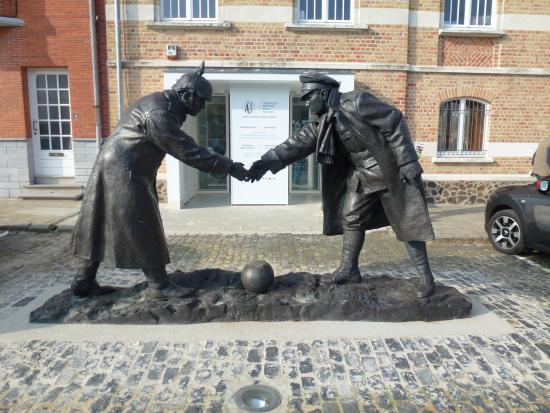
In the southern parts of this island, we are still wedded to the idea that economics of unlimited growth in a world bound by physical limits determines levels of happiness. No doubt it is better to be a rich man in a cold country than a poor man in a warm one. However, the great mechanisms of how we interact with tradable commodities continue to dominate thinking in informing the consensus. Lockdown was a chance to redress that imbalance. It was a unique opportunity for the average Joe to hop off the spinning wheel for a while and to try seeing life – and what he/she values from it – from a wholly different perspective. This perfect convergence of variables (that is to say, unusually great weather, government providing a blanket of financial support to the majority, as well as the stillness in the air that permitted us to think long and hard) gave the millions upon millions of conscripts fighting as footsoldiers and corporals in the boom and bust economic war the chance to think again about what they wanted out of their country. Unfortunately, like the Christmas Day short truce of 1914 where British and German soldiers showed their mutual enmity by getting together for a game of football and a post-match drink, this too is a false dawn. Like those men who knew, through a simple game of football, they had more in common with one another than with the chiefs of staff who sent them to the front in the first place, this cosy little interregnum that some have been enjoying of late is too dangerous to continue. The unfair society harnessed by the economics of naked aggression and unlimited growth cannot survive the neglect and contempt it is being shown at present.

1914-christmas-truce

The second age of the robber barons is not over yet. But a few more pandemic lockdowns might just do the trick. And not unlike the Peasants’ Revolt of 1381, a spring clean of the people (i.e. a serious trimming of human numbers leading to a radical restructuring of the socioeconomic order) may just give the downtrodden a glimmer of hope. And a chance to rise up alongside a damned and damaged natural world from the scorched earth of a long and unfruitful economic obsession.