Life Signs Vital

#adventure, Australia, Britain, British Isles, Buddhism, fate, free will, Hinduism, human mind, Life, Lifestyle, meditations, Musings, nature, Oddities, philosophy, predestination, Queensland, Reflections, roadtrip, serendipity, Solipsism, Spirituality, thoughts, Travel

From the wandering star followed to Bethlehem by the Magi, to Constantine and his Latin cross in the night skies over Rome’s Milvian Bridge, for as long as any historic text can remember, humans have acted not (as they might like to imagine) independently in matters of life choice, but as a response to phenomena out there in the world. Whether these phenomena involve snapped branches pointing in a particular direction out of the tangled forest, serendipitous meetings with mysterious strangers, or even constellations that speak directly to the individual in us by spelling out our mission in dot writing, natural events have proved unshakeably reliable as SIGNS ripe for following. Other animals follow their hunger and their paternal instinct toward the rains, or the seasons, or the ocean currents. But not us. Oh no, not humanity. We follow abstract signage in the most unlikely of quarters because something in the form and motion of a sign tells us that nature exists to furnish us with little messages put there FYI only.

But in an age of scientific materialism, should we listen to superstitious signs, or let mediums self-appointed with the power to interpret that symbolic value for us. The Gypsy lady? She who lets the tea leaves/coffee granules to settle into a discernible form spelling out (in her own inexplicable way) what’s in store for each of us? She with the singular ability to divine the past, present and future, and thus able to cut a path through our impenetrable present? Hooped earrings and colourful headscarves aside, should we even listen to ourselves when something out of the blue tells us which corner to turn in life? What is it in the nature of choice, the one true act of free will we convince ourselves is ours and ours to fuck up? Are we slaves to signs, subconsciously letting them lead us on into what we think will end either in good life choices or, horror of horrors, outcomes less than desirable? Do other members of our rapidly-proliferating species see signs with quite the obsessive sensing that I seem to? Questions, questions, questions, and only vague signs there to answer them.

I wrote a woefully-neglected book back in 2007 called Signs of Capricorn. Essentially, it was a free-thinking, free-spirited, faintly philosophical travelogue based on a long-awaited return to Australia. I had left the land Down Under in 2003, instantly regretting a choice which i deemed purely my own, without any other agency. At the time, I must have figured if i return to Britain things will be different. I’ll finally, after thirty years of trying and failing, fall in love with the island of my birth, and especially those two peculiarly British contributions to the world: a stubborn class system and a maritime climate that makes the headlines most days for all the wrong reasons. Yes, my family were instrumental in my going back. Unlike the weather, they weren’t changeable and horrid. But, like the English class system, they could be stubborn.

So, in the wake on my grand homecoming in 2003, I realised I had made a major life error, and instantly vowed to overturn this disastrous decision by going back to Sydney the following year. However, as the venerable Lennon said, life’s what happens when you’re busy making other plans. Suffice it to say, it wasn’t until 2006 that my pledge was finally realised. I departed a rainy Manchester, arriving after a brief stopover in Dubai, in to a hot Sydney. The city had changed in the intervening three years. That much i could detect within moments. It didn’t feel the same. Well, of course. Why would it? And here is where the book comes into play. I threw my hat up into the air and let the winds of fate carry it aloft. And so it was that I chose to spend a month driving as far and wide as I could in search of signs.

A critical factor in all this unfolding story is that I was misinformed that my Australian Permanent Residency visa would be duly reauthorised merely by going back there on holiday. Cruelly, this was not how how the immigration system worked. Nor was this how things were meant to be. On hearing that I had not amassed sufficient residential time in Australia within a 5-year period (i was a month short), I was faced with a binary choice: by all means, stay indefinitely (thus leaving my rental home, family and beloved dog back in Yorkshire where my family call home) in the Commonwealth of Australia; or fly out of Kingsford-Smith Airport and back to Heathrow, but do so knowing the consequences. That being an annulment of my right to remain in Australia. Visa cancelled. The term Burn Bridges springs to mind (another historical instance of how signs influences the course of a lifespan, in this case of Caesar’s Roman Empire). Mainly because of my dog, I knew I was going back, like it or not. With a month’s adventure ahead, I drove north through Queensland’s Sandstone Belt and out to the Barrier Reef. Along the way, I followed roadsigns down highways where life signs clung on like the spinifex grasses that give the Outback its patchy head of hair.

On returning to Britain, I nursed a quiet devastation. My first encounter – the first of many troubling signs, you might conclude – was with my neighbour, an awful human specimen who spent his disempowered life fulminating in one garden-wall dispute after another. In Old England, where most people are packed like sardines in a tin can because the entitled few own and jealously guard huge swathes of the land, such disputes and tensions are not uncommon. Knowing that I had made not one but two cardinal misjudgements in leaving Australia (an island-continent I had reimagined as being above such petty squabbles between neighbours) not once but twice. I knew the recurrence of this poor choice must signify something. It must be life’s ineluctable way of telling me I had, in fact, made the right choice leaving Sydney. Struggling to understand why, I wrote the book as a therapy, as a means of retracing my steps in order to discover the origins of these signs, and what they could possibly mean for my life, one that seemed to be in disarray.

You can generate the data to fit the theory, but that is not true science. Or you can map the data (as it appeared along the road to the Barrier Reef on that epic trip of self-discovery), building a picture through which a workable theory emerges. First data, then theory, then test of theory. Burning rubber on blacktop, I probed the island-continent to probe the answer to why life had turned out this way. For such a dry landmass, the results were improbably fertile. Hadn’t one of the great Greeks said something to the tune of….’life is played out on an ocean of timespace, whose currents carry us of their choosing unless we find it within ourselves to take the tiller and steer a course, even though the current will still take us, ultimately, where it chooses. In short, we can infer signs in life and so effect small but significant changes in our lives, even if the grander designs, such as fate, love, accident and death are not within our remit to shape as we would see fit to?

(n.b. of course, most of us would choose to be rich, healthy and loved, and never to die).

At journey’s end, I flew back. The immigration officer at Sydney’s airport peered at the visa page of my passport and asked me if I was sure I wanted to do this. You realise that if you leave you cannot come back? Helpless, unsure if I had even found a green light on those outback roads, I timidly acknowledged the gravity of what she was saying. Somewhat bemused, she stamped the exit visa and that was that. Another chapter closed. Except it wasn’t. Once back in England, I threw myself into the writing. Stapling together every little back-dated detail on what had been a diverse but disconnected life of travelling, of living in disparate regions of the world following love over career, the unpredictable over the predictable, I tried but could not discern signs that would lead me out of this mess of my own making.

I looked around. I looked inside. I could not make sense of life’s highway code. At the end of the book, life appeared to recover. Things were looking up. England didn’t seem quite so dismal, nor quite so synonymous with personal failure and utter alienation. And then the possibility dawned on me that therapising the experience of making life-changing choices had had the inadvertent upshot of detoxifying – for want of a better word – Australia from my bloodstream of consciousness. The book flopped but thanks to reclusive and intensely introspective nature of remaking memories in narrative form (a year locked away in a room), I steered a course through cold turkey. What emerged was acceptance that i had taken a wrong turn. Moreover, that ages hence I might actually find that leaving Australia when i did was not a misreading of signs at all. Rather, it was a correct reading of the sign to leave when I did and to return three years later to make peace with the war that was raging inside for all that time. It was not unlike the signs of Outback roads themselves – the ones that appear only once, at the beginning of the backroad, and where no signposts will appear again for many, many kilometres. Following a sign laid down years before gave to no signs whatsoever until the next one appeared. The next one would appear near the end of that stretch of bitumen. It stood as proof positive that the next junction led somewhere good, somewhere new.

Signs are everywhere to be followed, and yet nowhere to be seen. We convince ourselves we take decisions independent of influence, particularly from abstractions such as physical objects (stars), chance encounters (accidents that change our lives irrevocably), epiphanies birthed from freak occurrences (a spiritual awakening on the road to Kathmandu), and the likes. But our rational minds are steeped in the mythology of the inexplicable. Knowing that every weighty little decision rests solely on our steepled shoulders, or that each one is not interrelated, represents an unbearable burden on our lives. Decisions are ours to make? Oh yeah? That I followed invisible signs to where I am now (which is no bad place) suggests some things are meant to be. That all things might, just maybe, be more bound together than our Western social constructs would have us believe.
A Mountain to Climb

#adventure, Life, Lifestyle, meditations, Musings, philosophy, Travel

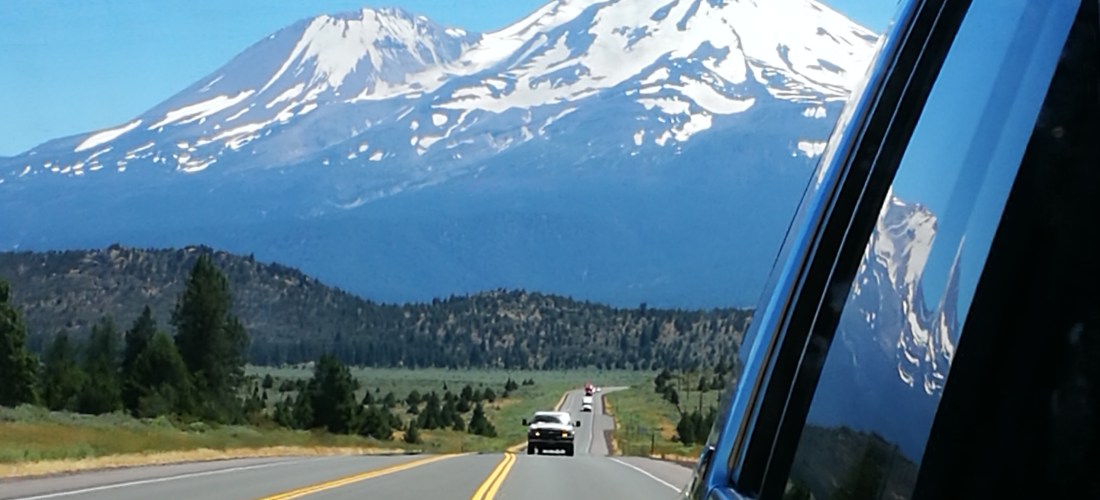
Everyone has their own mountain to climb, though it doesn’t have to mean the thing we usually ascribe to it. A mountain to climb, in the ordinary sense of the term, denotes something onerous, a task dreaded. I have a mountain to climb if I’m to get that doctorate. Britain will have a mountain to climb if Brexit goes through. You’ll have a mountain to climb if you don’t pull your finger out. So no question, meant in this regard a mountain to climb ain’t necessarily a good thing. A pejorative term, you might call it.

I was pretty convinced that I had had it with climbing mountains. Now, don’t get me wrong, those of the real variety, now one doesn’t too readily tire at the thought of yet another. One doesn’t have to be an Alpinist to love roaming the mountains, these mountains of rock and ice. They are, I hope you’ll agree, high above the realm of the unwelcome. They inspire again and again and again, and seen from all angles they are fractal, smaller triangles into smaller triangles and everything adding up to the magic number. But those mountains ain’t the problem; it’s the ones only we homo sapiens sapiens conceive of in our minds as more than the folded heaps of landmass that they really are, they are the problem. They warp and gorge, play on our fears. They grow more than a fingernail’s length per annum, which is faster than the Himalaya. Some grow so fast they block out all of life’s sunbeams in the cold light of morning. You might say therefore only the foolhardy and the masochistic among us savour their place at the bottom of any one of life’s metaphorical mountains of the mind, looking up at the soaring reality facing them. This i assumed to be eternal in our reckoning. Then i awoke.

dsc_2306


What I woke up to this morning was a minor epiphany. I realised, a little later while walking the dog, that what was preoccupying me was that me out there enveloped in that unquestionably beautiful location, taking it all in with the wonderment of a seven year-old staring at a non-linear equation, I realised i was bored silly and instead of scaling the walls what i truly needed was another mountain to climb.

Is it wiser that sharp intake of breath, or the lung-deflating exhalation that doubles as a weary sigh? Humans are at their best when they have something to go for. We, they, whichever pronoun you opt for, endure as predators of the lower Palaeolithic, sights locked on to an object worth risking life and limb for. When humans are honed for action they take small and sharp, but nevertheless significant, intakes of breath; just enough to power the muscles and the brain into coordinating, and carried by that motive force of energy their attentions are fixed on something other than themselves. Man the hunter does not give a weary sigh unless that evermore-daring object of his attentions slips from his grasp. When primed, focussed and ultimately content he lies in wait listening for regularity, for stillness, in his breathing. He sees his quarry grazing but alert, its ear cocked for the slightest disturbance. But a slow, rhythmic respiring he earns only by having a purpose in that very moment. Minus that purpose, either he sighs or else his heart beats liked a fucked clock on account of the modern ill of anxiety. 

Three Lonesome Peaks


I‘vgot this unique opportunity right now to do sweet Fanny Adams – any damn thing i choose within reason, come to think of it – and all the serotonin and dopamine i can squeeze from my hypothalamus (is that where neuro-magic dust is made?) comes from a deep desire to do something new and worthwhile. Project done, time to be a new seeker. There are people out there who would bite my hand off for three months of languishing in heavily comfortable surrounds reading novel after novel, sipping hot infusions and watching swans glide by. The drudgery of forced employment being superfluous to requirements in this case. But not everyone is a tortured soul it would seem. The soul must be inherently tortured to be forever malcontent. This is my lot. 2019’s project deadline has about matured. 2019, the year that was, is still just about, nearing the big sleep. Yours truly needled by restlessness. Another event scored off on the roster of a fleeting life in the cosmic scheme of things. Boxes ticked, in the sense that any life really worth living consists of one small but hugely meaningful milestone after another. There’s an afterglow in this here valley of attainment but mine is not to bask in that afterglow. There’s a little hump on the horizon, way out there forty days and forty nights walk from here. It’ll be hard reaching even the foothills, but, man, isn’t that a prerequisite of anything worth doing? 

dsc_2278


We all need mountains to climb; at least once in a while or in my case constantly. Only from their summits can the flag of achievement be planted and the next mountain espied, and the one beyond that and beyond that, ad absurdum. We have absolutely no choice but to press on. What is there otherwise? The time for reflection is later when the armchair becomes the means in itself. Keep striving, for when you stop you might as well stop for good.

Yes, We Can(al)!

#adventure, America, boats, England, Life, Uncategorized

When Barak Obama took the slogan, YES, WE CAN!, on campaign with him back during the 2008 elections, his growing sect of admirers took it up with gusto. Ennobled by the creed of optimism – a finite resource even in America – they chanted these three simple words with all the might they could muster. We’ll huff and puff and blow the Bush house down, that was the gist of it. We’ll relight hope from the embers of pointless war. We’ll do right in the place of wrong. We’ll patch together the broken pieces and live like we always promised ourselves we would. 

It was in the spirit of regeneration that I too took up this mantra from the ruins of Obama’s America. Now remember what his legacy brought. He talked a good game, but on leaving found that Yes, We Can! meant Yes, we can replace you with a bankrupted huckster from Queens, New York with a mouth to match his attitude. Not wanting to go down this road, I wanted my regeneration to bring an altogether more wholesome – as opposed to ‘whoresome’ – legacy. And so it was, I decided I would embrace the alternative life of the canal. I spent big on a big river boat and docked it on a 250 year-old canal set deep in the Somerset downs. This was going to be my Obama 2008 campaign moment.

The parallels certainly exist, if only you choose to see them. Like Obama’s predecessor, I too got embroiled in a Middle Eastern adventure, involving the expenditure of an awful lot of money with the aim of coming away with even more. To breathe Obama’s fresh air, first i had to choke on Bush’s dust. This I did, and by the time I had coughed up the last of it, the time had come to begin anew, to see the world through reopened eyes. My 5-year incursion into the oil-rich sands was over without a single shot being fired (although many a shot was downed in the booze-soaked atmosphere of the place). Back on Civvy St, somewhere in pre-Brexit Britain, the post-conflict settlement was up for grabs. Europe seemed like the kingdom beyond the wall by now, unfriendly, but only insofar as any former friend would be if you kept hurling insults at them from across the bows. The burgundy British passport, now both unofficially diminished in stature and narrowed in scope, was about the last official document one wanted with a post-2016 life on the Continent beckoning. And so it was that a set of reduced options made the next phase a little less fraught with the kind of complications we once had, confronted was we were with not just one but 28 countries to potentially set up home in. 

High in the Spanish sierras the decision was made.  Near the flanks of the Mulhacen, Spain’s tallest mountain, the YES was injected into WE CAN(AL). There and there alone, I decided to buy that shell of a riverboat and in it create a space fit for the ages. Having taken receipt of her, in all her graphite grey sleek beauty, i spent the next six months showering in a wheat field while fitting her out on dry land. She, the boat (for we ascribe boats with a feminine gender in English, for feminine equals fair, and the British do have the historical hots for vessels that float), sat on blocks in a field of swaying grass. As spring took hold, the stalks grew higher and the ears of wheat fatter, until the grass brushed the underside of the hull. With 90% of the work complete, and the largest 10% you’ve ever seen not quite complete, I had 700 ft/sq of spanking new boat trucked down on the motorway in the most surreal cruise I’ve ever witnessed.

She was lowered into the river Avon at Keynsham, near Bristol. Six long months like a fish out of water, and the transformation to fish in water was a thing to behold. It was as if the riverboat had never been out of its element. Now sitting stout and proud in its element, the voyage to its new mooring on the other side of Bath was going to be a maiden voyage, and one that would hopefully match Obama’s 2009 inauguration speech for majesty. Yes, we can! Um, well, in actual fact, no we can’t. There’s no way I can handle this stocky beast on those narrow waterways. Upshot: a river pilot was hastily arranged and my first officer status firmly established from the outset. Once through the locks of Bath, the Widcombe flight featuring the so-called Coffin, a 25ft drop into lock abyss, we emerged at the east end of town, navigating our way with particular attention paid to the fact that, contrary to the canal in my mind’s eye, this stretch of waterway was no wider in parts that the boat itself. At least in Apocalypse Now, the riverboat they used in pursuit of the renegade Colonel Kurtz plied a width wide enough to give them a fighting chance once the rogue arrows starting flying from the riverbank. Here, if Kurtz’s militia men had wanted they could have put down their bows and arrows and simply stepped aboard to conduct their rampage. 

She, the boat with the dead man’s complexion, has found a home under an ash tree. This fact is noteworthy as one of the main reasons for spending six months fitting her out on dry land was that her interior is lined with approx. 1.6kms of timber, mainly American ash. The emerald ash borer might be devastating America’s once mighty ash forests, but the little bastard fell short of laying its larvae in these buffed and beautiful planks. Since finding a permanent mooring, she doesn’t venture far. More like an apartment on water with the ultimate view, really. The traffic is constant and the logistics of untethering these mooring ropes too fraught and complex until the canal settles in for a lonesome winter. Tentatively, i proclaim, YES WE CANAL!. But this, being a radical departure from all previous incarnations, is going to split into one of two ways: adapting to this unique way of life; or, failing in that task, not adapting, and moving back onto the land, with all its concomitant problems, not least the soullessness of the modern urban plan. Then again, there’s always the remote likelihood that our British passports will amount to much again; will open doors as opposed to closing them. I mean, look at U.S. politics, when Obama vacated the White House in 2017, he left a door open for someone else to walk into. Disbelieving, they said, ‘your administration couldn’t pave the way for someone like Trump’, to which he replied, ‘Yes, we can!’

Anything’s possible, even on the canal.