La Terre Est Bleue Comme Une Orange

Uncategorized

What note should we start playing to get this riff going? A few major milestones have been reached this week, both personal and impersonal. We’ll start on a personal note then.

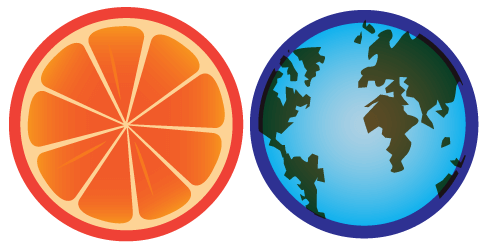
It’s funny how nature wastes nothing, even in the recurrence of words both delivered and received in the course of our lives. A case in point, five years ago – years that feel to this writer like they belong to another dimension of reality – a quite splendiferous woman loomed over my recumbent frame, held out her clasped fingers and, in a theatrical rendition every inch Hamlet holding Yorick’s skull, said La Terre est Bleue Comme une Orange. She then repeated it with added French verve, La terrrre (actus dramaticus – herein she made the letter ‘r’ in terre sound sexily gutteral) est bleue (for this word, her lips were pursed to bursting) comme une orange. Et voilà!

If the phrase weren’t so nonsensical it would be irresistible. Coined originally by the formative surrealist, Paul Eluard, the sentence translated as The earth is blue like an orange. A phrase still etched into the cultural subconscious decades later, it became a motif for the surrealist movement. And I mention this because I picked up a Guardian article this week on surrealism and lo and behold there it was printed plain as day. La Terre est Bleue Comme une Orange. And at moment those memories of that girl whose natural self-effacement and feelings of not ‘être a la hauteur’ – being ‘good enough’, in other words – derailed her dreams of the stage, were brought back to me in a flood of blues and oranges. As she, like Eluard’s blue planet of citric fruit, never really disappeared from consciousness, I thought of the untimeliness of recurrence. It all comes back, but where and when who can tell. The waking dream that is life, now there’s the essence of the earth blue as an orange. What better way to make real what is surreal?

In other news, Paris is drowning. As the mighty Seine creeps higher and higher, even the doors of the Louvre have been sealed and the priceless artefacts contained therein boxed and evacuated. When the Luftwaffe reigned the skies back in the summer of 1940, the British Government did likewise by stuffing the Royal family into crates cushioned by scrunched newspaper, ready to ship them out to the Canadian Arctic where they could chill a while until Churchill had downed enough of their VSOP brandy to come good on his oratory.

The central European whirlpool of rain has been biblical. Cars bobbing on a rushing torrent of brown, churning water like they were rubber duckies. Although Europe has been on the receiving end throughout recorded history – think the rains that turned the 100 years war between England and France into a mud-bloodbath – there’s something disquieting about the extreme force with which mother nature is throwing atmospheric phenomena at us. Newton’s Third Law is exaggerated with these rains. For every man-made action there is an unequal and disproportionate reaction on the part of nature. The more we push her, the harder she’ll push back. Environmental provocateurs beware.

Speaking of counterbalancing forces, the holy month of Ramadan falls this year on the eventide of the 6th or 7th June, depending on the appearance of the moon. From the elliptical sighting of the new moon early next week, that being the start of the ninth month of the Hijara calendar, to the elliptical closing a month later, the overwhelming majority of Muslims will let nothing, other than words, pass their lips between suhoor (sunup, about 4am) to iftar (sundown, about 7pm). Wherein most of the Islamic world exists between the horse latitudes of twenty to thirty degrees north of the equator where deserts proliferate, the 40-45 Celsius heat at this time of the year by any reckoning makes 13 hours of abstinence a feat worthy of respect. That is, until you factor in the little problem that in the present reign of King petrodollar the benefactors no longer live a life which involves stepping outside for all but the briefest of moments.

In the oil-rich region known in Arabic as Khaleej (the Gulf), the economics of affluence and the concomitant greed that ensues throws dim light on the whole notion of self-sacrificing acts of the magnitude of Ramadan. Admittedly it’s only a small corner of an Ummah (Muslim community) extending from Java to Morocco, yet the Gulf, by virtue of no longer being a humble place, is a destabilizing influence in terms of the authenticity of these religious acts of poverty and humility. 

Unlike the rest of the Ummah, dispersed as it is throughout lands described at best as developing, at worst as failing, the native population of the mega-wealthy Gulf has gotten so used to being served hand over fist since the fruiting of oil in the 1980s that to perceive many of them serving anything but themselves is a tricky proposition. So accustomed to having others do their cleaning up after them, even if Ramadan remains an important force to moderate human excess, you wonder if during the month of remembering the plight of the poor, self-purification for some might be a bridge too far. The cloak of obligation suddenly feels a whole lot heavier. 

Not to exaggerate the point, Saudis themselves testified to these very ears that they cram more into their beaks every night of Ramadan than any other time of the year. They actually put weight on in a time of fasting, if you can see the paradox in that.

Enjoying excessive spending power has an endgame, which is crass consumerism for consumerism’s sake. Adopting the de facto title of ‘home of the mega mall’ belies a deeper irony come the month of Ramadan. Floating free in a bubble of wealth, confusing lucky oil money with rights of entitlement, is inimical to the earthiness of Ramadan, and the moral hypocrisy that flows from the disjuncture is not lost on some. For they know that to make any sacrifice that requires extreme self-denial you’ve got to to feel it in your bones, and passionately. Doing it as a necessary duty, because not to would land you outside the community bounds of acceptance, isn’t enough. Remembering the plight of the hungered is a memory that is bound to fade the more complacent a people become through having affluence which can only be described as surreal.

For all the sense it makes, the earth might as well be blue like an orange.

John Bull, You Know Nothing.

Brexit

Which way will the wave break? Normandy beach or Chesil? Do modern British tribes have Spanish sangria flowing through their veins? A will of German steel? Fingers of Belgian chocolate and hearts of French St Gobain glass? A thirst for Athenian democracy and a taste for Italy? In short, yes. So what is this nonsense about calling the whole thing off with Europe?

‘But we’re different. We’re not like those continentals. Our historical destiny is not the same.’

Yes, it is and yes we are. Try mooring the British Isles in the Persian Gulf and then speak with narcissism of your minor differences vis-à-vis our European brethren. With Saudi Arabia and Iran as your new neighbours, the British naysayers will soon appreciate that what unites them with France, Portugal, Poland and Denmark, is far greater than what divides them.

Britain’s historical legacy is so wrapped up with the larger mass of land to the south to be ridiculous. The earliest trace of proto-Europeans from the Pleistocene epoch 800,000 y.a arrived in a drier, cooler Britain from, yes you guessed it, Europe. Cro-Magnons, the modern prototype of the European, crossed the dry seabed 40,000 y.a from, ja you guessed it, Europe. 2,500 y.a, Celts sailed the East Atlantic seaboard, to Britain, returning to resettle Brittany at the fall of the Roman empire. Let us think about this one, but not too taxingly. Oui, again Europe. The Celtic mystique we inherited from them was a gift from….drumroll… Europe. Ultimately…Ultimativ…En fin de compte…Por Ultimo…Ostatecznie. In however way you express it, from whichever angle you frame it, it all comes back to the same shit, the same progenitor.

Then came the next infusion of DNA into the increasingly fissiparous bloodline: the German tribes. That split things. Successive boatloads of prospectors as well as a few bona fide refugees from the post-Roman chaos added another European base metal into the British cast. Jutes, Angles, Frisians, Saxons, they all settled the fertile British Isles, pushing the previous incumbents, the tragic and heroic Romano-Celts into a brave last stand in the remote, rugged West under the mythic construct known by Monty Python as Arthur, King of the Britons. Arthur, was another gift from Europe, by the by, this time courtesy of that thoughtful, proto-European French minstrel, Chretien de Troyes. Don’t even mention the royal ascent. Catalysts of our great nation’s selfhood – from Richard the Lionheart to Electors of Hanover and even a young Queen Victoria – spoke the old lingo none too well, by all accounts.

http://www.spiegel.de/international/europe/the-anglo-saxon-invasion-britain-is-more-germanic-than-it-thinks-a-768706.html

My country is at this moment playing catch with a live hand grenade. You know that girl you lost and never quite got over? We called it the British empire. For a while the creeping of the fingers over the body of the world felt good. We were wanted. Playing the great game with some aplomb. But, to paraphrase Lord Palmerston, the no eternal allies and no perpetual enemies epoch is gone. Isolation is anything but splendid in 2016. Our distant past was with Europe, our recent empire was with everyone, our present is in Europe, our future is of Europe.

Lay your ghosts to rest and hear what the current crop of sages have to say. 90% are backing EU reform from within. They’ve been camping enough to know that it’s better to be inside the tent pissing out than outside pissng in. The smart money is on continuity and pan-Europeanism to counteract mutually destructive forces embedded in nationalism. Narrow-minded ruritarians with nothing to gain bark ‘out’. And do not be fooled by thirty miles of shallow, turbid water. A slip of a channel between us and them, geographically-speaking, is liable to dry to baked mud quicker than your eternity of lonesomeness and island-thinking. And then, when you’re walking home, south to Calais on a freezing day where icicles awaken from inter-glacial dormancy, you’ll remember where it was you came from all those geological days ago. So, we grow old together or we grow old apart. Whichever way the wave breaks, everything old enters a state of decline together. Grow old and fractious, or old and in harmony? That is the question.

John Bull didn’t want to drown when I saw him bathing in the Indian Ocean tonight. He washed the dust from his prodigious body and then headed for the homeland, the surface on which he may live unhindered, not the mid-Atlantic obscurity you tragically desire.

And by the way, if the majority opts out, the Scots will find themselves with new and abiding reasons to leave. Watch the north go. And then what? King’s Landing?

John Bull, you know nothing.


Image courtesy of trespasserine (copr. 2016 trespasserine)


Marching to Stand Still

Uncategorized

We know something about the unconscious symbols at play in nursery rhymes. We’ve probably had an inkling since we were children that there was something dark and deeply troubling about them, even back then. Have you ever had the impression that nursery rhymes were written by adults for adults? The masque of innocence uncovered, the face of the grown-up beneath is etched in toil and trouble, revealing the awful and inescapable reality that we adults have had to live inside our minds for much longer than the children who chant these rhymes with such abandon. Minds collect bric-a-brac. They grow top-heavy with the accretion of let downs, compromises and all the hangups that give our maturing minds their characteristic chemistry. Whether we occupy them or they us, our minds one way or another need taming. Like redcoats, they need a good dose of disciplining. That, though, is easier said than done.

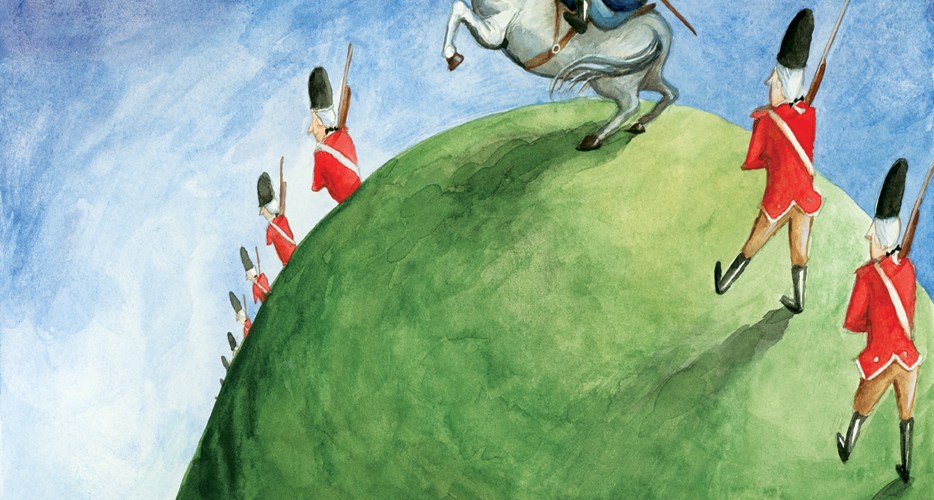
Speaking of redcoats and nursery rhymes, let’s take the Grand Old Duke of York, as an exemplar. As every child knows, he had ten thousand men. He marched them up to the top of the hill, and he marched them down again, and when they were up they were up and when they were down they were down, and when they were only half way up they were neither up nor down.

If that’s not a metaphor for the psyche, I don’t know what is. If marching foot soldiers uphill and downhill isn’t mood swings at their mildest or bipolarity at its most severe then I’ll be a cock-a-doodle do. Yet, it’s the bit in the middle where the rearguard bump into the vanguard and all ten thousand of them end up neither here nor there, that’s the part most psychologically revealing. For what is that if not a euphemism for ennui? What other language but French could coin a word for every turning of the emotional screw? Ennui: the condition which has a stranglehold on all ages but none more so than these queer middle years.

Neither up nor down – feeling nothing but listlessness and that persistent feeling that even though life is there for the living, we bumbling redcoats are not bearing up to the living part as briskly as we are to the existence part, a part, which by the way is incidental to living, as the heart beats whether we are truly living or not.

I remember Kevin Spacey’s character, Lester Burnham, in American Beauty. A lame-o whose highlight of the day was jerking off in the shower; who has lost something, although he cannot quite trace where the tributaries of that loss come from; a man – crucially – who didn’t always feel this sedated.

Tapping on the door of forty-four. Tis a funny age to call an age. At the juncture we’re squeezed between competing me-s: the rational me, the aspirational economic man; the irrational me, the passionate man. Those mental mudslingers wage a titanic shitfest struggle in the dual mind of me-me (the organism who is trying to make sense and meaning of it all) to claim the undisputed crown of quintessence, quintessence being the fifth element, the alchemy of true living. Was the choice to incubate the living part of life for X years to chase the $$$liquidity$$$ that seduces one into thinking that ‘you can do anything, go anywhere with money in the pocket and in the bank’ worth it? Hardly surprising given the ramped up role that monetarism plays in the lives of the average you and me. Better to be a rich man in a poor environment? Or a poor man in an enriched environment? No brainer – tis better to be a man of adequate means who is enriched by his environment.

How to assuage the nagging doubt that profound life choices we deem at some point along life’s journey to be far-reaching are actually really blinkered. Or that life choices that satisfy immediate needs are really the most visionary of all? To thine own self be true. That truism is as discerning in the New age as it was in the Elizabethan. Yet, when are we supposed to begin to do that, to be true unto ourselves, to wear the cap that fits? At what point do we know that we are really marching (whether up or down is irrelevant) rather than – like the Grand Old Duke’s Men – standing still?