Finding Dark Matter

humour, Oddities, Uncategorized

Mise-en-scène: A party in full swing in a wild riverside wood by the banks of the Rhône in central Geneva. Being night, not much light radiates other than the fading embers of a campfire. A reluctant party-goer, the plan is to stand there, do nothing, and let the laws of attraction do its work. Those physical laws are no more ably demonstrated than by particle physicists. And this being Geneva, home to the world’s greatest particle accelerator, look who we have here at the party down by the river. We have none other than a rabble of scientists from the quasi-mystical kingdom of CERN. I fall into talking with a couple of them. They seem about as ill at ease with their sociable surroundings as me. Geekiness is alive and well on the banks of the Rhône.

One is Italian and bashfully claims to be doing the role of ‘standard model’ photocopying while the other is Mexican and claims to be brewing electrical currents so that the Atlas project can get up to full-speed smashing protons with evermore TeVs.

‘CERN?’ I explete.

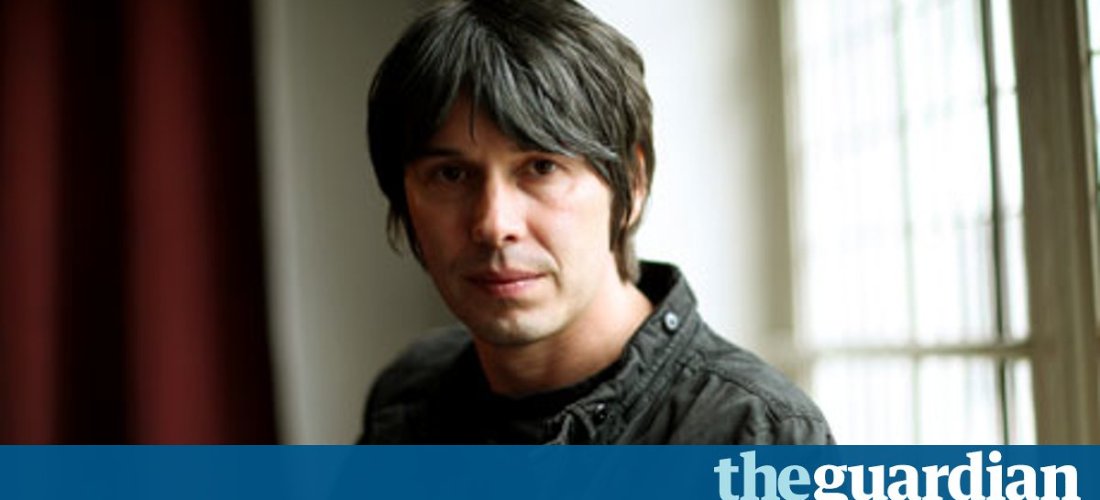
‘Woah! Do you boys know Brian Cox?’

‘No. Should we?’

‘Well, yeah. Professor Brian Cox. He’s a playboy particle physicist in Britain. Man, he’s all over the TV popularizing the subject. I ask because he’s at CERN, too.’

The Italian delves deep into pockets and draws his weapon of choice, a smart phone. Busily he starts to type.

‘How do you spell that?’

I spellcheck his effort.

‘No, no. Not with a c-k-s. It’s Cox with the letter x.’

He might be au fait with quantum mechanics, but the mysteries of Engligh phonetics needs working on. Duly, i take the Italian’s phone and type in the famous physicist’s name. He and the Mexican buzz with eagerness.

For reasons unknown, it is the risqué keyword ‘C-O-C-K-S’ and not C-O-X that leads the google image search. Low and behold a montage of photos illuminates the night sky, making my face glow with humiliation. They are all of gay porn actors posing in various states of explicit gay sex.

These scientists from the world’s greatest lab are not impressed. In fact, they couldn’t be more vexed if two WWF wrestlers were put in the Large Hadron Collider and sent crashing belly on belly at fractionally near the speed of light.

An awkward wait for something cosmic to happen ensues, but them being CERN boys they’ll be used to that peculiar phenomenon.

Busy protesting my innocence, I fumble to rectify (rectum-fy?) my mistake only to hit the wrong note again. This time a picture flashes up on google images of a gay porn actor’s anus looking ripe for the taking.

I am mortified.

My attempts at unpicking this mess are looking desperate by the second. What must they think of this stranger with mind full of smut and intentions of malevalence and sodomy?

A tussle for the phone ensues. I win. This time there will be no accidental touch of the recent history list. Cox – C-O-X. No mistaking it this time.

After a tense pause while the image montage loads, up flashes the face of CERN’s most photographed son. I stare at his perma-smile with a mixture of relief and anger. Something impish in that grin suggests Prof Brian was in on the joke all along. Caught red-handed browsing male butts, It is hapless I who is the real big butt of Brian’s joke.

By the blackened banks of the river Rhone in Geneva, my CERN acquaintances and myself have discovered dark matter. But we didn’t need the hadron collider to make that scientific breakthrough. It was the hard-on collider, in this case.

On The First Day Of Brexit, My True Love Gave To Me…

Brexit, Uncategorized

ON THE FIRST DAY OF BREXIT, MY TRUE LOVE GAVE TO ME…

….A heavy dose of despair and despondency.

By the seventh day, that feeling still lingered.

These chills rattled me to the bone such that I thought nothing could be as bad. And then the realisation struck me. It could be about to get a whole lot worse. Maybe what is needed is a tincture of the kind of optimism that the Brexiteers have been taking.

A week on from B-day and the aftermath has come. Bewilderment is hanging like a fog. No one really knows where to go from here. A power vacuum has emerged. The political class is convulsed in a human drama the likes of which has not been seen since the bad old days of union-breaking in 1984, or even the Suez debacle of 1956. With emotions running wild, an equilibrium has yet to settle. A consensus on what direction the country will take seems unlikely, even in the long term. One thing is for sure, the polls reveal a nation we all knew was riven apart by the forces of class, geography, age, education and outlook, but were too afraid to face up to the fact. Now it’s official and the whole world knows. Hairline fractures are opening up elsewhere with similar socioeconomic conditions, which means everywhere in some form or another.

Believers in the European project let their despondency form dark clouds overhead. They know the corrective measures Europe has taken since the Treaty of Rome in 1957 not to repeat her woeful history of one war after another is a 60 year-old lesson in harmony about to be unlearned. The five stages of grief will almost certainly ensue. Right now the those on the side of defeat hover between disbelief and denial. The disenchanted outcasts, who were never really enchanted with anything continental, think this divorce is going to be a panacea for all their ills. And it will feel that way until many find out to their own dismay that not much will change so long as money’s moving east to the Pacific and globalisation is still outsmarting mother nature, making fools of men and gods of monsters. The fundamentals of their life will not change for the better because they will not change the world any more than the world will change them.

Brexiteers see the shackles coming off. Unfortunately, these shackles not only silenced the liberty bell, they also kept in check the primitivist and atavistic instincts that kept Europeans at each others throats for centuries. Far from a revolutionary spirit having been released from the bottle these past few days, the miasma in the air is more reactionary than anything. The majority of the rejectors snubbed the only metonym of a faceless globalisation they knew – the EU – not for radical reasons, but for deeply conservative ones. Brussels became that byword for all that was wrong in large part because the daily diet of tabloid drivel had been peddling it through decades of sniping and badmouthing, which of course stoked the latent prejudices of the home guard readership.

Left behind on the dock of change, Dad’s Army, which is basically what the Brexiteer movement is, watched their ship sail. Few boarded it; fewer still could afford the ticket. Globalisation didn’t work for them. Yet beyond the EU, globalisation will continue unabated and it still won’t work for them. And by then it’ll be too late to act on the truth that, however unwieldy it was, the EU was ultimately a force for human decency and restraint. It tried to do the right thing at the wrong time. It brought the tide of war into its refuge not because it wanted to further put a strain on already strained and fragmented communities; it did it because it wanted to ameliorate their suffering. That’s the moral thing to do. When the alternative is a Trump-like unsympathizer who considers outsiders as vermin, then even the most egregious decision made at the supranational level in Strasbourg or Brussels will somehow seem mitigated by the immensely difficult circumstances in which we find ourselves presently. Closing in on ourselves, if it’s to have any ultimate benefit, will at least expose the true ringleaders whose failures landed so many people in such a cycle of despair. The outing of this homegrown elite might level the playing field for the little man. They’re going to be sorely disappointed when the rogues who stand by and let their towns decay turn out to be their own fellow countrymen, albeit a new tiny class of merchant with their eyes on the prize from new markets in far flung places among old Commonwealth allies.

Plus ça change, plus c’est la même chose, as our former French political partners say.

Some of those who were quick to announce a long overdue divorce are already sullen with regret, unsure in the light of a new day whether it was right to storm out of the marital home. Emotion has stabbed an arrow into the eye of common sense. Even the blind are beginning to see that. The more egregious the mistake the sooner the realisation dawns on people.

To be quite honest, the British were already ambivalent about a club in which they considered themselves too good to play by the rules. Like a flaky lover who stays when the going is good and threatens to quit when the times are tough, the plebiscite who would seek set the nation adrift from the continent chose a perfect moment to deliver the death knell when the EU was down and reeling from a succession of blows. The rejection was cruel and humiliating in its untimeliness. When the very idea of Europe was under threat from agents both inside and outside its border, it needed its big guns to rally to its defence with new resolve. Instead its biggest military force and second largest economy, the UK, waited until the EU was under fire to desert and form its own faction. No wonder the moderates on the Continent are seething.

Perfidious Albion! The French coined that one, too. Maybe Napoleon was right, England is that nation of shopkeepers.

So after thirty years of getting chronically dissed by the British populist media, Brussels is now free to pursue a less persecuted agenda. The chickens have come home to roost on a British Government who have been itching for this moment. It was their spin doctors, backbenchers and press secretaries, after all, that fed the tabloids with a lifeline of meretricious slurs which they knew would be gobbled up by Saxon John Bull during his tea break, further reaffirming his lingering second world war suspicions about the intentions of politicians in far off Berlin and Paris, speaking funny tongues he doesn’t understand. That formula sold lots of newspapers. It also, ironically enough, ultimately sold the country up the river.

Onto what now will the tabloids heap ridicule? Now the most visible target has been riddled with bullshit buckshot, who now will come into the cross-hairs of English public opinion? Truth is, there’s nobody left for the popular press to pillory other than the real elites. Will John Bull turn his ire on his elders and betters with their posh accents and taste for black olive paste on ciabatta?

The shires have packed up and gone, in a direction not even they can tell, and Europe will be all the better for it.

Globalisation worked for those who were willing to get out there and seek. And one did not have to be an Oxbridge graduate to sign up for that adventure. For all but the most industrious and entrepreneurial who refused to budge, only the slim pickings from globalisation were left them – the wishbone instead of the breast, so to speak. It was their rejection of something that was always over a horizon they shunned that has set in train this decline of integration, across Europe and far beyond.
Those who agitate for a renaissance of their small town, postindustrial communities, many fail to appreciate that their now moribund surrounds were once gleaming products of nineteenth century globalisation and that their ancestors followed the new money trail there from the bleak prospects of country life in search of the opportunity that the rail and manufacturing revolution afforded them. They were migrant workers in search of a better life even then. In 2016 we head for the Middle East in search of a solvent future; in 1816 it was the Midlands.
Those who got left behind have little inclination to go forward. By voting for change many, in a paradoxical sense, want the world to change for them. Though, as we all know in our heart of hearts, it is we who shape the world. Middle England has spoken. But who among them will care to listen?

 

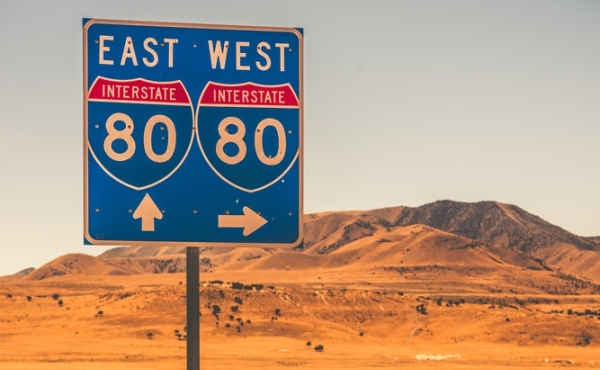
On Interstate 80, a Half-Life is Better Than No Life at all

Life, Reflections, Travel

What better way to compare key stages in the evolution of a single human lifetime than with the strange life of the atom. The radioisotope of uranium-238 has a half-life of about 4.5 billion years, the current age of the Earth. Put in laymen’s terms, half-life refers to the amount of time taken for half the atoms contained within that radioactive material to decay (capture and lose their subatomic particles, and the likes) and through that process transform into some other element. Uranium-238 into lead-206, you and me into a likeness of our former selves. We are the same but not. A brass rubbing of our younger selves. Like the isotopic decay of a uranium atom, in the course of a whole life we too reach cardinal points which I suppose could be called a half-life. In decaying, we gain and we lose. Most we carry forth but some details are left in the impression made by the rubbing.

To emphasize the quirkiness of the half-life, take the whole life of the woman who would go down as the first to win a Nobel Prize. Marie Curie died discovering it, never living long enough to see half the atoms in radium-226 decay into radon gas over a period of 1600 years. To put chemistry on a scale of civilisation we can all appreciate, a half-life of 1,600 years is the equivalent age of Islam. The life of the prophet Mohammed unto the present day, the life of the prophet-metal radium unto the gas radon.

Marie Curie did some of her most exciting research on radioactive decay half way to a death ascribed to over-exposure to radioactive decay, aged 71. That gave the Warsaw-born scientist, in one sense, a half–life of about 35 years, for it was in those middle years that she hit a key stage in her own intellectual development. It was then she made breakthroughs that would have ramifications on both herself and the wider world. Those cardinal points we talked of were reached on the trajectory of Curie’s life in a chronology of major life and death events clearly divisible by two: 35 years of age and the year of her death, aged 71. This point needs elucidating.

I decayed into being 44 last week, affording me a half-life of 22 years since I embarked on the first of many physical (not to mention metaphysical) journeys that have come to characterise my life hitherto. All have been life-changing and atom-smashing in their own right, yet still this first was a paradigm-shift in the manner in which I started looking into the interior and onto the exterior world. In the time-space of 22 years I have undergone fundamental atomic change. Half of me has turned into something else elemental, I’m damned sure of it. What that element is and in what form – gas, liquid or solid – it takes is something yet undefined. Notwithstanding the elemental decay and reform that a human life takes between its halfway stage and now, it pays not to forget that for all the radioactive decay that time gives to human life, halfway to total change signifies that the other half of what we once were still remains.

I remember being that young man, a stable isotope of 22 years old, with the whole world at his feet. A road trip across the continental United States – destination San Francisco – had been on the cards since the second year of undergrad. Doing it had become the king of obsessions among a realm of princelings. Wearing flowers in one’s hair was optional when dressing for the big trip-cum-pilgrimage, but wearing a badge of free thought and experimentalism was mandatory. In the year that Rwanda and Bosnia were being ethnically cleansed, driving from DC to San Francisco was a spiritual cleansing, a means to salvage precious hippie cargo from the wreckage of anti-capitalism libertarianism. And that 3,500-mile road trip across a dozen states to California was the least that could be done on that salvage mission.

While the old reminisced about their lost youth and the remorseful lamented the opportunities squandered when age was still on their side, we lucky few, who were anaemic enough to want enlightening and curious enough to override the instinct to disappear in plain sight of a world numbingly familiar, grabbed the proverbial bull by the horns and rode the fucker past the Pennsylvania turnpike and into the great wide open. Crossing the great divide to edge closer to uniting oneself was a feat of natural engineering. To be able to make our own minor contribution to the mythologizing of the West was like engraving your own name on Arlington Cemetery wall to join the ever-expanding pantheon of American heroes by virtue of simply being there to retrace the footsteps of Lewis & Clark. And so we wrote our glorious epitaphs before we had even learned to live.

Now 44 I am hostage to the desert half a world and three decades away, decades in which the substance of things, even the great God Zeitgeist himself, has transformed utterly (and frankly not for the betterment of what it is to be sentient and self-aware). So far from the hippiedom yet so near to being able to afford the back-to-nature dream of the Sixties, with a 21-century spin, I look around and out ahead. The next time i can take a chronological leap by a multiple of two, fate-permitting I will be 88 and frail growing frailer.

As I take my dying breath the year will be 2060. The Earth is busted flush. The thermostat gone haywire, the half-life of all wild things has brought biodiversity to a point where half of all things have decayed and disappeared forever due in no small part to the destructive path left by man. Our once beautiful Earth is neurotically trying to cool itself with ocean-bearing storms of such magnitude that half the coastlines of the world have been wholesale abandoned. The interior too has turned infertile from the nutrient-depleting process of a failed global agriculture where not even a world governing oligarchy run by the board of Monsanto can succeed in feeding a human population consisting of more mouths than spoonfuls to feed them. Remaining populations subsist on semi-coastal strip at the high latitudes between 50-100 kms inland. Human population has gone into irreversible decline. Boom populations (Bangladesh for one) have gone boom in an implosion. Negative growth populations like Denmark weather the weather change that bit better.

Hardest hit is the Persian Gulf. So long the chief benefactor of the economic system that landed us in this terrible morass in the first place, the region is now practically uninhabitable. What were unbearably hot midsummer days in 2016 are by 2060 normal winter’s day. Only a few super-wealthy elites from families who got the best from oil, who saw the writing on the wall while all others had their faces turned to Mecca and car showrooms, survive in subterranean networks and domed city-states. Thermally-adapted aircraft whisk them off to cooler climes in northern Europe when the post-catastrophe sheikhs and sheikhas are not busy lording and ladying it over the captives of their desert city-states. Now all that exists outside the dome are a few hardy brigands, sandmen from Tatooine, and their genetically freakish camels that can walk on burning coals. Only the suicidal exit the airtight gates of the Dubai city-state. Those, and the old who are expected to end it gracefully so that others may occupy their bed space. Naturally, realty is even more premium sought after than it is in 2016.

In 2016 the media was ablaze with stories of ancient city-settlements lost and found. Thanks to aerial laser mapping, archaeologists revealed buried platforms belonging to the Nabateans of Petra. Raised mounds and embankments, barely visible under a mop of vegetation, hinted at a Khmer super-city adjoining the ruins of Angkor. They flourished and then were no more. Unlike the postmodern city-state on the firing line of global environmental catastrophe it helped to foment, at least the lost and found ruins submerged under the sands of Petra lasted a good few hundred years.

Who would have thought it would be so short-lived? In this early 21st century civilisation built on the riches of 20th century oil, what now from my 18th floor window seems tranquil and permanent has been wholesale abandoned by 2060. The grid pattern of the coastal city has been reduced to geometric outlines visible from the air that draw a faint outline over a lifeless and skeletal coastline. Even the toughest, savviest survivalist, the stray dog, no longer barks his woes in the night. For hundreds, even thousands, of square miles all that remains of what once was are these domes. They are what used to be the caravansarais of yore, except only the wealthiest traders are now welcomed in. A vast acrylic parasol glimmering from far, distant dunes, Dubai is one such haven of life. Abu Dhabi another. Life holds on because the closed climate system is powered by huge air-conditioned units that, were they to fail, would result in the slow cooking of every last inhabitant, as the interior of the dome succumbs to an equalizing of temperature with that of the outside. There is no escaping the unremitting sun, nor the dust that coats the exterior, for which the criminal class pay with their condemned lives by facing the outside to dust and hose the acrylic clean.

22-44-88. The years multiply. The physical decay that started aged 22 will continue. Life experience will transform us all, into what state only slow and inexorable decay will decide. Still, a half-life is better than no life at all.