Where Mountains Let Off Steam

Iceland, Reflections, Travel, Uncategorized

There’s a place high in the North Atlantic where day by day America and Europe grow further apart in matters unrelated to politics. It’s no fun being the subject of a custody battle between mother Eurasia and father America.

Tectonic limbs all wrenched and popped from sockets by the selfish jostling of parents who should know better, this ‘kid’ is a work in geological progress. Only Hawaii experiences growth spurts like this.

There but for the grace of an ever-widening Atlantic goes it. It, of course, is Iceland. It, in its physical manifestation, looks like a green and white lesion on the skin of the Earth when seen from space. As lesions go, this one’s made of tough stuff: of gabbro, rhyolite, andesite and all the inanimate stuff of inner Earth, stuff whose quality reassures in both its lastingness and the sure-footing it provides our little feet on these hair-raising trips around our parent star.

When least expected, the lesion seeps hot puss onto Earth’s skin in the form of hot mantle rock. By night glowing rivulets of lava channel down from the frigid heights to where nature spins this rarely seen material on the loom of time. What spent aeons riding the currents of the hot, viscous ocean under the earth’s crust is now cooled under grey skies in these sub-polar environs. Evidence of it lies strewn everywhere, petrified fragments of magma now little charcoal-coloured sponges dissolved full of holes.

Iceland is rightly known as the land of fire and ice. There, hot geothermic forces that on most landmasses remain under a 70 km cap of insulating crust bring the insanely-hot upper mantle so close to the surface that green mountains blow jets of steam from their flanks. The sight is akin to seeing the smouldering embers of dozens of hillside campfires, except water is the fuel, and not the smouldering remains of firewood. Correspondingly, in rural Iceland, which is practically all of Iceland, drainage trenches cut into the roadside verge create curtains of hot vapour steaming up, making the driver feels he’s driving on a whistling kettle made of tarmac.

Known as Thule to the ancient Greeks, this place of black sand, ice-capped highland, stunted trees and primeval lime moss below the Arctic Circle is by no means mythical in spite of a temptation to deem it so. For to be mythical is to be ancient, and compared with granny Scotland to the south, Iceland is a geological laddie. Plus, its status is real enough to have a runway on its southwest peninsula bringing in an ever-increasing number of people curious to see what all the fuss is about. Not far out of the airport, and one can see why. A volcano, constructed by nature only yesterday so perfect is its conical shape, stamps the country’s character almost immediately.

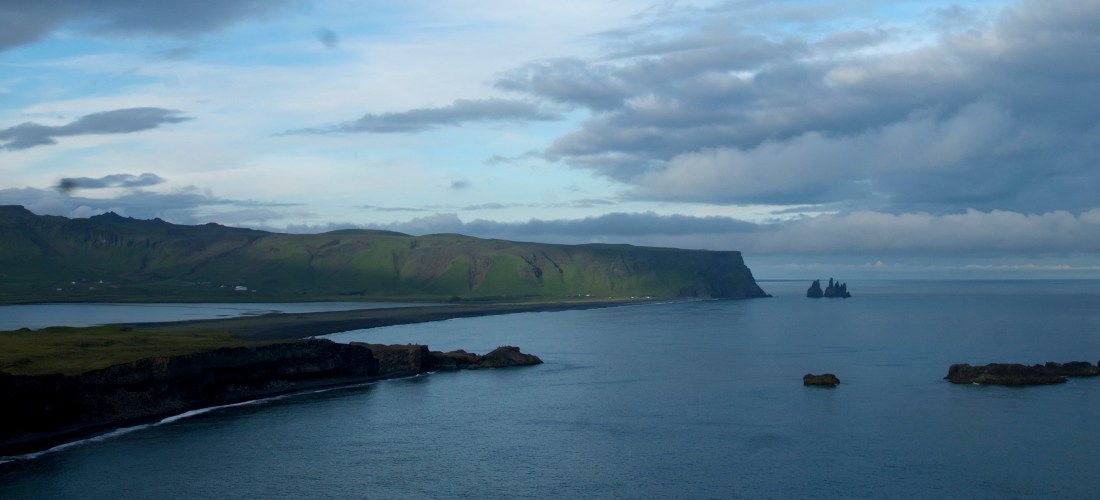
The south cape of Iceland is a sight like no other. Giving the savage beauty of the cape a human face is the village of Vik. Man, this is one cape that makes Superman’s look pointless. With its super-cooled hexagonal columns of basalt (think Fingal’s Cave in Iona, Scotland) propping up grass-coated cliffs that double as high rise apartments for legions of fulmars, puffins, terns and other tenants, the magic oozes right from the word go. Then there’s the headland that juts fearlessly into the freezing Atlantic. The sea stack at the outer perimeter of the headland is carved into the perfect stone arch which reaches high into the sky and through which a ship could pass unhindered. Pushing south into the North Atlantic, this point is the nearest Iceland will be to warmer waters, that is until it spews more submarine eruptions that give it that extra-territorial reach. No other island can undergo geology’s answer to a cosmetic makeover quite like this one. Stay alive long enough and you’ll see it morph into something else.

The innards of the earth ground down to grains, its black sand beaches stretch away into the past one way and into the future the other. We’re standing on a convergence point of time as it was, as it is, as it will be. All a bit disconcerting, in the nicest possible way. Behind it all looms the presence of the same Eyjafjallajokull volcano that belched thousands of transatlantic flights to a standstill five years ago. Iceland’s famed ponies stand in a huddle against the sheet rain. An endless supply of fresh grass is their only recompense for finding themselves stuck shivering in steel-grey of the mid-Atlantic.

All is not what it seems. Unlike most other places, where heat originates from above, Iceland feels it from below. A skein of hydro-thermal pipes run over old lava fields turned to moss. Blink and the pipes could be running oil. Denuded of trees, this place could be the hellish twin of the Persian Gulf, with its crude oil pipes running over equally barren lands. And like the deserts where winds blow sands into new arrangements, in Iceland it’s the restlessness of what lurks beneath that ensures that timelessness is no more than a cruel illusion. At least, Tolstoy would back me on that one if he were still around.

(The photograph was taken in Vik, on Iceland’s magnificent south cape).
Finding Dark Matter

humour, Oddities, Uncategorized

Mise-en-scène: A party in full swing in a wild riverside wood by the banks of the Rhône in central Geneva. Being night, not much light radiates other than the fading embers of a campfire. A reluctant party-goer, the plan is to stand there, do nothing, and let the laws of attraction do its work. Those physical laws are no more ably demonstrated than by particle physicists. And this being Geneva, home to the world’s greatest particle accelerator, look who we have here at the party down by the river. We have none other than a rabble of scientists from the quasi-mystical kingdom of CERN. I fall into talking with a couple of them. They seem about as ill at ease with their sociable surroundings as me. Geekiness is alive and well on the banks of the Rhône.

One is Italian and bashfully claims to be doing the role of ‘standard model’ photocopying while the other is Mexican and claims to be brewing electrical currents so that the Atlas project can get up to full-speed smashing protons with evermore TeVs.

‘CERN?’ I explete.

‘Woah! Do you boys know Brian Cox?’

‘No. Should we?’

‘Well, yeah. Professor Brian Cox. He’s a playboy particle physicist in Britain. Man, he’s all over the TV popularizing the subject. I ask because he’s at CERN, too.’

The Italian delves deep into pockets and draws his weapon of choice, a smart phone. Busily he starts to type.

‘How do you spell that?’

I spellcheck his effort.

‘No, no. Not with a c-k-s. It’s Cox with the letter x.’

He might be au fait with quantum mechanics, but the mysteries of Engligh phonetics needs working on. Duly, i take the Italian’s phone and type in the famous physicist’s name. He and the Mexican buzz with eagerness.

For reasons unknown, it is the risqué keyword ‘C-O-C-K-S’ and not C-O-X that leads the google image search. Low and behold a montage of photos illuminates the night sky, making my face glow with humiliation. They are all of gay porn actors posing in various states of explicit gay sex.

These scientists from the world’s greatest lab are not impressed. In fact, they couldn’t be more vexed if two WWF wrestlers were put in the Large Hadron Collider and sent crashing belly on belly at fractionally near the speed of light.

An awkward wait for something cosmic to happen ensues, but them being CERN boys they’ll be used to that peculiar phenomenon.

Busy protesting my innocence, I fumble to rectify (rectum-fy?) my mistake only to hit the wrong note again. This time a picture flashes up on google images of a gay porn actor’s anus looking ripe for the taking.

I am mortified.

My attempts at unpicking this mess are looking desperate by the second. What must they think of this stranger with mind full of smut and intentions of malevalence and sodomy?

A tussle for the phone ensues. I win. This time there will be no accidental touch of the recent history list. Cox – C-O-X. No mistaking it this time.

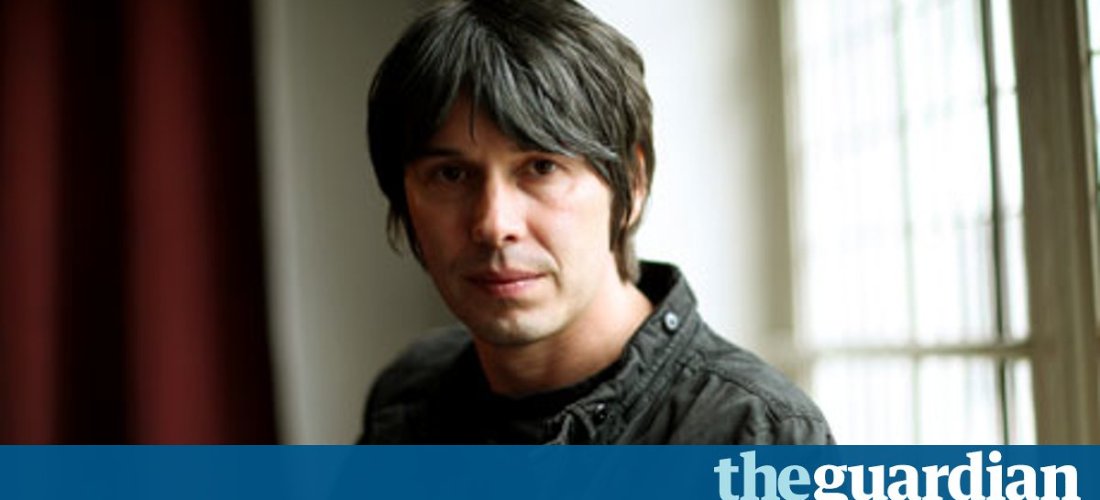
After a tense pause while the image montage loads, up flashes the face of CERN’s most photographed son. I stare at his perma-smile with a mixture of relief and anger. Something impish in that grin suggests Prof Brian was in on the joke all along. Caught red-handed browsing male butts, It is hapless I who is the real big butt of Brian’s joke.

By the blackened banks of the river Rhone in Geneva, my CERN acquaintances and myself have discovered dark matter. But we didn’t need the hadron collider to make that scientific breakthrough. It was the hard-on collider, in this case.

On The First Day Of Brexit, My True Love Gave To Me…

Brexit, Uncategorized

ON THE FIRST DAY OF BREXIT, MY TRUE LOVE GAVE TO ME…

….A heavy dose of despair and despondency.

By the seventh day, that feeling still lingered.

These chills rattled me to the bone such that I thought nothing could be as bad. And then the realisation struck me. It could be about to get a whole lot worse. Maybe what is needed is a tincture of the kind of optimism that the Brexiteers have been taking.

A week on from B-day and the aftermath has come. Bewilderment is hanging like a fog. No one really knows where to go from here. A power vacuum has emerged. The political class is convulsed in a human drama the likes of which has not been seen since the bad old days of union-breaking in 1984, or even the Suez debacle of 1956. With emotions running wild, an equilibrium has yet to settle. A consensus on what direction the country will take seems unlikely, even in the long term. One thing is for sure, the polls reveal a nation we all knew was riven apart by the forces of class, geography, age, education and outlook, but were too afraid to face up to the fact. Now it’s official and the whole world knows. Hairline fractures are opening up elsewhere with similar socioeconomic conditions, which means everywhere in some form or another.

Believers in the European project let their despondency form dark clouds overhead. They know the corrective measures Europe has taken since the Treaty of Rome in 1957 not to repeat her woeful history of one war after another is a 60 year-old lesson in harmony about to be unlearned. The five stages of grief will almost certainly ensue. Right now the those on the side of defeat hover between disbelief and denial. The disenchanted outcasts, who were never really enchanted with anything continental, think this divorce is going to be a panacea for all their ills. And it will feel that way until many find out to their own dismay that not much will change so long as money’s moving east to the Pacific and globalisation is still outsmarting mother nature, making fools of men and gods of monsters. The fundamentals of their life will not change for the better because they will not change the world any more than the world will change them.

Brexiteers see the shackles coming off. Unfortunately, these shackles not only silenced the liberty bell, they also kept in check the primitivist and atavistic instincts that kept Europeans at each others throats for centuries. Far from a revolutionary spirit having been released from the bottle these past few days, the miasma in the air is more reactionary than anything. The majority of the rejectors snubbed the only metonym of a faceless globalisation they knew – the EU – not for radical reasons, but for deeply conservative ones. Brussels became that byword for all that was wrong in large part because the daily diet of tabloid drivel had been peddling it through decades of sniping and badmouthing, which of course stoked the latent prejudices of the home guard readership.

Left behind on the dock of change, Dad’s Army, which is basically what the Brexiteer movement is, watched their ship sail. Few boarded it; fewer still could afford the ticket. Globalisation didn’t work for them. Yet beyond the EU, globalisation will continue unabated and it still won’t work for them. And by then it’ll be too late to act on the truth that, however unwieldy it was, the EU was ultimately a force for human decency and restraint. It tried to do the right thing at the wrong time. It brought the tide of war into its refuge not because it wanted to further put a strain on already strained and fragmented communities; it did it because it wanted to ameliorate their suffering. That’s the moral thing to do. When the alternative is a Trump-like unsympathizer who considers outsiders as vermin, then even the most egregious decision made at the supranational level in Strasbourg or Brussels will somehow seem mitigated by the immensely difficult circumstances in which we find ourselves presently. Closing in on ourselves, if it’s to have any ultimate benefit, will at least expose the true ringleaders whose failures landed so many people in such a cycle of despair. The outing of this homegrown elite might level the playing field for the little man. They’re going to be sorely disappointed when the rogues who stand by and let their towns decay turn out to be their own fellow countrymen, albeit a new tiny class of merchant with their eyes on the prize from new markets in far flung places among old Commonwealth allies.

Plus ça change, plus c’est la même chose, as our former French political partners say.

Some of those who were quick to announce a long overdue divorce are already sullen with regret, unsure in the light of a new day whether it was right to storm out of the marital home. Emotion has stabbed an arrow into the eye of common sense. Even the blind are beginning to see that. The more egregious the mistake the sooner the realisation dawns on people.

To be quite honest, the British were already ambivalent about a club in which they considered themselves too good to play by the rules. Like a flaky lover who stays when the going is good and threatens to quit when the times are tough, the plebiscite who would seek set the nation adrift from the continent chose a perfect moment to deliver the death knell when the EU was down and reeling from a succession of blows. The rejection was cruel and humiliating in its untimeliness. When the very idea of Europe was under threat from agents both inside and outside its border, it needed its big guns to rally to its defence with new resolve. Instead its biggest military force and second largest economy, the UK, waited until the EU was under fire to desert and form its own faction. No wonder the moderates on the Continent are seething.

Perfidious Albion! The French coined that one, too. Maybe Napoleon was right, England is that nation of shopkeepers.

So after thirty years of getting chronically dissed by the British populist media, Brussels is now free to pursue a less persecuted agenda. The chickens have come home to roost on a British Government who have been itching for this moment. It was their spin doctors, backbenchers and press secretaries, after all, that fed the tabloids with a lifeline of meretricious slurs which they knew would be gobbled up by Saxon John Bull during his tea break, further reaffirming his lingering second world war suspicions about the intentions of politicians in far off Berlin and Paris, speaking funny tongues he doesn’t understand. That formula sold lots of newspapers. It also, ironically enough, ultimately sold the country up the river.

Onto what now will the tabloids heap ridicule? Now the most visible target has been riddled with bullshit buckshot, who now will come into the cross-hairs of English public opinion? Truth is, there’s nobody left for the popular press to pillory other than the real elites. Will John Bull turn his ire on his elders and betters with their posh accents and taste for black olive paste on ciabatta?

The shires have packed up and gone, in a direction not even they can tell, and Europe will be all the better for it.

Globalisation worked for those who were willing to get out there and seek. And one did not have to be an Oxbridge graduate to sign up for that adventure. For all but the most industrious and entrepreneurial who refused to budge, only the slim pickings from globalisation were left them – the wishbone instead of the breast, so to speak. It was their rejection of something that was always over a horizon they shunned that has set in train this decline of integration, across Europe and far beyond.
Those who agitate for a renaissance of their small town, postindustrial communities, many fail to appreciate that their now moribund surrounds were once gleaming products of nineteenth century globalisation and that their ancestors followed the new money trail there from the bleak prospects of country life in search of the opportunity that the rail and manufacturing revolution afforded them. They were migrant workers in search of a better life even then. In 2016 we head for the Middle East in search of a solvent future; in 1816 it was the Midlands.
Those who got left behind have little inclination to go forward. By voting for change many, in a paradoxical sense, want the world to change for them. Though, as we all know in our heart of hearts, it is we who shape the world. Middle England has spoken. But who among them will care to listen?