The Consolations of Fate

Arabia, Christianity, civilisation, ethics, europe, fate, free will, future, greek philosophy, Hinduism, human mind, Islam, Life, Lifestyle, Meaning, meditations, Middle East, Musings, Muslim, Natural Law, natural philosophy

Maktoob: that which is written. Ask any one of 1.6 billion people of the world who belong within the Umma (the global community of Muslims, whatever their sect), and most will confess that their entire life boils down to a narrative, a script already written by a divine hand long before each infant has entered the maternity wards of this physical world. That only two endings are conceivable, paradise or hell, is by the wayside. It is the story of life that counts.

Now anyone who has ever lived among the faithful will know that by and large they are a contented bunch. Muslims the world over smile ineffably. When they are not busy with their struggles or else bogged down in civil strife, Arabs and their muslim brethren everywhere from Indonesia to West Africa seem to spend considerably more time that we in the West in a state of laughter and outward expressions of happiness. There’s a lightness to being among them; a sense that, unlike the self-made man of the West, enormous burdens have been somehow lifted from each and every shoulder. Speak to them about how they imagine their lives are going to pan out and in return you will receive a beatific smile and a shrug. It is not for me to say, he will counter. To which, I will respond baffled and he will reply, why worry about the future. It is not ours to decide.

Oh, fate? I will reply. Well, yes and no, he will say. You see, fate is that collision of two moving bodies sprinting down adjacent streets until both reach the corner simultaneously and boom! two bodies collide. Fate, to the Western mind has the air of being something sudden and unplanned. Yet fate – maktoob, is really rather different. What maktoob implies is that those who ran down that road did so before they even knew it. They collided on the corner not because fate ‘intervened’, as we in the Greco-Roman tradition are want to say. Fate to the ancient Greeks, and by extension the latter-day Western World, rested with fickle Gods. They refereed you through every minor move you made, blowing the whistle on transgressions, on foul play. With fate, occidental-style, you could be up one minute; down the next. But maktoob wrote the book of life before you were even conceived. You keep to a life script without ever consciously reading it. The key thing is that to the believer in the Qur’an, each mere mortal was never tasked with writing their own life story. That onerous task was never laid down before them. Blank pages in the annals of God’s creation were just too precious to be delegated to a human fuck-up. The weight of responsibility too great an undertaking for the pages ever to be left blank.

So here we are, twixt a world of the divine and the secular where the growing legions of secularists are sold the belief that life is what we make of it. Fortune favours the bold. Who dares wins. You get out no more and no less than you put in. The proverbs supporting free will are woven into the very fabric of Western languages. Their fellow mortals, in stark contrast, who maintain a more monotheistic tone (and even spiritual when you consider predestination as a central tenet of most Hindus, Jains, Parsees, Buddhists, Baha’i, animists, et al) do not fundamentally accord with this notion that each one of us is a little God carving out the cosmos in his or her own image. These adherents to Islamic (and Judaeo-Christian to a lesser degree) doctrine (the hadiths of the Prophet and the surahs of the Book) are happy of course to be given a patina of choice in life: what car they choose to drive, what profession they choose to follow, what football team they choose to support, even where they’d like to spend their honeymoon. But to most who adhere to a divine book – that we shall call a operator’s manual for living – all notion that each of us is alone to decide everything short of dying at the age of forty of terminal cancer (and even cancer in the West is often attributed in terms of blame to a person’s unhygienic choices, such as smoking) is risible. Of course, when we visit these holy lands with our fanatical secular faith tripping off the tongue like the good little imperialists we profess not to be but are all the same, our religiously-minded hosts humour us and indulge us our fantasies of taking control of our destinies. We lecture them on planning and freedom to choose and freedom to be and even freedom to fuck up. They listen and nod serenely before heading off to the mosque for the fifth time that day, the thirty-fifth time that week, to radiate in the knowledge that the road for them is already laid. Life is a book whose pages were filled in not by the protagonist, but by the author, a long time in the past, so long ago that time is irrelevant.

In a sense this is logical that the book of life be not composed by the main character, for it is the author – a figure who never appears in the book – as creator. Which brings us back to the happiness factor. For all the student suicides in secular Seoul, Shanghai or Tokyo, how many self-confessed failures in life do we count from among the lands of the strictly faithful? For all my mediocre students in Arabia, did I once ever see one who was so overburdened by feelings of impending academic failure, so ridden with self-blame for poor performance that they sought the easy way out? Not once. Many underperformed in class only to walk out in high spirits. And what of my Asiatic students? Did they push themselves to the outer limits of academic achievement because of a culturally ingrained belief that the buck stops with them? Yes, frequently. Their academic performance is linked directly to the underlying secular notion that we build our house with our own hands.

I try to reconcile the two opposing philosophies of free-will and predestination and I cannot other than to bewail the amount of responsibility heaped on young individuals in Western Secular and East Asiatic Confucian societies to take the quill of creation and write their life story like each one needs to be on the Booker shortlist. The pressures are immense; the philosophical premise of free-will still unproven. Life is lonely on a planet of authors. Life, in contrast, is one big jovial gathering on a planet where one anonymous author wrote everything for everyone for all time. Maktoob. Who wants to be a driver on a mad road when you can be passenger on a country lane? Isn’t it enough to be the train driver? Or must we lay each rail as well while we go along?

This is by no means a rallying cry for mass religious conversion. The strictures of an observant life of answering the azan thirty-five times a week (and much more during the month of Ramadan) are prohibitive and constrictive to the postmodern mind made up of Post-Christians and Post-Confucianists. Whether a philosophical brainchild of the eighteenth-century Enlightenment we call free will is no more than a pleasant self-deception, or at worst, a mirage, most feel no abiding need to abdicate control of their lives, or the appearance of self-control. But with pressures mounting on an ecological world in peril, the millions of inchoate dreams existing in aspirational societies that are grounded in the cult of individualism (this is the very guiding light of the West) are becoming ever more unattainable. Blame heaped on oneself, as well as feelings of failure, will balloon in future. Individuals marooned on a desert island of their own making. And sadly, it will be the West – that vanguard of progressive ideas – that will need the anti-depressants while the Arabs will continue to find amusement in the smallest things, such as death.

Too Good To Be True

Britain, British Isles, conservation, Coronavirus, counter-culture, Covid-19, death, developing world, England, environment, ethics, future, Great Britain, human development, kindness, Liberalism, Libertarianism, Life, Lifestyle, natural philosophy, natural world, pandemic, People, Political Culture, Politics, Poverty, revolution, Society, Socioeconomics, thoughts

That ol’ devil called greed is back again. Many feared the worst while others dreamed of a new, kinder dawn. But oh no no, sir! No sooner is full lockdown eased, untimely death is no longer news. And why? Because that she-devil, the economy, is back. No sooner has its mouth been welded shut than its teeth are glistening at the prospect of new blood.

Turn on the news and talk of rekindling a lost love for nature, or for that matter stopping to reflect on human suffering and the slow torture of social isolation, has been superseded by dire prognostications of poor industrial output, negative deficits, and looming recession. Figures in the billions (£) are banded around where only last week the figures were reserved for the dead. Yes, I’m afraid it’s time to rally together in a final push over the top to be mown down not by the bullets of the Bosch but by debt, overconsumption and more reckless environmental despoliation.

vikings

However, this national obsession with wealth accumulation has substantial precedent when seen over the arc of history. The very name Britannia came into being as a nomenclature given by Roman imperial planners (Britanicus, I think, was one of the Julio-Claudean line of rulers). The island was finally absorbed into the Romanosphere in the mid-first century not for magnanimous reasons but because it was known since Phoenician times for its lucrative silver, tin, lead and gold mines. Then, following the departing legions, Jutes, Angles and Saxons came not for magnanimous reasons but because in that fertile soil lay wealth and prosperity. Following them, the dreaded Danes, who arrived in the 790s on raiding parties along the North Sea coast. Not for magnanimous reasons did they emerge on the flat horizon, but to plunder the treasures known to be held in the abbeys. Following them the Normans, who didn’t raise a psychotic militia for magnanimous reasons but to spill blood onto land they knew would bring a crop of splendiferous wealth. During the civil war in the 1640s, a genuine attempt was made at levelling the appalling inequalities of serfdom in the late middle ages. But again that was snuffed out again by the forces of avarice. The Bank of England would be established forty years after the failures of English republicanism just to underscore the direction the country was heading in. In that century too, The East India Company and the Hudson Bay Company consolidated their royally-sanctioned gains to become the Multi-Nationals of their day. Following the failures of political equality in England, the notion of republicanism as the only force for egalitarianism was then left to France and the inchoate United States. In the years following the Seven Years War with France, by the mid-1700s the British empire had become the most profitable venture in the history of the world. Its adherence to the doctrine of greed, masqueraded as mercantilism, became set in stone, an article of faith.

Top-questions-answers-East-India-Company

And so it is that the country, as it appears today, finds itself true to its atavistic self. In other words, its socio-cultural DNA had been inherited from a long lineage. Other than the blip following both world wars when some kind of radical redistribution of wealth had to be sought to avoid a civilisational collapse, Britain has proven herself more adept at pursuing riches by any means possible than it has for coming up with novel ways of how people can co-exist harmoniously with each other and with the ecology that still clings to the land’s surface. It wasn’t for want of clever men and women that naked economics trumped high ideals. Those big ideas the so-called deep state (the power behind the power) encouraged our philosophers to debate, providing their conclusions arrived at a natural law of supply and demand, and of how man is shaped by self-evolving and universal economic forces than – as was the case in revolutionary France – how economic forces could be shaped by man and altered to reflect a fairer society. Utilitarianism, a dominant thought system in the very acquisitive nineteenth century was a excellent case in point. The greatest happiness for the greatest number lent itself well as a doctrine to England earning the sobriquet of a nation of shopkeepers.

Industrial Revolution

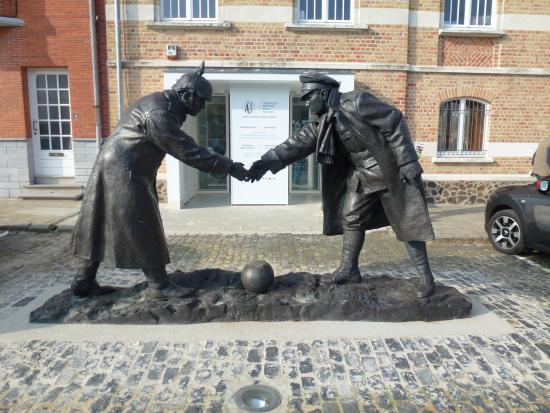
In the southern parts of this island, we are still wedded to the idea that economics of unlimited growth in a world bound by physical limits determines levels of happiness. No doubt it is better to be a rich man in a cold country than a poor man in a warm one. However, the great mechanisms of how we interact with tradable commodities continue to dominate thinking in informing the consensus. Lockdown was a chance to redress that imbalance. It was a unique opportunity for the average Joe to hop off the spinning wheel for a while and to try seeing life – and what he/she values from it – from a wholly different perspective. This perfect convergence of variables (that is to say, unusually great weather, government providing a blanket of financial support to the majority, as well as the stillness in the air that permitted us to think long and hard) gave the millions upon millions of conscripts fighting as footsoldiers and corporals in the boom and bust economic war the chance to think again about what they wanted out of their country. Unfortunately, like the Christmas Day short truce of 1914 where British and German soldiers showed their mutual enmity by getting together for a game of football and a post-match drink, this too is a false dawn. Like those men who knew, through a simple game of football, they had more in common with one another than with the chiefs of staff who sent them to the front in the first place, this cosy little interregnum that some have been enjoying of late is too dangerous to continue. The unfair society harnessed by the economics of naked aggression and unlimited growth cannot survive the neglect and contempt it is being shown at present.

1914-christmas-truce

The second age of the robber barons is not over yet. But a few more pandemic lockdowns might just do the trick. And not unlike the Peasants’ Revolt of 1381, a spring clean of the people (i.e. a serious trimming of human numbers leading to a radical restructuring of the socioeconomic order) may just give the downtrodden a glimmer of hope. And a chance to rise up alongside a damned and damaged natural world from the scorched earth of a long and unfruitful economic obsession.


(Nothing but) Flowers

apocalypse, botany, conservation, Coronavirus, Covid-19, crisis, development, earth, environment, ethics, forest, future, futurology, giant trees, Hippies, history, human development, Imagination, joni mitchell, Life, Lifestyle, lyrics, meditations, Music, Musings, natural philosophy, natural world, nature, pandemic, paradise found, paradise lost, People, Planet Earth, Political Culture, pop music, redwoods, Reflections, Society, talking heads, teleology, thoughts, trees, verse, Virus

Does art imitate life, or life art?

In days of Covid-19, when the sight of Piccadilly Circus derelict at 3pm could easily be mistaken for 3am midsummer in Murmansk with the sun already up (or more’s the point, having never actually gone down, situated as it is above the Arctic Circle), you know the face of the planet is a strange and beautiful – if deeply troubled – place in need of accounting for. To do that, what better way than to trove through the annals of music to find lyrics that somehow chime with our topsy-turvy vision of Twenty-Twenty.  

How pop music anticipated the short upside of the long lockdown.

Two classic numbers spring to mind as expressions of a world both blighted by the giant bovver boot of human success, and lifted from the dark shadow of its crushing conquest. To know them, we first need to know their context (both allude strongly to making/unmaking the world in our own human image) plus the order in which they arrived on the scene. 

The first song imagines paradise lost to human development and is really an ironic take on how when somewhere magical is discovered by the few it is soon descended upon by the many until that magic melts away before the axe, the pick, the shovel and the steamroller. Let’s face up, before the current pandemic, paradise was being lost at a rate of knots. Virgin lands were being deflowered faster than their chastity could stand. But this trend had a precedent. This was all laid out with depressing familiarity in the imagery conjured up in Joni Mitchell’s 1970 masterpiece, Big Yellow Taxi. She saw the tide changing even back then. Joni must’ve read Rachel Carson’s 1962 groundbreaker, Silent Spring. She, among the enlightened few, flocked to Laurel Canyon, in the hills outside L.A., when it was relatively untouched. By 1970 her lyrics were prescient enough to foreshadow an era when the faraway magic tree was starting to get laden with nest builders. In short, when the visionary few woke up to us killing the goose that laid the golden egg. 

She sings,

Don’t it always seem to go
That you don’t know what you’ve got
‘Til it’s gone
They paved paradise
Put up a parking lot.

This was 1970. By then California’s redwoods had taken about as much pummelling as they could without going extinct in their native habitat. Federal protection would soon ensue to safeguard the remaining 5% of coastal redwoods left in the wild. Things were by no means great, ecologically-speaking. But the world contained far fewer people than today, and far more biodiversity in still unchecked corners of the globe. Joni saw the writing on the wall. For her, it was going to be ugly, but not without the delicious tang of irony.

They took all the trees
Put them in a tree museum
And they charged all the people
A dollar and a half to see ’em.

The rapid human (& by extension commercial) development of Southern California, and in particular Laurel Canyon, was cause for concern, even then. It was in every sense yet another paradise in the process of being lost. You didn’t have to go back to Milton in the 1600’s to realise this. Nor even to the loss of Eden in the Old Testament. In fact, it was happening all around her and her hippie acolytes. So much so that she saw fit to pen the words to one of the great songs of popular music.

Hey, farmer, farmer
Put away the DDT now
Give me spots on my apples
But leave me the birds and the bees.

The birds needed their trees, but the trees were being shipped to the museum. And the bees needed the flowers to pollinate, but the flowers were sprayed with deadly insecticide. And so, the modern narrative was written. The context was nature’s loss for human gain, albeit temporary. The story of us was bittersweet. Our rampaging success came at a cost to everything that was hitherto worth living for. The garden of Eden was once again imperilled, and didn’t Joni express it every bit as well as a biblical prophet.

The second classic number from 1988, Talking Heads’ (Nothing but) Flowers, also laments loss – yes, those buckled blades of grass under the giant bovver boot of human progress that Joni decries – but this time in a different way. Human development for Joni amounted to stealing the pristine from under her nose as Laurel Canyon fills up with infrastructure that follows in the wake of other dream-seekers like herself. Where she accuses her fellow pioneers of stripping away at the fabric of pure nature in their onrush to exist in a state untouched by civilisation (in other words, by radical actions involving having to degrade nature so they could live it, which defeats the whole point of conservation), (Nothing But) Flowers laments the loss of what we brought to the world by changing it from natural to synthetic. The lyrics deliver a shot from the bows that, contrary to the selfish act of taking from nature to become more natural, mother nature (triggered by events untold in the Talking Heads song) has now reclaimed all things natural from her wayward child. His message is clear: we didn’t gain anything in losing our hold on the world. Roads without cars might well feel like a pleasant dream when cars on roads are all that is. But when all the cars are gone and the road is uprooted? Is that not just as lamentable as a world sans les animaux? Beware what you wish for is a sentiment that rattles through each verse.  

From the age of the dinosaurs
Cars have run on gasoline
Where, where have they gone?
Now, it’s nothing but flowers.

Whereas Joni’s brand new parking lot paved paradise, Talking Heads’ frontman David Byrne sings,

Once there were parking lots
Now it’s a peaceful oasis.

His parking lot has become overgrown in the absence of cars by the creeping dominion of natural regrowth. We have, in essence, gone full circle. However, this oasis is not all it is cracked up to be. Byrne soon tires of this state of nature, dreaming instead of,

 …cherry pies,
Candy bars, and chocolate chip cookies.  

One would be forgiven for thinking that where

…There was a factory
Now there are mountains and rivers…

can only be good. But no. Byrne proves to be no such primitivist. He wants his Dairy Queen, Honky Tonk and 7-Eleven back. Joni saw real estate supplanting the wild fields and trees, a town sprung up where once there were flowers. Byrne envisions the opposite.

This used to be real estate
Now it’s only fields and trees
Where, where is the town?
Now, it’s nothing but flowers.

Disabusing us of this idyllic state of post-civilisation, catching rattlesnakes for dinner is not a tempting prospect once civilisation has collapsed. In a nod to the 17th century English philosopher, Thomas Hobbes, David Byrne sees savagery as the state of nature. Thus, sovereignty has to be restored lest we descend into the the very thing we’ve tried to get way from throughout our painful history. For Joni Mitchell, the romanticism is straight out of a Gaugin painting of Tahitian women. Noble savagery, all swished with colour. For David Byrne, this post-apocalyptic bloom might as well be algal. For Joni, the optimal state of existence is what you might term prelapsarian, that is to say, straight from the Garden of Eden before the flood. Humans are the harbingers of apocalypse for her. Everything they do to commodify their world ends up being worse than the purity of what it replaced.

As Byrne sings toward the end verses:

We used to microwave
Now we just eat nuts and berries.

Don’t leave me stranded here
I can’t get used to this lifestyle

Both these splendid tunes are musical museum pieces for good reason. You or I couldn’t sit down and write them in an afternoon. But in spite of their substantive differences, both numbers are really just two sides of the same coin. Both deal with before and after. Both lament loss. Both pivot around this idea of the aftermath of a profound transition felt by everyone. In this regard, one can thread them to the current state of lockdown being experienced around the world. As has become all too apparent that everyone is feeling a different vibe to the recent halting of practically all human activity in the face of a deadly virus, we may well ask: is it time for a prequel to these songs? This time, in lieu of loss, the unnamed songwriter can wax lyrical about how we unpaved paradise, took down a parking lot. Of how we took all the museums, put them in a massive tree. Or, this was going to be real estate, but it was decided the best buildings are trees. Or, please leave me stranded here, I could get used to this lockdown. 

Leave something for the birds and the bees. Leave something for us and those of us to come.