Holy Cow! How Ruminating on Love Ends With the Strange Tale of the Bovine.

#romance, abandonment, boats, England, Life, love, parable, relationships

I have a good friend I met overseas. A trusted sort, loyal, bright, boundless in his generosity, a good companion on these journeys of wine and deep talk long into the night.

One fine day he meets this girl. Let’s call her Mademoiselle V, for literary purposes. There’s no dilly-dallying when mutual obsession is at stake. Within weeks he has fallen head over heels for her ineffable charms. And she his. Truly, the man is snared in the self-tightening loop of love. Like all good snares, the more the hapless ankle tries to pull away, the harder the loop tightens. Like all deadly snares, only once the victim learns to relax their grip and accept the will of the snare, their plight will be eased, until starvation sets in.

Over the course of the following year, my friend’s love affair intensified. There was no limit to the gifts he fettered upon her. And she reciprocated in kind, showering him with the kind of things that money just can’t buy. Before long, they were engaged. The faint peal of wedding bells could be heard all the way from France, which is where I thought they’d be wedded, and I given front row seats.

However, all that glitters is not gold. Or, if they had made it to that French altar, tout ce qui brille n’est pas or. But I digress.

When did the path of love ever run smoothly? On our now infrequent nights over wine, worldliness, and European cine noir, he would recreate vivd little scenes of pre-marital turbulence. After a while, these funny flash points of their relationship would come to replace cinema and philosophy as the centrepiece of our drunken, moonlit nights.

The stories he told of jealous fits of rage, of Montagues and Capulets, daggers at dawn, of stormy meltdowns, mini breakups immediately superseded by major makeups. Lurid. Intriguing. The seed that sprouts legend. Rhett Butler and Scarlett O’Hara had nothing on those two.

The details of their tiffs became ever more non-linear and madcap, the more libations he poured and the more inhibitions he shed. She would turn from Mademoiselle V one moment into suicidal Desdemona the next. Unbidden, she would test his mettle by climbing over balcony railings 200ft above the ground floor of a hotel, threatening to let go if he didn’t do something, the details of which he never quite got. She would storm out of the car into the back of beyond, leaving him to play chase me. They would be drinking in a bar and she would just up and leave in the company of strangers. Their tortured love I came to understand as part of a larger ritual of constantly affirming devotion and loyalty. All ways of showing affection are funny when human insecurity leads to a craving for feeling wanted and needed.

Naturally, all these tantrums had an unnerving effect on him. Mutual suspicions grew. Sniping about one another became quite caustic. He’d drop whatever he was drinking, and hightail it after her when she’d go periodically AWOL. The hunter would become the hunted. In all, it became apparent that passions, like wine, if left to ferment too long, take on a sour taste. Like corked wine, the taste of tainted love, while certainly unpalatable, was still good enough not to throw away.

In the two years they were an item, their exploits elevated them to the status of legends in their own time. Torrid. Tempestuous. Volatile. Spectacular. Christ! The pair of them were an Elizabethan playwright’s dream. And like a great work of art, whenever they sauntered into our watering hole, no one knew what would unfold through the next act; only that some talking point was bound to infect our wider group.

As was the inevitable. They broke up without fanfare, without ceremony. Most of us expected it. Even they both welcomed it, with acid poured over and the candles blown out long after burning out from both ends. He had had enough of her antics; she had had enough of pretty much every aspect of her present surroundings. And enough of him, too. More than likely.

I raise the spectre of this long-interred affair because their tale has echoes in something I witnessed recently that, on the surface, bears little or no relation to them whatsoever. My story, instead of reliving my own tale of blustery sexual relations with a dark-eyed temptress, in fact centres around young bullocks in a field acting strangely in the presence of my own Mademoiselle V: my boat. The parable of these animals and the boat is that sometimes the very things that are born out of acts of love and obsession, that offer us shelter and sustenance, pride and companionship, and most of all the promise of a future, don’t always appear in the form of lovestruck humans. They can be inanimate and still stress test you to breaking point by placing the same unreasonable, suffocating demands as a run of the mill hetero relationship.

N.B. When reading about the cows in the field and the boat moored alongside, it’s wise to keep this couple in mind – in particular, the intense, all-or-nothing basis to their engagement. That’s how parallels become parables.

Let’s mooo-ve along nicely. So, after weeks and months of mooring in giant brown baths (aka canals) that empty and refill with every lock gate opening and closing, leaving boats beached and stricken for half the time, finally i emerged onto a river section of the canal. Yes, a river, no less. Moving downstream like a liquid glacier, a river is nothing like a canal. On a river a boat can attain its neutral buoyancy easily, as it tends to sit perfectly even in deeper water. The river is clearer and supports proper wildlife, such as otters. The current ensures a degree of purification that you don’t find in stagnant canal water. In short, i found a dream mooring for a fortnight. Instead of the usual tunnel vision you find on ruler-straight stretches of canal with hedges and trees lining either bank, on the river the banks abut fields and meadows, offering a more expansive picture. So far, so good.

IMG_20210608_165305

For some time now, I had wanted to find a safe haven for the boat, allowing me to come and go as i pleased. No mooring until this one had provided that leverage i needed – to be able to walk away from my ‘beloved’ for a few days without worrying half to death that it would be either ransacked, or run aground, by the time i got back. That’s relationships for you, I told myself. Together through thick and thin, but mainly thick. The fact that it took me five years and billows of desert dust to save for the materials to build the interior to my high standards, as well as two more years of Gulag-hard labour, and zero foreign travel, to complete its interior fit-out, lent a certain emotional investment vis-à-vis the attachment and strength of feeling i had toward the boat. When you start a project from scratch, for every pound sterling poured in, another two pounds of love follows, leaving the whole owner-possession dynamic to drift into the realms of smothered love. It’s a strange affair, man and machine. And not altogether unlike my friends explosive dalliance with Mademoiselle V.

Pleased as punch with myself on finding this river mooring, I toyed with all manner of escape plans. I’d lock the boat up and go away camping for a few days. I’d take a ferry to the outer limits of the British island archipelago. I’d even take a train up north to see my family. After a lull of two years in an intense relationship with the boat – never leaving its vulnerable side lest it did anything rash like leaping off the 15th floor balcony of a faraway hotel – finally my time had come to gain the distance the relationship needed. That was until the field’s permanent residents, a herd of delinquent bullocks, decided to step in to the fray.

The first time I saw them mass nearby was under the tree nearest the boat. Thinking nothing of it, i returned back inside to the galley only to watch as a few stragglers began circling the mooring ropes, and the canvas chair sat beside. One picked up the chair in his mouth and tossed it away. Another, eyeing the plastic carrier bag tied around the mooring rope, started chomping on the bag. Another got a bit friendly with the bow ropes. But I wasn’t prepared for what ensued. Another broke through the ranks. Annoyed that only a nub of orange plastic remained where the bag used to flutter, he put his mouth around the 2-foot long mooring pin and proceeded to uproot it completely. I could not believe my eyes. I was seeing the systematic eviction of the boat from its lovely mooring spot by a bunch of rambunctious bullocks.

Suddenly, there was a commotion on the bank. Inquisitive as inquisitive can be for a bunch of cows, this lot were peering through the portholes, licking the outer cabin walls, and generally threaten to set the boat adrift. One of the stern ropes was a particular delicacy for another bully bovine, who started fraying the rope as if it was dental floss. Undeterred, I had a stern word with them all, and the herd got the message and dispersed. It then hit me: you really cannot leave this boat for some well-needed time apart. If you do, you may well return to find your home wedged in a weir somewhere downstream.

The herd returned periodically, showing particular interest in the mooring ropes and the pins. I decided to go away all the same. For only a night, but that in itself was a necessary break. And while i sat around that campfire 60 miles away wondering what in hellfire the cows were up to by the river, i thought of my friend and his former relationship. While neither he nor her resorted to yanking up mooring pins, chomping on ropes and tossing away camp chairs, other acts of don’t-leave-me ultimatums were all part and parcel of boozy Friday nights in their world.
On the Mountain of God (PartIII)

#adventure, adventure, Africa, mountain of god, Ol Doinyo Lengai, Tanzania, travelogue, Trekking

If this was any Mountain of God, the God in question suffered at the hands of a greater one: the weather. Rain lashed the steep slopes. The gradient, the worsening conditions, the midnight black, the rising panic: this was becoming a Jesus lashed by the Romans moment.

I couldn’t stop but turn on my hips to train the head torch on what was immediately behind me. The pitched floor of the volcano, the void behind and beneath. Raindrops rushing me out of the inky nowhere. I began to slip down, unable to keep my footing. Grabbing what purchase i could from the ground, chunks of the weirdest paste came out in clumps. I feared the worst. Not even the Himalaya had put the fear in me like this mythical giant. And like a mythic giant, once stirred from slumber they arch and wriggle, until rising mightily there’s nowhere to hang on but hurtle down.

Moses, my guide, was close ahead. He kept turning to reassure me. I saw in his dark features great courage. Yet, even he, the Masai warrior with a taste for suicidal volcanoes, looked at the very least surprised by these Scottish-like conditions.

It must have been after 3am by now. Lengai sat practically on the equator, but the temperatures struggled above latitude 50. We had been ascending – what felt like near-vertically – for upwards of 4 hours. How much longer until the summit? Moses cast a look of disappointment. “We’ll be there for sunrise. Two more hours.”

“There will be no sunrise at this rate,” I shot back.

Beseeching me to go on, Moses sensed the mood had shifted in me. For the first time in a long time an indifference overcame me about reaching the goal. I had travelled so far overland, paid so much for the privilege of my own cook, driver, armed guard, not to mention donkey handlers. I had spent so many months orchestrating this plan. And yet, here we were, 120 minutes from the crater of the world’s quirkiest volcano and I wanted nothing more of it.

“All right,” I said to him. “Let’s keep going. I suppose the rain might stop.” Of course, the Scot in me knew that when a man wants rainclouds banished, the weather gods don’t take kindly.

Another half hour onward and upward and the rain was truly routing the mountain’s immense flanks. Continuing to slide a foot for every two planted, I suspected foul play, that God – or whoever dwelt in this abominable realm – had no intentions of receiving worshippers that day. I slumped onto the liquid ground, my shoulders hunched in defeat. Moses noticed straight away, and turned back to see what was the matter.

“It ain’t gonna stop, Man. I just know it.”

“Look,” he replied. “You’ve come a long way. You can do this. You’re a Masai, like me.”

“But even if we reach the top, what then? We can’t see anything.”

I had, obviously, researched this expedition, leaving no visual stone unturned. You don’t take on something of this magnitude without first watching a few YouTube documentaries containing aerial panoramas shot from helicopters that leave you gasping for breath. Knowing that on a clear morning from Lengai’s summit Mt Kilimanjaro was there in all its abundant glory ninety miles away, that candy floss flocks of pink flamingos could be seen massing over nearby Lake Natron, and that practically the whole floor of the neighbouring Rift Valley could be savoured with a single sweep of the eye, was beginning to bother me. Why? Because, at this rate there was going to be no clear morning. We were going to end up wreathed in filthy rain clouds, unable to see more than a few metres of visibility.

I tried telling Moses this. “It’s about the views, man.” This fine young man looked, for all intents and purposes, an ancient soul shouldering all blame for what the sky was throwing at us. But none of this was his doing.

“I’m really sorry, Scott.”

“That’s okay, Moses. Let’s wait here a while before we think about quitting.” In truth, the sun could have been shining and I still would have been too afraid to march on.

Far below us I could discern human life in the form of four beams of torch light. Through the swarm of rain drops I studied them for many minutes. They were ascending swiftly. Rainproof and determined, that was for sure. What started as four tiny specks of light moving up the mountain in a series of switchbacks, after a while – how long in this surreality I had no idea – the lights began to close in on us.

Out of the blackness we were confronted. By four white faces. Two were dressed to the hilt in waterproofs while the other two appeared suitably attired for the park on a summer’s day. Through her sculpted hood, one the figures stared right through me. Her headlight bore into my soul as I gazed back at her.

“Are you alright? Why are you sitting here?” she asked. “We saw you climb quickly and then suddenly stop. Why?”

I told them of my misgivings. Playing down my uneasiness about the mountain’s peculiar aura, as well as the impossible gradient of the slopes in these conditions, I chose to accentuate the missed photo-op side of it.

“If this rain doesn’t clear in the next half hour, there’s no point in summiting. We won’t see anything. Isn’t that the whole point of it?”

The girls, both Polish and air hostesses in Norway, as it turned out, eyed me sympathetically. They knew that what was gripping me was also gripping them. This trepidation was self-evidently not shared by all. Their male companions, Russian and by my reckoning not air hostesses, lobbied to go onward. We all remained in this eerie stand-off, perhaps 8,000ft up the world’s only carbonatite volcano. The two underdressed Russians were having none of it while the two overdressed Poles were showing signs of apprehension going any further.

On the face of it, the two Polish girls, Moses and I, were willing the rain to abate. We accepted not only the danger in clinging to such a rain-sodden slope but also the futility in walking vertically halfway to heaven only to get stopped at the pearly gates. The Russians had no such reservations. Men are men, particularly in a nation where Putin would not have forgiven their cowardice so readily.

‘We go on,” they stated. And that was that.

“This rain is here to stay,” I said somewhat defeatedly, and a whole lot defiantly. “I’m turning back.” Moses looked bereft. All he wanted was to be the best midwife he could be, delivering me into wondrous new world.

The girls turned their headlights toward the Russians, then me.

“We’re coming with you,” they said.

The split was on high up on the Mountain of God. One of the Polish girls admitted she had been afraid. I seconded that fear and we were the better for it. As we traipsed down with a beaten Moses ahead, I kept turning to see the progress of the Russians. In a true George Mallory moment, the last we saw of their head torches was them disappearing into a thick wreathe of raincloud about 9/10ths of the way up, according to Moses.

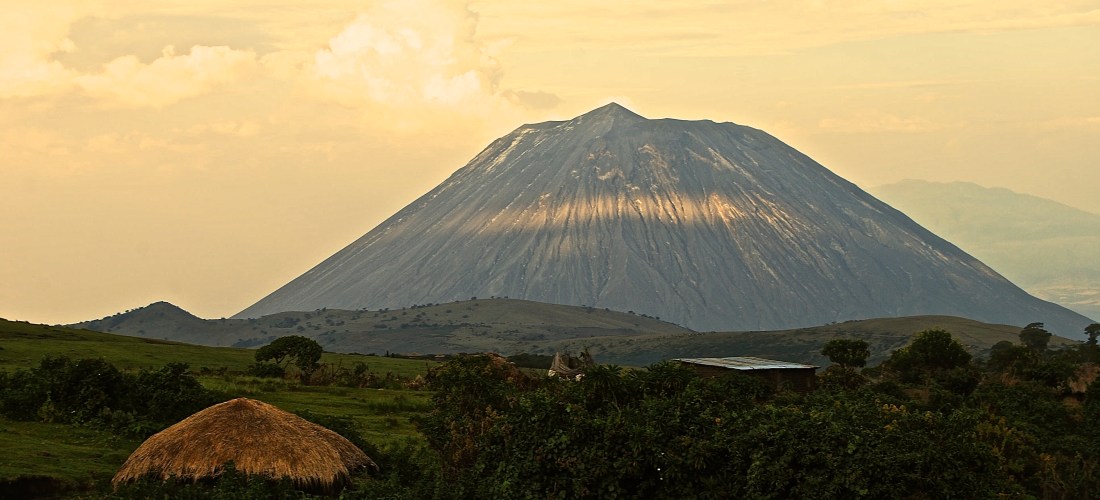
Now safely at the foot of Oldoinyo Lengai, a grey dawn broke. The mountain, its flanks rendered green by the rain and gouged by overflowing gullies, its crown all but invisible, seemed to me a refugee from Scotland’s Highlands before the ice smoothed all before it. Never had equatorial Africa looked so dreich. As we boarded the jeep, the rain finally ceased. But, trundling off across the Rift Valley I could see out of the rear window a perfect conical rising until decapitated by one stubborn son-of-a-bitch cloud that simply refused to budge.

The Russians might well have landed first, but as sure as sugar is sweet there’s no chance they were going to be met by that uninterrupted view all the way to Kilimanjaro. Though for them, that was never the purpose.

Below are hyperlinks to versions 1 and 2:

https://trespasserine.com/2016/09/06/on-the-mountain-of-god/

https://trespasserine.com/2016/09/20/on-the-mountain-of-god-2/

The Social Experiment: Going Off-Grid

#alternative lifestyle, #living off-grid, adventure, boats, Canal, climate, conservation, Ecology, England, environment, ethics

Part II: Life Off-Grid

There can be fewer acts of homegrown radicalism quite like going from mains power hook-up to living off grid. But what is it to live off-grid? Everyone is familiar with the term, though few are familiar with the kind of life that entails. Think of it thus: if mains power is similar to taking antibiotics through an I.V. drip, then living off-grid corresponds to foraging for your own medicine from nature’s own root & herb garden. The contrast couldn’t be greater, the results more startling. Sometimes wondrous, oftentimes disturbing. One thing’s for sure, there’s never a dull moment in the pursuit of the dream of living off-mains.

Before I embarked on what i call life unplugged I had seen glimpses of how it’s done. Having trekked the Himalaya a good few times, I had seen how the teahouses that operate as hostelries from the foothills to alpine altitudes managed to run their entire operations without the aid of AC power, or mains gas and cable telephony, for that matter. Naturally, these mountain people had no choice in the matter. Geography dictated Nepal’s infrastructure perhaps more than most places on Earth. Being poor didn’t help things either.

I marvelled at how these resourceful Nepalis ran an entire trekking operation with only two bottles of propane gas, a couple of 12V leisure batteries, a diesel generator, and a simple 12V wire loom coming off the batteries and leading to the only plug in the whole teahouse establishment. How they transport them up there is a whole other story. You see it, plain as day, a mess of plug adapters clustered onto a head adapter leading out from the wall sockets. From this higgledy-piggledy mess of cables, every mobile phone belonging to every paying guest is drawing electron juice from the auxiliary power source (in the absence of solar panels, usually the genny). There they are: a brood of mobile phones pulling like octuplets on their suffering mother’s teats, in the corner of the mess room where everyone spends their evening relaxing by the pot-bellied stove at 10,000ft.

That was the limits of my understanding back then. About the most i could discern from off-grid living was that when too many appliances try to draw current from a 12V/24V/48V system – one far lower than an AC voltage of 110v (USA) or 220v (UK) – there what’s called a voltage drop. You know when the bare lightbulb suddenly and inexplicably dims before shining brighter again. This, I later learned, is attributable to a fall in electrical pressure, which is essentially what voltage is. The phenomenon of this can be best imagined in cosmology documentaries where a distant star becomes a supernova, suddenly dimming before emitting a brilliant light in the night sky. Anyway, point is I had no inkling at all into the practicalities of surviving off-grid until I actually decided to try it. And try i did.

Initially, the feeling was euphoric. No more utility bills. Atonement for all those ecological crimes i partook of in the Gulf. Rapid diminution of carbon footprint, from gargantuan to nearly invisible. When the experiment in living commenced, it was the height of summer. Solar panels on the boat’s roof trickle-charged batteries, creating a false sense of power security. So convinced was I of the limitless benefits of going off-line that for that entire summer of 2019 I lived like there was no tomorrow: effectively consuming similar joules of energy than i had in a house. Unfortunately for me, gauging the true depth of discharge of those batteries, to whom i owed so much, did not become apparent until the gloomy autumn set in. By this time, so late in the year, long-term damage had been done to the 880Ah of lead-acid batteries. Plus, the solar panels were about as much use through a sunless English autumn/winter as a propeller in sand.

Sometimes the most enduring lessons to learn are also the hardest. It just so happened that the winter of 2019 was among the wettest on record. Noah would have been able to profit handsomely from starting an ark-building business had he been alive in that year. From the first ominous spatter in late September, that rain did not abate until the middle of March 2020. Living under the miserable deluge infinitely complicated the process of surviving off-grid life with relative comfort. Instead, as the batteries began their slow descent into decrepitude and death, the boat’s voltage meter reported a sorry tale of exhaustion with every reading. Just to get through the long evenings with a modicum of lamp light, heat and hot food in my belly, the trade-off was either to run a droning 2kw suitcase generator for hours on end each and every day under the rain, burning unleaded fuel and ruining my chances of salvation, or else run the boat’s powerful diesel engine. Restrictions applied by both methods. Running the genny meant, lest it end up stolen from a public towpath, i had to be in residence while it was going. The noise was incessant, not altogether dissimilar to the thrum of a billion hornets all descending on me. Try keeping your concentration when that din is going all day, and while people parade past your window gawping in to admire the designer kitchen. While the other method for supplying raw power to increase voltage in order to run every on-board system from plugs to pumps to central heating – the boat’s engine – never really deep-cycled the batteries for the simple reason that every 12v battery responds to an input charge voltage of a certain capacity, which the engine could never reach (it needed 14.7v but only put out 14.4v).

Talk about the best-laid plans o mice and men going awry. 250kg of lead-acid battery dumped after one year of chronic abuse. A replacement set costing a small fortune. A tonne and a half of coal burnt to keep the chronic dampness and cold out. Hundreds and hundreds of litres of diesel burnt to run on-board central heating, as well as to partially recharge the batteries. Hundreds of litres of unleaded fuel used to keep the suitcase genny sweet. A sizeable investment in solar panels, panels which for the half of the year you truly need them are conspicuous by their absence to deliver any volts whatsoever. It’s not even the off-grid burning of so many hydrocarbons that bothered me the most: it was the almost permanent state of hyper-alertness, apprehension and even anxiety, just waiting for the red low voltage warning light to blink on. Moreover, that one’s life is now going to be totally dictated to by the whims of auxiliary power. You cannot stop thinking about it. Constantly monitoring the situation; always on edge, twitching to pay back the battery bank for every little withdrawal of amps you make on a daily basis. I mean, how is anyone supposed to relax when providing domestic power becomes an almost obsessional challenge equal to servicing personal loans and debts.

The 99% who turn to mains power as a solution for modern power-intensive living: how could they ever know how taxing it is to manage the off-grid life? I didn’t until I unplugged the cable from shore power. Once the brief honeymoon period ended, the reality hit hard. Now, I believe if you are blessed enough to live in a perennially sunny spot below Latitude 45 degrees, living off grid by means of a large solar array is definitely do-able. Equally, tapping geo-thermal hotspots in your Icelandic backyard would work nicely, too. However, the indulgence of trying such a modus vivendi in a kingdom of rains and dirty grey clouds, like this one, by my reckoning is a challenge too great for most mortals. It was for me. I don’t want to face these uphill struggles through the dark of autumn and winter any more. Not here. Not now.

Human effort is not measured, thankfully, in amps. All experience is good experience, save for murder, incest and animal cruelty. At least i tried. And no one can take that away from me.