A Circular History of the Dome.

Uncategorized

Minarets, six of them, could launch into orbit if they were not so grounded. The cupola is the mother ship, domed to sit forever on the sand. Under the sulphur streetlamps not much moves at the mosque. There’s a insect quality to the structure, pods five abreast, three at the far end, within its marble perimeters a courtyard of rectilinear beauty.  Patiently it awaits the dawn and the return of the one, true God. Without question, the cupola is the architectural centrepiece, a naturally-occurring figure of the most technically challenging proportions. Yet it is its history and not its design that defies all probability. In short, the origins of the dome are about as curvilinear as the thing itself. Let me show you how.

They built this glorious house in the image of Istanbul’s Blue Mosque. The Ottoman’s built the Blue Mosque in the image of Justinian’s Haghia Sofia. The church of Saint Sofia owed its image to the Pantheon in Rome. 1st century Roman engineers who put together this, still today the largest unreinforced concrete dome on Earth, must have known of the beehive tombs of Mycenae that were the final resting place of Agamemnon, he who led the 10-year siege against the city-state of Troy around 1,200 years before the Roman golden age. The Mycenaeans must have known of the architectural wonders of the Near and Middle East: of Babylonia, Assyria and before that Sumeria, the land of the first men; of Ur, the first city and reputed birthplace of Abraham. Around the same time, sometime in the late bronze age, in what is now the Sultanate of Oman, beehive tombs were being built for what we presume were high-status tribesmen. As far as simple Bronze Age cupola design representing a breakthrough in protoarchitecture, it is hard to conceive of an earlier instance of the cupola that these days sits snug within the minarets as this.

And so, man and his proclivities for making self-supporting domed shapes from mud, stones and cement with ever more ambition – the self-same structures that bees and birds have been doing with twigs and resin for a lot longer – takes in a long curvilinear history. It started one hour SW of here some five thousand years ago, and here it ends five thousand on in perhaps its most triumphant, geometrically completed form: the mosque outside my window.

In Vino An Honest Drop

Uncategorized

And much as Wine has play’d the Infidel,
And robb’d me of my Robe of Honour–Well,
I wonder often what the Vintners buy
One half so precious as the stuff they sell.

(Omar Khayyam, Ar-Ruba’iyat, Verse 95)

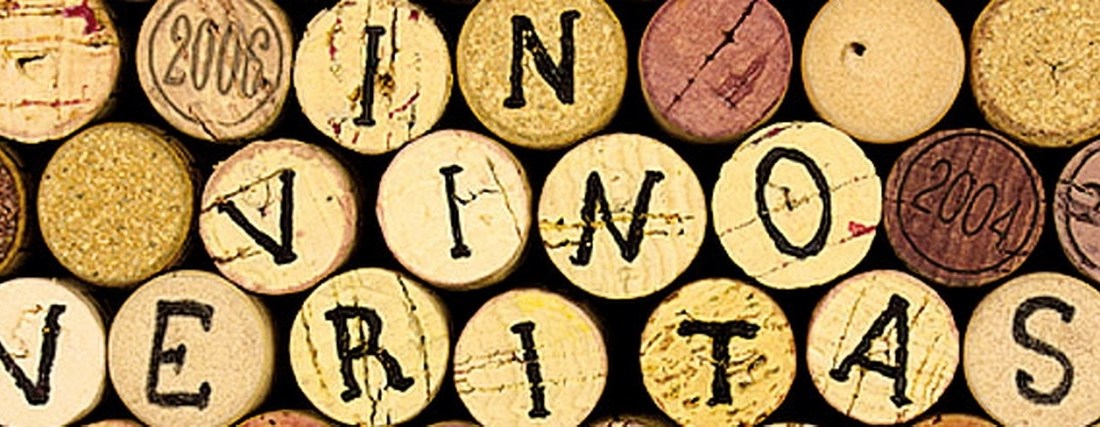
In vino veritas. In wine, truth. In a good drop, much truth. Whoever coined that proverb must have experienced drunkenness and candidness hand in hand, the cause probably the former, the effect most likely the latter. The author of that most enduring of Latinate proverbs might have been inspired to speak out of turn, so sozzled on Etruscan red he was. Yes, even Romans woke up, brain sack shrunk through dehydration, hangover crushing. Tongue dry as one of their famed sandals, with the hangover came the remorse. Did I put my foot in it last night? Oh, quod? As sensation and sensuality governed Julio-Claudian Rome in the same manner that sense and sensibility governed Regency England, the truth might have been a scandalous confession of love for the senator’s lovely wife, rebuffed with a sharp futuo off, homunculus.

Before it was “Dutch Courage” it was “Roman Fortitude”. Even the meekest among them could give as they got. All it took was a cheeseboard and half an amphora of the red rocket fuel to find courage to give a piece of the inebriated mind to the local taberna’s resident loudmouth cūlus (arse to you and me). You can see the coward now, sitting there in his sackcloth on a stifling night by the banks of the Tevere, downing cups of wine while quietly enduring some demobbed legionnaire – flush of his legion’s seashell collecting heroics on the English Channel – boast about the invasion of Britain that never happened. With word out that the Emperor, Caligula, is feeding his beloved horse, Incitatus, flakes of gold with its oats, this rumour is depressing enough. On and on the ex-soldier goes, railing against what he calls those Britanni barbari. Pissed good and proper, fed up with Roman hubris, and unable to tolerate this bigot’s excreta anymore, our ever-suffering wine tippler, who has drunk the colony of Sicily dry, staggers to his feet, balling ‘Caput tuum in ano est, you complete cunnus!”

Yesterday This Day’s Madness did prepare
To-morrow ’s Silence, Triumph, or Despair
Drink! for you not know whence you came, nor why
Drink! for you know not why you go, nor where.

(VS 74)

That vino-inspired epiphany probably landed our honest tippler a fattus lippus, but there’s no denying that in wine there has ever been truth. Who cannot fail to imbibe a quart of Cabernet without a slight loosening of the old tongue? Who, for that matter, can imbibe any less without fessing up to the fact that more imbibing is on the cards? This in spite of the surgeon-general’s appeal to the vox populi to cut down on unit consumption, conveniently leaving our government-appointed expert with the shelves all to him/herself to stock up on quality Pomerol for the end days to come, which they inevitably will when them lunatics in their lab coats get around to establishing the link between Malbec and Mad Cow Disease, or a £4 blended cépage from Aldi (fit for the casserole pot) linked to a pestilence fit for the common man, heart disease for argument’s sake.

Hear ye, outposts of empire! Raise a toast to the full-bodied blood that runs through these Roman veins. From the wheat belt of Mauritania in the southwest to the damp and underwhelming wall of mud-grass that Hadrian had built in the northwest – Laude! Praise! Let the wine flow from all our yesterdays till all our tomorrows. It matters not that you don’t know your arneis from your elbow, or a Pineau d’Aunis from a Pinot Noir, we’re all in this binge together. Vitis is the grapevine. You heard it on here. Vitis is vital. Vital is life. C’est la vie. C’est le vin. C’est comme ça. C’est comme ca qu’on s’aime. This is how we love. This is what we love. Wine is that thing we love more than even our loved ones. Dionysus would never have been preserved in the vinegar of immortality were he not soused the entire classical period. As for the golden age of Persian poetry? They might as well have teetered a millennium early under the tea-totalling tyranny of the 1979 Islamic revolution were the likes of Hafiz or Khayyam left downing libations less red and lyrically bewitching than a cup of glorious Shiraz, or ten.

Nothing like wine can prepare us for the now. And nothing like the now can render the before and the after so pointless, so sober and so bereft a land fit to dwell in.

What have the Romans ever done for us? Made us rather partial to wine is what they did. Now, that’s got to be a legacy worth bequeathing.

Ah, with the Grape my fading Life provide,
And wash the Body whence the Life has died,
And lay me, shrouded in the living Leaf,
By some not unfrequented Garden-side. 

                                                                                  (VS 91)

Freehold Tenancy of the Cerebral Kind

Uncategorized

Picture for a minute a language wherein its speakers have to find a way of describing quintessential stuff like love and recollections without recourse to metaphor. Leave out, for a minute, the symbolic referents used to get over the problem of abstractions: mind-benders such as, What is this Crazy Little Thing Called Love I keep hearing about on the jukebox? What is a memory, because I’m damned if I can remember? What is this feeling of joy because trying to describe it is really getting me down? And, If death is the undiscovered country, then who the f**k would want to fly there? Try getting by in the bardic language of love and remembrance without borrowing heavily from the world around us – from the phenomenological world of things: of nature’s great spectacles, like hurricanes and heatwaves, and drops of water, and delicate plants and hearts of oak, and organisms – like love itself – that live for a day then die. There would be no picture, for one. My love is like a red, red rose would become my love is like a physiological entity, a feeling if you will, induced by the hormones oxytocin and endorphin that are secreted in varying quantity as an endocrine response to a strong impulse normally associated with human behaviours, most notably sexual reproduction and pair-bonding. For the dispassionate scientist of love, this most mammalian of felt experiences does not flood the senses, burn the fingers, smoulder with desire, or even – to borrow from the late, great Jackie Wilson – lift me higher and higher. Rather, it needs no symbolic transport to carry it from speaker to listener, because for the scientist love is not an abstract, it is biological function of higher mammals that finds its context socially. At a push, love is a trick designed by nature to make the bonding stick, to maximise parental success in raising their single offspring through a relatively long period of care and early years development. Or, to fall back on a metaphor, love is a trap for fools. Not that all parents are fools. One thing love is not is the force that makes the world go round. No, no. That would be angular momentum, conserved by something felt not only as a physical force but also, coincidentally, by lovers falling rapidly out of love: namely, inertia.

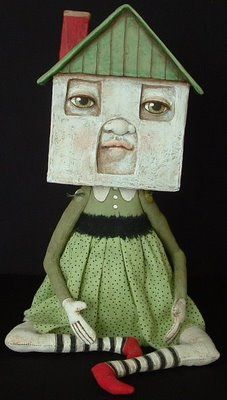
Let us think of the head without recourse to metaphor. A stab at the head might result in injury, but a stab at defining it? Can that result in anything other than metaphor? In ifkucinglovescience terms, the head is a biological development shared by nearly all orders of animal. Some heads, admittedly, are more head-like than others. Your average head contains brain cortex and that cortex contains centres/lobes tasked with different jobs. Vital organs generally situated in earshot (clear punmanship intended) of the brain endow the organism with hearing, seeing, tasting and smelling. Now let us do away with these inadequacies – with this dour, clinical description – and think instead of the head as a command centre for all sensory instruction. Better think of it as a nerve centre for all signals sent and received to and from various locations around the organism. Better still, how about as a whole universe in itself, or a third eye of higher consciousness, or even an ever-greying signature of physical identity? Maybe the head area as the part of the whole that we fall in love with most and remember best. Now let us go mental on metaphor. Let us wallow in the stuff as a hippo would in a mud bath. The head is now a house. The cranium is the walls, the eyes are the windows, the ears and nose the alarm system, the mouth the noise that emanates from it, and the brain? Oh! That chestnut. The brain is the sum total of the various rooms that connected by electricity, gas and water make the house a homeostatic, live-in system. But more than that, the brain is everything within the house that brings that house to life. An empty house is pretty brain dead as the living brain dead are pretty vacant. Hence, in making symbols of the head we have a perfectly suitable metaphor to describe a house to, say, an undomesticated E.T. who exists on an exoplanet without streets and cul de sacs. But one, nevertheless, evolved to have livings, sentient beings with heads.

Now let us take a tangential journey through metaphor back to sentiment. We are going to bring the head back to love via the house. Stay with me now. The de facto head of the household was, in days of yore, nearly always the man. However, in the larger houses, aka manors, a governess (she who put the manners into manors) was oftentimes employed to do what Mary Poppins couldn’t without bed knobs and broomsticks. Many governesses became so attached to the higher pursuit of etiquette that their sense of duty became their eventual raison d’être. As career spinsters their heart would often lie within the walls (or cranium) of the house. Once those governed under their wing (why use the word tutelage when the metaphor wing will fly?) had grown up and flown the nest, the life of the ex-governess must have been lonely and sometimes bereft. Comforted by an eternally grateful head of household, some may well have been allowed to grow sick and die there in their attic beds from where they rose again to resume their duties, this time as ghosts. To this day many a spectre – wearing heel length Edwardian frock, pigeon-breast blouse, talking like Eliza Doolittle could only dream of – goes drifting down dilapidated manor halls looking for kids to graduate from the school of propriety. They haunt the house. They fill the metaphorical head, in other words, with ghosts of the past. The memory that stole you away, out out the blue, from your present whatever-it-is- you-were-doing, that memory was actually the riffling of white diaphanous drapes in the conservatory, the kind you see in spooky films. And that sudden recollection of a girl you once thought you would love until death shook some sense into you, the one that made you drop your spanner in the alternator belt, rear up and whack your head on the underside of the car bonnet? That was actually the dog barking furiously in the kitchen from an inexplicable presence that, among the newest occupants of that big, old manor where legend had it an old lady in a long black frock died sitting primly in the attic one hundred years before, none but their dog could sense.

Dogs and metaphors – where would we be without them?