The Social Experiment in Living Off-Grid: How Goes It?

#alternative lifestyle, #living off-grid, boats, Ecology, England, environment, Lifestyle, social issues, Society

Part I: Life on the Grid

Or should that be the anti-social experiment in off-grid living? There is that aspect, too, though there’s more to life off-grid than a simple wordplay. Or unbearable isolation. There’s the experiment itself, which has to be longitudinal – meaning same conditions over an extended period – and has to transition from living on-grid to living off, with all the upheavals that entails. For all those who aspire to living La Vida Loca – offline, unhitched, and possibly unhinged – the experience goes a bit thus…

Before entering the spartan realm of minimalist, I was a maximalist. Whereas today I can claim to tiptoe on the Earth with a size-4 carbon/ecological footprint, pre-watershed I used to make the Earth shake with a megafauna-sized carbon footprint. You know the type: Crusty the Clown outsized shoes, freak show dimensions, gargantuan metatarsals. Three years ago, but it seems like only yesterday (to quote The Carpenters), I was following a high-octane consumption pattern.

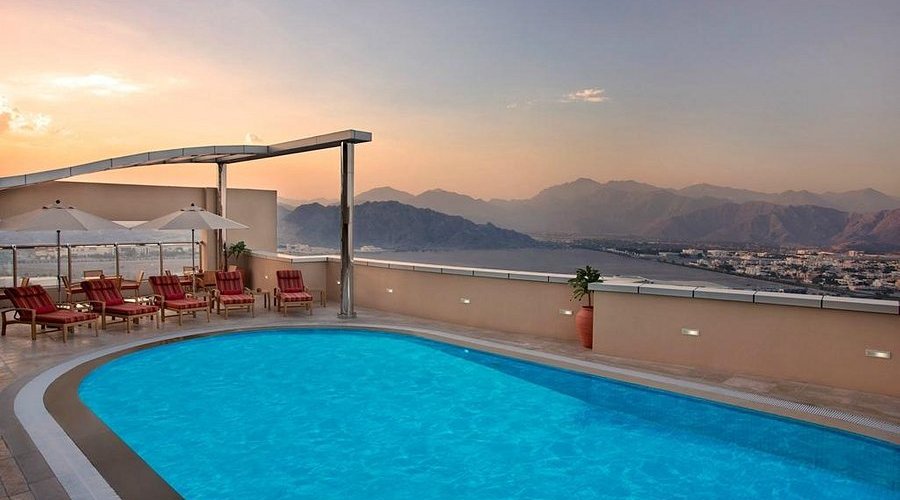
Living twixt the ocean and the deserts of the Arabian Gulf, I drove a car whose off-roading capabilities rendered it a gas-guzzling behemoth. Not that quenching its thirst for fuel mattered much, as costs at the pump were absurdly affordable. I lived in a business hotel in a spacious apartment high up on the 18th floor. For nine months of the year the air outside was so sultry that the air-con inside was on 24/7. A simple walk around the vast mosque near my home, while pleasant, often resulted in a complete body sweat blended in with atmospheric dust and other nasty particulates. The only self-purification was to lose oneself in the apartment’s planet-sized, walk-in shower cubicle. I dread to think what the water consumption was per shower. And yes, in summer one shower could easily morph into three scrub downs per day. That in itself wouldn’t be too egregious an act of environmental vandalism were it not for the fact that in the entire Arabian peninsula – an area about the size of Western Europe – there is not one single watercourse viewable from space. That means that ‘sweet’ water has to be sourced from somewhere other than the traditional go-to place for the native Bedouins, the well.

Arabia’s carrying capacity for humans is naturally small. To elevate it in order to invite millions of migratory workers in, engineers had to build a series of water desalination plants along the coast. Turning seawater into the salt-free solution that comes through the plumbing requires phenomenal amounts of oil to burn the salt off millions of gallons of water in steam condensers that run day and night. This process accounts for a surprising percentage of all oil production. That aside, the point I’m trying to force through here is that just to have a shower required an industrial process that burnt mind-boggling quantities of oil from water sequestrated from the ocean. The Persian Gulf, all 700 miles of it, is turning saltier because of the desalination required to sustain millions of migrant labourers. This brackish chemistry puts stress on the aquatic ecology, too. Most famously, sea grasses are suffering, which brings big problems downstream to grazers such as the manatee.

At work, we used machinery in a profligate way. Printing worksheets and other paraphernalia for the sake of it resulted in towers of waste paper, un-recyclable laser jet cartridges, and overworked Xerox machines. Air-con ran all day through unmanned corridors, empty classrooms, bare staff rooms, and even little panic rooms where you go to escape the madness. The utilities bill alone must have been equal to the GDP of a small principality. Lights were routinely on in empty rooms. Just switching them off was an act of radicalism.

Workdays there are kinder than in the slave-driving West. One of the reasons so many venture there in the first place. Instead of being bolted to one’s desk until long after dark, privileged expat Europeans (Brits included) would finish work with the sun still high in the sky. That exacerbated our carbon footprint, as at 4 o’clock there’s much life left in the day. Invariably, myself and friends would do some form of physical exercise in an air-conditioned gym, on equipment often running on mains power. In fact, the treadmills often needed their own national grid to operate. Once the aerobic fun and games were over it was time to decamp to the bar for a cold one. Except, for the Guinness to reach chill factor 10 required power beyond power. When outside the temperature is touching 40 celsius with a wet bulb humidity level of 80%, and inside the beer tap has a designer layer of ice around it, you know you’ve got an addiction to mains power. Is there any wonder a pint costs the equivalent of $15?

Of course, this power audit i’m describing is not the half of it. One of the great mass movements of expats in the carbon-rich Gulf is to descend en masse to the airport on the first day of school holidays. It is far from unusual to meet a colleague, neighbour or even drinking buddy in the queue for check-in. Their intended destinations are myriad, but all of them are linked by one carbon-relevant fact: flight time is seldom less than five hours, and sometimes fifteen. That’s a lot of vapour trail.

But this mass gathering of folks sharing similar socio-economic status is by no means confined to the air travel industry. If you want to visualise another airport analogue, but this time for the domestic market outside of school holidays, look no further than the mall. The great emporium of the 21st century – beloved of Arab rulers who see a historicity with the ancient bazaars and souks of the Middle East, as well as a source of great internal revenue – draws the crowds in all weathers, be it hot or hotter. Some, such as the Dubai Mall, are so sprawling as to contain more shops than some cities (Dubai Mall has circa 1,200 individual rental units within its great perimeter walls).

Once inside these 21st Century temples of consumer worship you see the level of food waste. That, in itself, is staggering. If I had a dollar for every plate of leftovers I witnessed, I’d be a wealthy man. Buffets barely-touched. Takeaways partially eaten. Quantities of cooked food that no society without an agricultural base should ever rightfully have within their means. The profligacy of quality food would appall any good Presbyterian. There, in the Arabian Gulf, apportioning little or no value to a precious thing as fresh, quality food is a fact of life in a burnout society gone badly wrong. Now, if these generous helpings of leftovers would go to feeding the pitiful canine waifs and strays that mill around behind malls and hotels, I could almost justify the waste. But they don’t, as a matter of policy. The Muslim rulers would rather legislate for a situation where uneaten food is binned than to nourish an animal considered to be vermin.

Like any superstructure, be it an international airport hub or a world-beating shopping mall, the maintenance costs of the mall are almost as environmentally disastrous as the industrial legacy of building them from their foundations. While I don’t profess to having the data on how many megawatts per hour the Dubai Mall uses in order to keep the lights on, the air-con nippy, and the customers happy, I’ll wager that its not far off the levels consumed by the whole country thirty years ago. A graph showing the mains power consumption over a thirty-year period would likely resemble a hockey stick: from sustainable to a complete loss of perspective in a single generation. The point being here that I was one of millions far exceeding a carbon footprint expected from the average consumer in their home nations. It’s the gift that keeps giving, the party without the hangover.

So much raw power consumed from relatively few sources. We’re not talking PV solar panels blanketing the desert, drawing in abundant current from the Arabian sun. We’re talking good old fashioned oil-burning power stations sending carbon consumption through the roof for many. We’re talking industrial output from raw materials extraction that has had a deleterious – in places catastrophic – effect on the specialist ecology and wildlife of the desert. Arabian leopard, down to two hundred individuals across two million square miles. The Arabian wolf, dwindling away to nothing, unable to halt their own human-led persecution. Hyrax, under threat. Corals, wrecked by coastal degradation. About the only wild things to have prospered are the feral dogs that cling on, unloved, in the derelict quarters of the city. Oh, and the ubiquitous camel, too cherished as a commodity to be in danger of extinction.

It doesn’t take a visionary to see that consumption levels of both power (delivered in cheap abundance by the burning of non-renewable fossil fuels) and commodities (imported on oil-burning container ships in exchange for crude oil and gas) are disturbingly high. After five years, I was reaching a moral dead-end. I couldn’t go on enacting a lifestyle that I myself criticised for its crimes against nature. To be sitting at a bar in the desert drinking Irish beer from a tap that’s chilled not by the air outside but but a long chain of industrial processes demanding huge quantities of power, while having discussions about how to bang the world to rights, that’s wasn’t going to cut it long-term. That’s when the small footprint plan kicked into action.

The transition from energy elephant to mouse has been a steep learning curve. Contrastive, to say the least. It’s not all peaches and cream when you’re trying to atone for your former environmental crimes. The challenges of acquiring power off-grid, of limiting daily usage, and of scrimping on water, are in their own right as equally immense as running power stations for cities such as Dubai. Ethically, living off-grid you’re on firmer ground. However, in a practical sense could we all do it? Or is off-grid living destined to be a strictly niche affair?

In my next blog, I’ll illustrate some of the day-to-day rituals required to keep the lights on, the fire going, and the water running.

The Year is 2020, So Where is the Vision?

Britain, conservation, crisis, desert, developing world, development, earth, environment, ethics, EU, Fishing, forest, future, global polity, globalisation, history, human development, Libertarianism, Life, natural philosophy, natural world, nature, neglect, Ocean, People, Planet Earth, Political Culture, Politics, Poverty, revolution, Society, Socioeconomics, third world, thoughts, trees, Uncategorized

Humanity bumbling along, governing bodies staring longingly into their former selves à la Dorian Grey and his cloaked mirror, and so-called policies as ham-fisted as a fist full of, erm, ham. Yes, the list just rolls on and on in this the only year in history dedicated to a field of vision deemed as clear and perspicacious as you can get. Oh, the irony of it all! We might be languishing in the year of our landlord, 2020, but we as a race do not enjoy the accompanying 20/20 vision that makes a bleary-eyed rookie into a hawk-eyed fighter pilot.

Let’s start with the only thing that really matters, and no it’s not us. Dorian Grey’s older self would be disappointed to hear that admission. That thing I speak of is the world around us. Let’s face it, it’s the only world we’ll ever have and the only living one within about, let’s say for argument’s sake, ten light years, or 58 trillion 590 billion kilometres, if you’re claiming on mileage. Wilderness, as most of us are aware, is being co-opted for agronomy and industry to serve a human population that is beginning to resemble an infestation or worst still a bacterial culture gone rogue in a planet-sized petri dish. This is happening at a rate for which there is no excuse. We are eating ourselves out of house and home and the only ones not seeing that are those with their craw stuffed full of nature’s bounty, as well as unschooled ignoramuses, for which there are many even if the the doyens of political correctness admonish us for calling out all the provincial thinkers in our swelled ranks. We have known for much of my own lifetime about the concomitant risks in taming the wild places: what is lost cannot be recovered in a timeframe that humans understand. Every Tom, Dick and Harry, however hard of hearing, must know that extinction is forever. We’ve known the phrase slash and burn for decades and, encoded in it, all its barbaric implications. Even though the debate has taken on new and violent terms of reference, eco-vandalism is going on in spite of our knowledge of it and complicity in it. All the while it seems the more dire the prognostications, the more wanton our behaviour and the more debased our greed for the things that have kept the world hitherto in balance. I have lost track of the number of times I hear the term ‘sixth extinction’. Now if that were insufficient to jolt us into redefining the boundaries by which the human race exploits the natural world, i do not know therefore what is sufficient. The more the mainstream media reports on how we’re approaching a tipping point, a point of no return, the more the average family’s material needs appear to multiply. While global population ploughs upward to an 11-digit figure, our celebrity culture boasts of its procreative prowess by inviting the media to snapshot their opulent lives in rural Sussex with six children in tow. Why make the implicit link between many offspring and material success in the knowledge that this is a false correlation? I mean, throughout most of history large families have more often than not been synonymous with extreme poverty, and not opulence. A Prime Minister of Great Britain with six offspring (that we know of), chaired with the task of finding a common voice to bring down the human impact? Gimme a break. What kind of vision is that coming from the stuttering mouth of yet another high-flying free-market mercantilist libertarian who believes in the greatest markets for the greatest numbers?

While the correlation between modern industry and atmospheric-changing carbon emissions has been better made, we continue to miss the point. If you want to trace the problem back to its genesis, jump not onto the bandwagon of climate change. Look again, use that 20-20 vision and you’ll see that Attenborough has been whispering truth: it all comes back to global human population. It’s out of control and from it everything flows. Rampant human overpopulation is the taproot down which a pestilent tree of Man grows. Wild habitat is stolen to tend the needs of a burgeoning population (in Africa and Asia) who all aspire to live as postwar Americans have. Forest goes tree after tree, species after species. We know all this. We know that nothing hosts biodiversity better than a forest found 20 degrees either side of the equator. We know the secrets to finding cures for human ailments lies within their mind-blowing array of biota. We know that to have space to grow row after endless row of oil palm trees to produce better soap and all manner of packet food to feed ever-growing numbers of hungry mouths and to wash evermore grubby little faces, we first have to collapse an ecosystem perfectly evolved to provided a pyramidical shelter for every manner of creature, plant and fungus from here to kingdom come. We know that without canopy cover the thin, reedy soils of the tropics turn infertile, into dust under the blazing sun. So why do we, as a race, persist in laying the groundwork to seed our own miserable demise? Why clear-fell whole countries only to fatten cattle for their mass slaughter to give some Lazy Joe a nutrition-depleted, ready-made burger? Not content with turning the complex machinery of nature into a monocultural wasteland where even the public are forbidden to go, we’re even ramping up operations on livestock farms to expand the export market for meat into a China that’s seen the largest middle-class in history emerge within the past thirty years. Even their tastes are changing to embrace a completely cruel and unsustainable world. Bye bye Taoism. The only consolation we can draw is that 800 million Hindus refuse point blank to jump on the cattle train, not that Mother India is a shining beacon of environmental custodianship.

Living in 2020 without the corresponding vision is not totally unlike the proverbial overflowing bucket of liquified manure that spills out to all quarters. It’s not just the disappearance of tropical and sub-tropical forest, nor the disappearance of broadleaf temperate forest that we in Europe have mourned for a thousand years. It’s everything, everywhere. The human cancer has gone metastatic. Desert is growing everywhere between latitude 20 and 30 north and south, yet we turn a blind eye for most of us do not live in a desert, nor have so much as stepped in one. Grasslands have already been co-opted, but that’s old news now since Buffalo Bill Hickok shot six million bison on the Great Plains as a way of spitefully starving the Sioux. Ice is going, yet while we mourn its melting we overlook that if it were advancing – as it has dozens of times in the past two million years – we wouldn’t find it so brilliant white or cute. As for the oceans, well, not only have we gone from trawler to factory ship as if to underscore the intensification of the end for all who partake in the feast of misery, we continue to sully the waters around our coasts and then some more. We’ve created a floating mat of congealed plastics that swirl around in the North Pacific and is reckoned to be the size of big ol’ Texas. A remarkable feat of human ingenuity if you ask me. Only outdone by the crass stupidity of knowing that fish stocks (even the term ‘stocks’ implies monetary value and property for humans) are near exhausted, so how about we build trawlers the size of small passenger liners with hooked lines trailing off the stern, some long enough to reach the moon and back, which was in all fairness the last decent thing we ever did to get one over on nature. Scrape the seabed for a catch that justifies the distances the fleets (mainly Chinese) will go in order to bring home the ocean’s bacon. They know the damage wrought by this crude method, but do they care? They must know that hardwired into their rapacious business model is the reality that what they’re doing is finite and temporary and smacks of the kind of short-term strategic planning that is no planning at all. Rather, the dragnet of modern fishing fleets represents another instance of short-sightedness that can never equate to the far, crystal clear vision that 20-20 provides.

A discussion about the absence of vision in the year where the two words best eclipse, cannot be foreclosed without mention of political will and leadership. It does not require radical insight to see that leadership around the world is characterized by a near collapse in the manner of vision needed to see the living Earth through the 21st century without any more bodily desecration than is strictly needed to lead a low-impact life. Leaders are followers. Whom they follow is up for argument, but you can bet that the pursuit of profit and unenlightened self-interest lies right behind them. Britain and the U.S. are grotesque examples of nations who have known visionary leadership in their illustrious pasts and who have now descended into a near-existential breakdown because the current crop of leaders are singularly lacking in the kind of millennial vision that sees a hundred years ahead, and not the next hundred days, fearing the imminence of their own destruction, which is the lot of the modern politician. Where are the leaders that the world in crisis demands? Where are the new wave of articulate young voices? Where is the unity of purpose in it all? Of course, worshipping the making of capital and looking to those early 21st century capitalists as pedigree for the type of leadership our damaged world needs is going to end badly. The credo of unlimited economic growth built upon the conquest of nature (as espoused by Adam Smith back in 1776) is a dangerous one, setting a course for yet more planetary destruction by a species whose boots have gotten too big for their feet, whose eyes have grown too large and covetous for their sockets, but whose vision has dimmed. Contrary to the saucer-sized eyes they think is needed for a bigger, bolder vision, they’re missing the whole point: its smaller, less covetous eyes we need, but eyes that penetrate the darkness we currently find ourselves lost in.

Too Good To Be True

Britain, British Isles, conservation, Coronavirus, counter-culture, Covid-19, death, developing world, England, environment, ethics, future, Great Britain, human development, kindness, Liberalism, Libertarianism, Life, Lifestyle, natural philosophy, natural world, pandemic, People, Political Culture, Politics, Poverty, revolution, Society, Socioeconomics, thoughts

That ol’ devil called greed is back again. Many feared the worst while others dreamed of a new, kinder dawn. But oh no no, sir! No sooner is full lockdown eased, untimely death is no longer news. And why? Because that she-devil, the economy, is back. No sooner has its mouth been welded shut than its teeth are glistening at the prospect of new blood.

Turn on the news and talk of rekindling a lost love for nature, or for that matter stopping to reflect on human suffering and the slow torture of social isolation, has been superseded by dire prognostications of poor industrial output, negative deficits, and looming recession. Figures in the billions (£) are banded around where only last week the figures were reserved for the dead. Yes, I’m afraid it’s time to rally together in a final push over the top to be mown down not by the bullets of the Bosch but by debt, overconsumption and more reckless environmental despoliation.

vikings

However, this national obsession with wealth accumulation has substantial precedent when seen over the arc of history. The very name Britannia came into being as a nomenclature given by Roman imperial planners (Britanicus, I think, was one of the Julio-Claudean line of rulers). The island was finally absorbed into the Romanosphere in the mid-first century not for magnanimous reasons but because it was known since Phoenician times for its lucrative silver, tin, lead and gold mines. Then, following the departing legions, Jutes, Angles and Saxons came not for magnanimous reasons but because in that fertile soil lay wealth and prosperity. Following them, the dreaded Danes, who arrived in the 790s on raiding parties along the North Sea coast. Not for magnanimous reasons did they emerge on the flat horizon, but to plunder the treasures known to be held in the abbeys. Following them the Normans, who didn’t raise a psychotic militia for magnanimous reasons but to spill blood onto land they knew would bring a crop of splendiferous wealth. During the civil war in the 1640s, a genuine attempt was made at levelling the appalling inequalities of serfdom in the late middle ages. But again that was snuffed out again by the forces of avarice. The Bank of England would be established forty years after the failures of English republicanism just to underscore the direction the country was heading in. In that century too, The East India Company and the Hudson Bay Company consolidated their royally-sanctioned gains to become the Multi-Nationals of their day. Following the failures of political equality in England, the notion of republicanism as the only force for egalitarianism was then left to France and the inchoate United States. In the years following the Seven Years War with France, by the mid-1700s the British empire had become the most profitable venture in the history of the world. Its adherence to the doctrine of greed, masqueraded as mercantilism, became set in stone, an article of faith.

Top-questions-answers-East-India-Company

And so it is that the country, as it appears today, finds itself true to its atavistic self. In other words, its socio-cultural DNA had been inherited from a long lineage. Other than the blip following both world wars when some kind of radical redistribution of wealth had to be sought to avoid a civilisational collapse, Britain has proven herself more adept at pursuing riches by any means possible than it has for coming up with novel ways of how people can co-exist harmoniously with each other and with the ecology that still clings to the land’s surface. It wasn’t for want of clever men and women that naked economics trumped high ideals. Those big ideas the so-called deep state (the power behind the power) encouraged our philosophers to debate, providing their conclusions arrived at a natural law of supply and demand, and of how man is shaped by self-evolving and universal economic forces than – as was the case in revolutionary France – how economic forces could be shaped by man and altered to reflect a fairer society. Utilitarianism, a dominant thought system in the very acquisitive nineteenth century was a excellent case in point. The greatest happiness for the greatest number lent itself well as a doctrine to England earning the sobriquet of a nation of shopkeepers.

Industrial Revolution

In the southern parts of this island, we are still wedded to the idea that economics of unlimited growth in a world bound by physical limits determines levels of happiness. No doubt it is better to be a rich man in a cold country than a poor man in a warm one. However, the great mechanisms of how we interact with tradable commodities continue to dominate thinking in informing the consensus. Lockdown was a chance to redress that imbalance. It was a unique opportunity for the average Joe to hop off the spinning wheel for a while and to try seeing life – and what he/she values from it – from a wholly different perspective. This perfect convergence of variables (that is to say, unusually great weather, government providing a blanket of financial support to the majority, as well as the stillness in the air that permitted us to think long and hard) gave the millions upon millions of conscripts fighting as footsoldiers and corporals in the boom and bust economic war the chance to think again about what they wanted out of their country. Unfortunately, like the Christmas Day short truce of 1914 where British and German soldiers showed their mutual enmity by getting together for a game of football and a post-match drink, this too is a false dawn. Like those men who knew, through a simple game of football, they had more in common with one another than with the chiefs of staff who sent them to the front in the first place, this cosy little interregnum that some have been enjoying of late is too dangerous to continue. The unfair society harnessed by the economics of naked aggression and unlimited growth cannot survive the neglect and contempt it is being shown at present.

1914-christmas-truce

The second age of the robber barons is not over yet. But a few more pandemic lockdowns might just do the trick. And not unlike the Peasants’ Revolt of 1381, a spring clean of the people (i.e. a serious trimming of human numbers leading to a radical restructuring of the socioeconomic order) may just give the downtrodden a glimmer of hope. And a chance to rise up alongside a damned and damaged natural world from the scorched earth of a long and unfruitful economic obsession.