A Time to Plant

Uncategorized

There’s not much pollen rattling the air out there. Not even heat convection can excite the molecules. The ear strains to hear the drumbeat of hooves clomp in a rising crescendo. While not an avid race goer, I’m sure it’s not like this when geldings go galloping on English turf.

A plume of the finest sand kicked up by the softest, broadest pads of all two-toed animals envelops the herd in a dust bubble. Little else competes with their approach other than the owner relaying orders to the jockey from the comfort of an all-terrain vehicle crawling alongside the track on a highway laid specially for the moving spectator.

Tall, lean dromedaries lope along on sand in teams of six. On legs taller than a man, their stride is almost exaggerated. Wearing fawn and cavalry blue Shalwar Kameez, the trainers mounted front and rear look Pakistani. Or possibly Afghani, continuing a proud tradition that began with the Afghani camel drivers who were brought to Australia in the 19th century to penetrate deep into the Outback. Nimble little stalwarts riding bareback, these trainers crouch in the brace position on the hind slope of the animal’s hump. Any more bumping and grinding and they will slip down its steep gradient and onto a painful dumping on the coccyx. Yet, few if any do.

Seeing that today’s camel jockey is a race day robot, these trainers fall short of being silicon enough to see action on the furlongs. He’s on it most of the week, because through his nurturing abilities the trainer avoids obsolescence. There to groom the dashing dromedary in a pampering exercise regime, his loving care shows in the health and well-being of this most venerated of beasts.

Camels are coated in colourful blankets with bundles for humps, great long legs made for striding and necks bowed for pipping other necks to the post. If the age of oil and the fame of the sheikhdom cities that flowed from the wells had not already put the rest of the world conveniently in the iconic frame of the Bedouin in his white robes sailing his ship of the desert, anyone would be forgiven for thinking that what they were witnessing on that track was a George Lucas re-imagining of a horse race. Weird, prehensile lips flapping at the end of impossibly outstretched necks in this all-encompassing sandscape that glares more powerfully than any bank of studio lights ever could, Lucas’ planet Tatooine was obviously a borrowed creation. A crushing reality check for anyone who remembers being a kid in 1977 when Star Wars first hit the screens.

To suck the marrow out of life first you need to splinter a few bones. If that means extending the love and attention that organic compounds have long denied the desert, then so be it. They say nothing good can come from nothing, that no good thing can grow in a desert. But they didn’t reckon for creations that don’t need a steady supply of rainwater: like memories, experience and the trickery of light on red satin snow as the sun makes its descent. There’s shrubbery in planting on these margins of life. While not a religious man, I am a devout worshipper of 60’s psychedelic rock. Here’s the book of Ecclesiastes doing The Byrds, Turn, Turn, Turn:

To every thing there is a season, and a time to every purpose under the heaven:

A time to be born, and a time to die; a time to plant, and a time to pluck up that which is planted.

The spectre of winter can fall on places never touched by frost. This lull in the long summer gives pause to plant. In the desert of our day-to-day we plant for a tomorrow when we may uproot, the day when finally we emerge from the sea of sand with what gift of experience the Bedouin in their majlis send us away with. From dust we come, into dust we shall return. But not before we glow a little, out there in the dancing dust and singing sands where natives come for the day to relearn the custom of being at ease with their former selves in the company of the animals to whom they owe their everything; where incomers visit just to feel alive.

Sitting in a majli twirling ceremonial sticks, or standing in line in a dance ritual launching antique rifles into the air, then crouching back down on their haunches to rest against cushions and look on motionless and indifferent at the comings and goings of others, not their own, those Bedouin eyes fix watchful over their true love, the only thing capable of upstaging them in their domain: Jamal (camel to you and me).

There has to be a reason for these chance encounters. We’ll glance back over the shoulders of time one day and there he’ll be, resplendent in rags.

Tolstoy?

we’ll entreat him.

What did it mean to be there all that time ago? Why this boy of all people?

And he’ll answer, dressed head to toe in his scruffy greatcoat, worldly belongings stuffed into a haversack that makes him camel in all but name. He’ll answer:

Where was this? Who was there?’

It was a desert, and it was me. I was there. I was there.

And he’ll say, Then that’s what it meant. There’s your answer.

And we’ll entreat him again.

Why me? Me of all people?

And he’ll consider the question, but this time answer with less patience.

Why not you? Did you think you were the only one not meant to be in places you never thought you’d be? Does a tree have a choice in where it puts down roots? No! Only if and when.

So Tolstoy, did it mean something in the long run? To have been there?

If it didn’t you wouldn’t be asking me this question years later. Now leave me be. It’s a long way back on foot to the village from here and I have beet seeds to plant before it’s too late.


The Stuff of Life

Uncategorized

“Oh Tolstoy, where to look in this great world of ours?”

“Start by knowing what it is you seek.”

“I don’t know what it is I seek.”

“If you don’t know what you seek, how will you find it?”

“I don’t know.”

“Then stop bothering me.”


Just when it felt safe to go overboard on the Mastercard, a leviathan rises from the inky depths and takes you whole. Okay, we’re talking more juniper than Jonah, more green oasis than white whale. Nevertheless, a leviathan’s a leviathan. It’s bigger and smarter than your average bear.

Being devoured by mother nature is a death most noble. Shoppers take note, being swallowed by another kind of creature from the deep – the 14,000-space underground car park – might not be. To be spared an eternity of roaming formless under the roof of air-cooled consumerist paradise with your keys jangling does strike fear into the heart of those in our rank and file averse to retail.

Some claim the real leviathan of this day and age is the super-mall, but that’s cobblers. Hardly of biblical proportions for our new age Jonah to repent inside the belly of Victoria’s Secret only to be regurgitated three days later wearing stockings and a diaphanous bra. Malls might be built with a passing reference to the oasis in mind, but try as they might to be the last refuge of life, they don’t quite throb with the same pulse. Unlike the perennially resourceful oasis with its magical ecology, the resilience of the super-mall to creeping desertification and oil’s extinction remains in doubt. No, the thing that devours you in a place like this is the very same thing that holds out some hope amid the hopelessness of the dust and the dunes: the plants that survive. Nothing else comes close.

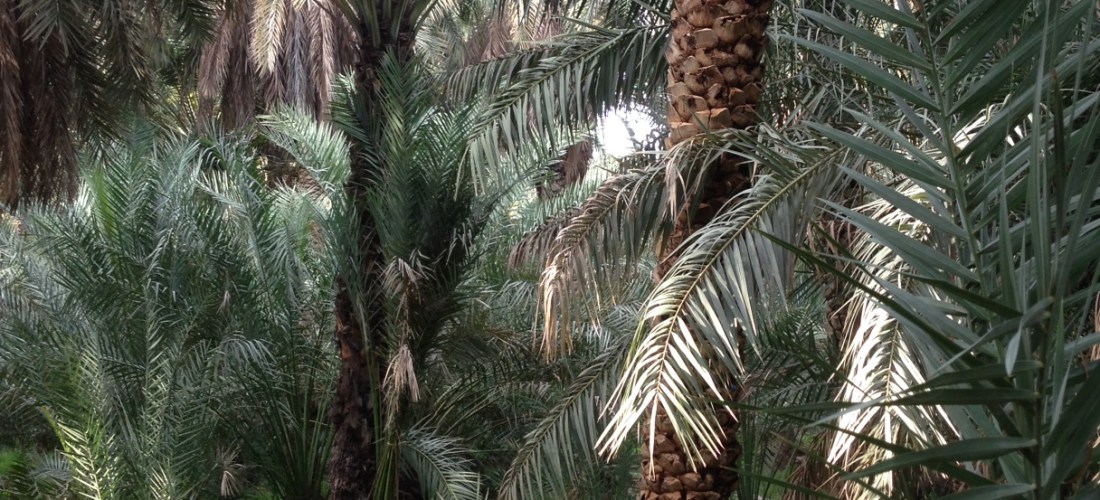
Oases loom in the Western mind for being frail as they are foolhardy, but one or two are much more than mere outposts consisting of a few raggedy palms beside a receding pool of water only a camel would drink. In fact, one in particular is a leviathan, come from the depths of the water table to commandeer an area of 3,000 acres. The super oasis of Al Ain is a climate-controlled paradise the likes of which Dubai Mall could only dream of. Functioning beautifully by means of an ancient system of irrigation veins, known in Arabic as Aflaj, this oasis has to be seen to be believed. The channels and water margins that run and run with artesian water through 5,000 years of Man ensure the prosperity is ongoing on two counts: by enriching the dozens of varieties of endemic flora with life-affirming water, as well as gifting the visitor with a labyrinth of paths that spread like loving fingers between those iconic trees.

Cut to the tree that keeps fruiting in soil good for nothing: the mall. In terms of variety, climate control, and insulation from these harsh and enveloping climes, the super-mall offers a good juxtaposition with the oasis. Providing tepid relief from scorching sands, from day one the mall seems the only option. One look inside and any old fool can feel the birth of a newish religion underway. A Gulf tourist destination par excellence, the mall is where multitudes forget there’s a world outside that is not overtly pretty. Whereas out there the climate screams F#&k You!, indoors it has no such free reign to wreak heatstroke havoc. The difference means that never have the wide open spaces felt so alone, so unwanted. As for the malls, demand is high. To describe them as an event, a day out at the beach, would not be far-fetched.

Having already integrated reef aquariums, ski slopes, ice rinks, waterfalls and rainforest recordings into the sensory experience, indoor dunes might be the next step. Verisimilitude is a powerful tool for retail industrialists. Turning the outside inside tricks the mind into oozing endorphins normally triggered by oneness with the great outdoors. Bringing in the sand will be cost-effective, too. It’s not as if there’s not enough to go round. Why enjoy nature for free when you can pay for it?

In contrast to the stripped-down nature of the surrounds, the investment cartels that bankroll £niverses have brought an entire rainforest of emporia under one roof. We’re talking a biodiversity, non-biodegradable hotspot. In a desert ecology where one needs to find the devil to find the detail, retail is diversity incarnate: Japanese aesthetics, German kraftsmanship, French panache, English tailoring, Swiss horologists, Fifth Avenue pizzazz. The old souq within the new souq adds a Arabesque centrepiece.

In the Dubai Mall, money spinning mother lode of revenue, New York vies with Paris. Three stories of Galeries Lafayette rise like Optimus Prime on the Westside while on the Eastside Bloomingdales retrofits itself into Megatron. This clash of titans creates such a sandstorm of public interest that it’s hard for the much-maligned desert ecology to get a look in. The best the dunes can do, by comparison, is to let the buggies score them with aimless tread marks. But appearances can be deceiving, none moreso than the good old mirage, so elusive we had to raid another language to describe it. For eons it formed from shimmering lakes and slinking, buckling palms. These days the mirage in these oil sheikhdoms is the mall. The thirst-maddening quest for the real oasis, it turns out, is worth the wait.

If you look hard enough you’ll find it. From the Monaco-size principality that is the mall’s basement car park head south as the camel blows. Keep the great rust desert in the corner of your right eye. Don’t venture in now. At the Hotel Rub Al-Khali you can check in but you can’t check out.  Seven days hard travelling and you’re there in the cradle of civilisation from where Moses sailed his reed basket. The Al Ain oasis truly is a champagne supernova in the sand.


“To the eyes of the man of imagination, nature is imagination itself.”


What Is The Sound Of One Head Banging (Against a Wall)?

Uncategorized

 ‘But, Sir, what do you mean by that? What is critical analysis?’


‘I’ll tell you what it’s not. It’s not collecting disconnected scraps of information from Wikipedia because they sound good, then passing them off as your own beside a nice Google image of said subject matter.” (Editor’s note: that method is best kept for blogs).


Silence in the room. The unique silence that settles on the faces of bemusement and detachment.

No further questions.


When you analyse it, being the teacher can at times be almost as futile as the teaching itself. Promoting doubt in a room full of certainty is releasing the dove that barely gets off the ground before coming home to roost. Faced with the unwinnable war, the only defence left is to call up to the box the worst simile one can think of.

Call forth the witness…

‘Using language we can all understand, explain to the jury what it’s like to engineer learning through the introduction of abstract concepts, more commonly referred to as analysis?’

‘Well, it’s rather like sticking an SD memory card into a film camera. Spools, not slots, yeah? Or even like wiring an onboard computer system into the dashboard of a ’55 Karmann Ghia. Dials, not screens, if you catch my drift.’

‘Thank you, Mr Simile. The prosecution has no further questions.’


No doubt there are worst similes, but are there worse-equipped learners? Across the globe on isolated chairs, millions. Within a purely cultural context, it is harder to find a more disingenuous bunch than those from lands who do not like voicing doubts, who know fine well their elders are their betters and that truth is knowing what you like and liking what you know. Knowledge as fixed inheritance is the way to see it. Perhaps it pays not to think too deeply. In most of the world it pays neither to offer too much commentary nor court too much controversy. After all, who wants the emerge black and blue from the scrum of free thoughts? Or worse still, not emerge at all (from that place behind the sun).


When you are raised on rice, wisdom is not to sift through the grains with a fine tooth comb. When you are hatched on rock hot enough to fry eggs, flying too close to the sun can send you into an early tailspin. But what has egg-fried rice to do with analytical awareness? Diet is the the answer. Diets of learning are just as telling as the calorie diets we usually think of. Strictly-speaking, a diet is anything ingested and not all that is ingested is digested. Not all that glitters turns to shit either. Protein thinking leaves the learner lean and hungry, primed to hunt down and disembowel the mythical beasts in their canon of knowledge. But monounsaturated fats leave them flaccid, helpless to kill those mythic sloths that refuse to shift their lazy asses. That’s a narrative shorn of happiness. Recall happiness? That thing the Dalai Lama called the be all and end all? More to come on the marriage of knowing and being.


Globalisation:- the conjurer of the weird (Ebola – where does it disappear to for so long when it’s not busy making eyeballs bleed?), the wonderful (Bob Dylan, 74 and still touring the world), and the worrisome (Jihadis with padded abdomens lurking in your midst as we speak) delivers the whole package. Through it, new ideas are vectored as virulently as communicable disease. Exotic notions of going from an ignorant to an articulate society are imported by air, cable and sea on the back of exotic foodstuffs imported by air and sea (Side note to Les ancien regimes: you cannot always have your cake and eat it.) That’s what happens to the local gazette when the village becomes the world and the world the village.

In regions outside the Anglosphere where obesity and type-2 diabetes go unchecked, diets were not always so rich in calories. Nor were they so rich in heuristics (learning through trial and error; self discovery), nor in critical thinking, nor in the free exchange of ideas, all of which amounted to a kind of open-source software of philosophy to trump the jealously-guarded source code of truth that old elites held so stubbornly to for so long.

Through all the Jamie Oliveresque frustration at trying to convince the turkey-twizzling recalcitrants to switch to a diet of kale, goji berries and organic salmon, there is an electrical dialogue going on across hemispheres of the brain, as well as the planet. Some talk of divergent thinking about what constitutes thinking as a clash of civilisations. It’s as if the redoubtable Saladin himself had returned to meet Richard the Lionheart in the sequel to the Third Crusade. The battle for hearts and minds is more subtle than that and not always fought on the same front.

East is East and West is West, but in the classroom the twain has and shall continue to meet. When we consider the so-called civilising mission of the imperial British and French of the 19th century, their missionaries were the teaching task force. Then, as before and since, with trade and military intervention went the transmission and diffusion of the seller’s ideas into the buyer; the ruler’s weltanschauung onto the unwitting and often unenthusiastic subject. Preaching was teaching and teaching was the crucible of cultures. The philosophy of free trade went in lockstep with the philosophy of free thought although both had a chaining effect, as Gandhi beautifully exemplified by showing that Indian philosophy was every bit as enlightened and more as that of the British Raj. When delving into the dynamics of what happens when Western ways of critical reflection, relativism and self-awareness come flush against Arab absolutism or Chinese Confucianism, when we place the individualist against the collectivist, only then does indoctrination/ enlightenment/transmission, whatever you choose to call it, become apparent as a process. The process is both two-way and convoluted. Thinking across cultures therefore reveals more sequences than an improvised dance troupe, and more patterns than a thick book of carpet samples.

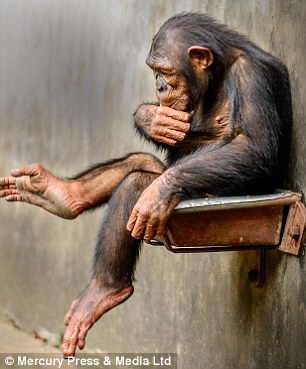
Can an old dog be taught new tricks? Why would he want to? Banging one’s head against a blank wall because others don’t see your point of turning truth in on itself brings a smile on the faces of the politely detached. The smiles, for all we know, could be inane grins revealing the tensions of smuggling critical and reflective intellectual practice through the back door while operating a strict autocratic code at the front. That polite detachment, for all we know, could be the embarrassment-cum-denial of farting on public transport. Inscrutable as that look is, inscrutable as these exotic creatures are, the critical thinker in there says, this has got to be cognitive dissonance in its manifest form. Look, they are thrown by the confusion of holding opposing values of tradition and modernity as simultaneously true. On their gormless faces is the priceless visage of someone whose left and right hemisphere has been cleaved in half. Surely, their culture is anoxic. Where is the oxygen of free, unhindered thinking? Have wings will fly; have knuckles, will drag.

And then the thought arrives: what if the reason these heavenly creatures are so joyful, the reason they laugh and smile with such sense of abandon, is because they are the ones whom knowledge has set free? Unlike the critical analyst, plagued by doubts, chained to uncertainty, floating aimlessly outside the box, maybe it is they who rejoice in the security of the box, and in the certainty of a knowledge that is immutable and unchanging as the book itself. Who needs doubters when everyone knows that when a tree falls in a forest it makes the sound of millions of hands clapping. There is solace is knowing what you know.

What the halal is going on? The tables have turned.

Who has the cognitive dissonance now?