On the Mountain of God (PartIII)

#adventure, adventure, Africa, mountain of god, Ol Doinyo Lengai, Tanzania, travelogue, Trekking

If this was any Mountain of God, the God in question suffered at the hands of a greater one: the weather. Rain lashed the steep slopes. The gradient, the worsening conditions, the midnight black, the rising panic: this was becoming a Jesus lashed by the Romans moment.

I couldn’t stop but turn on my hips to train the head torch on what was immediately behind me. The pitched floor of the volcano, the void behind and beneath. Raindrops rushing me out of the inky nowhere. I began to slip down, unable to keep my footing. Grabbing what purchase i could from the ground, chunks of the weirdest paste came out in clumps. I feared the worst. Not even the Himalaya had put the fear in me like this mythical giant. And like a mythic giant, once stirred from slumber they arch and wriggle, until rising mightily there’s nowhere to hang on but hurtle down.

Moses, my guide, was close ahead. He kept turning to reassure me. I saw in his dark features great courage. Yet, even he, the Masai warrior with a taste for suicidal volcanoes, looked at the very least surprised by these Scottish-like conditions.

It must have been after 3am by now. Lengai sat practically on the equator, but the temperatures struggled above latitude 50. We had been ascending – what felt like near-vertically – for upwards of 4 hours. How much longer until the summit? Moses cast a look of disappointment. “We’ll be there for sunrise. Two more hours.”

“There will be no sunrise at this rate,” I shot back.

Beseeching me to go on, Moses sensed the mood had shifted in me. For the first time in a long time an indifference overcame me about reaching the goal. I had travelled so far overland, paid so much for the privilege of my own cook, driver, armed guard, not to mention donkey handlers. I had spent so many months orchestrating this plan. And yet, here we were, 120 minutes from the crater of the world’s quirkiest volcano and I wanted nothing more of it.

“All right,” I said to him. “Let’s keep going. I suppose the rain might stop.” Of course, the Scot in me knew that when a man wants rainclouds banished, the weather gods don’t take kindly.

Another half hour onward and upward and the rain was truly routing the mountain’s immense flanks. Continuing to slide a foot for every two planted, I suspected foul play, that God – or whoever dwelt in this abominable realm – had no intentions of receiving worshippers that day. I slumped onto the liquid ground, my shoulders hunched in defeat. Moses noticed straight away, and turned back to see what was the matter.

“It ain’t gonna stop, Man. I just know it.”

“Look,” he replied. “You’ve come a long way. You can do this. You’re a Masai, like me.”

“But even if we reach the top, what then? We can’t see anything.”

I had, obviously, researched this expedition, leaving no visual stone unturned. You don’t take on something of this magnitude without first watching a few YouTube documentaries containing aerial panoramas shot from helicopters that leave you gasping for breath. Knowing that on a clear morning from Lengai’s summit Mt Kilimanjaro was there in all its abundant glory ninety miles away, that candy floss flocks of pink flamingos could be seen massing over nearby Lake Natron, and that practically the whole floor of the neighbouring Rift Valley could be savoured with a single sweep of the eye, was beginning to bother me. Why? Because, at this rate there was going to be no clear morning. We were going to end up wreathed in filthy rain clouds, unable to see more than a few metres of visibility.

I tried telling Moses this. “It’s about the views, man.” This fine young man looked, for all intents and purposes, an ancient soul shouldering all blame for what the sky was throwing at us. But none of this was his doing.

“I’m really sorry, Scott.”

“That’s okay, Moses. Let’s wait here a while before we think about quitting.” In truth, the sun could have been shining and I still would have been too afraid to march on.

Far below us I could discern human life in the form of four beams of torch light. Through the swarm of rain drops I studied them for many minutes. They were ascending swiftly. Rainproof and determined, that was for sure. What started as four tiny specks of light moving up the mountain in a series of switchbacks, after a while – how long in this surreality I had no idea – the lights began to close in on us.

Out of the blackness we were confronted. By four white faces. Two were dressed to the hilt in waterproofs while the other two appeared suitably attired for the park on a summer’s day. Through her sculpted hood, one the figures stared right through me. Her headlight bore into my soul as I gazed back at her.

“Are you alright? Why are you sitting here?” she asked. “We saw you climb quickly and then suddenly stop. Why?”

I told them of my misgivings. Playing down my uneasiness about the mountain’s peculiar aura, as well as the impossible gradient of the slopes in these conditions, I chose to accentuate the missed photo-op side of it.

“If this rain doesn’t clear in the next half hour, there’s no point in summiting. We won’t see anything. Isn’t that the whole point of it?”

The girls, both Polish and air hostesses in Norway, as it turned out, eyed me sympathetically. They knew that what was gripping me was also gripping them. This trepidation was self-evidently not shared by all. Their male companions, Russian and by my reckoning not air hostesses, lobbied to go onward. We all remained in this eerie stand-off, perhaps 8,000ft up the world’s only carbonatite volcano. The two underdressed Russians were having none of it while the two overdressed Poles were showing signs of apprehension going any further.

On the face of it, the two Polish girls, Moses and I, were willing the rain to abate. We accepted not only the danger in clinging to such a rain-sodden slope but also the futility in walking vertically halfway to heaven only to get stopped at the pearly gates. The Russians had no such reservations. Men are men, particularly in a nation where Putin would not have forgiven their cowardice so readily.

‘We go on,” they stated. And that was that.

“This rain is here to stay,” I said somewhat defeatedly, and a whole lot defiantly. “I’m turning back.” Moses looked bereft. All he wanted was to be the best midwife he could be, delivering me into wondrous new world.

The girls turned their headlights toward the Russians, then me.

“We’re coming with you,” they said.

The split was on high up on the Mountain of God. One of the Polish girls admitted she had been afraid. I seconded that fear and we were the better for it. As we traipsed down with a beaten Moses ahead, I kept turning to see the progress of the Russians. In a true George Mallory moment, the last we saw of their head torches was them disappearing into a thick wreathe of raincloud about 9/10ths of the way up, according to Moses.

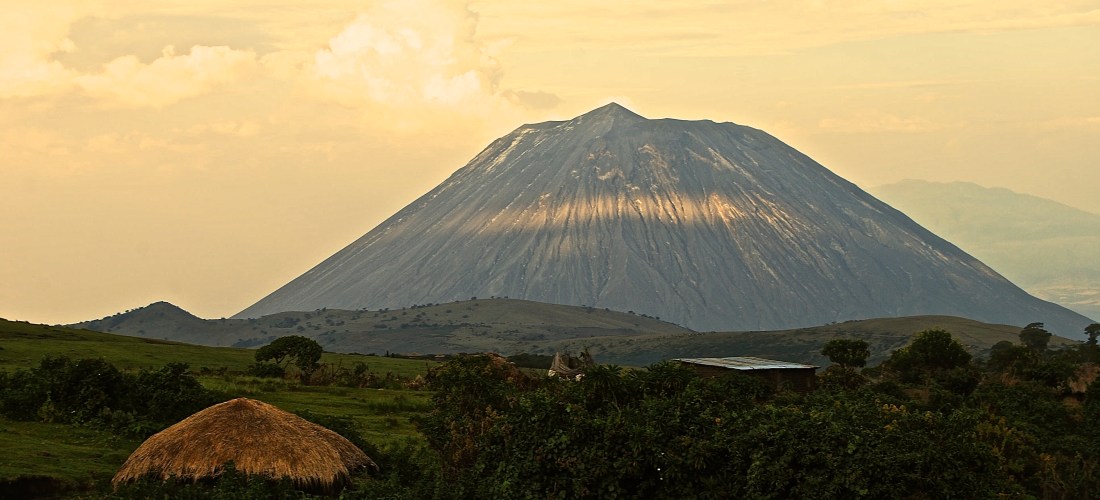
Now safely at the foot of Oldoinyo Lengai, a grey dawn broke. The mountain, its flanks rendered green by the rain and gouged by overflowing gullies, its crown all but invisible, seemed to me a refugee from Scotland’s Highlands before the ice smoothed all before it. Never had equatorial Africa looked so dreich. As we boarded the jeep, the rain finally ceased. But, trundling off across the Rift Valley I could see out of the rear window a perfect conical rising until decapitated by one stubborn son-of-a-bitch cloud that simply refused to budge.

The Russians might well have landed first, but as sure as sugar is sweet there’s no chance they were going to be met by that uninterrupted view all the way to Kilimanjaro. Though for them, that was never the purpose.

Below are hyperlinks to versions 1 and 2:

https://trespasserine.com/2016/09/06/on-the-mountain-of-god/

https://trespasserine.com/2016/09/20/on-the-mountain-of-god-2/

The Social Experiment: Going Off-Grid

#alternative lifestyle, #living off-grid, adventure, boats, Canal, climate, conservation, Ecology, England, environment, ethics

Part II: Life Off-Grid

There can be fewer acts of homegrown radicalism quite like going from mains power hook-up to living off grid. But what is it to live off-grid? Everyone is familiar with the term, though few are familiar with the kind of life that entails. Think of it thus: if mains power is similar to taking antibiotics through an I.V. drip, then living off-grid corresponds to foraging for your own medicine from nature’s own root & herb garden. The contrast couldn’t be greater, the results more startling. Sometimes wondrous, oftentimes disturbing. One thing’s for sure, there’s never a dull moment in the pursuit of the dream of living off-mains.

Before I embarked on what i call life unplugged I had seen glimpses of how it’s done. Having trekked the Himalaya a good few times, I had seen how the teahouses that operate as hostelries from the foothills to alpine altitudes managed to run their entire operations without the aid of AC power, or mains gas and cable telephony, for that matter. Naturally, these mountain people had no choice in the matter. Geography dictated Nepal’s infrastructure perhaps more than most places on Earth. Being poor didn’t help things either.

I marvelled at how these resourceful Nepalis ran an entire trekking operation with only two bottles of propane gas, a couple of 12V leisure batteries, a diesel generator, and a simple 12V wire loom coming off the batteries and leading to the only plug in the whole teahouse establishment. How they transport them up there is a whole other story. You see it, plain as day, a mess of plug adapters clustered onto a head adapter leading out from the wall sockets. From this higgledy-piggledy mess of cables, every mobile phone belonging to every paying guest is drawing electron juice from the auxiliary power source (in the absence of solar panels, usually the genny). There they are: a brood of mobile phones pulling like octuplets on their suffering mother’s teats, in the corner of the mess room where everyone spends their evening relaxing by the pot-bellied stove at 10,000ft.

That was the limits of my understanding back then. About the most i could discern from off-grid living was that when too many appliances try to draw current from a 12V/24V/48V system – one far lower than an AC voltage of 110v (USA) or 220v (UK) – there what’s called a voltage drop. You know when the bare lightbulb suddenly and inexplicably dims before shining brighter again. This, I later learned, is attributable to a fall in electrical pressure, which is essentially what voltage is. The phenomenon of this can be best imagined in cosmology documentaries where a distant star becomes a supernova, suddenly dimming before emitting a brilliant light in the night sky. Anyway, point is I had no inkling at all into the practicalities of surviving off-grid until I actually decided to try it. And try i did.

Initially, the feeling was euphoric. No more utility bills. Atonement for all those ecological crimes i partook of in the Gulf. Rapid diminution of carbon footprint, from gargantuan to nearly invisible. When the experiment in living commenced, it was the height of summer. Solar panels on the boat’s roof trickle-charged batteries, creating a false sense of power security. So convinced was I of the limitless benefits of going off-line that for that entire summer of 2019 I lived like there was no tomorrow: effectively consuming similar joules of energy than i had in a house. Unfortunately for me, gauging the true depth of discharge of those batteries, to whom i owed so much, did not become apparent until the gloomy autumn set in. By this time, so late in the year, long-term damage had been done to the 880Ah of lead-acid batteries. Plus, the solar panels were about as much use through a sunless English autumn/winter as a propeller in sand.

Sometimes the most enduring lessons to learn are also the hardest. It just so happened that the winter of 2019 was among the wettest on record. Noah would have been able to profit handsomely from starting an ark-building business had he been alive in that year. From the first ominous spatter in late September, that rain did not abate until the middle of March 2020. Living under the miserable deluge infinitely complicated the process of surviving off-grid life with relative comfort. Instead, as the batteries began their slow descent into decrepitude and death, the boat’s voltage meter reported a sorry tale of exhaustion with every reading. Just to get through the long evenings with a modicum of lamp light, heat and hot food in my belly, the trade-off was either to run a droning 2kw suitcase generator for hours on end each and every day under the rain, burning unleaded fuel and ruining my chances of salvation, or else run the boat’s powerful diesel engine. Restrictions applied by both methods. Running the genny meant, lest it end up stolen from a public towpath, i had to be in residence while it was going. The noise was incessant, not altogether dissimilar to the thrum of a billion hornets all descending on me. Try keeping your concentration when that din is going all day, and while people parade past your window gawping in to admire the designer kitchen. While the other method for supplying raw power to increase voltage in order to run every on-board system from plugs to pumps to central heating – the boat’s engine – never really deep-cycled the batteries for the simple reason that every 12v battery responds to an input charge voltage of a certain capacity, which the engine could never reach (it needed 14.7v but only put out 14.4v).

Talk about the best-laid plans o mice and men going awry. 250kg of lead-acid battery dumped after one year of chronic abuse. A replacement set costing a small fortune. A tonne and a half of coal burnt to keep the chronic dampness and cold out. Hundreds and hundreds of litres of diesel burnt to run on-board central heating, as well as to partially recharge the batteries. Hundreds of litres of unleaded fuel used to keep the suitcase genny sweet. A sizeable investment in solar panels, panels which for the half of the year you truly need them are conspicuous by their absence to deliver any volts whatsoever. It’s not even the off-grid burning of so many hydrocarbons that bothered me the most: it was the almost permanent state of hyper-alertness, apprehension and even anxiety, just waiting for the red low voltage warning light to blink on. Moreover, that one’s life is now going to be totally dictated to by the whims of auxiliary power. You cannot stop thinking about it. Constantly monitoring the situation; always on edge, twitching to pay back the battery bank for every little withdrawal of amps you make on a daily basis. I mean, how is anyone supposed to relax when providing domestic power becomes an almost obsessional challenge equal to servicing personal loans and debts.

The 99% who turn to mains power as a solution for modern power-intensive living: how could they ever know how taxing it is to manage the off-grid life? I didn’t until I unplugged the cable from shore power. Once the brief honeymoon period ended, the reality hit hard. Now, I believe if you are blessed enough to live in a perennially sunny spot below Latitude 45 degrees, living off grid by means of a large solar array is definitely do-able. Equally, tapping geo-thermal hotspots in your Icelandic backyard would work nicely, too. However, the indulgence of trying such a modus vivendi in a kingdom of rains and dirty grey clouds, like this one, by my reckoning is a challenge too great for most mortals. It was for me. I don’t want to face these uphill struggles through the dark of autumn and winter any more. Not here. Not now.

Human effort is not measured, thankfully, in amps. All experience is good experience, save for murder, incest and animal cruelty. At least i tried. And no one can take that away from me.

The Social Experiment in Living Off-Grid: How Goes It?

#alternative lifestyle, #living off-grid, boats, Ecology, England, environment, Lifestyle, social issues, Society

Part I: Life on the Grid

Or should that be the anti-social experiment in off-grid living? There is that aspect, too, though there’s more to life off-grid than a simple wordplay. Or unbearable isolation. There’s the experiment itself, which has to be longitudinal – meaning same conditions over an extended period – and has to transition from living on-grid to living off, with all the upheavals that entails. For all those who aspire to living La Vida Loca – offline, unhitched, and possibly unhinged – the experience goes a bit thus…

Before entering the spartan realm of minimalist, I was a maximalist. Whereas today I can claim to tiptoe on the Earth with a size-4 carbon/ecological footprint, pre-watershed I used to make the Earth shake with a megafauna-sized carbon footprint. You know the type: Crusty the Clown outsized shoes, freak show dimensions, gargantuan metatarsals. Three years ago, but it seems like only yesterday (to quote The Carpenters), I was following a high-octane consumption pattern.

Living twixt the ocean and the deserts of the Arabian Gulf, I drove a car whose off-roading capabilities rendered it a gas-guzzling behemoth. Not that quenching its thirst for fuel mattered much, as costs at the pump were absurdly affordable. I lived in a business hotel in a spacious apartment high up on the 18th floor. For nine months of the year the air outside was so sultry that the air-con inside was on 24/7. A simple walk around the vast mosque near my home, while pleasant, often resulted in a complete body sweat blended in with atmospheric dust and other nasty particulates. The only self-purification was to lose oneself in the apartment’s planet-sized, walk-in shower cubicle. I dread to think what the water consumption was per shower. And yes, in summer one shower could easily morph into three scrub downs per day. That in itself wouldn’t be too egregious an act of environmental vandalism were it not for the fact that in the entire Arabian peninsula – an area about the size of Western Europe – there is not one single watercourse viewable from space. That means that ‘sweet’ water has to be sourced from somewhere other than the traditional go-to place for the native Bedouins, the well.

Arabia’s carrying capacity for humans is naturally small. To elevate it in order to invite millions of migratory workers in, engineers had to build a series of water desalination plants along the coast. Turning seawater into the salt-free solution that comes through the plumbing requires phenomenal amounts of oil to burn the salt off millions of gallons of water in steam condensers that run day and night. This process accounts for a surprising percentage of all oil production. That aside, the point I’m trying to force through here is that just to have a shower required an industrial process that burnt mind-boggling quantities of oil from water sequestrated from the ocean. The Persian Gulf, all 700 miles of it, is turning saltier because of the desalination required to sustain millions of migrant labourers. This brackish chemistry puts stress on the aquatic ecology, too. Most famously, sea grasses are suffering, which brings big problems downstream to grazers such as the manatee.

At work, we used machinery in a profligate way. Printing worksheets and other paraphernalia for the sake of it resulted in towers of waste paper, un-recyclable laser jet cartridges, and overworked Xerox machines. Air-con ran all day through unmanned corridors, empty classrooms, bare staff rooms, and even little panic rooms where you go to escape the madness. The utilities bill alone must have been equal to the GDP of a small principality. Lights were routinely on in empty rooms. Just switching them off was an act of radicalism.

Workdays there are kinder than in the slave-driving West. One of the reasons so many venture there in the first place. Instead of being bolted to one’s desk until long after dark, privileged expat Europeans (Brits included) would finish work with the sun still high in the sky. That exacerbated our carbon footprint, as at 4 o’clock there’s much life left in the day. Invariably, myself and friends would do some form of physical exercise in an air-conditioned gym, on equipment often running on mains power. In fact, the treadmills often needed their own national grid to operate. Once the aerobic fun and games were over it was time to decamp to the bar for a cold one. Except, for the Guinness to reach chill factor 10 required power beyond power. When outside the temperature is touching 40 celsius with a wet bulb humidity level of 80%, and inside the beer tap has a designer layer of ice around it, you know you’ve got an addiction to mains power. Is there any wonder a pint costs the equivalent of $15?

Of course, this power audit i’m describing is not the half of it. One of the great mass movements of expats in the carbon-rich Gulf is to descend en masse to the airport on the first day of school holidays. It is far from unusual to meet a colleague, neighbour or even drinking buddy in the queue for check-in. Their intended destinations are myriad, but all of them are linked by one carbon-relevant fact: flight time is seldom less than five hours, and sometimes fifteen. That’s a lot of vapour trail.

But this mass gathering of folks sharing similar socio-economic status is by no means confined to the air travel industry. If you want to visualise another airport analogue, but this time for the domestic market outside of school holidays, look no further than the mall. The great emporium of the 21st century – beloved of Arab rulers who see a historicity with the ancient bazaars and souks of the Middle East, as well as a source of great internal revenue – draws the crowds in all weathers, be it hot or hotter. Some, such as the Dubai Mall, are so sprawling as to contain more shops than some cities (Dubai Mall has circa 1,200 individual rental units within its great perimeter walls).

Once inside these 21st Century temples of consumer worship you see the level of food waste. That, in itself, is staggering. If I had a dollar for every plate of leftovers I witnessed, I’d be a wealthy man. Buffets barely-touched. Takeaways partially eaten. Quantities of cooked food that no society without an agricultural base should ever rightfully have within their means. The profligacy of quality food would appall any good Presbyterian. There, in the Arabian Gulf, apportioning little or no value to a precious thing as fresh, quality food is a fact of life in a burnout society gone badly wrong. Now, if these generous helpings of leftovers would go to feeding the pitiful canine waifs and strays that mill around behind malls and hotels, I could almost justify the waste. But they don’t, as a matter of policy. The Muslim rulers would rather legislate for a situation where uneaten food is binned than to nourish an animal considered to be vermin.

Like any superstructure, be it an international airport hub or a world-beating shopping mall, the maintenance costs of the mall are almost as environmentally disastrous as the industrial legacy of building them from their foundations. While I don’t profess to having the data on how many megawatts per hour the Dubai Mall uses in order to keep the lights on, the air-con nippy, and the customers happy, I’ll wager that its not far off the levels consumed by the whole country thirty years ago. A graph showing the mains power consumption over a thirty-year period would likely resemble a hockey stick: from sustainable to a complete loss of perspective in a single generation. The point being here that I was one of millions far exceeding a carbon footprint expected from the average consumer in their home nations. It’s the gift that keeps giving, the party without the hangover.

So much raw power consumed from relatively few sources. We’re not talking PV solar panels blanketing the desert, drawing in abundant current from the Arabian sun. We’re talking good old fashioned oil-burning power stations sending carbon consumption through the roof for many. We’re talking industrial output from raw materials extraction that has had a deleterious – in places catastrophic – effect on the specialist ecology and wildlife of the desert. Arabian leopard, down to two hundred individuals across two million square miles. The Arabian wolf, dwindling away to nothing, unable to halt their own human-led persecution. Hyrax, under threat. Corals, wrecked by coastal degradation. About the only wild things to have prospered are the feral dogs that cling on, unloved, in the derelict quarters of the city. Oh, and the ubiquitous camel, too cherished as a commodity to be in danger of extinction.

It doesn’t take a visionary to see that consumption levels of both power (delivered in cheap abundance by the burning of non-renewable fossil fuels) and commodities (imported on oil-burning container ships in exchange for crude oil and gas) are disturbingly high. After five years, I was reaching a moral dead-end. I couldn’t go on enacting a lifestyle that I myself criticised for its crimes against nature. To be sitting at a bar in the desert drinking Irish beer from a tap that’s chilled not by the air outside but but a long chain of industrial processes demanding huge quantities of power, while having discussions about how to bang the world to rights, that’s wasn’t going to cut it long-term. That’s when the small footprint plan kicked into action.

The transition from energy elephant to mouse has been a steep learning curve. Contrastive, to say the least. It’s not all peaches and cream when you’re trying to atone for your former environmental crimes. The challenges of acquiring power off-grid, of limiting daily usage, and of scrimping on water, are in their own right as equally immense as running power stations for cities such as Dubai. Ethically, living off-grid you’re on firmer ground. However, in a practical sense could we all do it? Or is off-grid living destined to be a strictly niche affair?

In my next blog, I’ll illustrate some of the day-to-day rituals required to keep the lights on, the fire going, and the water running.