And much as Wine has play’d the Infidel,
And robb’d me of my Robe of Honour–Well,
I wonder often what the Vintners buy
One half so precious as the stuff they sell.
(Omar Khayyam, Ar-Ruba’iyat, Verse 95)
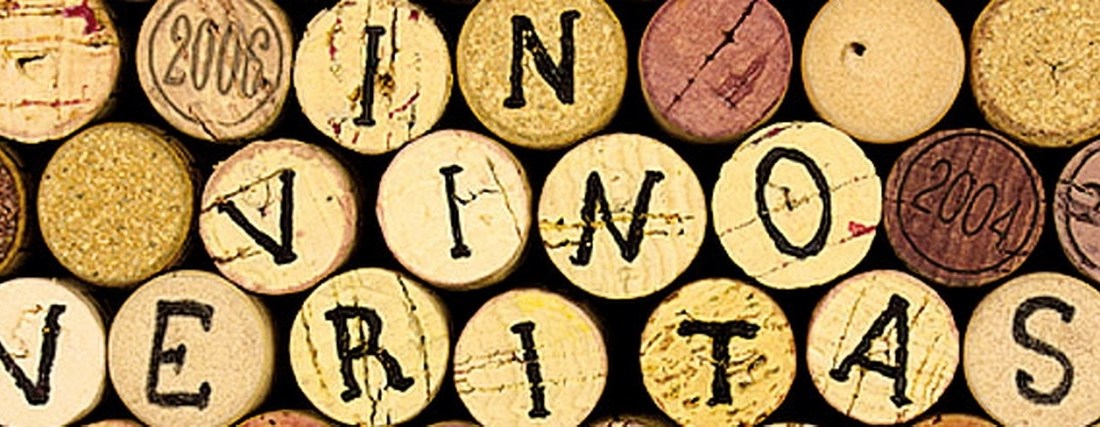
In vino veritas. In wine, truth. In a good drop, much truth. Whoever coined that proverb must have experienced drunkenness and candidness hand in hand, the cause probably the former, the effect most likely the latter. The author of that most enduring of Latinate proverbs might have been inspired to speak out of turn, so sozzled on Etruscan red he was. Yes, even Romans woke up, brain sack shrunk through dehydration, hangover crushing. Tongue dry as one of their famed sandals, with the hangover came the remorse. Did I put my foot in it last night? Oh, quod? As sensation and sensuality governed Julio-Claudian Rome in the same manner that sense and sensibility governed Regency England, the truth might have been a scandalous confession of love for the senator’s lovely wife, rebuffed with a sharp futuo off, homunculus.
Before it was “Dutch Courage” it was “Roman Fortitude”. Even the meekest among them could give as they got. All it took was a cheeseboard and half an amphora of the red rocket fuel to find courage to give a piece of the inebriated mind to the local taberna’s resident loudmouth cūlus (arse to you and me). You can see the coward now, sitting there in his sackcloth on a stifling night by the banks of the Tevere, downing cups of wine while quietly enduring some demobbed legionnaire – flush of his legion’s seashell collecting heroics on the English Channel – boast about the invasion of Britain that never happened. With word out that the Emperor, Caligula, is feeding his beloved horse, Incitatus, flakes of gold with its oats, this rumour is depressing enough. On and on the ex-soldier goes, railing against what he calls those Britanni barbari. Pissed good and proper, fed up with Roman hubris, and unable to tolerate this bigot’s excreta anymore, our ever-suffering wine tippler, who has drunk the colony of Sicily dry, staggers to his feet, balling ‘Caput tuum in ano est, you complete cunnus!”
Yesterday This Day’s Madness did prepare
To-morrow ’s Silence, Triumph, or Despair
Drink! for you not know whence you came, nor why
Drink! for you know not why you go, nor where.
(VS 74)
That vino-inspired epiphany probably landed our honest tippler a fattus lippus, but there’s no denying that in wine there has ever been truth. Who cannot fail to imbibe a quart of Cabernet without a slight loosening of the old tongue? Who, for that matter, can imbibe any less without fessing up to the fact that more imbibing is on the cards? This in spite of the surgeon-general’s appeal to the vox populi to cut down on unit consumption, conveniently leaving our government-appointed expert with the shelves all to him/herself to stock up on quality Pomerol for the end days to come, which they inevitably will when them lunatics in their lab coats get around to establishing the link between Malbec and Mad Cow Disease, or a £4 blended cépage from Aldi (fit for the casserole pot) linked to a pestilence fit for the common man, heart disease for argument’s sake.
Hear ye, outposts of empire! Raise a toast to the full-bodied blood that runs through these Roman veins. From the wheat belt of Mauritania in the southwest to the damp and underwhelming wall of mud-grass that Hadrian had built in the northwest – Laude! Praise! Let the wine flow from all our yesterdays till all our tomorrows. It matters not that you don’t know your arneis from your elbow, or a Pineau d’Aunis from a Pinot Noir, we’re all in this binge together. Vitis is the grapevine. You heard it on here. Vitis is vital. Vital is life. C’est la vie. C’est le vin. C’est comme ça. C’est comme ca qu’on s’aime. This is how we love. This is what we love. Wine is that thing we love more than even our loved ones. Dionysus would never have been preserved in the vinegar of immortality were he not soused the entire classical period. As for the golden age of Persian poetry? They might as well have teetered a millennium early under the tea-totalling tyranny of the 1979 Islamic revolution were the likes of Hafiz or Khayyam left downing libations less red and lyrically bewitching than a cup of glorious Shiraz, or ten.
Nothing like wine can prepare us for the now. And nothing like the now can render the before and the after so pointless, so sober and so bereft a land fit to dwell in.
What have the Romans ever done for us? Made us rather partial to wine is what they did. Now, that’s got to be a legacy worth bequeathing.
Ah, with the Grape my fading Life provide,
And wash the Body whence the Life has died,
And lay me, shrouded in the living Leaf,
By some not unfrequented Garden-side.
(VS 91)


 The Blind Salamander